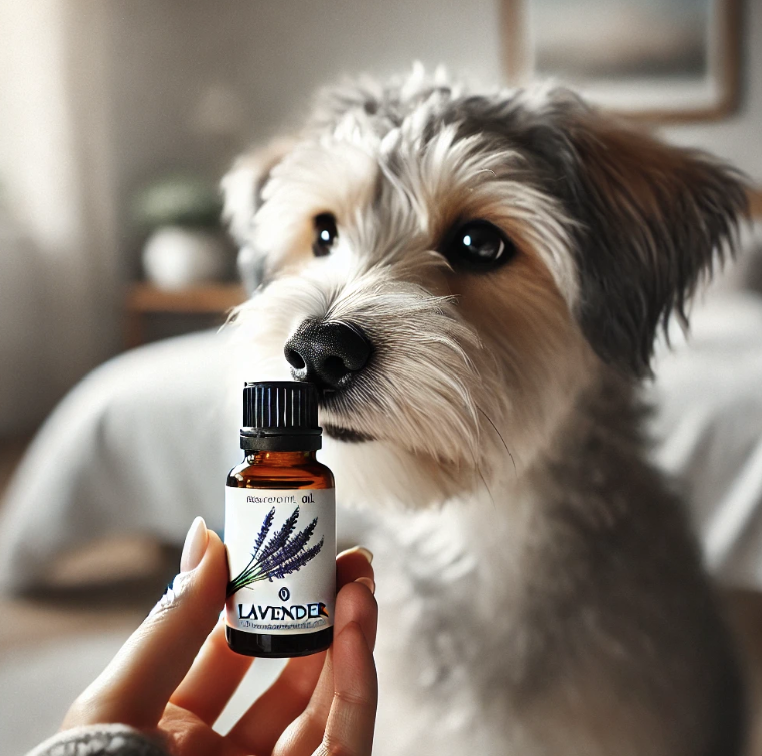

Essential Oils for Dogs: The Wellness Tool I’ll Never Be Without
Essential Oils for Dogs: The Wellness Tool I’ll Never Be Without
You may have heard that essential oils are dangerous for dogs. You may have heard they are toxic, risky or something you should avoid completely.
Or maybe you bought a few bottles, stuck them in a cabinet—I did that for a whole year—and never really used them because you were not sure what was safe.
I understand why dog moms are confused. The internet has made an absolute mess of this conversation.
Essential oils are not something to fear blindly. They are also not something to use recklessly.
They are concentrated plant extracts with real chemistry, real possibilities and real considerations.
Your Dog Needs Essential Oils — You Just Need to Learn How to Use Them Well
On one side, you have people acting like every essential oil is poison in a bottle.
On the other side, you have people acting like “natural” means you can slather anything on your dog, diffuse it all day and call it wellness.
Neither extreme is education, and neither one helps your dog.
The problem is not essential oils.
The problem is uneducated use, poor-quality oils, inappropriate application, fragrance oils being mistaken for true essential oils and random internet recipes being treated like gospel.
That is not wellness.
That is guessing with a fragrant bottle.
I Do Not Want You Afraid of Essential Oils. I Want You Educated.
I teach essential oils because I believe every dog mom should understand them.
Not because they replace veterinary care.
Not because they fix everything.
Not because I think you should throw oils at symptoms instead of asking better questions.
I teach essential oils because when they are chosen well, used correctly and understood as part of a bigger wellness picture, they can become one of the most useful tools you will ever bring into your home.
If you are new to aromatherapy with dogs, also visit my Essential Oils for Dogs resource hub where you can explore more specific applications and safety topics.
What Are the Benefits of Essential Oils for Dogs?
Essential oils may offer dogs supportive benefits across physical, emotional and environmental wellness when the oil, method of use and individual dog are considered carefully.
Depending on the goal, essential oils may be used to support calm behavior, nervous-system regulation, emotional balance, skin comfort, respiratory comfort, mobility, circulation, recovery, sleep, digestive comfort, first aid, low-tox living and general wellness.
One of the reasons I value them so much is that they do not have to be the entire plan to be useful.
They can work alongside fresh-food nutrition, veterinary care, herbs, homeopathy, supplements, CBD, massage, PEMF, rehabilitation, training and other supportive tools.
Calm & Emotional Support
Aromatic support may help some dogs settle, recover from stressful events, sleep more comfortably and create positive associations around predictable triggers.
Comfort & Recovery
Essential oils may be incorporated into supportive routines for muscles, joints, circulation, tissue comfort, relaxation and recovery after physical or emotional stress.
Skin & Seasonal Support
Properly selected oils may support skin comfort, barrier health, environmental irritation and seasonal wellness as part of a broader plan.
Respiratory Support
Appropriate aromatic use may support respiratory comfort, breathing routines and seasonal environmental challenges.
First Aid & Everyday Life
Oils can become useful tools for many of the minor everyday moments that come with living with dogs—when you understand what belongs at home and what belongs at the veterinarian.
A Lower-Tox Home
Essential oils can also help pet parents replace some synthetic fragrance and heavily scented household products with simpler options.
The benefit is not simply owning oils.
The benefit is knowing what you are trying to support, which oil fits that goal, how to use it appropriately and when your dog needs something completely different.
Essential Oils Are Where Nature and Science Meet
Essential oils are plant-based, but that does not mean they are weak.
Plants have been creating complex aromatic compounds long before humans started making synthetic products in laboratories.
Essential oils capture a concentrated part of that plant chemistry.
They are not just smells.
Aromatic compounds can be experienced through inhalation and topical application, and scent has a particularly close relationship with the brain, emotion, memory, stress and learned associations.
When properly selected and applied, essential oils can also become part of routines supporting skin, muscles, joints, circulation, lymphatic movement, comfort and recovery.
This is nature and science working together.
Your Dog Is Not a Collection of Separate Problems
This is one of the biggest reasons I love essential oils.
They do not fit neatly into one little box.
Your dog’s skin is connected to the immune system. The gut is connected to the brain. Stress affects digestion. Pain affects behavior. Anxiety affects sleep. The nervous system influences recovery. The environment affects everything.
So when your dog is itchy, anxious, stiff, reactive, inflamed, gassy, sensitive, exhausted or constantly flaring, I am not only looking at one symptom.
I am looking at the whole dog.
That same whole-dog thinking is the foundation of my Holistic Pet Health Coaching work and my Holistic Dog Health Guide .
Health Support Before Everything Is on Fire
Most dog moms start looking for natural tools when something is already wrong.
The itching is out of control. The gut is a mess. The anxiety is escalating. The dog is limping. The senior dog is struggling. The vet bills are piling up.
Everyone is tired.
That is a hard place to learn from.
I would rather teach you before you are desperate.
Essential oils can become part of everyday wellness routines supporting calm, comfort, skin, respiratory wellness, recovery, sleep and emotional steadiness.
That does not mean you need to use oils constantly.
It means you understand what to reach for, when to reach for it and how to use it well.
Recovery Support When the Body Is Working Hard
Recovery is not passive.
The body has to repair, regulate, clear waste, calm inflammation, restore sleep, rebuild strength and come back into balance.
That is true after physical stress, emotional stress, illness, injury, surgery, overexertion, a big life change or a flare.
Essential oils can be a beautiful part of recovery support.
They may support comfort, relaxation, circulation, lymphatic movement, breathing, sleep, emotional grounding and the body’s recovery processes.
They can work alongside nutrition, veterinary care, appropriate movement, bodywork, herbs, CBD, homeopathy, PEMF, massage and other supportive tools.
This is where oils shine.
They do not have to be the whole plan to make the plan better.
First Aid Support for Real Life With Dogs
Dogs are dogs.
They run, roll, scratch, lick, leap, crash, chase, sniff, eat questionable things, step on things, get stung, overdo it and occasionally make decisions that prove they are not reading the wellness plan.
This is where essential oils become incredibly practical.
With the right education, you can learn how oils may fit into everyday support for minor skin irritation, outdoor exposure, muscle tension, emotional upset, cleaning needs, respiratory comfort and those “what do I reach for first?” moments that happen in real life.
For more detail, read Using Essential Oils for First Aid With Dogs .
Essential oils do not replace emergency care.
If your dog is bleeding heavily, struggling to breathe, collapsing, having seizures, repeatedly vomiting, showing severe pain or clearly in crisis, you call your veterinarian or go to the emergency clinic.
Common sense is still invited to the party.
Stress, Anxiety, Fear and Trauma Support
Dogs are emotional beings.
They remember. They anticipate. They grieve. They worry. They startle. They shut down. They overreact.
And many dog moms are trying to train dogs whose nervous systems are not ready to learn.
Essential oils can be one part of supporting dogs dealing with fear, hypervigilance, storms, fireworks, travel, vet visits, grooming stress, separation issues, household tension or major transitions.
They do not replace behavior work.
They may help the dog become more available for behavior work.
For a deeper look at choosing oils based on the anxiety pattern, read Essential Oils for Dog Anxiety .
Your Stress Matters Too
Your dog lives with your nervous system.
That does not mean you caused your dog’s issues, so do not run off into a guilt spiral.
That helps no one, and your dog does not need you sobbing into a lavender roller bottle.
But the emotional tone of the home does matter.
Essential oils may support calming routines, better sleep rituals, grounding practices and a more peaceful environment for the humans too.
Sometimes the dog mom needs the oil before the dog does.
I said what I said.
Detox and Lower-Tox Living
Our dogs live in a chemical-heavy world.
Synthetic fragrance, plug-ins, harsh cleaners, lawn products, pesticides, smoke, mold, plastics, grooming products and other environmental exposures all become part of the dog's daily environment.
I am not suggesting we panic about every exposure.
I am suggesting we get smarter about reducing unnecessary ones.
Essential oils can help pet parents rethink household products, fragrance and cleaning routines while also becoming part of supportive bodywork and wellness practices.
Patch the holes in the boat before bragging about your bucket.
Support for Different Systems of the Body
Once you understand how broad aromatherapy can be, it becomes difficult to reduce essential oils to “something that smells nice.”
Depending on the individual dog and goal:
- Nervous system: grounding, relaxation, sleep routines, stress recovery and emotional regulation.
- Respiratory system: seasonal comfort and respiratory ease when used appropriately.
- Digestive support: comfort, relaxation and the gut-brain connection as part of a broader nutrition plan.
- Skin: comfort, barrier support and environmental irritation when properly diluted.
- Muscles, joints and mobility: comfort, circulation, relaxation and recovery.
- Lymphatic support: movement and circulation when combined with hydration, movement, massage and bodywork.
- Emotional wellness: grounding, confidence, transitions, fear, tension and recovery from stressful experiences.
Calling essential oils “nice smells” is a little like calling food “stuff in a bowl.”
Technically true. Wildly inadequate.
It Is Not Essential Oils Instead of Medication
This is not essential oils versus medication.
This is not natural wellness versus veterinary care.
There are times medication is needed.
There are times diagnostics, surgery, emergency treatment, antibiotics, pain management and other medical interventions are appropriate.
I am not here to shame a dog mom for using the tools her dog needs.
But I am also not going to pretend medication is the only tool worth considering.
Essential oils may be used as part of a larger plan alongside conventional and complementary care.
That gives us more options, not fewer.
Quality, Safety and the Individual Dog Matter
Not all oils belong on or near every dog.
There is a difference between a true essential oil and a fragrance oil.
There is also a difference between thoughtful use and: “I saw this recipe online and doubled it because more must be better.”
More is not always better.
Better is better.
The oil matters. The method matters. The dog’s age matters. Health history matters. Medications matter. Neurological concerns matter. Sensitivity matters.
A young healthy 70-pound dog is not the same as a fragile senior Dachshund.
A dog with seizures is not the same as a dog with itchy paws.
That is why I do not teach essential oils as memorized recipes.
I teach you how to understand the tool, observe your dog and make better decisions.
For a deeper safety foundation, read Essential Oil Safety for Dogs .
If you use a diffuser, also read Diffusing Essential Oils Safely Around Dogs .
Why Learning From Me Is Different
I did not buy a starter kit and decide I was an expert by Tuesday.
I have spent years studying dogs, behavior, nutrition, natural wellness, aromatherapy, animal aromatherapy, bodywork and emotional wellness.
My background includes Holistic Pet Health Coaching, Certified Canine Nutrition, aromatherapy education, animal aromatherapy, Raindrop Technique for animals, herbal education, homeopathy education, Reiki, Healing Touch and other complementary modalities.
That does not mean every dog gets every modality.
It means I take this work seriously enough to understand that the dog in front of me matters more than the bottle in my hand.
You can learn more about that professional approach here: Certified Animal Aromatherapy for Dogs .
Frequently Asked Questions About Essential Oils for Dogs
What are the benefits of essential oils for dogs?
Essential oils may support dogs in several areas including calm behavior, emotional balance, nervous-system regulation, skin comfort, respiratory comfort, mobility, circulation, recovery, sleep, first aid and general wellness. Their usefulness depends on choosing the appropriate oil and method for the individual dog rather than assuming one oil or recipe fits everyone.
Are essential oils safe for dogs?
Many essential oils can be used with dogs when quality, oil choice, method of use, the dog’s age, health history, medications and sensitivity are considered. Essential oils are concentrated botanical products, so education and appropriate use matter.
Read my full Essential Oil Safety for Dogs guide .
Can essential oils help calm an anxious dog?
Essential oils may help support relaxation, emotional regulation and calming routines for some dogs, but there is no single “best calming oil” for every anxiety pattern. Fear, separation distress, pain, hypervigilance and overstimulation may require different approaches.
Read Essential Oils for Dog Anxiety for a deeper discussion.
Can essential oils be used for dog first aid?
Essential oils may be useful for some minor everyday first-aid and supportive-care situations, but they do not replace veterinary emergency treatment. Knowing the difference between something you can support at home and something that needs immediate medical care is part of responsible use.
Is it safe to diffuse essential oils around dogs?
Diffusion can be used around many dogs when the oil, concentration, ventilation, room size and individual animal are considered. Dogs should be able to leave the area, and diffusion should have a purpose beyond simply making the house smell strong.
Do essential oils replace veterinary care?
No. Essential oils are complementary wellness tools. Veterinary care is still needed for diagnosis, emergencies, imaging, surgery, stabilization, prescriptions and medical treatment when appropriate. Essential oils may fit alongside those tools as part of a larger plan.
Ready to Learn Essential Oils for Your Dog?
If you are curious about essential oils for your dog, learn them the right way.
Not from fear-based posts.
Not from random social-media recipes.
Not from someone who understands oils but does not understand dogs.
And not from someone who understands dogs but has barely studied oils.
You need education that brings the pieces together: dog health, behavior, nutrition, safety, quality, emotional wellness, recovery, first aid and practical use in real life.
That is what I offer.
Whether you are brand new to oils or you have bottles sitting in a cabinet because you never felt confident using them, this is worth learning.
Your dog’s wellness plan does not have to be limited to food bowls, vet visits, medication and crossed fingers.
There are more tools available.
Essential oils are one of my favorites.
And always will be.
If y’all find me unwell or even in the hospital someday—somebody better bring my oils.
Trust me. I’ve already snuck them into the recovery room after procedures.
And when you learn how to use them well, they may become one of your favorite tools too.
This information is provided for educational and wellness-support purposes only and is not intended to diagnose, treat, cure or prevent disease or replace veterinary care. Always work with your veterinarian for diagnosis, medical treatment and emergencies.