

Is Diffusing Essential Oils Safe for Dogs?
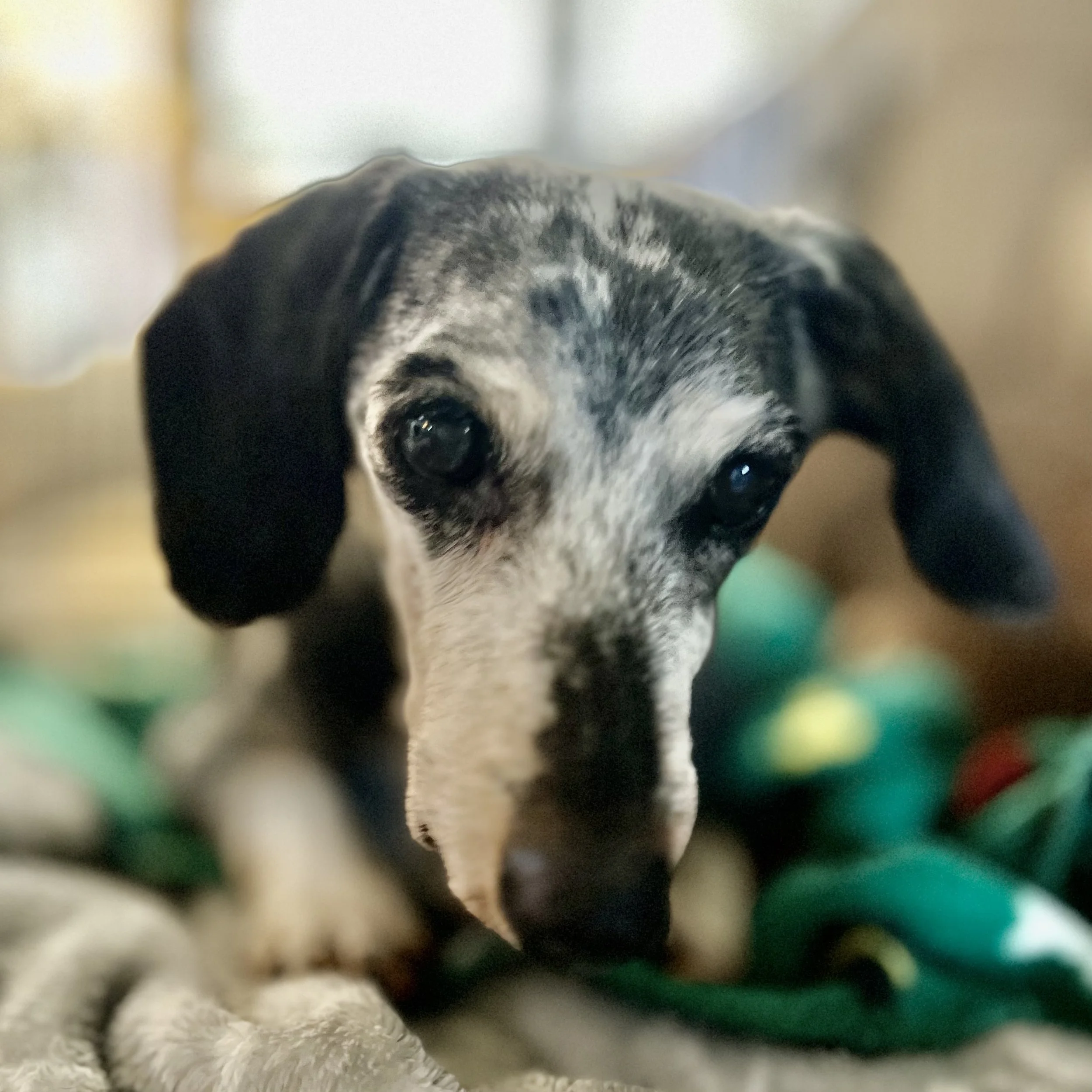
I trusted this precious soul with my essential oils every day. He was 20 years old.
How Diffusion Actually Works in Your Home
If you have ever wondered, “How much essential oil is my dog actually breathing when I run a diffuser?” you are asking the right question.
Most pet parents hear two extremes:
Essential oils are dangerous and should never be used around pets.
Or essential oils are natural, so there is nothing to worry about.
Neither answer is helpful.
This blog is not the basic “how to diffuse safely around dogs” article. I already have more step-by-step safety guidance for that. This one is about what actually happens when essential oils are diffused in your home, how far they travel, what your dog may be exposed to, and why room size, airflow, oil choice, and your dog’s health all change the answer.
Because yes, I diffuse essential oils in my own home. I also pay attention. There is a difference between thoughtful use and turning your living room into a lavender fog machine.
What Happens When You Diffuse Essential Oils?
When you add essential oils to a diffuser, you are dispersing tiny aromatic compounds into the air. With an ultrasonic diffuser, water and oil are broken into a fine mist. Some of those aromatic compounds stay airborne for a period of time. Some settle onto nearby surfaces like floors, furniture, bedding, and blankets.
That means diffusion is not just about what you smell.
For your dog, exposure may happen through:
Breathing in the aromatic compounds
Lying near the mist or in the area where particles settle
Walking across floors where residue may land
Grooming or licking their coat or paws later
Spending extended time in a closed room with the diffuser running
This is why I care about quality, quantity, airflow, and the individual dog.
Research on essential oil diffusers shows that they can release volatile organic compounds, including terpenes, into indoor air. The actual amount depends on the oil, diffuser type, room conditions, ventilation, and run time. So no, one drop count does not equal one universal exposure level in every home.
Your Dog Experiences Scent Differently Than You Do
Dogs do not experience scent like we do. Their noses are built for it.
A scent that seems light to you may be much stronger to your dog. Dogs can detect much smaller concentrations of odorants than people because of their olfactory system, receptor density, and the way scent is processed in the brain.
That does not mean every scent is dangerous. It means we need to stop using the human nose as the measuring tool.
If you walk into the room and think, “Wow, that is strong,” your dog probably got there about 20 minutes before you did.
How Much Essential Oil Is Your Dog Exposed To?
The honest answer is: it depends.
I know, everybody hates that answer. The internet wants a neat little chart. Your dog’s body did not get the memo.
Your dog’s exposure depends on:
How many drops you use
The size of the room
Whether the room is open or closed
How long the diffuser runs
How powerful the diffuser is
Whether the HVAC, fans, or open windows are moving air
Which essential oil is being diffused
How close your dog is to the diffuser
Whether your dog can leave the area
Your dog’s age, health, and sensitivity level
A healthy adult dog in a ventilated room with a lightly diffused, appropriate oil is a very different situation than a senior dog with respiratory disease lying next to a diffuser running all day in a closed bedroom.
Same oil. Different risk picture.
How Far Do Diffused Essential Oils Travel?
Most home diffusers do not treat the whole house. They usually affect the room they are in most strongly, with lighter scent drift into nearby spaces depending on airflow.
In a smaller closed bedroom, a diffuser may create a noticeable scent throughout the room.
In a large open-concept living room, that same diffuser may barely reach the far side of the space.
If the HVAC is running, the scent may travel farther, but it may also dissipate faster. If the room is closed up with no airflow, the aroma may feel stronger and hang around longer.
Practical takeaway:
Small room: lower drop count and shorter run time usually makes sense
Large open space: one diffuser may not create much therapeutic reach
Closed room: use more caution because concentration can build
Good airflow: exposure spreads out and clears faster
Poor airflow: scent may linger longer and feel heavier
This is why I do not love blanket advice like “use 10 drops.” Ten drops where? In a bathroom? A bedroom? A 700-square-foot open living room? With a Great Dane? With a coughing senior Yorkie? Details matter — and yes, I know I said the forbidden “it depends,” but this is exactly where it belongs.
Why Your Dog’s Location in the Room Changes Exposure
Dogs are not sitting upright at adult-human nose level sipping tea and evaluating the fragrance notes.
They are on the floor.
They lie on rugs, beds, blankets, and couches. Their noses are closer to flooring and fabric. Their bellies, paws, and coats touch surfaces where droplets or residue may settle.
So when we think about diffusion around dogs, we need to ask:
Is the diffuser blowing directly toward the dog’s bed?
Is mist landing on bedding or blankets?
Is the dog lying under or beside the diffuser?
Is the diffuser on the floor where the dog can knock it over?
Does the dog have a scent-free place to go?
Is this dog likely to lick bedding, paws, or fur?
This is also why I do not recommend putting a diffuser right next to a dog’s face and calling it “gentle.” Sometimes gentle is moving it across the room and letting the dog choose.
Oil Choice Changes the Outcome
Not all essential oils behave the same way in the air.
Lighter, more volatile oils tend to disperse faster and fade faster. Citrus oils are a good example.
Heavier oils and resins may feel more grounding, stay more localized, or linger longer. Think frankincense, myrrh, vetiver, or similar oils.
Blends add another layer because now you are dealing with multiple plant compounds at once.
This does not mean one category is automatically good or bad. It means the oil should match the goal, the room, and the dog.
For example:
Calming support: you may only need a light aroma in the room where your dog rests.
Respiratory support: placement, airflow, and room size become more important because the dog actually needs to be in the area where the aromatic compounds are present.
Air freshening: you may need less than you think because your dog’s nose is not asking for a spa day.
If You Are Diffusing for a Therapeutic Goal
Diffusing for scent is one thing.
Diffusing because you are trying to support your dog’s respiratory comfort, stress response, sleep, emotional balance, or overall wellness is different.
A diffuser across the house is probably not doing much for the dog sleeping in the bedroom.
If your goal is more targeted support, you may need to think differently:
Move the diffuser closer to the area where your dog rests, without pointing it directly at them
Use short, intermittent diffusion instead of running it nonstop
Allow your dog to leave the room
Choose oils based on the goal, not just because they smell pretty
Consider other methods when appropriate, such as a properly diluted topical blend, collar or bandana method, hydrosol, or environmental support
This is where personalized guidance helps, especially for sensitive dogs, seniors, puppies, seizure dogs, respiratory dogs, dogs with liver or kidney concerns, and dogs already taking medications.
Signs Your Dog May Not Like the Diffuser
Your dog does not need to write a formal complaint. They will usually tell you.
Watch for:
Leaving the room
Avoiding the diffuser area
Squinting or watery eyes
Sneezing
Coughing
Increased reverse sneezing
Pawing at the face
Drooling
Restlessness
Hiding
Acting “off”
Nausea or lip licking
Increased anxiety instead of relaxation
If you see these signs, turn off the diffuser, increase ventilation, and let your dog move into fresh air.
If your dog has breathing trouble, weakness, vomiting, tremors, collapse, seizures, or severe behavior changes, that is not a “wait and see” situation. Contact your veterinarian or poison control. Veterinary toxicology resources note that essential oil exposure can cause respiratory, digestive, neurologic, liver, or kidney concerns in animals depending on the oil, concentration, route of exposure, and individual pet.
Dogs Who Need Extra Caution
Some dogs need a lighter hand.
Be more conservative with:
Puppies
Senior dogs
Toy breeds
Dogs with respiratory disease
Dogs with seizures
Dogs with liver or kidney concerns
Dogs with cancer
Dogs with mast cell disease or significant allergies
Dogs with neurologic symptoms
Dogs recovering from illness or surgery
Dogs on multiple medications
Dogs who are already chemically sensitive
This does not mean “never diffuse.” It means the plan should fit the dog in front of you.
A robust adult dog and a medically fragile senior are not the same project.
What About Cats, Birds, and Other Pets?
This blog is dog-focused, but if you have cats, birds, rabbits, or other small animals in the home, you need to be more cautious.
Cats metabolize many compounds differently than dogs, and birds have very sensitive respiratory systems. The ASPCA notes that diffuser use around pets is not a simple yes-or-no question and that concentrated oils, direct exposure, respiratory history, and species all change the risk level.
If you have a mixed-species home, do not build your oil routine around the dog only.
Why I Prefer Pure Essential Oils Over Synthetic Fragrance
This is where I will be blunt.
I would rather thoughtfully diffuse a known, high-quality essential oil than plug in a mystery fragrance product and pretend that is somehow cleaner.
That does not mean essential oils are risk-free. They are chemically active plant compounds. That is the whole point.
But many conventional air fresheners, sprays, plug-ins, scented candles, and “fresh” home products release volatile organic compounds into indoor air. The EPA lists air fresheners, aerosol sprays, cleaners, disinfectants, and many household products as VOC sources, and VOC levels are often higher indoors than outdoors.
So when someone says, “I don’t diffuse oils because I’m worried about my dog,” but they use plug-ins, scented laundry products, Febreze, wax melts, perfume sprays, and heavily fragranced cleaners, I have questions.
Big questions.
Your dog is breathing your whole home environment, not just your diffuser.
The Real Formula: Quality + Quantity + Airflow + The Dog
If I had to simplify this, I would say safe and effective diffusion depends on four things:
Quality: Use real, high-quality essential oils. Not fragrance oils. Not mystery blends. Not bargain-bin “lavender-ish” liquid.
Quantity: More is not better. Start low. You can always increase carefully, but you cannot un-diffuse a room once your dog is uncomfortable.
Airflow: Fresh air changes everything. Closed, stagnant rooms increase exposure. Ventilation helps scent dissipate.
The dog: Age, size, health, sensitivity, medications, and behavior all affect what makes sense.
That is the part the one-size-fits-all advice misses.
My Practical Diffusing Guidelines for Dog Homes
Use this as a common-sense starting point:
Use high-quality essential oils only
Avoid synthetic fragrance oils
Keep the diffuser where your dog cannot knock it over
Do not run the diffuser nonstop
Start with fewer drops than you think you need
Use intermittent diffusion
Keep the door open so your dog can leave
Watch your dog’s behavior, not just your own nose
Avoid pointing mist directly at your dog
Do not diffuse in tiny closed rooms with your dog trapped inside
Use extra caution with seniors, puppies, seizure dogs, respiratory dogs, and medically fragile dogs
Rotate oils instead of using the same oil constantly
Ventilate the room after diffusing
If your dog avoids the room, believe them
Dogs are honest reviewers. No affiliate link required.
When Diffusion May Not Be the Best Method
Diffusion is not always the best delivery method.
If you are trying to support a specific dog with a specific issue, diffusion may be too broad, too mild, or too inconsistent.
Other options may include:
Properly diluted topical use
Collar or bandana application
Hydrosols
Bedding or room sprays made appropriately
Raindrop-style bodywork
Respiratory support blends used with guidance
Nervous system support with oils, herbs, CBD, nutrition, and bodywork
A broader plan that includes food, gut health, inflammation support, and environmental cleanup
This is especially true when the dog has chronic anxiety, respiratory issues, allergies, immune challenges, seizures, or age-related decline. Diffusion can be a tool, but it is not the whole toolbox.
The Bottom Line on Diffusing Essential Oils Around Dogs
Diffusing essential oils around dogs can be done thoughtfully.
The goal is not to fear every molecule floating through the air. The goal is to understand exposure.
A diffuser usually affects the room it is in most strongly. It does not magically create a whole-house therapeutic effect unless you have a small home, strong airflow, or multiple diffusers. Your dog’s exposure depends on the oil, the room, the diffuser, the airflow, the time, and the dog.
Use quality oils. Use less than you think. Give your dog a choice. Pay attention.
That is a much better plan than panic — and definitely better than pretending synthetic fragrance plug-ins are innocent little angels. They are not. They are chemical confetti.
Want Help Choosing Oils for Your Dog?
If you are trying to support your dog’s breathing, anxiety, immune system, sleep, allergies, senior comfort, or overall wellness, the oil choice and method should match the dog.
Submit an inquiry and let’s see what I can do to help. No obligation — the inquiry callback is no cost to you.
Read More about Diffusing Safety Around Pets
When DIY Isn't Enough Already tried the basics? If this is happening with your dog and you're still stuck, I can help you figure out what deserves attention next.
Request a Discovery Callback →