

Why Does My Dog’s Digestive System Flare After Stress
The Gut, Skin, Pancreas, and Immune System Are Listening
Some dogs do fine until life gets loud.
A trip, boarding, visitors, fireworks, a schedule change, grooming, vet visit, surgery, moving, a new dog in the house, a heat wave, a cold snap, or even a chaotic weekend can send them sideways.
Suddenly the dog who was “doing okay” has loose stool, vomiting, reflux, itchy skin, yeasty paws, an ear flare, a pancreatitis episode, colitis, gastritis, anxiety, or a full-body “what just happened?” moment.
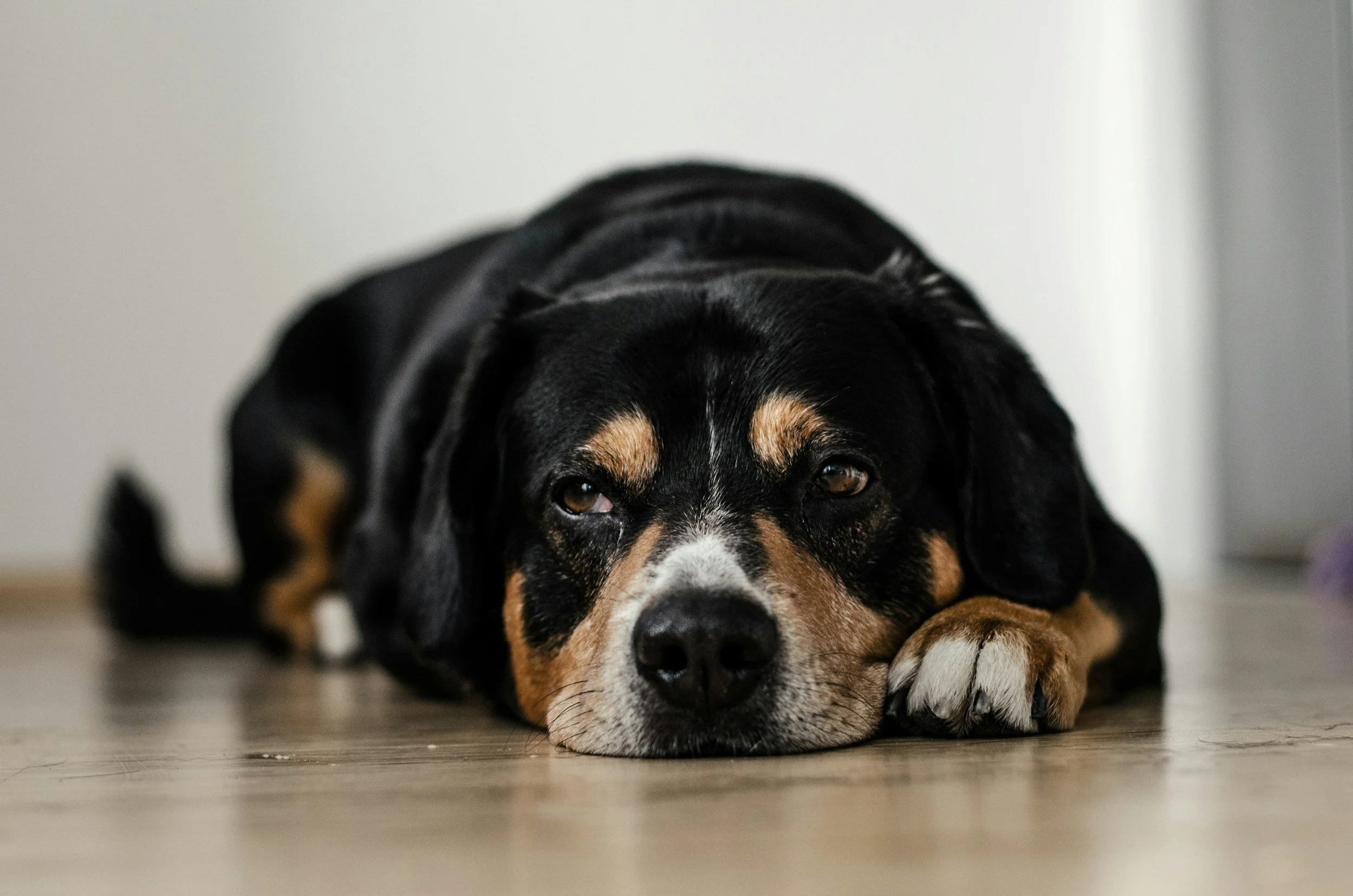
And the pet parent is left wondering:
Was it the food?
Was it the treat?
Was it the weather?
Was it stress?
Was it everything?
Often, yes. That is the annoying answer.
Stress does not stay in the brain. The gut hears it. The immune system hears it. The skin hears it. The pancreas hears it. The nervous system hears it. The body is not a collection of separate departments that never talk to each other. It is one connected system, and stress can absolutely tip a sensitive dog into a flare.
What Do I Mean by a “Flare”?
A flare is when symptoms suddenly increase, return, or intensify after a trigger.
For some dogs, that flare looks digestive:
• Vomiting
• Loose stool
• Diarrhea
• Mucus in stool
• Colitis
• Gastritis
• Reflux
• Lip licking
• Grass eating
• Gas or gurgling
• Appetite changes
• Pancreatitis symptoms
For other dogs, stress shows up through the skin:
• Itching
• Paw licking
• Red belly or armpits
• Ear irritation
• Yeast overgrowth
• Hot spots
• Hives
• Coat dullness
• Skin odor
Some dogs flare emotionally or neurologically:
• Anxiety
• Reactivity
• Restlessness
• Sleep disruption
• Noise sensitivity
• Pacing
• Trembling
• Seizure threshold changes
• Compulsive licking or chewing
And some dogs do a little bit of everything because apparently they like to keep us humble.
A flare is information. It tells us the body hit a threshold.
Stress Does Not Have to Be “Bad” to Affect the Body
This is where pet parents often miss the connection.
Stress is not only trauma, fear, or panic. Stress can be excitement, change, travel, overstimulation, heat, cold, pain, lack of sleep, too much activity, too little routine, new people, new dogs, or even a fun vacation.
Yes, even fun can be stressful to the body.
Your dog may enjoy the beach trip, the family visit, the holiday weekend, or the new puppy — and still have a nervous system and digestive system that are completely over it.
That is not drama. That is physiology.
Why Stress Can Trigger Gut Flares
The gut and nervous system are deeply connected. When a dog is stressed, the body shifts resources toward survival and away from calm digestion.
That can affect:
• Stomach acid
• Motility
• Bile flow
• Enzyme output
• Gut barrier function
• Microbiome balance
• Immune activity in the gut
• Inflammatory response
• Appetite and nausea patterns
This is why some dogs get stress colitis after boarding, travel, grooming, vet visits, thunderstorms, or schedule changes.
The dog did not magically become allergic to Tuesday. Their nervous system and gut got pushed past their tolerance.
Stress-related gut flares may show up as:
• Mucus in stool
• Urgency
• Loose stool
• Diarrhea
• Blood-streaked stool
• Gas
• Nausea
• Reflux
• Vomiting
• Refusing food
• Eating grass
• Pancreatic sensitivity
This is also why I do not love the automatic “just give chicken and rice” advice. That may calm some dogs temporarily, but it does not rebuild the gut, restore the microbiome, address nervous system stress, support enzymes, or tell us why the dog keeps flaring.
Chicken and rice is not a gut healing plan. It is a pause button with carbs.
Stress, Pancreatitis, and Digestive Fragility
Pancreatitis dogs are a perfect example of why stress matters.
Most pet parents are told to watch fat. That is fair. Fat can be a major trigger for many pancreatitis dogs.
But fat is not the whole story.
A pancreatitis dog may also flare when stress affects digestion, appetite, bile flow, inflammation, hydration, sleep, gut motility, and enzyme demand. Add a schedule change, travel, boarding, a dropped treat, a heat wave, and poor sleep — and suddenly the pancreas is not amused.
If your dog has chronic pancreatitis, stress may lower the threshold for a flare.
That does not mean every flare is “just stress.” It means stress may be one of the pieces that pushes the dog over the edge.
This is why I want to know what happened in the days before the flare, not just what the dog ate five minutes before vomiting.
Even the season of the year.
Stress, Gastritis, and Reflux
Some dogs flare with gastritis or reflux after stress.
They may start:
• Lip licking
• Burping
• Swallowing hard
• Vomiting bile
• Eating grass
• Refusing breakfast
• Acting hungry but walking away
• Pacing at night
• Looking uncomfortable after meals
This is where pet parents often chase food changes without recognizing the stress pattern.
The dog may need food adjustments, yes. But we also need to look at meal timing, stomach comfort, bile patterns, nervous system regulation, gut lining support, hydration, and what the dog’s body does when routine disappears.
The stomach does not love chaos. Some dogs need rhythm like a tiny furry accountant.
Stress and Allergies: Why Itchy Dogs Flare When Life Gets Loud
Allergy dogs are another big one.
A dog may be doing better, then suddenly after boarding, grooming, travel, pollen season, heat, humidity, or a stressful event, the itching explodes.
That does not mean the allergy plan “failed overnight.” It may mean the dog’s inflammatory bucket overflowed.
Stress can influence immune response, skin barrier function, gut balance, histamine patterns, and inflammation. If the dog already has food intolerance, environmental allergies, yeast, gut imbalance, or a weak skin barrier, stress can tip the whole system.
That is why the same dog may be itchier during:
• Spring pollen season
• Summer heat and humidity
• Fall mold and ragweed shifts
• Winter dryness
• Holiday chaos
• Boarding or travel
• Grooming appointments
• Fireworks season
• Household changes
The skin is not separate from the gut, immune system, liver, nervous system, and environment. If the plan only turns down itching but does not support the deeper pattern, the dog may remain reactive.
The Inflammatory Bucket
I like the bucket analogy because it makes sense.
Your dog may be carrying multiple stressors at once:
• Processed food
• Food intolerance
• Poor gut health
• Microbiome damage
• Antibiotic history
• Steroid history
• Flea/tick chemicals
• Vaccination stress
• Pain
• Poor sleep
• Anxiety
• Heat or humidity
• Seasonal allergens
• Mold exposure
• Digestive weakness
• Poor mineral status
• Chronic inflammation
One stressor may not cause a flare by itself.
But stack enough of them, and the bucket spills.
Then everyone blames the last thing that happened.
“The dog ate cheese.”
“The dog went to boarding.”
“The dog had a bath.”
“The dog changed food.”
“The weather changed.”
Maybe. But sometimes the last thing was just the final drop.
TCVM Patterns: Stress Does Not Look the Same in Every Dog
This is where TCVM can help us think more clearly.
From a Traditional Chinese Veterinary Medicine perspective, stress flares are not all the same pattern.
One dog may run hot and inflamed. Another may be damp and yeasty. Another may be deficient and depleted. Another may have stagnation, digestive weakness, or liver/gallbladder involvement.
TCVM patterns may include:
• Liver Qi stagnation, where stress affects flow, digestion, mood, and tension
• Spleen Qi deficiency, where digestion is weak and the dog is prone to loose stool, fatigue, dampness, or poor nutrient use
• Damp heat, where inflammation, yeast, odor, greasy skin, loose stool, or ear issues show up
• Stomach heat, where reflux, nausea, hunger, restlessness, or vomiting may appear
• Yin deficiency, where the dog may be dry, restless, hot at night, or inflamed in a more depleted way
• Kidney deficiency in older dogs, where resilience, recovery, temperature regulation, and vitality may be lower
This does not replace veterinary diagnostics. It gives us another lens.
Two dogs can both have diarrhea after boarding, but one may need gut lining and nervous system support, another may need microbiome rebuilding, another may need enzyme support, and another may need TCVM pattern support for heat, dampness, stagnation, or deficiency.
Same symptom does not mean same plan.
Seasons Can Change the Pattern
Some dogs flare seasonally because the environment changes the body’s workload.
Spring may bring pollen, wind, new growth, and more environmental allergy pressure.
Summer may bring heat, humidity, fleas, ticks, yeast, hot spots, dehydration, and more outdoor exposure.
Late summer and fall may bring ragweed, mold, dampness, hurricanes, leaf litter, and skin or ear flares.
Winter may bring dryness, less movement, more indoor toxins, holiday food mistakes, and stiffness or pain.
From a TCVM lens, seasons can also highlight patterns already living in the dog. Heat-prone dogs may struggle more in summer. Damp dogs may flare with humidity. Deficient older dogs may struggle in winter. Windy seasonal shifts may stir itching, restlessness, or sudden symptom changes.
The season is not always the root cause. Sometimes it exposes the weakness.
That is a different way to think.
The Nervous System Is Part of the Plan
If your dog flares after stress, we cannot ignore the nervous system.
This does not mean the problem is “all in their head.” I truly dislike that phrase. The nervous system is physical. It influences digestion, immune response, sleep, pain, inflammation, and recovery.
A dog living in fight-or-flight mode may not digest well, detox well, sleep deeply, regulate immune response, or recover quickly.
This is why I look at:
• Anxiety
• Reactivity
• Noise sensitivity
• Pain
• Sleep
• Routine
• Exercise balance
• Overstimulation
• Household stress
• Training stress
• Gut-brain connection
• Mineral status
• Vagus nerve support
• Bodywork and touch tolerance
If the dog is constantly braced for impact, the body is not in its best healing state.
What Conventional Care May Miss
Conventional care can be very useful.
Your vet is important for diagnostics, lab work, imaging, medications, pain control, anti-nausea support, fluids, allergy medication, infection treatment, seizure management, and emergency care.
But pet parents are often left with incomplete guidance after the crisis is handled.
They may be told:
• “It was probably stress.”
• “Use this bland diet.”
• “Stay on this prescription food.”
• “Give this medication when it happens.”
• “Avoid the trigger.”
• “Come back if it gets worse.”
That may help in the short term.
But if stress keeps triggering flares, the dog needs more than a reaction plan.
We need to ask why the body cannot handle normal life without falling apart.
What I Want to Know Before Building a Plan
Before I recommend a strategy for a dog who flares after stress, I want the details.
I want to know:
• What kind of flare happens — gut, skin, pancreas, anxiety, seizures, pain, ears, urinary, or all of the above?
• How soon after stress do symptoms appear?
• How long do they last?
• What season is it?
• What was the weather like?
• Did food, treats, chews, toppers, oils, or scraps change?
• Was there boarding, grooming, travel, vaccination, medication, pest prevention, anesthesia, or antibiotics?
• What does the stool look like?
• Is there mucus, blood, grease, yellow stool, pale stool, or undigested food?
• Is there nausea, reflux, bile vomiting, or appetite change?
• Is the dog itchy, yeasty, hot, damp, dry, or inflamed?
• Is the dog anxious, reactive, restless, noise-sensitive, or painful?
• Are there lab trends involving liver, pancreas, thyroid, adrenals, kidneys, glucose, triglycerides, B12, or inflammation?
• What medications and supplements are already being used?
• What is the current diet really made of?
Most people answer the question they are asked.
What they often need is someone who asks the questions they did not know to ask.
Natural Support Categories I May Consider
This is not a public protocol. The right support depends on the dog’s case, medications, diagnosis, organ function, diet history, and tolerance.
But when stress triggers flares, I may think about support in categories such as:
• Fresh food nutrition
• Digestive enzymes
• Gut lining support
• Microbiome support
• Liver and gallbladder support
• Minerals and electrolytes
• Omega-3 strategy when appropriate
• Herbs for stress, digestion, inflammation, or immune balance
• Homeopathy
• Essential oils
• CBD
• Medicinal mushrooms
• PEMF
• Reiki
• Massage or bodywork
• Vagus nerve and nervous system support
• TCVM pattern support
• Environmental changes
• Testing when needed
The goal is not to throw all the things at the dog. That is not a plan. That is a shopping cart with anxiety.
The goal is to choose the right support for the dog in front of us.
When a Stress Flare Needs the Vet
Home support has a place, but do not wait too long when symptoms are serious.
Please contact your veterinarian or emergency vet if your dog has:
• Repeated vomiting
• Severe diarrhea
• Blood in stool
• Signs of pancreatitis
• Abdominal pain
• Prayer position with distress
• Refusal to eat with lethargy
• Weakness or collapse
• Pale gums
• Fever
• Dehydration
• Trouble breathing
• Repeated seizures
• Suspected bloat
• Urinary blockage signs
• Sudden severe pain
• A rapid decline after stress or travel
Your vet can help with diagnosis, stabilization, pain control, nausea support, fluids, imaging, labs, and medications when needed.
Then, once the dog is stable, we can work on the deeper support plan.
The Real Question Is Not “Was It Stress?”
Sometimes pet parents ask, “Can stress really cause all of this?”
My answer is: stress can absolutely be part of it.
But I do not want to stop there.
The better question is:
Why does this dog’s body flare when stressed?
That question opens the door to digestion, inflammation, microbiome health, immune balance, nutrition, minerals, nervous system regulation, pain, seasonal patterns, TCVM patterns, and whole-dog support.
That is where the deeper work lives.
This Is Where Personalized Support Helps
If your dog flares every time life changes, the answer is probably not one random supplement, one bland meal, or one more Facebook suggestion from someone whose dog is nothing like yours.
Same symptom does not mean same plan.
A dog with stress colitis may need a different strategy than a dog with pancreatitis. An itchy dog with damp heat and yeast may need a different plan than a dry, itchy, inflamed senior. A reflux dog with liver/gallbladder clues may need a different approach than a dog with anxiety-driven nausea.
The goal is not to bubble-wrap your dog forever.
The goal is to help the body become less reactive, more supported, and better able to recover when life gets messy — because life will get messy.
Submit an inquiry and let’s see what I can do to help. No obligation — the inquiry callback is no cost to you.
About the Author
Written by Dana Brigman, Holistic Pet Health Coach and Canine Nutritionist at The Well Oiled K9. Dana helps dog parents look beyond generic advice and build personalized nutrition and natural wellness plans using fresh food, digestive support, herbs, essential oils, homeopathy, TCVM-informed assessment, and whole-dog strategy.
Related Content: dog diarrhea after stress, dog colitis after boarding, dog vomiting after stress, dog pancreatitis flare after stress, dog itching after stress, dog allergies worse after stress, dog reflux after stress, dog gastritis after stress, dog stress colitis, dog flares after grooming, dog flare after vacation, dog seasonal allergies and stress, dog gut health and stress, TCVM patterns in dogs, dog inflammation after stress