How a Holistic Pet Health Coach Thinks Differently About Your Dog's Health
If you’ve worked with me before, you’ve probably noticed something pretty quickly.
You come to me with a diagnosis like allergies, pancreatitis, kidney disease, anxiety, seizures, arthritis, cancer, chronic ear infections, or digestive issues.
And then I start asking questions that seem like I took a wrong turn.
Does your dog love laying in the sun? Do they seek the cold tile floor? Are they always thirsty? What does their stool usually look like? Are they anxious by nature? Do they prefer winter or summer? Can I see a picture of their tongue? Or their eyes.
I know. It can feel like you came to talk about pancreatitis and I wandered off into your dog’s personality profile.
But I promise there is a reason.
I’m not asking random questions because I enjoy making intake forms longer. I’m asking because your dog’s diagnosis is only one part of the story.
You Bring the Diagnosis. I Help Build the Plan.
I do not diagnose disease. That is your veterinarian’s role.
Many pet parents come to me after their veterinarian has already diagnosed something, and they are looking for help with the next layer: food, supplements, herbs, essential oils, lifestyle changes, recovery support, or simply understanding why their dog is not improving the way they hoped.
Other times, something in the dog’s history raises a red flag for me, and I may recommend additional veterinary testing before we go further. Blood work, imaging, urinalysis, cultures, biopsies, and other diagnostics often give us information we simply should not guess about.
The diagnosis gives us a name.
My work starts with the next question.
Now what?
How do we support this dog, not just this diagnosis?
That is where the whole-dog work begins.
When the Vet Has Not Found a Clear Answer
Sometimes the frustrating part is that there is no clean diagnosis.
The blood work is “normal,” but your dog is not.
The vet ruled out the big scary stuff, but the itching, nausea, stool issues, anxiety, pain, low energy, or odd symptoms are still hanging around like an unwanted houseguest.
Or maybe there was a diagnosis, but the standard plan did not work, did not stick, or only helped for a short time before the symptoms crept back in.
This is where pattern work can be extremely helpful.
TCVM does not replace veterinary diagnostics, and it should never be used to ignore symptoms that need medical care. But when the obvious answers are not obvious, it can help us ask better questions.
Sometimes the next step is a food change.
Sometimes it is deeper gut support.
Sometimes it is asking for more labs.
Sometimes it is looping in a holistic veterinarian.
The point is not to force your dog into a label. The point is to stop wandering in circles.
What Is TCVM?
Traditional Chinese Veterinary Medicine, or TCVM, is a system of veterinary medicine that looks at how the body functions as a whole.
It is not an either/or situation.
I am not asking you to choose between your veterinarian and holistic care. I believe dogs often do best when we use the strengths of both.
Your vet helps with diagnostics, emergency care, pain control, imaging, labs, prescriptions, surgery, and medical management.
I help you look at the daily pieces that often shape the healing process: food, digestion, inflammation, stress, environment, supplements, herbs, essential oils, patterns, and how your dog is actually responding.
Veterinary diagnostics help tell us what is happening.
TCVM can help us understand why this particular dog may be struggling and where support may need to go.
TCVM Is Pattern Recognition
TCVM uses words that can sound a little odd at first.
Heat. Cold. Dampness. Dryness. Deficiency. Stagnation. Excess.
These are not just about body temperature. They are ways of describing how the body behaves over time.
A dog with a lot of Heat may pant often, seek cool floors, have red itchy skin, drink more water, act restless, or seem easily irritated.
A dog with more Cold or Deficiency may seek warmth, move slowly, tire easily, have weaker digestion, or struggle more in cold weather.
Same diagnosis.
Different dog.
Different direction.
And that direction changes the plan.
Why Two Dogs With the Same Diagnosis May Need Different Support
This is one of the biggest reasons I bring up TCVM so often.
Two dogs can both have allergies, pancreatitis, arthritis, kidney disease, anxiety, or cancer.
But they may not need the same food, herbs, supplements, essential oils, or lifestyle changes.
One dog may be inflamed, hot, itchy, restless, and reactive.
Another may be depleted, cold, sluggish, nauseous, and sensitive.
If we only treat the diagnosis, we miss the dog.
And when we miss the dog, we usually end up guessing.
That is where pet parents get stuck buying one supplement after another, changing foods over and over, trying the thing that worked for someone else’s dog, and wondering why nothing seems to land.
How TCVM Helps Narrow the Plan
This is where TCVM becomes practical.
Once we start seeing a pattern, we can make better choices instead of grabbing random products and hoping something works.
A dog showing a lot of Heat signs may not do well with the same food, herbs, or oils as a dog who is cold, sluggish, deficient, or weak in digestion.
That may influence which proteins I consider first, whether warming or cooling foods make more sense, which vegetables may fit the dog better, and whether we need to focus first on digestion, liver and gallbladder support, inflammation, minerals, gut lining, immune balance, or the nervous system.
It may also help narrow which herbs, supplements, or essential oils make sense and which ones may be poorly timed, unnecessary, or not a good fit for that dog right now.
This does not mean we guess harder.
It means we guess less.
TCVM helps narrow the field so we are not throwing the whole supplement cabinet at your dog and calling it a plan.
The Energy of Food
This is also why I talk about the energy of food.
I have a full blog on that topic because it deserves its own conversation.
In TCVM, food is not only viewed by protein, fat, carbs, calories, vitamins, and minerals. Foods can also be warming, cooling, neutral, drying, moistening, moving, or nourishing.
That does not replace nutrition science.
It adds another layer.
This is why I may choose one protein over another, rotate certain vegetables, avoid certain ingredients during a flare, or use food to support the direction we want the body to move.
For some dogs, this is the piece that finally makes the diet make sense.
Like Supports Like
Another concept that can show up in this work is “like supports like.”
That does not mean we ignore safety, dosing, medications, organ function, lab work, or common sense. It simply means the body may respond well to something that energetically or biologically mirrors what it is trying to process, clear, rebuild, or regulate.
You may see this concept in homeopathy, glandular support, certain food choices, organ meats, tissue-specific nutrients, and even how animals self-select plants or natural substances.
Again, this is not random.
We look at the dog, the pattern, the diagnosis, the history, and the goal. Then we choose the direction that makes the most sense.
The Questions I Ask Are Not Random
When I ask about your dog’s appetite, water intake, stool, nausea, energy, personality, sleep habits, anxiety, temperature preferences, skin, coat, tongue, gums, diet history, treats, medications, supplements, stress, weight changes, muscle loss, lab trends, and other diagnoses, I am not trying to make things complicated.
I am trying to understand the full picture.
Most pet parents answer the question they are asked.
My job is to ask the questions you did not know might matter.
That is often where the useful information is hiding.
Every Dog Has A Constitution
Every dog has a natural constitution. (Take the Quiz and Find Yours)
Some dogs are intense and driven. Some are sensitive and cautious. Some are easygoing. Some worry about everything. Some run hot. Some run cold. Some are sturdy little tanks. Some fall apart if you change breakfast by three kibbles.
Those tendencies do not automatically mean something is wrong.
They help me understand how your dog handles stress, inflammation, aging, digestion, illness, and recovery.
I am not trying to label your dog.
I am trying to understand them.
Because understanding the individual almost always leads to better decisions than treating the diagnosis alone.
Sometimes We Let the Dog Weigh In
Once TCVM helps narrow the direction, we may have a few reasonable options to consider.
Other times, we are still dealing with a dog who does not fit neatly into a box because bodies are rude like that.
That is where I may use additional tools like muscle testing, intuition, experience, and observation to help choose where to start.
This is not a replacement for diagnostics. It is not a party trick. It is another way to reduce the guessing.
I may also use the concept of zoopharmacognosy, which is the study of how animals self-select plants, essential oils, minerals, clays, herbs, or other natural substances to support themselves. Don’t worry if you don’t know anything about these modalities. I can teach you!
In plain English, sometimes we let the dog show us what they are drawn to and what they reject.
That does not mean we put ten bottles on the floor and let chaos drive the bus.
It means we offer appropriate options, watch the dog’s response, and use that information along with the history, symptoms, labs, medications, diet, and current goals.
Sometimes the dog’s response confirms what we already suspected.
Sometimes it tells us to pause.
Sometimes it helps us choose between several good options.
And honestly, that can save a lot of time, money, and frustration.
Healing Is Rarely About One Thing
One supplement rarely changes everything.
Neither does one prescription.
Or one food.
Or one herb.
Healing usually comes from stacking the right pieces together.
Better nutrition. Better digestion. Microbiome support. Inflammation support. Pain control when needed. Nervous system support. Stress reduction. Better hydration. Cleaner ingredients. Environmental changes. Appropriate exercise. Rest. Recovery. Veterinary care. Natural support.
When we improve enough pieces of the puzzle, the body often has a much better chance to do what it was designed to do.
Healing takes time! It happens from the inside out. In reverse order of how the symptoms developed. And let me clear — it sometimes gets worse before it gets better. Which is why you need help with the plan and the process when it starts to look like you’re going to panic.
When the Case Needs More Support
Some dogs need a bigger team.
I am not a trained TCVM veterinarian. I wish I could go to the CHI institute. But I do learn from them and loop them in when needed!
If we hit a point where your dog needs additional diagnostics, prescriptions, acupuncture, chiropractic care, advanced TCVM work, or therapies beyond my scope, I may recommend looping in a holistic veterinarian.
Sometimes that vet becomes part of the team.
Sometimes they need to take the lead.
And when a case feels especially stuck, layered, emotional, or energetically heavy, I may also bring in additional support such as quantum healing work from Dr. Barb Fox.
No, I do not consider that “woo.”
I consider it another layer of support when the basics have been addressed and the dog may need help beyond food, supplements, and herbs alone.
The goal is always the same: stop guessing, support the dog in front of us, and use the right tools at the right time.
Working Together Often Gives Dogs the Best Chance
I believe veterinary medicine and holistic care work best together, not in competition.
Your veterinarian provides diagnostics, emergency care, surgery when needed, prescription medications, and ongoing medical management.
I help you make sense of the day-to-day decisions that often determine how well your dog lives with that diagnosis.
We look at nutrition, food choices, supplements, herbs, essential oils, lifestyle, environmental factors, gut health, stress, patterns, and the many little details that do not always fit into a routine office visit.
My goal is not to replace your veterinarian.
My goal is to help your dog benefit from the strengths of both worlds.
Why You Will Keep Hearing Me Talk About TCVM
TCVM changed the way I think.
It taught me to stop chasing diagnoses and start understanding dogs.
It taught me that symptoms rarely exist in isolation.
It taught me that two dogs with the same disease may need very different support.
Most of all, it taught me that asking better questions usually leads to better answers.
That is why you will continue to hear me talk about constitutions, patterns, food energetics, stress, personality, tongue pictures, and the bigger picture.
Because your dog is far more than a diagnosis on a medical record.
And I believe they deserve a plan that is just as individual as they are.
Ready to Look Beyond the Diagnosis?
If your dog has already been diagnosed and you are wondering what else you can do to support healing, or if you are not sure whether it is time to pursue additional veterinary testing, I would be happy to help you think through the next steps.
"My goal isn't to find every possible answer. It's to narrow the field. After looking at your dog's diagnosis, history, constitution, TCVM pattern, food energetics, lab work, lifestyle, and everything else we've discussed, we often go from dozens of possibilities to just a few logical starting points. From there, experience, observation, muscle testing, and sometimes even letting the dog participate through zoopharmacognosy can help us choose the best place to begin."
Sometimes all it takes is asking a few different questions to uncover opportunities that have been overlooked.
Submit an inquiry and let’s see what I can do to help. No obligation — the inquiry callback is no cost to you.
https://welloiledk9.com/questionnaire
Want more education, Q&A, and support?
https://community.welloiledk9.com
Related Content
What Is Food Energetics for Dogs?
Why Working With a Certified Canine Nutritionist Can Change Everything for Your Dog’s Health
Why There Is Not One Right Answer in Dog Health
Holistic Support for Dog Allergies — ask me for my guides too.
Holistic Support for Dogs With Digestive Issues — ask me for my guides for specific conditions.
Holistic Support for Dog Anxiety — ask me for my guides.
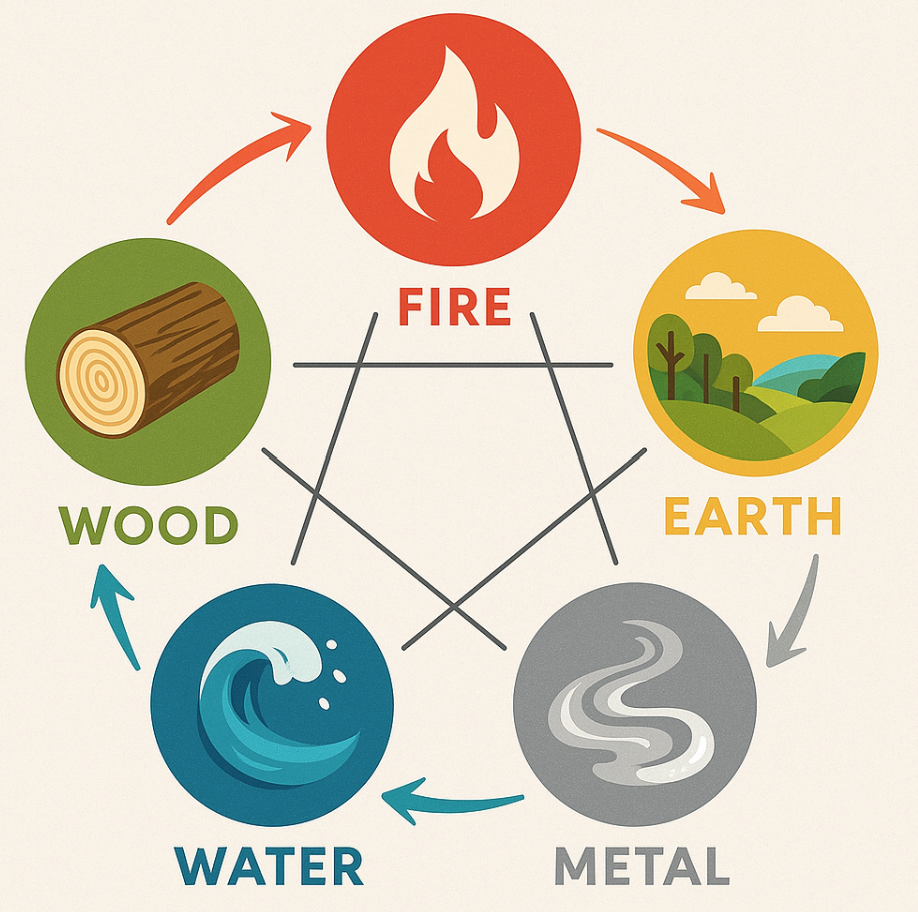
Get started learning about the 5 Elements — Earth