
Earth Element Dogs: TCVM Support for Digestion, Dampness, Yeast, Worry, and Seasonal Transitions
Take the Quiz:https://welloiledk9.com/downloads
Late Summer, the Earth Element, and Your Dog’s Center
Late summer is the season of warmth, humidity, harvest, nourishment, and transition.
It is that in-between season when the intensity of summer starts to soften, but autumn has not fully arrived. The air may feel heavy. The ground may feel damp. Dogs may be a little slower, digestion may get touchy, allergies may still be hanging around like an unwanted houseguest, and some dogs may feel a bit emotionally needy or unsettled.
In TCVM, Earth is most strongly associated with late summer, the season of harvest, nourishment, humidity, and digestion. But Earth also appears during the transitional periods between all seasons — those roughly two-week windows when the body is shifting from one energetic season into another.
This is why Earth dogs may struggle not only in late summer, but also during seasonal transitions: spring into summer, summer into autumn, autumn into winter, and winter into spring.
The Earth Element is associated with:
Digestion
Nourishment
Stability
Muscle tone
The Spleen
The Stomach
Dampness
Worry
Overthinking
Grounding
Routine
Caregiving
Feeling safe and supported
When Earth is balanced, a dog feels grounded, nourished, steady, and comfortable in their body.
When Earth becomes imbalanced, you may see digestive issues, loose stool, mucus in stool, weight changes, low muscle tone, food sensitivities, damp skin issues, lethargy, worry, clinginess, or a dog who seems emotionally unsettled.
Earth dogs often want comfort, routine, food, connection, and reassurance.
Basically, the dog version of “I brought snacks, but also I need emotional support.”
What Is an Earth Dog in TCVM?
In TCVM 5 Element Theory, every dog has constitutional tendencies. These tendencies can influence personality, behavior, physical vulnerabilities, seasonal patterns, and how the dog responds to stress.
An Earth dog often has a sweet, nurturing, steady, affectionate, food-loving quality.
These are often the dogs who want to be close, keep everyone together, supervise the household, and make sure nobody is skipping snack time. They may be wonderful family dogs, emotionally intuitive companions, and natural comforters.
Balanced Earth dogs are grounded, loyal, easygoing, and nurturing.
Unbalanced Earth dogs may become worried, clingy, sluggish, damp, heavy, obsessive about food, or digestively sensitive.
Earth dogs are often emotionally generous.
But when they are out of balance, they may absorb the stress of the home like a furry little sponge.
The Personality of an Earth Dog
Earth dogs tend to be steady, affectionate, and relationship-oriented.
They often like predictable routines, familiar people, cozy spaces, and regular meals. They may be sensitive to tension in the home and may try to soothe others.
Common Earth dog traits may include:
Sweetness
Loyalty
Nurturing behavior
Strong food motivation
Affectionate personality
Desire for routine
Desire to be near their people
Sensitivity to household stress
Easygoing temperament when balanced
Tendency toward worry when unbalanced
Comfort-seeking behavior
Love of cozy spaces
Strong connection to family
A balanced Earth dog feels like home.
An unbalanced Earth dog may feel stuck, heavy, needy, worried, or physically bogged down.
Earth dogs do not always “act out” dramatically. Sometimes they just get mushy — emotionally, physically, digestively, or all three.
The Spleen and Stomach in TCVM
The Earth Element corresponds with the Spleen and Stomach.
In TCVM, the Spleen is not viewed only through the conventional anatomy lens. It is connected to digestion, transformation, transportation of nutrients, muscle tone, energy production, and keeping things in their proper place.
The Stomach receives food and begins the digestive process. Together, the Spleen and Stomach are central to nourishment.
This is why Earth imbalance often shows up through digestion, appetite, stool quality, energy, muscles, weight, and emotional steadiness.
A dog with Earth imbalance may have:
Loose stool
Mucus in stool
Gas
Gurgly belly
Vomiting
Food sensitivities
Low appetite or excessive appetite
Weight gain
Weight loss
Poor muscle tone
Fatigue
Damp skin issues
Worry or clinginess
The Earth Element is about what the body takes in, transforms, and uses.
That includes food.
It also includes emotional input.
Some dogs digest stress about as well as they digest cheap kibble. Which is to say, not great.
Signs Your Dog May Be an Earth Dog
Your dog may have an Earth constitution if they are nurturing, affectionate, food-focused, routine-loving, and emotionally tuned in to the family.
Earth dogs often want everyone together. They may follow their people from room to room, lean into touch, seek comfort, or become concerned when the household feels chaotic.
Common Earth dog signs include:
Strong food motivation
Love of routine
Sweet and affectionate nature
Desire for closeness
Sensitivity to family stress
Tendency toward digestive issues
Loose stool during emotional stress
Weight gain tendency
Soft body condition
Lower muscle tone
Damp or yeasty skin patterns
Worry or clinginess
Need for reassurance
Lethargy in humid weather
A balanced Earth dog is comforting and steady.
An unbalanced Earth dog may become heavy, damp, worried, clingy, sluggish, or digestively messy.
Earth Element Imbalance in Dogs
Earth imbalance often shows up as Spleen Qi deficiency, dampness, phlegm, or Stomach disharmony.
In pet-parent language, this often looks like poor digestion, loose stool, mucus, food sensitivity, low muscle tone, fatigue, weight problems, yeast, damp skin, or emotional worry.
Spleen Qi Deficiency in Dogs
Spleen Qi deficiency is one of the most common Earth patterns.
This is the dog whose digestion and energy production are not keeping up well.
Signs may include:
Loose stool
Frequent soft stool
Mucus in stool
Gas
Gurgly belly
Poor appetite
Picky eating
Fatigue after meals
Low stamina
Weakness
Poor muscle tone
Weight loss despite eating
Difficulty gaining muscle
Pale tongue
Increased need for rest
Worry or clinginess
These dogs often need warm, simple, digestible food and a steady routine.
They usually do not thrive on cold, random, overly complicated feeding plans.
Their gut is already waving a white flag. Do not throw a buffet at it.
Dampness in Dogs
Dampness is a major Earth pattern.
Dampness can feel like heaviness, stagnation, fluid accumulation, mucus, greasiness, or that “bogged down” quality in the body.
Signs of dampness may include:
Mucus in stool
Greasy coat
Yeasty smell
Ear gunk
Paw licking
Heavy body condition
Weight gain
Lethargy
Sluggishness
Lipomas
Excessive drooling
Chronic soft stool
Damp skin folds
Hot spots with moisture
Anal gland issues
Thick discharge
Damp dogs often look like their body is not efficiently transforming and moving fluids.
They may feel puffy, heavy, sticky, yeasty, or chronically inflamed.
This is where diet becomes a big deal.
A damp dog eating a high-starch, ultra-processed diet is usually not going to magically dry out and thrive.
Phlegm in Dogs
In TCVM, phlegm is often considered a more congealed form of dampness.
This does not only mean mucus in the throat. Phlegm patterns can show up in many ways.
Signs may include:
Lipomas
Thick mucus
Chronic congestion
Cysts
Fatty masses
Heavy body condition
Brain fog or dullness
Seizure tendencies in some patterns
Chronic damp skin issues
Phlegm often tells us that dampness has been present for a while.
This is not usually fixed with one supplement and a prayer.
Stomach Disharmony in Dogs
The Stomach prefers things to move downward.
When that normal flow is disrupted, dogs may show upper digestive symptoms.
Signs may include:
Vomiting
Nausea
Burping
Reflux
Grass eating
Lip licking
Drooling
Food refusal
Gurgling
Restlessness after eating
Sensitivity to rich foods
Some dogs with Stomach disharmony do better with smaller meals, warm foods, simple ingredients, and a slower transition plan.
Why Late Summer Can Be Hard on Earth Dogs
Late summer often brings heat, humidity, environmental allergens, dampness, and digestive stress.
For Earth dogs, this season can amplify patterns that were already present.
You may notice:
More loose stool
More mucus in stool
More yeast
More ear issues
More paw licking
More lethargy
More weight gain
More food sensitivity
More clinginess
More worry
More sluggish digestion
More skin dampness
More anal gland issues
Humidity can make dampness worse.
Heat can make inflammation worse.
Seasonal changes can make digestion and emotions more sensitive.
And if the dog is already eating a diet that does not support the gut, late summer can turn a small issue into a full-blown swamp festival.
No one wants a swamp festival.
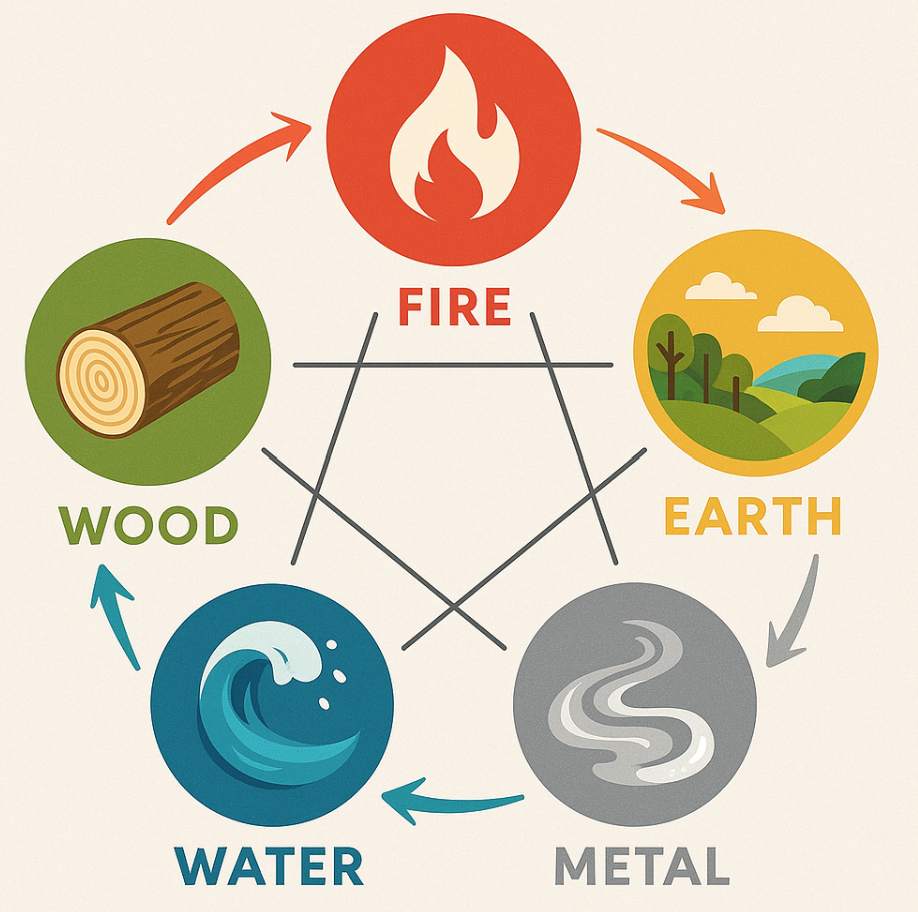
The Influence of Fire on Earth
In the Five Element cycle, Fire creates Earth.
This relationship is important.
Fire represents warmth, joy, circulation, emotional connection, and transformation. In balance, Fire helps Earth by providing warmth and energy for digestion, nourishment, and emotional connection.
Think of a fire cooking food.
Without enough warmth, food stays cold and hard to transform.
In dogs, healthy Fire supports the digestive process, circulation, emotional warmth, and the ability to feel connected and secure.
But excess Fire can overwhelm Earth.
Too much heat, stimulation, anxiety, inflammation, or emotional intensity can disrupt digestion and create more damp-heat patterns.
This may show up as:
Stress diarrhea
Loose stool after excitement
Red, inflamed skin with dampness
Hot, yeasty ears
Panting with digestive upset
Anxiety affecting appetite
Restlessness after meals
Heat worsening GI symptoms
Emotional intensity leading to stomach upset
Increased thirst with damp or inflamed skin
Overexcitement followed by exhaustion
This is one reason a dog may show both Fire and Earth patterns.
For example, a dog may be anxious, clingy, restless, and overheated from Fire imbalance while also showing loose stool, mucus, yeast, weight gain, or food sensitivity from Earth imbalance.
Fire can help Earth transform.
But too much Fire can cook the system too hard and create inflammation, damp-heat, and digestive chaos.
A little warmth helps digestion.
A wildfire does not.
When Fire and Earth Overlap
Fire and Earth overlap often shows up in dogs who are emotionally sensitive and digestively reactive.
You may see:
Anxiety with diarrhea
Excitement causing loose stool
Clinginess with digestive upset
Heat intolerance with yeast
Red inflamed ears with damp discharge
Restlessness with reflux
Panting with nausea
Overstimulation followed by fatigue
Skin inflammation with greasiness or odor
Worry that worsens appetite or stool
This is common in dogs who are sensitive, food-reactive, overfed, undernourished, chronically inflamed, or living in a high-stress home.
The gut and emotions are not separate.
The dog who gets diarrhea after visitors, daycare, thunderstorms, travel, grooming, or conflict in the home is telling you something.
The gut is part of the nervous system conversation.
And sometimes it is not whispering.
The Influence of Wood on Earth
In the control cycle, Wood controls Earth.
This also matters.
When Wood is balanced, it helps Earth maintain movement and direction. It prevents stagnation. It keeps digestion from getting too stuck or sluggish.
But when Wood is excessive, frustrated, stagnant, or hot, it can over-control Earth.
In dogs, Wood overacting on Earth may show up as stress directly affecting digestion.
You may see:
Stress colitis
Diarrhea after frustration
Vomiting during stress
Appetite changes with anxiety
Digestive upset after reactivity
Loose stool after training stress
Gut flares during household tension
Irritability with stomach symptoms
Skin flare-ups with digestive upset
This is the classic dog whose stomach gets wrecked by stress.
The Liver/Wood system gets tense, frustrated, or stagnant, and Earth digestion takes the hit.
This is why some digestive cases need more than probiotics and pumpkin.
They need emotional regulation, nervous system support, movement, structure, and Liver flow.
Digestion and the Earth Element
Digestion is the center of Earth Element care.
If the gut is not working well, everything else becomes harder.
Your dog may struggle with:
Nutrient absorption
Energy production
Immune balance
Skin health
Muscle tone
Emotional steadiness
Detoxification
Weight regulation
This is why I start with food so often.
Not because food is trendy.
Because the gut is the foundation.
A dog with chronic loose stool, yeast, allergies, low muscle tone, or food sensitivities needs a deeper look at digestion.
And no, a prescription diet with questionable ingredients is not always the grand solution. Sometimes it is just a beige Band-Aid.
Food Sensitivities and Earth Dogs
Earth dogs may be more prone to food sensitivity patterns, especially when the gut is weak or inflamed.
Signs may include:
Chronic loose stool
Gurgling
Gas
Itchy skin
Ear issues
Paw licking
Anal gland problems
Reflux
Vomiting
Food refusal
Mucus in stool
Yeasty odor
Weight changes
Food sensitivities are not always obvious.
A dog may tolerate a food for months and then start flaring because the gut, immune system, season, stress load, or toxin exposure changed.
This is why rotating foods, improving gut health, reducing processed ingredients, and tracking patterns can be so valuable.
Muscle Tone, Weight, and the Earth Element
Earth governs the muscles.
Dogs with Earth imbalance may have soft muscle tone, difficulty building muscle, weight gain, or weakness.
This is especially common in:
Senior dogs
Dogs eating poor-quality food
Dogs with digestive weakness
Dogs recovering from illness
Dogs with chronic inflammation
Dogs with low activity
Dogs with endocrine issues
Dogs with poor protein assimilation
A dog can be overweight and under-muscled at the same time.
That is an Earth problem I see often.
The body may be storing weight but not building strong, functional tissue.
Support may include:
Better protein quality
Digestive enzyme support when appropriate
Gut repair
Strength exercises
Weight management
Reducing starch
Fresh food
Anti-inflammatory support
Correcting nutrient gaps
The goal is not just a lower number on the scale.
The goal is better body composition, strength, digestion, and resilience.
Skin, Yeast, and Dampness
Earth imbalance often shows up in skin patterns that are damp, greasy, yeasty, or heavy.
Common signs include:
Yeasty ears
Brown ear debris
Paw licking
Greasy coat
Musty odor
Damp hot spots
Skin folds that stay irritated
Anal gland problems
Recurrent skin infections
Thick discharge
Itchy belly or armpits
Dampness loves sugar and starch.
This is why high-starch diets can be such a problem for yeasty dogs. The skin is not the only issue. The internal terrain matters.
If your dog is yeasty, we have to ask:
What is feeding the yeast?
Is the gut inflamed?
Is the diet too starchy?
Is the immune system dysregulated?
Is there dampness?
Is there damp-heat?
Are detox pathways sluggish?
Is the dog overmedicated or undernourished?
Is the skin being suppressed instead of supported?
Yeast is rarely just a bath problem.
Topicals may help, but the terrain has to change.
Emotional Worry and the Earth Dog
The Earth Element is connected to worry, overthinking, nurturing, and feeling secure.
Dogs may not “overthink” the way humans do, but they absolutely can become emotionally unsettled, clingy, or worried.
Earth imbalance may show up as:
Clinginess
Needing reassurance
Following the person room to room
Stress eating
Loss of appetite during stress
Digestive upset when the family is tense
Difficulty being alone
Becoming unsettled by schedule changes
Comfort-seeking behavior
Over-attachment
Emotional heaviness
Earth dogs often want to know that everything is okay.
They may struggle when their humans are stressed, distracted, grieving, angry, or chaotic.
They are often the dogs who try to hold the family together.
Sweet? Yes.
Healthy when it becomes chronic? Not so much.
Foods That Support the Earth Element
Earth dogs often benefit from warm, simple, nourishing, digestible foods.
This does not mean every Earth dog needs the same diet.
But many do better when meals are less processed, moisture-rich, and easier to digest.
Earth-Supportive Proteins
Depending on the dog’s pattern, helpful proteins may include:
Turkey
Chicken if tolerated
Beef if tolerated
Rabbit
Whitefish
Eggs if tolerated
Lean pork in some cases
Dogs with dampness may need leaner, less greasy options.
Dogs with deficiency may need deeper nourishment.
Dogs with heat may need cooling or neutral proteins.
The protein choice should match the dog, not a chart on the internet.
Earth-Supportive Carbohydrates and Vegetables
Some Earth dogs benefit from small amounts of properly prepared carbohydrates and root vegetables, especially if they are deficient, underweight, or weak.
Options may include:
Pumpkin
Sweet potato
Butternut squash
Carrots
Parsnip
Oats in some cases
Millet in some cases
But for damp, yeasty, overweight, or inflamed dogs, too much starch can backfire.
This is where people get into trouble.
Pumpkin can help some dogs.
Pumpkin can worsen others.
Pumpkin is not a religion.
Digestive-Supportive Foods
Helpful additions may include:
Bone broth
Fermented foods when tolerated
Goat milk kefir when tolerated
Lightly cooked vegetables
Ginger in tiny food-based amounts when appropriate
Green tripe
Digestive enzymes when appropriate
Probiotic support when needed
Earth dogs often do best with consistency.
Randomly changing foods every three days because TikTok said so is not a plan.
Foods That May Worsen Earth Imbalance
Some foods may worsen dampness, loose stool, yeast, or digestive weakness in sensitive Earth dogs.
Potential aggravators may include:
High-starch kibble
Ultra-processed food
Artificial additives
Food dyes
Excessive treats
Greasy foods
Too many cold foods
Too much dairy
Repeated food sensitivities
Poor-quality fats
Too much variety too quickly
Raw food introduced too aggressively
Excessive carbohydrates in yeasty dogs
Fresh food can be wonderful.
Raw food can be wonderful.
Gently cooked food can be wonderful.
But the transition matters.
Earth dogs do not always appreciate a dramatic food plot twist.
Hydration and Moisture for Earth Dogs
Moisture is important, but Earth dogs need the right kind of moisture.
A dry diet can weaken digestion and contribute to constipation, poor nutrient movement, and low vitality.
But excessive dampness is also a problem.
This is where balance matters.
Helpful hydration support may include:
Adding warm water to meals
Feeding fresh food or fresh toppers
Using bone broth
Offering moisture-rich vegetables
Avoiding chronically dry food
Supporting proper fluid movement
Reducing excess starch in damp dogs
For many Earth dogs, warm moisture is better than cold moisture.
A little warm broth over food may be more supportive than cold food straight from the fridge.
The Spleen likes warmth.
It is not trying to live inside a smoothie bar.
Herbs That May Support the Earth Element
Herbs can be very helpful for Earth dogs when chosen properly.
Some dogs need digestive warming. Some need dampness cleared. Some need gut soothing. Some need immune and microbiome support. Some need deep nourishment.
Common herbs to consider may include:
Ginger
Ginger may support digestion, nausea, circulation, and warming the digestive system. It is not ideal for every dog, especially those with strong heat signs, but it can be useful in the right pattern.
Slippery Elm
Slippery elm may soothe the digestive tract and support irritated mucosal tissues. It can be helpful for some dogs with GI irritation, but it may affect absorption of medications or supplements, so timing matters.
Marshmallow Root
Marshmallow root is soothing and moistening to mucous membranes and may support the digestive tract.
Dandelion Root
Dandelion root may support digestion, bile flow, liver function, and elimination.
Chamomile
Chamomile may support digestion, mild stress, and gut-related tension.
Licorice Root
Licorice can be useful for gut and adrenal-type support in some dogs, but it is not appropriate for every dog, especially dogs with certain heart, blood pressure, or medication concerns.
Medicinal Mushrooms
Mushrooms such as turkey tail, reishi, and others may support immune balance, gut health, and deeper resilience depending on the dog’s needs.
Herbs should match the dog’s pattern.
Do not treat Earth imbalance like a supplement shopping spree.
Essential Oils for Earth Element Support
Essential oils can be a helpful part of Earth Element support when used safely and thoughtfully.
For Earth dogs, I often think in categories:
Digestive support
Emotional grounding
Dampness and skin support
Stress-related gut support
Comfort and stability
Essential Oils for Digestive Support
Oils commonly considered for digestive comfort may include:
Ginger
Fennel
Cardamom
Coriander
Roman chamomile
Lavender
These oils should be used carefully and appropriately diluted. Digestive oils can be powerful and not every oil is right for every dog.
Essential Oils for Emotional Grounding
For worry, clinginess, and emotional heaviness, oils may include:
Vetiver
Frankincense
Lavender
Roman chamomile
Cedarwood
Sandalwood
These may help support a calmer, more grounded emotional state.
Essential Oils for Damp Skin and Yeast-Prone Patterns
For damp, yeasty, or skin-related patterns, oils may include:
Lavender
Copaiba
Frankincense
Geranium
Cedarwood
Stronger oils may be useful in some cases, but they require more care and individual guidance.
Yeasty skin does not need an essential oil grenade.
It needs a plan.
How to Use Essential Oils Safely with Dogs
Essential oils may be used through:
Gentle diffusion
Diluted topical application
Petting application
Custom sprays
Application to bedding
Supportive bodywork
Start low and slow.
Watch your dog. If your dog leaves the room, avoids the smell, drools, squints, coughs, pants, becomes restless, or seems uncomfortable, stop and reassess.
Do not trap your dog near a diffuser.
Do not apply oils near the eyes, nose, genitals, or irritated skin without proper guidance.
Do not use oils internally without professional support.
Essential oils can be wonderful tools, but only when used with common sense and respect for the individual dog.
Lifestyle Support for Earth Dogs
Earth dogs thrive on routine, steadiness, and a sense of safety.
Helpful lifestyle support includes:
Consistent meal times
Predictable routines
Calm feeding environment
Slow transitions with food
Regular gentle movement
Strength-building exercises
Avoiding overfeeding
Reducing household chaos
Creating decompression time
Gentle bodywork
Calm connection
Food puzzles used appropriately
Avoiding constant snacking
Earth dogs may love food, but food should not become the only source of comfort.
Comfort can also be routine, touch, movement, connection, rest, and emotional safety.
Movement and Muscle Support for Earth Dogs
Because Earth governs the muscles, movement matters.
But Earth dogs may need encouragement.
They may prefer comfort over challenge, especially if they are overweight, damp, weak, or sluggish.
Helpful movement may include:
Slow walks
Hill walking when appropriate
Cavaletti poles
Sit-to-stand exercises
Gentle core work
Balance work
Controlled movement
Swimming when appropriate
Short frequent sessions
Strength-building over time
The goal is not to exhaust the dog.
The goal is to build strength and improve metabolism, digestion, confidence, and body awareness.
A stronger Earth dog is usually a more resilient Earth dog.
When Earth Imbalance Needs a Deeper Look
If your dog has chronic loose stool, food sensitivities, yeast, recurring ear issues, weight problems, low muscle tone, anxiety with GI upset, or chronic skin dampness, it is time to look deeper.
Earth imbalance may be connected to:
Diet
Gut health
Food sensitivities
Poor microbiome diversity
High-starch foods
Chronic inflammation
Stress
Overfeeding
Poor protein quality
Dampness
Damp-heat
Weak digestion
Lack of movement
Endocrine issues
Medication history
Repeated antibiotics
Environmental toxins
This is why I do not love chasing symptoms one at a time.
The yeast, loose stool, anal gland issues, food sensitivity, and worry may be connected.
The body is not random.
It is giving clues.
How to Tell If Your Dog Needs Earth Element Support
Your dog may benefit from Earth Element support if late summer or seasonal transitions bring changes in digestion, skin, weight, muscles, or emotional steadiness.
Ask yourself:
Does my dog have frequent loose stool?
Is there mucus in the stool?
Does my dog have gas or gurgling?
Does my dog struggle with food sensitivities?
Is my dog yeasty?
Are the ears damp, gunky, or smelly?
Does my dog lick paws?
Is my dog overweight but under-muscled?
Does my dog seem sluggish in humid weather?
Does my dog get clingy or worried?
Does stress affect appetite or stool?
Does my dog struggle with transitions?
Patterns matter.
One soft stool after eating something ridiculous does not define your dog’s constitution.
Repeated patterns are worth listening to.
Supporting the Earth Dog Naturally
An Earth dog does not need constant restriction or random supplement piles.
They need nourishment, digestion support, structure, movement, emotional steadiness, and a plan that reduces dampness without weakening the dog.
The goal is not to make a sweet Earth dog less soft-hearted.
The goal is to help their body become stronger, clearer, lighter, and more resilient.
An Earth Element support plan may include:
Better food quality
Warm, digestible meals
Moisture-rich food
Gut support
Microbiome support
Dampness reduction
Yeast support
Thoughtful herbs
Properly used essential oils
Strength-building movement
Weight management
Emotional grounding
Predictable routines
Fire-balancing support when heat affects digestion
Wood support when stress is driving GI symptoms
Earth dogs can be deeply loving, steady, and comforting companions.
They simply need support that keeps their center strong.
Take the Earth Dog Quiz
Not sure if your dog is an Earth dog?
Take the quiz and look at your dog’s constitution, personality, seasonal tendencies, digestive patterns, skin issues, muscle tone, food relationship, and emotional responses.
Your dog may be mostly Earth, or Earth may simply be the element that gets challenged during late summer or seasonal transitions.
Either way, understanding your dog’s elemental pattern can help you make better choices with food, herbs, essential oils, lifestyle, movement, and seasonal wellness support.
Take the quiz here: https://welloiledk9.com/downloads
Final Thoughts: Late Summer Dog Care Is About Digestion, Stability, and Nourishment
Late summer dog care is not just about surviving humidity, allergies, and the mystery smell coming from your dog’s ears.
It is about supporting digestion, the gut, muscles, skin, emotional steadiness, and the body’s ability to transform food into real nourishment.
For Earth dogs, late summer can be a season of grounding, nourishment, and stability.
It can also bring loose stool, yeast, damp skin, food sensitivities, sluggishness, weight gain, worry, and emotional clinginess.
The good news is that small changes can make a big difference.
Better food. Warm meals. More moisture. Less starch when needed. Gut support. Strength work. Thoughtful herbs. Properly used essential oils. Consistent routines. Less chaos. More grounding.
That is how we help dogs eat better, feel better, and live longer.
If your dog struggles with digestive issues, food sensitivities, yeast, weight problems, low muscle tone, worry, or seasonal dampness, schedule a consultation so we can look at the whole dog and create a support plan that actually fits.
Schedule a consultation: https://welloiledk9.com/questionnaire
Or join the member forum for more seasonal wellness education, natural remedy guidance, and ongoing support:
When DIY Isn't Enough Already tried the basics? If this is happening with your dog and you're still stuck, I can help you figure out what deserves attention next.
Request a Discovery Callback →