Why Work With a Pet Health Coach Trained in Canine Aromatherapy?
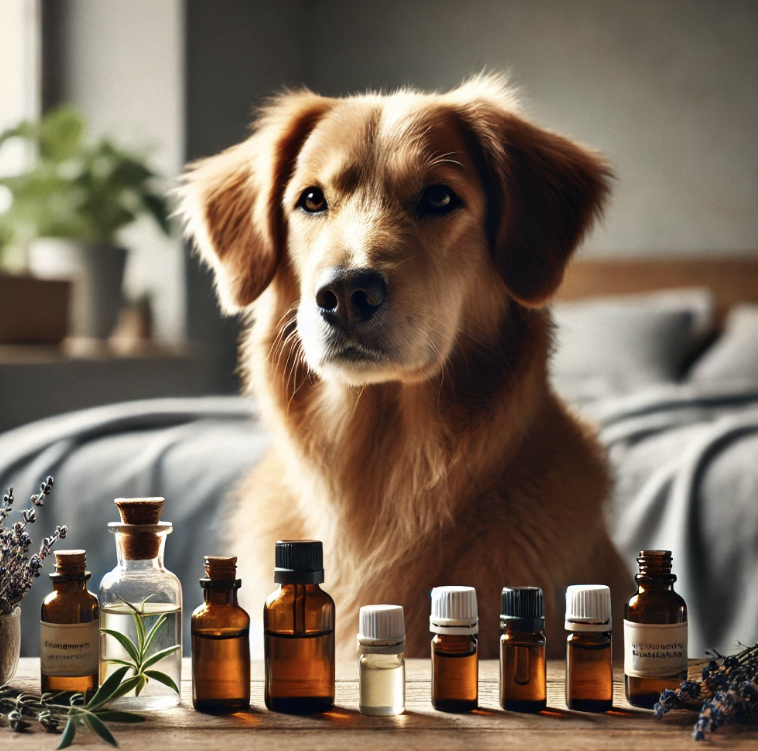
Essential oils are only one part of the work I do with dogs, but my training in animal aromatherapy changes the way I think about safety, stress, pain, recovery, behavior and whole-dog wellness.
I am not choosing an oil because a symptom appears on a list.
I am looking at the dog.
What is happening physically? What changed recently? Is pain involved? Is the nervous system overwhelmed? Is the dog taking medication? Does he have a seizure history, respiratory concerns or another condition that changes which oils make sense? Is this a situation where essential oils belong at all?
That distinction matters.
As a Certified Animal Aromatherapist and Holistic Pet Health Coach, my job is not simply to know which essential oils are commonly used with dogs. It is to understand when they may fit, how they may fit and when they should stay in the cabinet.
What Does a Certified Animal Aromatherapist Actually Know?
Using essential oils with animals requires more than knowing that lavender is calming or frankincense is popular.
Formal aromatherapy education includes learning about essential oil chemistry, therapeutic properties, routes of application, dilution, individual sensitivity, contraindications and the ways health history can influence which oils are appropriate.
Dogs are not small humans.
Their sense of smell is dramatically more sensitive than ours. Their body size, metabolism, health status and ability to move away from an aroma all matter.
A thoughtful approach to canine aromatherapy considers things such as:
the individual oil and its chemical constituents
concentration and dilution
aromatic versus topical use
the dog's age, size and overall health
medications and current veterinary treatment
neurological and seizure history
respiratory health
liver and kidney concerns
pregnancy or very young age
the dog's previous experience with essential oils
whether the dog actually wants to be near the aroma
There is a big difference between using essential oils around dogs and understanding how to use aromatherapy thoughtfully with an individual dog.
Why Aromatherapy Training Matters in Holistic Pet Health Coaching
Aromatherapy education gives me another way to look at what the dog is experiencing beyond the diagnosis itself.
A dog may be medically stable and still be frightened.
He may have received appropriate pain treatment and still be unable to settle.
He may be recovering from surgery but tense every time someone reaches toward him.
He may have an upset stomach after travel, become anxious before veterinary appointments or remain physically guarded after an injury.
Those pieces matter because health is not happening in isolated compartments.
The nervous system affects digestion. Pain changes behavior. Stress affects sleep and recovery. Fear can change how a dog responds to handling and future veterinary care.
Aromatherapy can sometimes help support those layers while the underlying medical problem is being appropriately addressed.
Essential Oils Are a Tool — Not the Whole Plan
Being trained in aromatherapy does not mean I believe every dog needs an essential oil.
Sometimes food is the first thing I want to change.
Sometimes pain needs veterinary attention.
Sometimes a dog needs rest, hydration, behavioral support or a better recovery environment.
Sometimes the nervous system is so overloaded that the first goal is simply helping the dog feel safe again.
And sometimes an essential oil is exactly the tool I reach for.
The value is not having a large collection of bottles.
The value is understanding which tool belongs in the situation in front of us.
That philosophy is a large part of how I work as a
<a href="https://welloiledk9.com/holistic-pet-health-coaching">
<strong>Holistic Pet Health Coach</strong>
</a>.
Instead of treating food, behavior, stress, medications, supplements and complementary modalities as separate subjects, I look for the relationships between them.
How I Think About Essential Oils With Dogs
I rarely begin with:
What oil treats this condition?
I am much more likely to ask:
What is the dog showing me right now?
Is he tense?
Restless?
Guarding?
Nauseated?
Overstimulated?
Unable to settle?
Emotionally shut down?
Recovering from something physically or emotionally stressful?
Those patterns help determine whether aromatherapy may be useful and what direction makes sense.
For example, an aromatic approach for a frightened dog may look very different from what I would consider for a dog experiencing physical discomfort.
A dog who needs emotional grounding may require a different strategy from a dog recovering after anesthesia.
And a dog with a complicated medical history may need a much more conservative approach than a healthy adult dog.
That is why I do not believe in universal recipes for every dog with the same diagnosis.
Why Choice Matters
One of the most important things I want pet parents to understand about aromatherapy is that the dog should have a voice in the process.
I do not believe in holding an open bottle under a dog's nose or covering a dog in an aroma he cannot escape.
I prefer to introduce scent gently and observe.
Does the dog move closer?
Relax?
Blink?
Settle?
Take a deeper breath?
Or does he turn away, move across the room, sneeze or become restless?
Those responses matter.
Especially when a dog is already sick, stressed or recovering, I want aromatherapy to give him more comfort and choice, not less control over his environment.
Safety Is More Than a List of “Safe Oils”
People understandably want lists.
Which essential oils are safe for dogs?
Which oils should I avoid?
How much should I dilute them?
Those are reasonable questions, but a list can only take you so far.
An oil that is well tolerated by one dog may not be appropriate for another because of age, medical history, medication, neurological concerns, respiratory health or simply individual sensitivity.
Safety also depends on how an oil is being used.
Diffusing an oil into an enclosed room, offering an aroma from a distance and applying a diluted oil topically are very different exposures.
This is why I teach pet parents to think beyond the bottle.
If you want the bigger picture of how I use aromatherapy with my own dogs and with clients, start with
<a href="https://welloiledk9.com/danas-take/essential-oils-for-dogs">
<strong>Essential Oils for Dogs: Why I’ll Never Be Without Them</strong>
</a>.
That is my foundational article on why essential oils remain such an important part of my canine wellness toolbox.
Aromatherapy and the Nervous System
One of the reasons essential oils are particularly interesting in whole-dog wellness is their relationship with scent and the nervous system.
Smell can influence emotional state very quickly.
That is one reason I often think about aromatherapy when a dog is dealing with:
fear
veterinary stress
travel
separation-related distress
difficulty settling
emotional recovery after illness or injury
changes in routine
grief or loss
overstimulation
tension around handling
The goal is not to make the dog unconscious or emotionally flat.
I want to help create conditions where the dog is better able to rest, regulate and recover.
And sometimes the biggest win is not dramatic.
It may simply be the dog finally lying down.
Sleeping.
Eating.
Allowing gentle touch.
Or no longer looking like every nerve in his body is waiting for the next bad thing to happen.
Aromatherapy During Illness and Recovery
Illness affects more than the organ or tissue named in a diagnosis.
A dog can become exhausted from poor sleep.
He may become fearful after repeated procedures.
He may guard his body because touch has become associated with pain.
He may lose interest in food because nausea and medication have changed how he feels.
He may appear physically improved while still emotionally unsettled.
This is one place where complementary modalities can be particularly valuable.
Essential oils, Reiki, gentle bodywork and other supportive approaches are not replacements for veterinary care.
They can help support the dog going through the veterinary care.
That difference is important.
How Aromatherapy Fits With Nutrition
Nutrition and aromatherapy have very different jobs.
Food provides the raw materials the body needs every day.
Aromatherapy may provide targeted support around stress, emotional regulation, comfort, recovery or other specific needs.
I do not want one modality replacing another simply because I happen to be trained in both.
When nutrition is the larger issue, I want to address nutrition.
If you want to understand how I approach individualized feeding, fresh food and nutrition support, read:
<a href="https://welloiledk9.com/danas-take/canine-nutritionist-dana-brigman">
<strong>What a Canine Nutritionist Really Does</strong>
</a>.
That is the broader nutrition authority page on my site.
The same philosophy applies whether we are talking about food, essential oils, herbs, homeopathy, behavior work or energy modalities:
Use the tool that makes sense for the dog — not the tool you happen to have in your hand.
How Aromatherapy Fits With Herbs and Homeopathy
Essential oils, herbs and homeopathy are often grouped together under the enormous umbrella of “natural remedies,” but they are not interchangeable.
They work differently.
They are selected differently.
And they should not simply be stacked together because more natural products sound better than fewer.
Sometimes an herb makes more sense.
Sometimes homeopathy may fit the acute picture.
Sometimes aromatherapy provides exactly the kind of emotional or sensory support I am looking for.
And sometimes the best plan is to do very little.
Part of holistic practice is knowing that more is not automatically better.
Aromatherapy and Behavior
Behavior is another area where I find my aromatherapy education useful — but again, oils are not dog training.
If a dog is afraid of the veterinarian, an essential oil will not erase the learning history that created the fear.
If a dog has separation anxiety, we cannot simply diffuse lavender and call the behavior treated.
If a dog is guarding his body because he is painful, behavior work alone will not solve the underlying discomfort.
But reducing emotional arousal may make it easier for some dogs to learn, rest or tolerate gradual behavior work.
This is where I often think about aromatherapy as part of the environment around the behavior plan rather than the behavior plan itself.
My Training Changes the Questions I Ask
This may be the biggest reason my aromatherapy background matters in my work as a pet health coach.
It gives me more questions to ask.
Instead of:
Which oil should we use?
I may ask:
What changed immediately before this started?
Is pain involved?
Is the dog sleeping?
Has appetite changed?
What medications were recently added?
Is this dog neurologically sensitive?
What happened at the last veterinary visit?
Is he asking for contact or trying to get away?
Is the problem primarily physical, emotional or both?
Do we need aromatherapy — or something else?
Those questions often tell us far more than a symptom chart ever could.
Why Credentials Matter
There is an enormous amount of essential-oil information online.
Some of it is excellent.
Some of it is repeated without context.
Some of it treats dogs as though every animal responds the same way.
And some of it creates unnecessary fear by implying that all essential oils are inherently dangerous around dogs.
Neither extreme is useful.
Education matters because it allows us to move beyond:
“Essential oils are completely safe.”
and
“Essential oils are toxic to dogs.”
The useful answer usually starts with:
It depends.
Which oil?
What concentration?
What method?
Which dog?
What health history?
What medication?
What are we trying to accomplish?
That is where education becomes more valuable than a list.
What Makes My Approach Different
I do not work from one modality.
A dog may come to me because his mom is worried about allergies, digestive problems, pain, anxiety, seizures, aging or simply because she knows something is not right.
I may look at:
nutrition
gut health
inflammation
pain
medications and supplements
stress and nervous-system regulation
behavior
environment
essential oils
herbs
homeopathy
energy work
recovery history
the patterns that keep repeating
Aromatherapy is one piece of that larger picture.
My education as a Certified Animal Aromatherapist allows me to use that piece with more thought, more context and greater respect for the individual dog.
And that is really the point.
It is not about having more remedies.
It is about having more ways to understand the dog in front of me.
Want to Learn More About Essential Oils for Dogs?
If essential oils are the piece you want to explore more deeply, begin with:
Essential Oils for Dogs: Why I’ll Never Be Without Them
There I explain why aromatherapy remains one of the first supportive modalities I consider for my own dogs and how I think about using essential oils as part of a larger wellness plan.
If nutrition is the bigger question, start with:
What a Canine Nutritionist Really Does
And if you are trying to put all the pieces together for your individual dog, learn more about:
That is where nutrition, aromatherapy, supplements, stress, behavior, health history and the rest of the dog finally get looked at in the same conversation.
The Bottom Line
I am proud of my training in animal aromatherapy.
Not because a certification gives me permission to tell every dog mom to use essential oils.
Quite the opposite.
The education helps me recognize when aromatherapy may be useful, how to approach it thoughtfully and when another tool makes more sense.
Essential oils can be incredibly valuable.
But they work best when we stop asking:
“What oil treats this?”
and start asking:
“What does this dog need?”
That is the question behind nearly everything I do.
certified animal aromatherapist | canine aromatherapy | aromatherapist for dogs | holistic pet health coach | essential oils for dogs | canine wellness | animal aromatherapy | animal aromatherapist |