

Dog Immune System Support
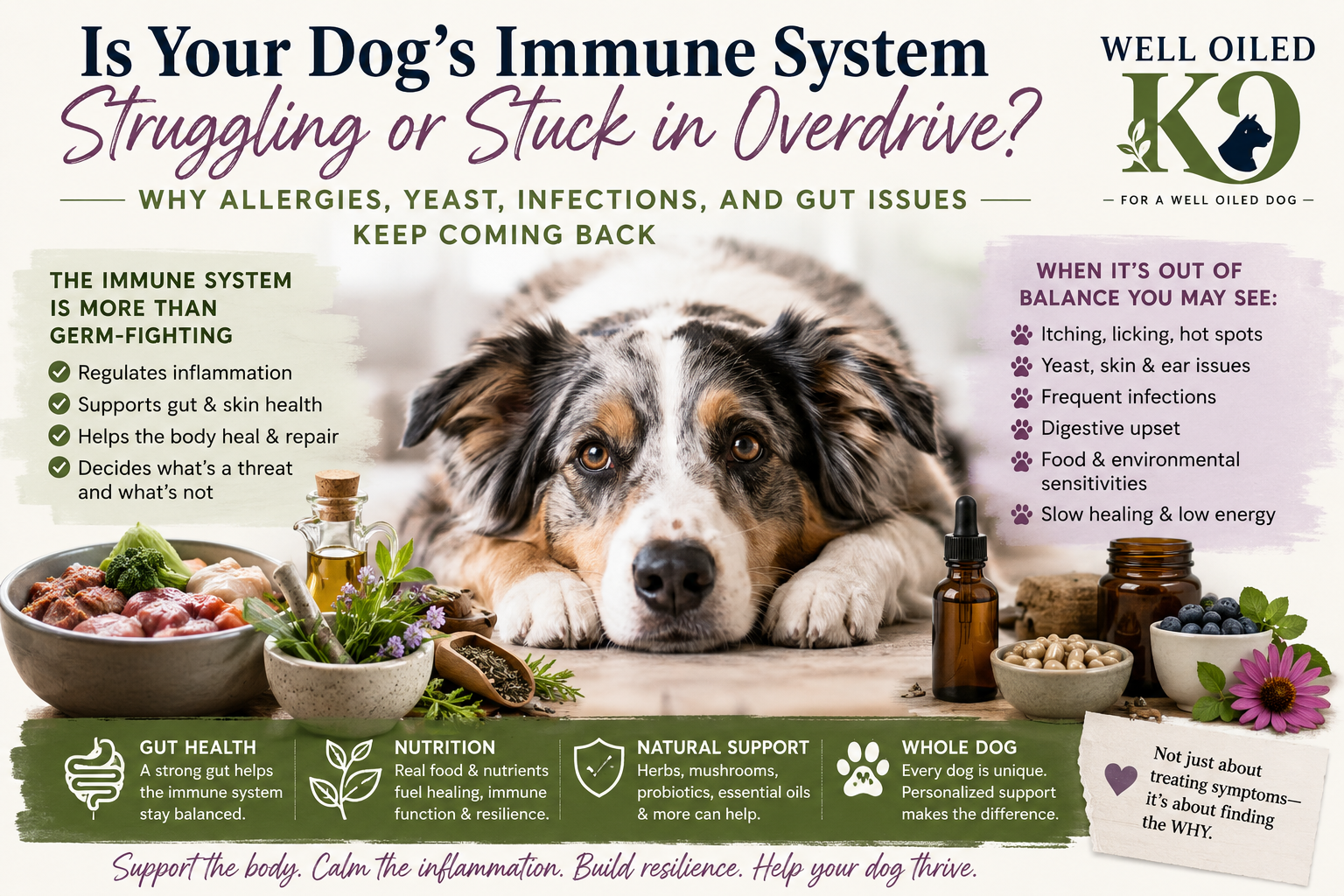
Is Your Dog’s Immune System Struggling or Stuck in Overdrive?
Your dog’s immune system is supposed to protect them.
That sounds simple enough, right?
But the immune system is not just a germ-fighting machine. It is also involved in inflammation, healing, gut health, skin health, allergy response, microbial balance, tissue repair, detox support, and how well your dog recovers after stress, illness, medications, vaccines, infections, or flare-ups.
So when a dog is constantly itchy, yeasty, inflamed, infected, reactive or intolerant to foods, slow to heal, or flaring from every little thing, we need to ask a better question.
Not just, “What can I give for the symptom?”
But, “Why is the body struggling to respond appropriately?”
Because a healthy immune system should not be lazy, chaotic, or dramatic. It should be responsive, intelligent, and able to calm itself down when the job is done.
Some dogs need help because their immune system is underperforming. Others need help because it is overreacting. And some dogs manage to do both, because apparently the body likes to keep us humble.
What the Immune System Actually Does
The immune system is often described like an army defending the body from invaders. That is partly true, but it is not the whole story.
Your dog’s immune system also helps:
Recognize bacteria, viruses, parasites, fungi, toxins, allergens, and damaged cells
Regulate inflammation
Support wound healing and tissue repair
Maintain balance in the gut and skin microbiome
Decide what is a real threat and what should be tolerated
Communicate with the digestive system, nervous system, liver, lymph, skin, and hormones
Clean up after illness, injury, infection, stress, and environmental exposure
A strong immune system is not one that reacts to everything. A strong immune system knows how to respond and then settle back down.
That is the piece many pet parents are missing.
If your dog is reacting to every food, every bug bite, every pollen season, every vaccine, every antibiotic, every stress event, every grooming appointment, every boarding stay, and every mystery Tuesday, the goal is not just to keep chasing the latest symptom.
The goal is to understand why the body has lost resilience.
When the Immune System Is Struggling
When the immune system is weak, depleted, distracted, or under-supported, your dog may not bounce back the way they should.
You may notice:
Frequent infections
Recurring ear issues
Chronic yeast
Slow wound healing
Skin that stays irritated
Hot spots that keep returning
Repeated urinary tract issues
Digestive upset after small changes
Poor recovery after antibiotics, vaccines, stress, or illness
Dull coat or hair loss
Low energy
Muscle loss or poor body condition
Increased sensitivity as they age
These dogs may not look “sick enough” for an emergency, but they also are not thriving.
They are the dogs who seem fine until they are not. The dogs who need antibiotics again. The dogs whose skin improves for a few weeks and then flares. The dogs who do okay until something small tips the whole system over.
That is not bad luck. That is a pattern.
When the Immune System Moves Into Overdrive
The other side of immune imbalance is overreaction.
This is when the immune system is not too weak — it is too reactive, inflamed, confused, or stuck in high alert.
You may see:
Itching, licking, chewing, or scratching
Red belly, armpits, paws, ears, or groin
Seasonal allergies
Food sensitivities or food intolerance
Hives or swelling
Hot spots
Chronic ear inflammation
Yeasty paws or skin
Mucus stool or chronic digestive irritation
Histamine-type reactions
Autoimmune patterns
Vaccine sensitivity
Dogs who flare from almost everything
This is where pet parents often get stuck in the “what is my dog allergic to?” loop.
That question has value, especially when food intolerance or environmental allergies are involved. But it is not the only question.
We also need to ask why the immune system is reacting so strongly in the first place.
Why is pollen causing misery instead of mild seasonal irritation?
Why does one treat cause days of itching?
Why does one piece of cheese trigger vomiting, diarrhea, or a flare?
Why does every antibiotic seem to lead to yeast?
Why does the body keep choosing inflammation as its default setting?
The internet loves simple answers, but the body does not always cooperate.
The Gut and Immune System Are Constantly Talking
A huge portion of immune activity is connected to the gut. That means digestion, stool quality, microbiome balance, food tolerance, nutrient absorption, and gut lining integrity all influence immune behavior.
This is why gut health can show up as skin problems.
And why skin problems can come back if gut health is ignored.
And why a dog with chronic allergies may also have loose stool, mucus, gas, reflux, nausea, picky appetite, or a long history of food changes.
The gut helps teach the immune system what is safe and what is not. When the gut is inflamed, damaged, imbalanced, or lacking microbial diversity, the immune system may become more reactive.
That is one reason I rarely look at itching, yeast, allergies, or recurrent infections as isolated problems.
The skin is loud. The gut is often part of the conversation.
What Can Suppress or Weaken Your Dog’s Immune System?
The immune system does not struggle out of nowhere. Sometimes the body has been dealing with layers of stress for months or years before symptoms become obvious.
Common contributors include:
Highly processed diets
Poor protein quality
Too many synthetic ingredients and additives
Unbalanced homemade diets (members have access to my guide and class)
Low omega-3 intake
Gut dysbiosis
Repeated antibiotics without microbiome repair
Chronic stress or poor sleep
Pesticides, herbicides, cleaning chemicals, and environmental toxins
Flea and tick chemicals in sensitive dogs
Long-term steroid use or immune-suppressing medications
Poor detox and drainage
Dental disease
Lack of fresh food nutrients
Aging and inflammaging
Underlying liver, kidney, gut, endocrine, or immune stress
This does not mean every dog needs every supplement under the sun. Please do not turn your kitchen counter into a supplement crime scene.
It means the plan needs to match the dog.
A dog with chronic yeast may need a different approach than a dog recovering from antibiotics. A senior dog with muscle loss needs a different lens than a young dog with seasonal allergies. A dog with autoimmune tendencies is not the same as a dog who picked up a simple infection.
Same symptom does not mean same plan.
Antibiotics, Resistance, and the Missing Recovery Plan
Antibiotics have a place.
They can be necessary for serious infections, painful infections, spreading infections, wounds, urinary tract infections, pneumonia, tick-borne disease, and situations where the body needs help quickly. Veterinary diagnostics, cultures, labs, imaging, pain control, fluids, and medications can be very important.
The problem is not that antibiotics exist.
The problem is when antibiotics become the whole plan.
Antibiotics may reduce or eliminate susceptible bacteria, but they do not rebuild the terrain. They do not restore gut diversity. They do not repair the gut lining. They do not address diet, inflammation, immune balance, stress, allergies, yeast tendency, or why the infection happened in the first place.
And repeated antibiotic use can create another problem: resistant organisms.
When bacteria are repeatedly exposed to antibiotics, the stronger survivors may become harder to manage. This is one reason chronic, recurring infections deserve a bigger conversation.
If your dog keeps needing antibiotics for the same ear, skin, urinary, respiratory, or digestive issue, it is time to ask:
Was this truly bacterial?
Was a culture needed?
Is yeast involved too?
Is inflammation the real driver?
Is the gut depleted?
Is the immune system suppressed or overreactive?
Is the diet supporting repair?
Are we rebuilding after treatment?
Why does the same pattern keep coming back?
Antibiotics can help handle the immediate fire. But if the house keeps catching fire, we need to stop only talking about the smoke.
Where Essential Oils Fit
Essential oils can be part of a natural immune support conversation when they are chosen well and used appropriately.
They may support:
Skin comfort
Respiratory wellness
Microbial balance
Environmental exposure
Stress response
Inflammatory balance
Lymphatic movement
Emotional regulation
Recovery routines
Essential oils are not single-action drugs. They are complex plant compounds, and that complexity is one reason they are so interesting when we talk about microbial balance and wellness support.
But this is not a “put oregano on everything and pray” situation.
The individual dog still counts.
A senior dog, seizure-prone dog, puppy, pregnant dog, liver-compromised dog, medically fragile dog, or dog on multiple medications may need a very different approach than a healthy adult dog with a mild seasonal flare.
Quality, dilution, route of use, frequency, and the dog’s constitution all affect the plan.
This is where experience helps. TCVM patterns, body assessment, muscle testing, history, symptoms, and tolerance can help narrow the direction instead of randomly throwing oils, herbs, foods, and supplements at the dog to see what sticks.
Random guessing is still random guessing, even if it smells like lavender.
Nutrition Is Immune Support
Food is not just calories. Food gives the immune system the raw materials it needs to function, repair, communicate, and calm down.
Your dog needs usable nutrients from real food, including:
Quality protein for tissue repair, antibodies, enzymes, muscle, and healing
Healthy fats for cellular health and inflammatory regulation
Omega-3 fatty acids for skin, joints, brain, heart, and immune signaling
Minerals for immune communication, thyroid function, skin integrity, enzyme activity, and recovery
Moisture for digestion, circulation, detox, and stool quality
Fresh food antioxidants to help manage oxidative stress
Fiber and microbiome-supportive foods when appropriate
This is one reason I do not get excited about simply swapping one ultra-processed bag for another and calling it immune support.
Kibble may be convenient, but convenience does not mean the body is getting the best tools for repair. Prescription diets may have a purpose in some situations, but they are not automatically a complete healing plan for chronic immune imbalance, allergies, yeast, inflammation, or recurring infections.
What I know is this: when a dog is inflamed, depleted, itchy, yeasty, reactive, or slow to heal, nutrition deserves a real conversation.
Not a Facebook comment.
Not “just try salmon.”
Not “buy this one bag.”
A real conversation.
Herbs, Mushrooms, Colostrum, and Other Natural Support
Natural support should be chosen based on the dog, not because it is trending in a group.
Helpful categories may include:
Medicinal mushrooms for immune modulation and cellular support
Colostrum for immune signaling, gut lining, and allergy-type support
Herbs for lymph, liver, gut, inflammation, microbial balance, and drainage
Omega-3s for inflammatory regulation and skin support
Probiotics, postbiotics, and microbiome restoration for gut and immune health
Digestive enzymes when digestion and nutrient breakdown need support
Gut lining support for dogs with food intolerance, chronic stool issues, or antibiotic history
CBD for stress, comfort, and inflammatory balance
Homeopathy for acute patterns or deeper constitutional support
Essential oils for targeted wellness support
Minerals and electrolytes when diet history, water source, symptoms, or testing suggests a need
PEMF, Reiki, massage, lymphatic work, and bodywork for recovery and nervous system support
This is not a shopping list.
It is a reminder that there are many ways to support the immune system beyond “give this pill and wait.”
The art is choosing what fits this dog, in this season, with this history.
Why Facebook Advice Falls Short
Most people in Facebook groups are trying to help. I believe that.
But most people are answering from their own dog’s story.
Their dog had yeast, so they recommend the supplement that helped their dog.
Their dog had allergies, so they recommend the food that helped their dog.
Their dog had an infection, so they recommend the thing that worked once.
That does not mean their advice is bad. It means it may not apply to your dog.
The same diagnosis does not mean the same plan.
A dog with seasonal itching, damp yeasty paws, chronic antibiotic history, warm red skin, soft stool, and anxiety is not the same as a dog with dry flaky skin, hair loss, low thyroid signs, mineral deficiency, and poor coat quality.
Both may be itchy.
The plan should not be identical.
This is why “what can I give?” is often the least useful question.
Better questions sound like:
Why is this dog reacting?
What changed before the flare?
What has been suppressed?
What has never been rebuilt?
Is the dog hot, damp, deficient, stagnant, inflamed, depleted, or stressed?
What does the stool tell us?
What does the diet history tell us?
What do the labs suggest?
What has helped before?
What made things worse?
What is the body trying to show us?
Most pet parents answer the questions they are asked.
What they often need is someone who asks the questions they did not know to ask.
Whole-Dog Immune Support Means Looking Beyond the Symptom
When I look at immune support, I want to know more than the diagnosis.
I want to know:
Age
Breed and size
Diet history
Treats, chews, toppers, oils, scraps, and hidden extras
Water source
Stool history
Skin and coat patterns
Appetite and nausea patterns
Weight and muscle condition
Stress patterns
Sleep quality
Vaccine history
Medication history
Antibiotic history
Flea and tick product history
Lab trends
Gut, liver, gallbladder, kidney, endocrine, immune, and inflammatory clues
Other diagnoses
What has already been tried
What the dog did not tolerate
This is where TCVM, muscle testing, body assessment, and experience can help narrow the plan.
TCVM may help identify patterns such as heat, dampness, stagnation, deficiency, digestive weakness, stress, or inflammation.
Muscle testing may help guide tolerance and direction in sensitive or complicated dogs.
Experience helps recognize patterns faster, ask better questions, and avoid wasting time on random product guessing.
These tools do not replace veterinary diagnostics. They add another layer to the conversation.
When This Is a Vet Visit
Immune support is not a replacement for medical care.
Please see your veterinarian if your dog has:
Fever
Extreme lethargy
Loss of appetite
Pain
Sudden weakness
Difficulty breathing
Facial swelling or severe hives
Repeated vomiting or diarrhea
Blood in stool, urine, vomit, or discharge
A wound, abscess, puncture, or spreading skin infection
Signs of dehydration
A suspected autoimmune condition
A urinary issue, especially straining or inability to urinate
An infection that is worsening or not improving
A senior or medically fragile dog who suddenly declines
Veterinary care is important for diagnosis, labs, imaging, cultures, stabilization, fluids, pain control, and medications when needed.
Then, once the immediate issue is addressed, we can look at the bigger picture.
Why did this happen?
Why does it keep returning?
What needs to be rebuilt?
What support does this dog need to become more stable?
The Goal Is Resilience
The goal is not to make your dog live in a bubble.
Your dog is going to encounter pollen, bugs, bacteria, stress, weather changes, food changes, chemicals, medications, vaccines, visitors, travel, grooming, boarding, and the occasional dropped snack that apparently has the power of a grenade.
The goal is resilience.
A resilient dog may still have health challenges, but the body has more tools to respond, recover, and return to balance.
That is very different from a dog who is constantly one bite, one bath, one vaccine, one antibiotic, one flea bite, one pollen season, or one stressful weekend away from a full-body meltdown.
If your dog is stuck in that cycle, it may be time to stop only chasing symptoms and start asking why the immune system is struggling to regulate itself.
Want Help Looking at the Whole Dog?
If your dog keeps cycling through itching, yeast, infections, gut issues, inflammation, antibiotic use, food reactions, or mystery flare-ups, this blog is the starting point.
The deeper work is figuring out what your dog actually needs.
Not what worked for someone else’s dog.
Not what the internet yelled the loudest.
Not what is trending this week.
Your dog’s history, diet, labs, symptoms, tolerance, medications, and patterns all change the plan.
Submit an inquiry and let’s see what I can do to help. No obligation — the inquiry callback is no cost to you.
Related Content
Dog immune system support, how to boost dog immune system naturally, dog keeps getting infections, dog allergies and immune system, dog yeast and immune system, probiotics after antibiotics for dogs, antibiotics for dogs gut health, natural immune support for dogs, dog chronic inflammation, itchy dog immune system, dog food intolerance, senior dog immune support, dog autoimmune symptoms, dog hot spots, recurring ear infections in dogs
When DIY Isn't Enough Already tried the basics? If this is happening with your dog and you're still stuck, I can help you figure out what deserves attention next.
Request a Discovery Callback →