The Effects of a Mineral-Deficient Diet in Dogs
One of the trickier things about nutritional deficiencies is that they do not always announce themselves quickly.
Your dog can eat a diet that is running short on certain vitamins, minerals or trace minerals for quite a while and still look pretty good on the outside.
Then one day you notice the coat is duller. Muscle is disappearing. Energy is lower. The skin is acting up. Recovery takes longer. Behavior changes. The immune system seems less resilient. Or your senior dog suddenly looks like they have aged six months in six weeks.
That does not automatically mean a vitamin or mineral deficiency is the cause. But it is absolutely one of the questions I want us asking when the diet has been limited, highly processed, homemade without much variety, or built around the same handful of foods for a long time.
See your vet for a diagnosis and then you and I can collaborate on a custom strategy for your dog's health.
Can Dogs Become Deficient in Vitamins and Minerals?
Yes.
Vitamins, minerals and trace minerals help regulate thousands of functions in the body. They are involved in energy production, nerves, muscles, bone, immune function, hormone production, skin, coat, digestion, oxygen transport, antioxidant protection and tissue repair.
When the diet repeatedly comes up short, the body may compensate for a while. It may draw on stored nutrients. It may prioritize one system over another. It may simply become less efficient.
That is why a dog can appear to be “doing fine” on a limited diet until suddenly they are not.
Nutritional status is not simply about whether your dog ate enough food. We also have to ask whether the food supplied enough of the nutrients the body actually needed.
What Can Cause Vitamin and Mineral Deficiencies in Dogs?
There are several ways nutritional gaps can develop, and they are not all caused by someone feeding a terrible diet.
Sometimes the dog mom is doing everything she knows to do and simply has not been given the full nutritional picture.
Common situations I see include:
- Homemade diets built from too few ingredients
- Chicken, rice and vegetables used as a long-term diet
- Very limited protein rotation
- Raw diets based only on a simple ratio without looking at the rest of the nutrient picture
- Too little organ diversity
- Low-calorie diets that unintentionally become low-nutrient diets
- Senior dogs eating smaller portions without enough nutrient density
- Dogs recovering from illness, surgery or chronic digestive problems
- Long-term poor appetite
- Malabsorption or chronic intestinal disease
- Medications that may affect nutrient status or digestion
- Very restricted elimination diets used longer than intended
- Highly processed diets with poor ingredient variety
There can also be a difference between what is technically present in a diet and what the dog is actually digesting, absorbing and using.
That is one reason I look beyond the label.
What Happens When a Dog Is Deficient for a Long Time?
The answer depends on which nutrients are low, how severe the deficiency is, how long it has been present and what else is happening in the dog's body.
Deficiencies can show up in different systems rather than producing one neat symptom that says, “This is zinc” or “This is vitamin D.”
Over time, nutritional gaps may contribute to changes in:
- Skin and coat quality
- Muscle mass and strength
- Bone health
- Energy and endurance
- Immune resilience
- Wound healing and tissue repair
- Digestive function
- Nervous-system function
- Behavior and cognition
- Thyroid and other endocrine pathways
- Red blood cell production
- Antioxidant protection
What I know is that the body needs raw materials to repair, regulate and recover. If those materials are repeatedly missing, it becomes harder for the body to do its job well.
Signs That Make Me Look More Closely at Nutrition
None of these symptoms proves a nutrient deficiency by itself, but they may make me want to look more carefully at the diet and the bigger health picture.
- Dull, brittle or thinning coat
- Hair loss
- Dry, flaky or chronically irritated skin
- Poor wound healing
- Loss of muscle despite eating
- Weakness or reduced stamina
- Weight loss or difficulty maintaining weight
- Low appetite
- Slow recovery after illness or surgery
- Frequent infections
- Digestive instability
- Behavioral or cognitive changes
- Changes in nails, paw pads or pigmentation
- General decline that does not have an obvious explanation
This is where labs, diet history, physical condition and the pattern over time become more useful than guessing based on one symptom.
Which Nutrients Commonly Deserve a Closer Look?
I do not like turning nutrition into a scavenger hunt where every symptom gets matched to one vitamin from a chart.
Nutrients work together.
Still, there are several nutrients that deserve attention when evaluating a limited or homemade diet.
Calcium and Phosphorus
These are especially important for bones, teeth, muscle contraction and nerve function.
Boneless meat is naturally high in phosphorus and relatively low in calcium, which is why meat-based homemade diets need an intentional calcium strategy.
Zinc
Zinc is involved in skin, coat, immunity, wound healing, enzyme activity and many other processes.
Dogs with chronic skin issues or poor coat quality may be worth evaluating from a zinc perspective, although supplementation should not be guessed because minerals interact with one another.
Copper
Copper plays roles in connective tissue, pigment, iron metabolism, antioxidant enzymes and energy production.
Too little can be a problem, but too much can also be a concern in certain dogs, which is exactly why I do not like the “just add more minerals” approach.
Manganese
Manganese supports cartilage, connective tissue, metabolism and antioxidant pathways.
It is one of those trace minerals that can be easy to overlook in a homemade diet depending on the ingredients being used.
Iodine
Iodine is closely tied to thyroid hormone production.
Too little is not ideal. Too much is not ideal either. This is another nutrient where “more” is not the goal.
Selenium
Selenium supports antioxidant defenses, thyroid function and immune health.
Vitamin D
Dogs do not make vitamin D from sunlight in the same way humans do. They rely heavily on dietary intake.
Vitamin D influences bone health, immune function and many other regulatory processes.
Vitamin E
Vitamin E is an important antioxidant and becomes particularly relevant when we are intentionally increasing polyunsaturated fats such as omega-3s.
B Vitamins
B vitamins are involved in energy metabolism, red blood cell production, nervous-system function and many enzyme pathways.
Dogs with chronic digestive disease or poor absorption may deserve extra attention here.
Iron
Iron is essential for oxygen transport and red blood cell production.
Again, deficiency should not automatically lead to supplementation without understanding why iron is low.
Why Seniors Can Be More Sensitive to Nutrient Gaps
Senior dogs are one of the groups I watch especially closely.
They often begin eating less food at the same time their bodies are dealing with muscle loss, inflammation, reduced digestive efficiency, chronic disease, medication use or slower recovery.
If they are eating less, every bite has to work harder.
That means I am not interested in simply making the bowl bigger with low-calorie filler. I want the food they are willing to eat to carry useful protein, appropriate fat, vitamins, minerals, omega-3s and other nutrients that support muscle, brain, immune function and recovery.
This is one of the reasons senior nutrition should not automatically mean “less food.”
Dogs in Recovery Also Have Less Room for Nutritional Gaps
Recovery asks more of the body.
Surgery, illness, chronic digestive disease, weight loss, infection or a prolonged period of poor appetite can all increase the importance of nutrient density.
A dog may be eating less while simultaneously needing more nutritional support for tissue repair, immune function, muscle preservation and energy.
This is exactly why I become concerned when a temporary bland diet quietly becomes the long-term diet.
Chicken and rice may have served a purpose for a few days.
Six weeks later, we need a different conversation.
What About Puppies and Pregnant or Nursing Dogs?
These dogs also have very little room for nutritional guessing.
Growth and reproduction create higher demands for protein, calories, calcium, phosphorus and many other nutrients.
Errors that might take a long time to become obvious in an adult dog can become much more significant in a growing puppy or nursing mother.
This is not where I want you relying on a random recipe from Facebook because the ingredients “look healthy.”
Can Homemade Dog Food Be Nutritionally Complete?
Absolutely.
Homemade does not mean deficient.
A thoughtful fresh-food diet can provide tremendous nutritional variety, but we have to look at more than whether the ingredients are fresh.
Protein, fat, organ meats, calcium and phosphorus, omega-3s, vitamins, minerals, trace minerals, vegetables, calories and rotation all contribute to the bigger picture.
And no, I do not expect every single bowl to be mathematically identical.
I care about the nutritional picture over time, thoughtful rotation and whether the diet is actually meeting the needs of the individual dog.
Does Rotation Help Prevent Nutritional Gaps?
Thoughtful rotation can help broaden the nutrient profile of a fresh-food diet.
Beef, turkey, chicken, fish and other proteins do not provide the exact same nutrients. Neither do different organs, vegetables, fats or whole-food additions.
That is why I encourage rotation when the individual dog tolerates it.
But rotation should actually create diversity.
Switching chicken, rice, peas and carrots to turkey, rice, peas and carrots is not a dramatic nutritional shift.
I want us thinking about meaningful rotation across proteins, organs, fats, vegetables and nutrient-dense foods.
Should I Just Add a Multivitamin?
Maybe. But I do not want that to be the automatic answer.
A multivitamin can be useful, but first I want to understand what the diet is already providing and what may actually be missing.
If your dog eats fortified kibble, you may already be adding synthetic vitamins and minerals through the base diet.
If your dog eats homemade food, we may be able to provide many nutrients through thoughtful food choices and then supplement more strategically where needed.
More supplements do not automatically create better nutrition.
Why I Prefer to Look at the Whole Dog
Nutritional deficiencies rarely exist in a vacuum.
If I am concerned about nutrient status, I also want to know about:
- Age and breed
- How long the current diet has been fed
- Protein rotation
- Organ and vegetable variety
- Treats, chews, toppers and hidden extras
- Appetite and nausea
- Stool history
- Weight and muscle condition
- Digestive disease or poor absorption
- Current medications and supplements
- Recent lab trends
- Kidney, liver, gallbladder, endocrine or inflammatory concerns
- Stress and nervous-system patterns
TCVM may also help identify patterns such as heat, dampness, stagnation, deficiency, digestive weakness, stress or inflammation.
Muscle testing may help guide tolerance and direction in sensitive or complicated dogs, and experience helps recognize patterns and avoid wasting time on random supplement guessing.
Already Feeding Homemade? This Is Where a Recipe Review Can Help
If you are making your dog's food and wondering whether you are covering the important nutritional pieces, you do not necessarily need to throw away everything you are doing.
A Recipe Review gives us a chance to look at what you are already feeding, the rotation you are using and where the diet may need more support.
Sometimes we need a bigger change.
Sometimes we just need to tighten up a few missing pieces.
Want to Learn How to Build a Homemade Diet?
My Homemade Dog Food Course is designed to help you understand the foundation rather than simply hand you a recipe and hope you never need to change it.
We cover protein, fat, organs, calcium and phosphorus, omega-3s, vegetables, supplements, calories, rotation, variety and how the pieces fit together.
The course is available as a stand-alone option and is also included as part of the value of The WellOiledK9 Membership.
Nutrient Gaps Are Usually Easier to Address Before They Become Big Problems
I do not want pet parents afraid to feed homemade food, afraid to rotate ingredients or afraid that one imperfect meal has harmed their dog.
That is not the point.
The point is to understand that the body needs a broad range of nutrients over time, and a chronically limited diet can eventually catch up with a dog.
You do not need to obsess over every bite.
You do need to look at the pattern.
What is your dog eating week after week? Are you rotating useful foods? Are important nutrients repeatedly being left out? Has your senior started eating less? Is a recovery diet becoming permanent? Are you supplementing thoughtfully or simply adding products?
Those are the questions that give us somewhere useful to start.
Come, Sit and Stay Well.
Related Content
Frequently Asked Questions About Vitamin and Mineral Deficiencies in Dogs
Can a dog look healthy and still be nutritionally deficient?
Yes. Nutritional gaps may develop gradually, and the body can compensate for a period of time. Changes in coat, muscle, energy, immune resilience, digestion or recovery may not appear until the deficiency has been present for a while.
What are common signs of vitamin or mineral deficiency in dogs?
Possible signs can include poor coat quality, skin changes, muscle loss, weakness, low energy, poor healing, digestive problems, weight changes, immune issues or neurologic and behavioral changes. These signs can also have many other causes, so they should not be used to diagnose a deficiency by themselves.
Can homemade dog food cause nutrient deficiencies?
Homemade food can be nutritionally excellent, but a very limited homemade diet may leave gaps over time. Protein variety, appropriate fats, calcium, organs, omega-3s, vitamins, minerals, vegetables and thoughtful rotation all contribute to the overall nutritional picture.
Are senior dogs more vulnerable to nutrient deficiencies?
They can be. Seniors often eat less while also dealing with muscle loss, reduced digestion, chronic disease, inflammation or medication use. That makes nutrient density especially important.
Can chicken and rice cause deficiencies if fed long term?
Chicken and rice can be useful temporarily in some situations, but it does not provide a complete long-term nutritional profile by itself. If it becomes the permanent diet, important fats, calcium, vitamins, minerals, organs and other nutrients may be missing.
Should I give my dog a multivitamin to prevent deficiencies?
Not automatically. The better question is what the current diet provides and where the actual gaps may be. Some dogs may benefit from a multivitamin or mineral product, while others need more targeted support or simply a better food rotation.
Can too many vitamins and minerals also be harmful?
Yes. More is not always better. Some vitamins and minerals can accumulate or interfere with other nutrients, which is why supplementation should be based on the diet and the individual dog rather than added blindly.
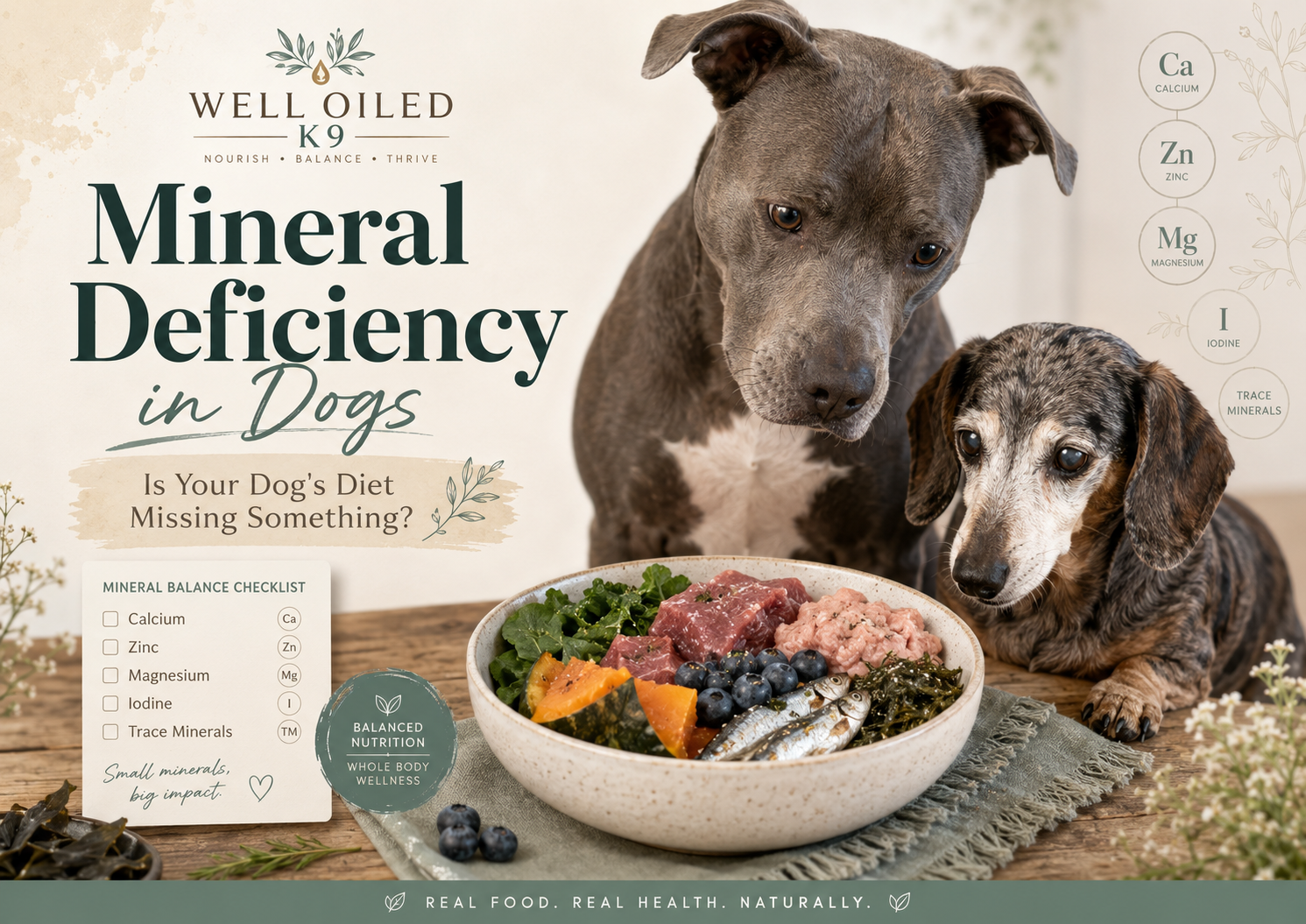
Two-time Nobel Prize-winning chemist Dr. Linus Pauling is widely credited with the famous quote: "You can trace every sickness, every disease, and every ailment to a mineral deficiency."
When DIY Isn't Enough Already tried the basics? If this is happening with your dog and you're still stuck, I can help you figure out what deserves attention next.
Request a Discovery Callback →