
Why Is My Dog So Itchy?
It’s Not Always Allergies
Why Dogs Get Itchy
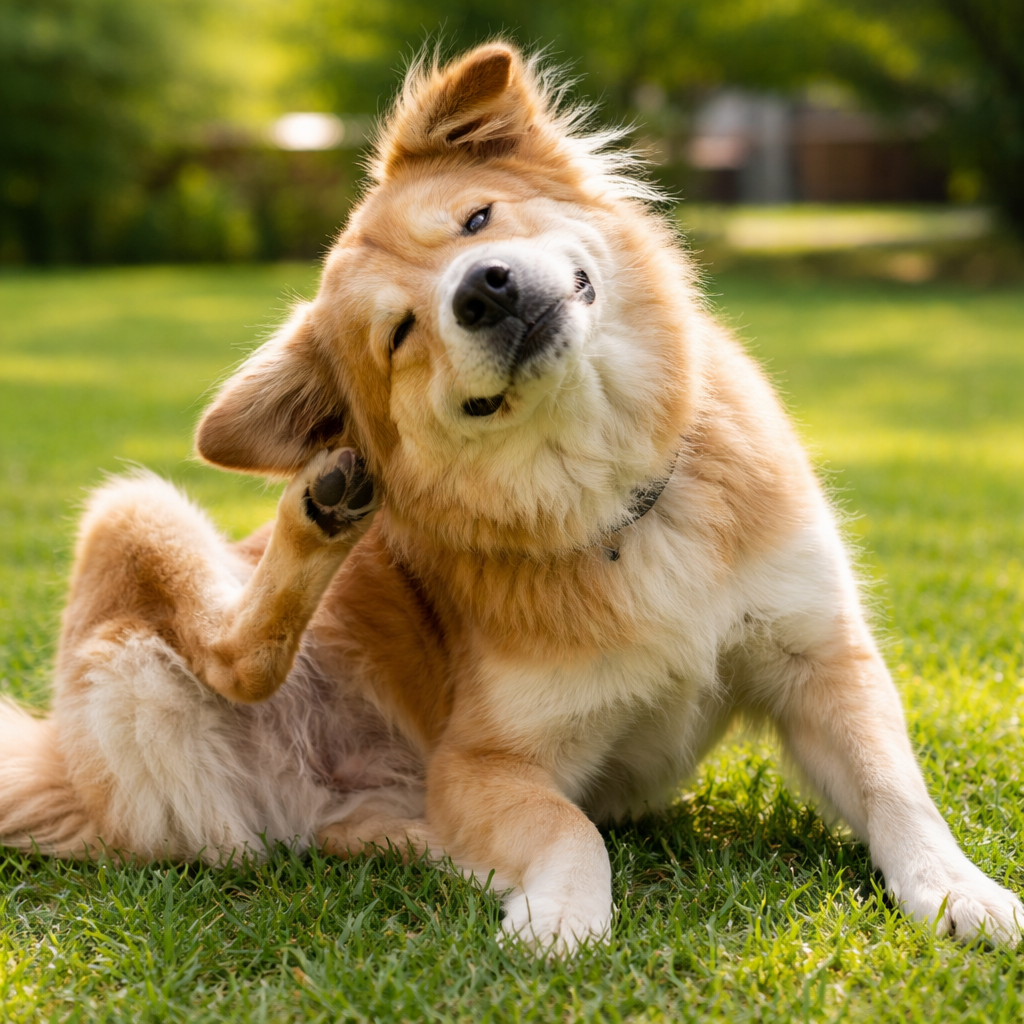
If your dog is scratching, licking, chewing, rubbing, rolling, or waking you up at 2 a.m. with the full-body jingle-jangle collar orchestra, it is easy to assume one thing: allergies.
And yes, allergies can be part of the story. Food intolerance can be part of the story too. But itching is a symptom, not a diagnosis. That means the real question is not just, “What is my dog allergic to?” The better question is, “What is making my dog’s body react this way?”
Environmental Triggers Are More Common Than People Realize
Grass, pollen, weeds, mold, dust mites, smoke, laundry detergent, carpet sprays, household cleaners, shampoos, lawn chemicals, mulch, and even seasonal changes can all irritate the skin or trigger an immune response.
Some dogs react after lying in the grass. Some get worse after walks. Some flare after the lawn is treated. Some lick their feet every spring and fall like it is their full-time job.
This is why rotating the protein in the bowl does not always fix the itch.
Insect Bites Can Make Your Dog Miserable
Fleas are the obvious one, but they are not the only bug drama.
A dog with flea bite sensitivity may react intensely to just one bite. Mosquitoes can irritate thin-haired areas like the belly, ears, armpits, and groin. No-see-ums — those tiny biting gnats that make you question your life choices outside — can also cause intense itching, especially on the belly, legs, ears, and face.
And in the South, we absolutely have to talk about fire ants. Fire ant bites and stings can create painful bumps, swelling, redness, licking, sudden limping, or hives. Some dogs get into a mound before you even realize it is there, and those bites can add up fast.
Beach dogs have another nuisance to contend with—sand fleas. These tiny beach-dwelling critters don't set up housekeeping on your dog like regular fleas, but their bites can still leave behind itchy, irritated skin. Add salt, sand, and a day of rolling in who-knows-what, and it's no surprise some dogs come home scratching after a fun day at the beach.
Bee and wasp stings can cause localized swelling or hives, and in more serious cases, facial swelling, vomiting, weakness, or breathing trouble. Mites can create intense itching, hair loss, crusting, ear irritation, or skin damage. Tick bites can remain itchy and inflamed even after the tick is gone.
So yes, bugs count. Annoyingly, they count a lot.
Food Isn’t the Only Thing That Can Cause Itching
Food intolerance, ingredient sensitivity, poor-quality fats, too many processed carbohydrates, synthetic additives, nutrient deficiencies, and gut imbalance can all contribute to skin problems.
But the food conversation should go beyond “chicken bad, salmon good.” Two dogs can eat the same food and respond completely differently because their gut health, immune system, detox pathways, stress load, genetics, and inflammation levels are not the same.
Food may be the trigger. It may be the fuel. Or it may be only one layer in a much bigger mess.
Hives Are a Clue, Not the Whole Answer
Hives usually mean the immune system reacted to something. That “something” could be a bug bite, sting, food, medication, vaccine, chemical exposure, plant, shampoo, environmental allergen, or something your dog rolled in outside because apparently that seemed like a solid life choice.
Hives that come with facial swelling, vomiting, weakness, pale gums, collapse, or trouble breathing need veterinary care right away. That is not a “let’s see what Facebook says” moment.
What Your Dog’s Paws Are Trying to Tell You
Paws are often one of the biggest clues. Red paws, licking, chewing, staining, swelling, yeasty smell, interdigital irritation, or constant nibbling can point toward grass exposure, contact irritation, yeast, inflammation, allergies, gut imbalance, or immune overreaction.
Paws touch everything: grass, chemicals, pollen, sidewalks, cleaners, salt, fertilizer, pesticides, and whatever mystery substance was on the floor at the pet store. Then your dog licks it. Because of course they do.
The Skin Is Often the Messenger
The skin is not just “skin.” It is connected to the gut, liver, kidneys, lymphatic system, immune system, hormones, and microbiome.
When the body is overwhelmed, inflamed, undernourished, poorly eliminating, or reacting to too many triggers, the skin is often where you see the smoke before you find the fire.
That can show up as itching, hot spots, rashes, hair loss, flaky skin, darkened skin, odor, paw licking, ear problems, scabs, hives, or recurring skin infections.
Other Reasons Dogs Become Itchy
Itching may also be connected to yeast, bacterial infections, parasites, dry skin, poor coat quality, mineral deficiencies, thyroid issues, Cushing’s, autoimmune disease, medication reactions, vaccine reactions, stress, anxiety, or chronic inflammation.
This is why the same symptom does not always mean the same plan.
Why Generic Advice Falls Short
Most people online are answering from their own dog’s story. That does not make them bad people. It just means their answer may not apply to your dog.
One itchy dog may need food changes. Another may need flea and bug support. Another may need gut repair. Another may need yeast addressed. Another may need liver, lymph, or mineral support. Another may need environmental cleanup. Many need a combination.
The internet loves simple answers. The body does not always cooperate.
Next: What Can You Do About an Itchy Dog?
In the next post, we will talk about what you can actually do to help an itchy dog naturally, including nutrition, bathing, environmental cleanup, flea and bug support, gut health, herbs, essential oils, detox support, and when veterinary care is needed.
Because guessing gets expensive fast, and your dog deserves better than supplement roulette.
Related Content: dog allergies, itchy dog, paw licking in dogs, yeast in dogs, seasonal allergies in dogs, flea allergy dermatitis, hives in dogs, hot spots, ear infections, dog detox, gut health for dogs.
When DIY Isn't Enough Already tried the basics? If this is happening with your dog and you're still stuck, I can help you figure out what deserves attention next.
Request a Discovery Callback →