

Antibiotic Resistance in Dogs
Why It Happens and What Your Dog’s Body Has to Do With It
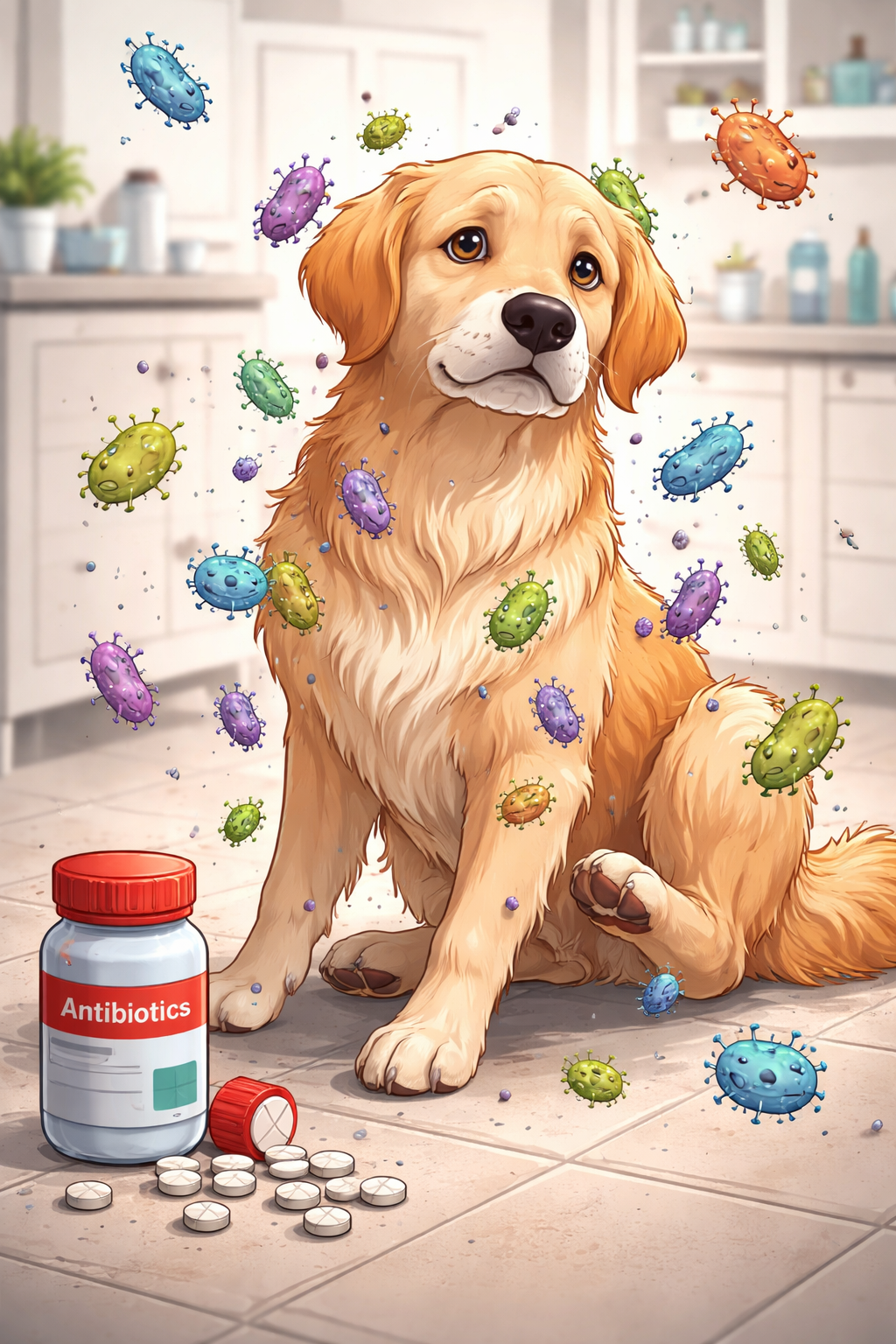
I was watching two veterinary shows recently and both cases involved infections that were not responding to antibiotics the way the veterinarians expected. During the show I was low-key shouting, “essential oils”.
Situations like that are becoming more common in both human and veterinary medicine. It’s called antibiotic resistance, and it’s an important topic for dog parents to understand.
Antibiotics are powerful tools and sometimes absolutely necessary. But they are not magic, and they are not the whole story when it comes to infection recovery.
A dog’s immune system, gut health, nutrition, nervous system, and overall terrain all influence how the body responds to infection.
Understanding that bigger picture helps explain why some dogs bounce back quickly while others seem to struggle with infections that keep returning.
What Antibiotic Resistance Actually Means
Antibiotic resistance does not mean antibiotics suddenly stop working entirely.
What it means is that certain bacteria have adapted in ways that make them harder to eliminate with specific medications.
Bacteria reproduce very quickly. Within any population, a few may naturally have traits that allow them to survive exposure to an antibiotic.
When antibiotics are used:
• The most vulnerable bacteria are eliminated
• The strongest bacteria survive
• Those survivors reproduce and pass their traits forward
Over time, the bacteria that remain may be less responsive to the medication that once worked well.
Some bacteria can even share resistance genes with other bacteria, spreading those traits further.
Why Some Dogs Develop Resistant Infections
Resistance rarely happens in isolation. It often reflects what is happening inside the dog’s body and environment.
Several factors can increase the likelihood of recurring infections or resistant bacteria:
• Repeated antibiotic use
• Antibiotics used when the problem was not bacterial
• Chronic ear, skin, dental, or bladder infections
• Bacteria that form protective biofilms
• Gut microbiome disruption
• Chronic inflammation
• Stress affecting the nervous and endocrine systems
• Nutritional imbalances
• Environmental exposures that affect immune resilience
When infections keep returning, it is often a signal that the body’s internal environment needs attention, not just the bacteria themselves.
Nope, you didn’t hear me say to never use antibiotics. And I won’t. There are times we need them, temporarily and not on repeat. But if there’s guess work on low-level health concerns like we see on some of the 90’s vet shows and they throw abx and ‘roids at it to “see if it helps” whey they don’t really have a good Dx — I’d try natural options like essential oils and herbs. And you better believe if what the vets were traying proved to be “resisted” by my dog — I’m 100% going try esssential oils land herbs.
The Immune System Is the Real Infection Manager
One of the biggest misconceptions is that antibiotics “heal” infections. Not really. Antibiotics kill-off / reduce bacterial numbers so the immune system can finish the job.
Think of it like this:
Antibiotics lower the enemy population.
The immune system clears the battlefield.
If the immune system is functioning well, infections often resolve efficiently.
If immune defenses are struggling, bacteria may linger, rebound, or adapt.
This is why dogs with chronic infections often have underlying immune stress or imbalance that hasn’t been addressed yet.
Could Your Probiotic be contributing to Antibiotic Resistance: Review the new studies:
Investigating antimicrobial resistance genes in probiotic products (Fido Flora) for companion animals: https://www.frontiersin.org/.../fvets.2024.1464351/full
When DIY Isn't Enough Already tried the basics? If this is happening with your dog and you're still stuck, I can help you figure out what deserves attention next.
Request a Discovery Callback →