

Trauma Imprints in Dogs: Why Fear Sticks After the Event Is Over
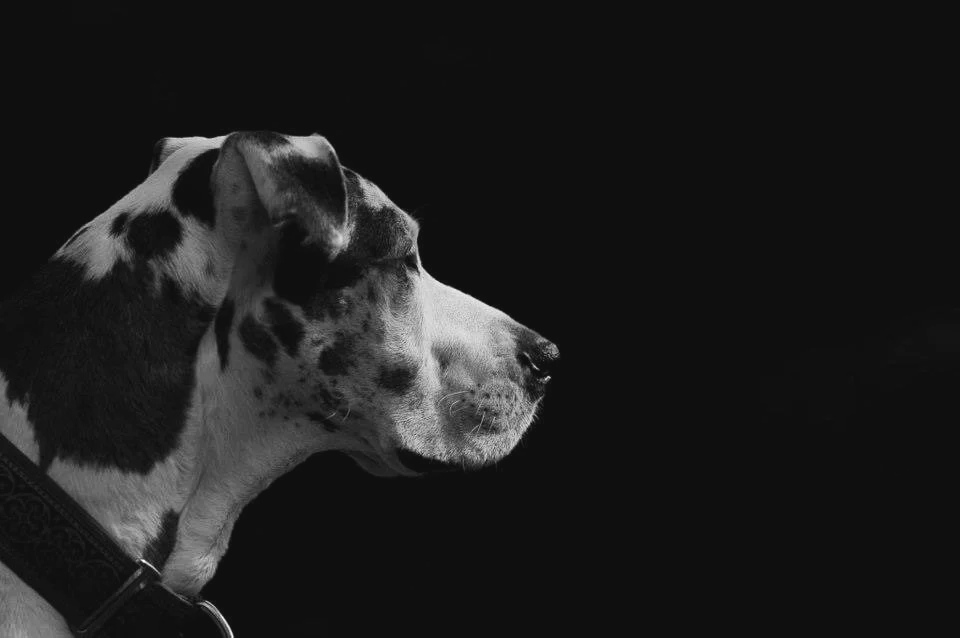
Maybe your dog was attacked once and now reacts to dogs who look nothing like the dog who attacked him.
Maybe one terrible grooming appointment changed how he feels about clippers, strangers touching his feet, the car ride to the salon — or all of it.
Maybe the original event happened years ago, but something today can still make his body behave as though it is happening all over again.
This is one of those places where understanding behavior changes what we do next.
The dog is not sitting there reviewing the event like a human telling a story about his childhood. But dogs absolutely learn through association, and fear learning can be powerful because its purpose is survival.
If something frightened or hurt you badly once, being prepared the next time you encounter anything similar is useful.
Until it isn't.
How Does a Trauma Imprint Happen?
Imagine a dog who has a frightening experience at a veterinary hospital.
Maybe he is already sick and uncomfortable when he arrives. He smells disinfectant and other animals. He hears metal doors and barking. His person is nervous. A stranger restrains him. Something hurts.
His brain does not have to decide which one of those things caused the danger before learning from the experience.
It can gather the entire scene.
The veterinary building. The exam table. A white coat. A particular smell. Being held around the chest. The car ride that came before it. The sound of nail clippers. A person reaching toward a paw.
That is why the trigger later can look unrelated to us.
How the Association Can Form
This can happen after a dramatic event such as a dog attack or accident, but the experience does not have to make the evening news to matter to the dog.
A grooming incident, painful ear treatment, repeated frightening handling, being trapped by another dog, a period of abandonment, shelter life, a severe storm, a medical emergency or repeated experiences where the dog felt unable to escape can all shape future responses.
And repeated lower-level fear can matter too. Trauma is not always one enormous event. Sometimes the pattern is built through repetition.
Why Can a Smell, Sound or Place Trigger Such a Big Reaction?
Because fear learning is not limited to the obvious thing we humans identify as “the cause.”
If your dog was attacked by a large black dog, you may expect him to react to large black dogs.
But perhaps the attack happened beside a chain-link fence while another dog barked. Maybe his leash tightened just before the attack. Maybe it happened at dusk.
Later, the dog reacts beside fences. Or when he hears a certain bark. Or when the leash suddenly tightens.
We say:
“But nothing happened!”
Nothing happened today.
The cue may still carry information from what happened before.
Why Doesn't the Dog Just Learn That It's Safe Now?
Sometimes he does.
But one of the most important things to understand about fear learning is that reducing a fear response does not necessarily mean the original association has been erased.
In learning research, repeated safe experiences with a former trigger can build new learning: this cue does not always predict danger anymore.
But the older fear association can remain available.
That helps explain something dog parents find incredibly frustrating: a dog can make beautiful progress and then suddenly react again.
Maybe months have passed. Maybe the dog is in a different environment. Maybe he is already stressed. Maybe one new frightening event occurs.
The old response can reappear.
This is also why I do not consider one bad day proof that months of progress disappeared.
If the dog recovers faster, needs less distance, can disengage sooner or returns to baseline more easily than he once did, those changes matter.
Not Every Fearful Dog Has a Known Trauma
I also want to be careful about assuming there must be a terrible hidden story every time a dog is fearful.
Genetics matter. Early development matters. Socialization matters. Pain and health matter. Temperament matters. A puppy can develop fear without having been abused, and a rescue dog who ducks when someone raises a hand does not automatically prove somebody hit him.
Sometimes we know exactly what happened because we watched it happen.
Sometimes we have a reasonable suspicion.
Sometimes we will never know.
We can still work with the dog who stands in front of us today.
If you're trying to understand the difference between trauma, chronic anxiety and more PTSD-like patterns, read: Can Dogs Have PTSD? Understanding Trauma, Anxiety & Recovery →
The Body Can Make an Old Fear Easier to Trigger
This is where the WellOiledK9 side of behavior becomes important.
Learned fear is behavioral, but behavior happens in a body.
A dog who is painful, itchy, exhausted, sick, chronically over-aroused or already carrying a heavy stress load may have less capacity to handle a trigger that he manages reasonably well on a better day.
That does not mean nutrition caused the traumatic memory or that fixing the gut magically erases learned fear.
It means I care about the foundation we are asking the dog to learn on.
Think About Threshold, Not Just the Trigger
If an old trigger is a 5 on your dog's scale but pain, poor sleep, houseguests and a chaotic week have already taken him to an 8, it may take very little to push the dog into a full reaction.
That is why trauma recovery can involve both new behavioral learning and support for the dog's overall ability to regulate, rest and recover.
Read: The Over-Aroused Dog — When Your Dog Can't Settle Down →
Read: Whose Stress Is It? How Household Stress Affects Your Dog →
Where Essential Oils Fit Into Trauma Recovery
Scent is one of my favorite tools for emotional work precisely because smell and emotional memory are so closely connected.
But I do not think about essential oils as an eraser that removes a fear memory.
I use aromatherapy as one tool for creating a calmer state, supporting emotional regulation and intentionally building new associations around safety, rest, handling or recovery.
The timing matters.
If I introduce a brand-new aroma for the first time while a dog is in the middle of absolute panic, I also have to consider what association I may be creating with that scent.
I would much rather introduce supportive scents when the dog is calm and has the ability to experience them without being overwhelmed. Then that aroma can become part of a familiar calming routine that may later be useful when stress begins to rise.
Go deeper into scent association: Introducing Essential Oils to Dogs: How Scent Imprinting Shapes Emotional Responses →
For the emotional-release side of aromatherapy: Emotional Release for Dogs →
What About Reiki, Emotional Release and Energy Work?
This is another part of my work, and I think it is useful to be clear about how I hold these different pieces.
The learning-science explanation for trauma focuses on fear conditioning, memory, context, arousal and new safety learning.
In my energy and emotional work, I also look at what I describe as emotional patterns or an imprint the dog still seems to carry.
I do not need those two frameworks to be identical in order to use both thoughtfully.
Reiki, emotional release work, animal communication and related modalities are not obedience training. They do not teach a dog that another dog on the sidewalk is safe or automatically teach him how to tolerate nail trimming.
Their role is different.
What I am looking for is not some dramatic performance where the dog “releases trauma” on command.
Often the useful changes are quieter.
A deeper exhale.
A dog who finally sleeps.
Softer body language.
Less vigilance.
More willingness to engage.
Faster recovery after something difficult.
Those changes can give us a dog who is more available for the behavioral work that still needs to happen.
Supporting the Nervous System Is Not the Same as Avoiding the Trigger Forever
This distinction is critical.
If your dog became frightened after a bad experience, removing all pressure for a short period may be exactly what he needs.
But permanent avoidance can leave the original prediction untouched.
At some point, depending on the dog and the trigger, recovery may require carefully creating new experiences in which the old cue is present but the terrible outcome does not occur.
That process needs to be appropriate for the individual dog.
Too much, too fast can overwhelm him again.
Too little may never create enough new information to change his expectation.
This Is Where WellOiledK9 Hands the Dog Back to The K9 Coach
Here on WellOiledK9, I want you to understand why the reaction may still be happening, what can affect the dog's nervous-system capacity, and what complementary tools may support emotional recovery.
But when the question becomes: “How do I actually rebuild confidence around the thing that frightened my dog?” — that becomes training and behavior-modification work.
What If the Traumatic Event Just Happened?
That is a slightly different conversation.
After a dog attack, frightening procedure, grooming incident, accident or another overwhelming event, I do not want to wait six months to see whether a new fear develops.
The immediate priorities are safety, appropriate medical care when needed, reducing unnecessary additional stress, helping the dog recover physically and emotionally, and being thoughtful about what experiences come next.
I have a separate article specifically for that window:
What If This Happened Years Ago?
Then we work with the dog we have now.
I do not think an old experience has to become the permanent explanation for everything a dog does.
The behavior may be deeply practiced. The fear association may be strong. We may never even know exactly what happened.
But dogs continue learning.
New experiences can be built.
The nervous system can experience more safety.
The dog can develop different responses.
Progress may be slower than it would have been if we had intervened immediately, but old does not automatically mean permanent.
Trauma Recovery Is Usually More Than One Thing
This is where I think people get stuck looking for the one tool.
The perfect oil.
The perfect trainer.
The perfect supplement.
The perfect technique.
I rarely think that way.
A dog recovering from trauma may need a safer environment, better management, physical comfort, adequate sleep, fewer unnecessary stressors, appropriate veterinary care, nervous-system support and carefully planned behavior work.
Essential oils may fit.
Reiki may fit.
Emotional release work may fit.
Animal communication may fit.
And none of those automatically replaces the need to teach the dog that the world can now work differently.
Frequently Asked Questions
Can dogs remember traumatic experiences?
Dogs can form strong learned associations around frightening or painful experiences. They may later respond to sights, smells, sounds, people, places or handling that became associated with the original event, even when the present situation is safe.
Why is my dog suddenly afraid of something after one bad experience?
Fear learning can happen quickly because recognizing potential danger has survival value. A single intense event may be enough for a dog to associate a previously neutral cue with something frightening or painful.
Can an old fear come back after my dog seemed better?
Yes. Fear reduction often involves learning a newer safety association rather than simply deleting the original fear memory. Old responses can sometimes reappear with time, stress, a change in environment or another frightening experience. That does not mean all previous progress was lost.
Can smells trigger traumatic memories in dogs?
Smell can become part of an emotional association just like sounds, places, handling or other sensory cues. Because dogs rely so heavily on scent, I pay particular attention to odors that were present during frightening experiences and to the way new aromatherapy scents are introduced.
Can essential oils erase trauma in dogs?
I do not think of essential oils as erasing a learned fear memory. I use aromatherapy to support calm, grounding, emotional regulation and intentional positive scent associations as one part of a larger recovery plan.
Can Reiki help a traumatized dog?
Reiki is a complementary energy modality I use to create a quiet, low-demand environment that may support relaxation and emotional settling. It does not replace veterinary care or behavior modification, but it may be useful alongside those approaches for sensitive or highly stressed dogs.
Should I avoid everything that scares my dog?
Temporary distance and management can be important, especially immediately after a frightening experience or when the dog is overwhelmed. Long-term recovery may also require carefully planned opportunities to build new, safer associations rather than permanent avoidance of every trigger.
Is it too late to help a dog with old trauma?
No. Older fear patterns may require patience because they have been practiced for a long time, but dogs continue learning throughout life. Recovery focuses on the dog’s current triggers, physical and emotional capacity, environment and opportunities to build different experiences.
The Goal Is Not to Make Your Dog Forget.
The goal is to help the dog standing in front of you build enough safety, resilience and new experience that the past no longer has to control every response.
Sometimes that means behavior work. Sometimes it means nervous-system and emotional support. Sometimes it means addressing pain, sleep or another physical problem that keeps the dog close to threshold.
Often, it means putting more than one piece together.
Explore WellOiledK9 Membership → Tell Me What's Going On →Research Behind the Learning Piece
Vervliet B, Craske MG, Hermans D. Fear extinction and relapse: state of the art.
Goode TD, Maren S. Animal Models of Fear Relapse.
Research on fear extinction consistently supports the idea that reducing a conditioned fear response involves new safety learning and that old fear responses can sometimes return through processes such as renewal, reinstatement and spontaneous recovery.