
The Over Aroused Dog | The Over Trained Dog
Why Can't My Dog Settle Down?
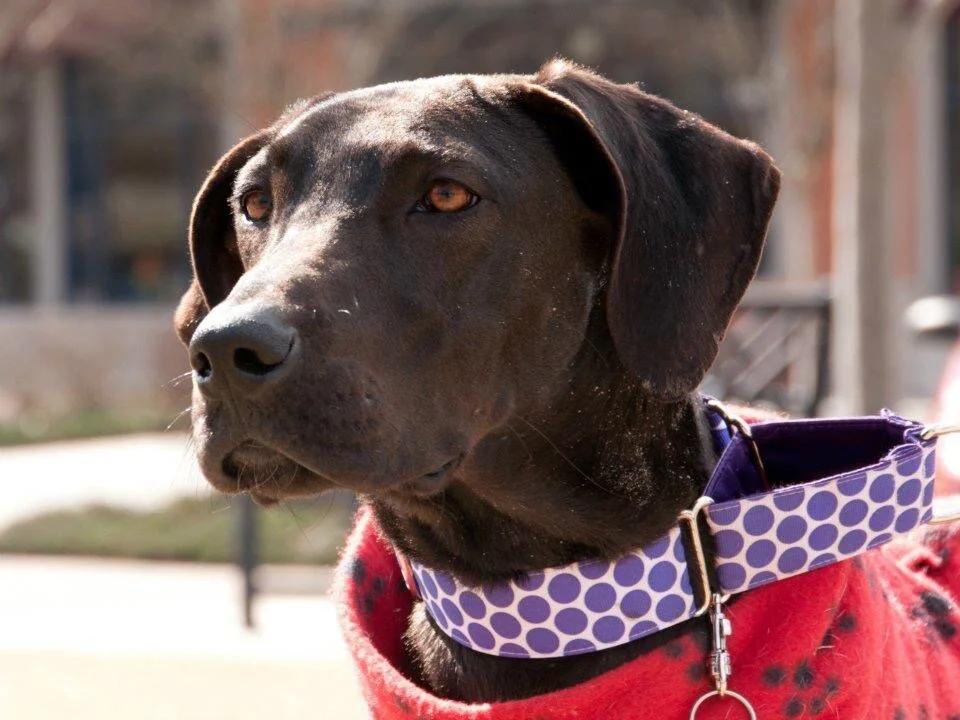
Some dogs live almost entirely in anticipation. The leash comes out and they explode. The ball appears and their brain disappears. Someone moves toward the door and they are already three steps ahead. They bark, jump, pace, scan, pull, whine, chase and react before they seem to have consciously processed what is happening.
I see this constantly.
And one of the biggest mistakes we make is assuming the answer must be more exercise, more stimulation, more obedience, more commands or a better way to physically tire the dog out.
Sometimes those things are exactly what keep the cycle going.
Over-Aroused and Over-Trained Are Similar — But They Are Not the Same
These two dogs can look surprisingly similar from across the room.
Both may be watchful. Both may have difficulty relaxing. Both may seem constantly ready for something to happen.
But what is driving that state can be very different.
The Over-Aroused Dog
This dog is living on excitement, anticipation and adrenaline. His brain is always racing toward what happens next.
The walk. The ball. The squirrel. The visitor. The car. The other dog. The food bowl. The release cue.
He may not be afraid at all. He may be thrilled.
But repeated excitement without sufficient recovery can still leave the nervous system spending far too much time in a highly activated state.
The Over-Trained Dog
This dog may be beautifully obedient but constantly monitoring the handler.
What is the next command? Was that a command? Am I supposed to move? Did I miss something? Am I about to be corrected?
He can perform brilliantly while still being unable to psychologically clock out.
Obedience and relaxation are not the same skill.
What Does an Over-Aroused Dog Look Like?
Over-arousal is not always dramatic. Sometimes it looks like chaos. Sometimes it looks like incredible focus.
What I am watching for is a dog whose internal speed rarely seems to drop.
Excitement Is Normal. The Problem Is When Recovery Goes Missing.
I am not trying to turn dogs into furry throw pillows.
Dogs should run. Play. Work. Train. Chase things when appropriate. Get excited when their favorite person comes home. Enjoy a hike. Lose their minds for thirty seconds over a really good dinner.
Arousal is normal.
What matters is whether the dog can move back out of that state.
The dogs I worry about are skipping those last two steps.
They go from walk to window barking to ball throwing to visitor arrival to training session to dinner anticipation to evening patrol.
Every activity may look harmless by itself.
The problem is that the dog rarely experiences a meaningful period of true recovery between them.
Over-Arousal Eventually Becomes a Wellness Conversation
Once a dog spends enough time in chronic activation, I stop viewing the problem as merely behavioral.
Stress physiology involves the nervous system and hormonal systems designed to help an animal respond to challenges. Those systems are useful and necessary.
The concern is repeated activation without enough opportunity to recover.
That is why I begin looking beyond what the dog is doing and start asking how the dog is functioning physically.
I have a separate article devoted to what ongoing anxiety and stress can do throughout the body. If your dog seems permanently on edge rather than simply excitable, read this next.
Read: When Stress Won't Stop — How Chronic Anxiety Affects Your Dog's Body and Behavior →
The Dog Who Never Got to Clock Out
Years ago, a family drove from Charlotte to Myrtle Beach to spend an entire weekend with me in an immersion training program.
Their dog was highly trained.
I mean highly trained — almost military-style in his precision. He knew his commands. He listened closely. He was responsive to his handler.
If I had evaluated training skill alone, I could have easily concluded that this was an exceptionally well-trained dog.
But spending the entire weekend with the family showed me something I might never have seen during ordinary weekly lessons.
The dog was stressed out of his mind.
He seemed to sleep with one eye open and one ear listening.
He was constantly monitoring his handler — not simply watching the environment or guarding the home, but listening for every word, every movement and every possible command.
There was an underlying sense that he could not afford to miss something.
What if a command came and he did not hear it?
What if he responded too slowly?
What if he missed the cue and was corrected?
This was not a military working dog waiting for deployment.
This was a pet dog living in a home.
Yet he never seemed to believe he was truly off duty.
That weekend changed the assessment.
If I had seen that dog for one lesson a week, I might have seen beautiful obedience, good handler focus and technical skill.
Living with the family for the weekend allowed me to see the lifestyle around the training — and the dog in the hours between the commands.
That is where the real problem became obvious.
But Working Dogs Need to Clock Out Too
The fact that the dog in that story was a pet dog matters — but it also raises an important question about dogs who actually do have jobs.
Service dogs, military dogs, law-enforcement dogs, detection dogs, sport dogs and other working dogs may be asked to maintain levels of attention, responsiveness and environmental awareness that we would never expect from the average companion dog.
That does not remove their biological need for recovery.
In fact, I would argue the opposite.
A service dog may be exceptionally skilled at recognizing changes in a handler, navigating a public environment or performing trained tasks. But that dog still needs sleep, decompression, physical recovery, unstructured movement and periods when every movement of the handler does not require a response.
Working capacity and recovery capacity belong in the same conversation.
A dog who never stops monitoring may continue performing for a very long time before the strain becomes obvious.
That is one reason I talk so much about protecting the health and longevity of service and working dogs — not merely whether they can continue completing the task.
Read: Holistic Wellness for Service Dogs — Supporting the Dog Behind the Job →
Can a Dog Be Obedient and Still Be Stressed?
Absolutely.
This is one of the biggest misconceptions I want pet parents to understand.
A dog can hold a perfect place command while waiting intensely for release.
A dog can sit at the door while every muscle in his body says GO.
A dog can heel beautifully while hyper-monitoring every movement of the handler.
A dog can remain physically still and still be completely aroused internally.
Compliance tells me what the dog is doing.
It does not automatically tell me how the dog feels while doing it.
| What We See | What I Also Want to Know |
|---|---|
| The dog is lying on place. | Is he actually resting, or staring at the handler waiting for release? |
| The dog sits before going outside. | Is his nervous system calmer, or is he sitting while internally exploding? |
| The dog has excellent handler focus. | Can he appropriately disengage from the handler when nothing is required? |
| The dog exercises for hours. | Does he become calmer afterward, or simply fitter and ready for more stimulation? |
| The dog appears tired. | Can he actually transition into deep, restorative rest? |
Sleep Is One of the First Things I Want to Know About
When someone tells me their dog cannot settle, I want to know how that dog sleeps.
Not just whether he lies down.
Does he sleep deeply?
Does ordinary movement in the house wake him?
Does he follow someone every time they stand up?
Does he patrol windows and doors?
Does he seem to rest with one ear permanently listening?
Does he finally crash only after he is completely exhausted?
Sleep is a fundamental biological process in dogs. Rest and restorative sleep support cognition, recovery and normal physical regulation.
A dog who is chronically under-rested may therefore be entering tomorrow's stress bucket before today's has completely emptied.
The Gut Is Listening Too
This is another reason the article belongs on WellOiledK9.
Stress does not stay neatly inside the dog's head.
The nervous system, digestive system, immune system and microbiome communicate continually.
So when my over-aroused dog also has loose stool, reflux, nausea, food intolerance, yeast, inconsistent appetite or a digestive flare every time life gets chaotic, I do not automatically treat those as two unrelated cases.
I have a separate article specifically about dogs who develop digestive, skin or inflammatory flares after periods of stress.
Read: Why Does My Dog's Digestive System Flare After Stress? →
And for the deeper gut-brain explanation:
Read: How Your Dog's Gut Influences Their Brain and Behavior →
Food Cannot Train an Off Switch — But Nutrition Still Matters
I do not want this discussion turning into “feed your dog this food and he will magically become calm.”
That is not how behavior works.
But I also do not want a chronically stressed, highly active dog trying to regulate himself on a poor nutritional foundation.
Protein and amino acids, appropriate fats, minerals, vitamins, hydration, digestive health and adequate calories all support the body that has to perform, recover, sleep and regulate.
If the dog is simultaneously itchy, inflamed, digestively uncomfortable or poorly nourished, we may be adding physical stress to an already overloaded system.
Read: Can Dog Food Affect Behavior? Nutrition, Anxiety, Aggression & Reactivity →
How I May Help the Body Practice Coming Down
Once I understand that a dog has difficulty returning to baseline, I may use more than nutrition and behavior work.
This is where many of the natural wellness tools I use fit beautifully.
Not because one oil, one PEMF session or one Reiki treatment is going to magically “fix” an over-aroused dog.
Their value is different.
I may layer these tools with fresh-food nutrition, gut support, appropriate movement, better sleep opportunity and changes to the dog's overall stress load.
The specific combination depends on the dog.
Read: Reiki for Dogs — Helping the Body Move From “On” Toward Rest →
Read: Essential Oils for Anxiety and Emotional Support in Dogs →
More Exercise Does Not Automatically Create a Calmer Dog
Movement is important.
Exercise is important.
Dogs need appropriate physical outlets.
But I want to get rid of the assumption that every over-aroused dog simply needs to be exhausted harder.
A dog can become extremely physically fit at activities that also keep him highly activated.
Ball. Ball. Ball. Ball.
Run. Chase. Tug. Daycare. Agility. Walk. Training. Repeat.
And then the family says:
“I don't understand. We exercise him constantly and he still never settles.”
That sentence is information.
I want to look not only at how much energy the dog expends, but at what state of mind and body those activities repeatedly create — and whether the dog is getting enough lower-arousal movement, sniffing, wandering, sleep and true downtime between them.
So What Should a Pet Parent Look at First?
On WellOiledK9, I am not going to give you a complete behavior-modification program for a dog I have never met.
I do want you to start looking at the right questions.
The Training Side of This Matters Too
This is where I deliberately separate the two parts of my work.
WellOiledK9 is where I want you to understand why chronic arousal and chronic stress become a whole-body issue.
But training, handler behavior, leadership, expectations, lifestyle and the way we structure the dog's day can absolutely contribute to the problem — or help resolve it.
That discussion belongs more deeply on The K9 Coach.
I have a companion article on The K9 Coach about over-aroused and over-trained dogs. That is where I talk more directly about state of mind, obedience, handler expectations and changing the way we work with the dog.
Read The K9 Coach: The Over-Aroused Dog | The Over-Trained Dog →
Frequently Asked Questions
Why can't my dog settle down?
A dog who cannot settle may be dealing with over-arousal, anxiety, chronic stress, inadequate sleep, pain, physical discomfort, environmental stimulation, learned anticipation or a lifestyle that rarely allows true recovery. I look at both the dog's behavior and what may be happening physically underneath it.
What does over-arousal look like in dogs?
Over-aroused dogs may pace, whine, bark, jump, mouth, pull, scan, react quickly, struggle to think around exciting events and take a long time to return to baseline afterward. Some dogs look wildly excited; others appear intensely focused and ready for the next event.
Is an over-aroused dog the same as an anxious dog?
No. Anxiety can certainly create high arousal, but excitement and anticipation can also produce a highly activated dog. Some of the most over-aroused dogs I see are not obviously fearful at all. They are enthusiastic, stimulated and perpetually anticipating what happens next.
Can a dog be over-trained?
Yes, particularly when training creates constant vigilance around the handler rather than helping the dog develop both useful skills and the ability to disengage. A dog may be extremely obedient while remaining internally tense, anticipatory or worried about missing the next cue.
Can too much exercise make a dog more hyper?
Exercise itself is not the problem, and appropriate physical activity is important. But repeatedly using highly stimulating exercise as the only way to manage an already over-aroused dog may improve physical fitness without improving recovery. I want an appropriate balance of activity, lower-arousal movement, sleep and genuine downtime.
Can chronic stress affect my dog's gut?
Yes. The gut and brain communicate in both directions. If behavioral stress and digestive flares repeatedly occur together, I want to look at both rather than assuming the timing is meaningless.
Can poor sleep affect dog behavior?
Sleep is essential for normal physiological and cognitive function. When a dog is unable to settle, sleeps lightly or repeatedly wakes to monitor the environment, sleep belongs in the assessment.
Can essential oils, Reiki or PEMF help an over-aroused dog?
They may be useful supportive tools when selected appropriately. I may use aromatherapy, Reiki, PEMF, massage or other modalities to support physical relaxation, emotional settling and recovery. They do not replace changes to training, lifestyle, sleep, pain management, nutrition or other contributors keeping the dog chronically activated.
Do service dogs and working dogs need off-duty time?
Yes. A working dog may have extraordinary focus and job-specific skills, but the biological need for sleep, recovery, decompression and genuine downtime remains. The more consistently a dog is expected to be attentive and responsive, the more intentionally I want to protect opportunities for that dog to truly come off duty.
How do I calm an over-aroused dog?
First determine what is driving the state. The plan may involve changes to stimulation, sleep, exercise, training, household routines, pain or medical care, nutrition, digestive support and stress load. A chronically over-aroused dog usually needs more than one calming trick, and the training side should be individualized to the dog.
If Your Dog Has No Off Switch, I Want to Look at More Than Obedience.
If your dog is constantly excited, restless, reactive, unable to settle or always waiting for what happens next, there may be more going on than excess energy.
I want to know how the dog sleeps, eats, digests, recovers, handles stress, responds to stimulation and behaves when nobody is asking him to do anything.
Sometimes that is where the real story finally shows up.
Tell Me What Is Going On With Your Dog →Research Worth Reading
Macchi E, et al. Behavioral and Cortisol-Based Evaluation of Stress in Dogs During Agility Training. Journal of Applied Animal Welfare Science. 2026. View on PubMed.
Lensen RCMM, Moons CPH, Diederich C. Physiological stress reactivity and recovery related to behavioral traits in dogs. PLOS ONE. 2019. View on PubMed.
Mondino A, et al. Sleep Disorders in Dogs: A Pathophysiological and Clinical Review. Topics in Companion Animal Medicine. 2021. View on PubMed.
Patel KV, et al. Impact of Acute Stress on the Canine Gut Microbiota. Scientific Reports. 2024. View on PubMed.