

Understanding PTSD in Dogs
More Than Just Anxiety
When most people hear the term PTSD, they think of military veterans or people who have experienced major life-threatening events. I think sometimes forget people and pets can have similar repsonses to medical experiences, car accidents, emotional abandonment, etc.
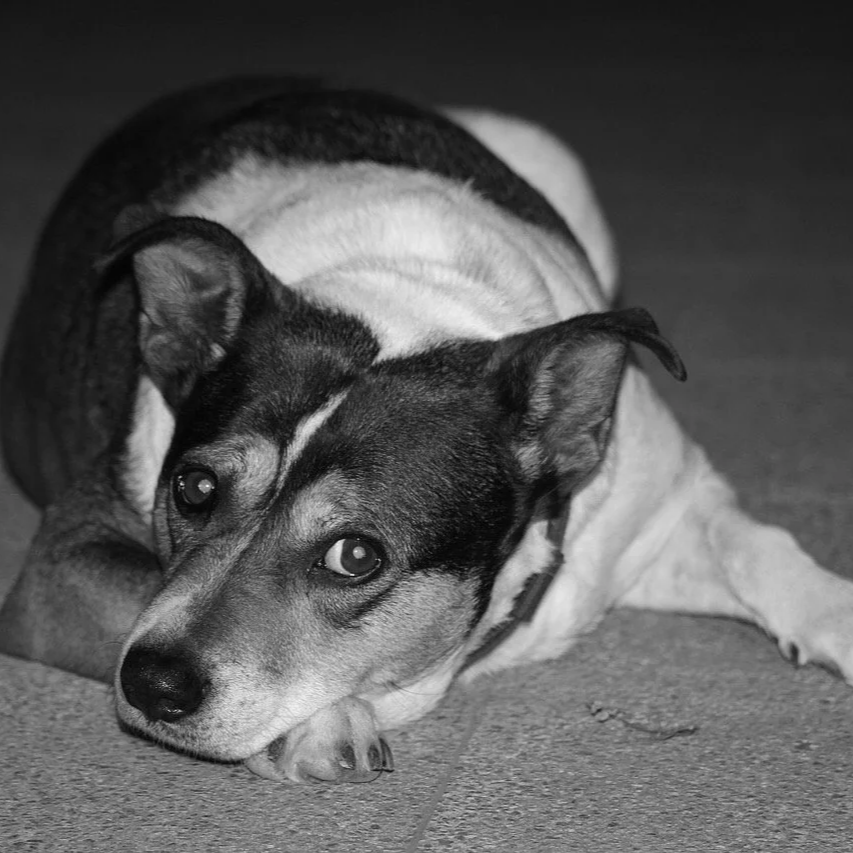
Not every difficult experience leads to PTSD, but some events leave a lasting imprint on a dog's nervous system. A dog who has been abused, neglected, attacked by another dog, involved in a car accident, lost during a storm, injured, abandoned, repeatedly rehomed (through no fault of their own) , or exposed to chronic fear may continue carrying the effects long after the event itself is over. Even when the pet parent seems to be trying to love and keep the dog safe. I
Sometimes the cause is obvious. A rescue dog flinches when someone raises their hand, and we can easily imagine what may have happened in their past.
Other times, the trauma is invisible.
A dog who was trapped in a house fire. A puppy who spent months isolated during critical developmental periods. A dog who experienced painful medical procedures. A dog who lived through hurricanes, fireworks, gunfire, or severe thunderstorms. Even a single terrifying event can change how a dog views the world.
The challenge is that trauma doesn't always stay attached to the original event.
The dog may no longer be afraid of the car accident itself, but now becomes fearful of riding in the car. They may not remember the specific dog that attacked them, but they become reactive whenever another dog approaches. They may not understand why they feel unsafe during a thunderstorm, only that their body remembers the fear.
That's what makes PTSD so difficult.
The danger may be gone, but the nervous system hasn't figured that out yet.
For many dogs, life begins to feel like a constant state of waiting for the next bad thing to happen.
They struggle to relax. They sleep lightly. They startle easily. They constantly monitor their surroundings. Some become reactive, bark excessively, or develop aggressive behaviors because they feel they must protect themselves before something bad happens again.
Others go in the opposite direction.
They become withdrawn. Quiet. Shut down. They stop exploring, stop engaging, and seem emotionally distant. Many people mistake this for a calm dog when, in reality, the dog may simply be surviving the only way they know how.
What breaks my heart is that these dogs are often misunderstood.
People see the barking, growling, reactivity, anxiety, or clinginess and assume the dog is being difficult.
But underneath those behaviors is often a dog who doesn't feel safe.
A dog whose brain is working overtime trying to prevent another frightening experience.
And that chronic state of stress doesn't just affect behavior.
The body was never designed to live in survival mode forever.
Over time, prolonged stress can influence sleep quality, digestion, inflammation, immune function, pain levels, and overall resilience. Dogs living in a constant state of hypervigilance often have difficulty fully resting, fully healing, and fully recovering. The mind and body become trapped in a cycle where each continues to affect the other.
The encouraging news is that PTSD is not a life sentence.
Dogs are incredibly resilient.
I've seen rescue dogs who were terrified of people eventually become affectionate companions. I've seen dogs who couldn't walk past another dog without reacting learn to navigate the world with confidence. I've seen dogs who spent years afraid finally discover what it feels like to relax.
Healing rarely happens overnight, and it rarely comes from a single solution.
Recovery is often built through hundreds of small moments where the dog learns that life is different now.
That they are safe.
That they are heard.
That they no longer have to carry the burden of surviving every minute of every day.
This is where a truly holistic approach can make a tremendous difference. Nutrition, gut health, pain management, decompression, training, and environmental changes all play a role. I also frequently use tools such as essential oils, adaptogenic herbs, medicinal mushrooms, PEMF, Reiki, and Raindrop Technique to support the nervous system, release trauma, and help dogs move out of chronic stress and into a state where healing can occur.
None of these approaches erase the past.
What they can do is help the dog build a new relationship with the present.
Because recovery isn't about forgetting what happened.
It's about helping the nervous system realize that what happened is over.
And that they are safe and supported.
When DIY Isn't Enough Already tried the basics? If this is happening with your dog and you're still stuck, I can help you figure out what deserves attention next.
Request a Discovery Callback →