

Dog Safe Vegetable Broth
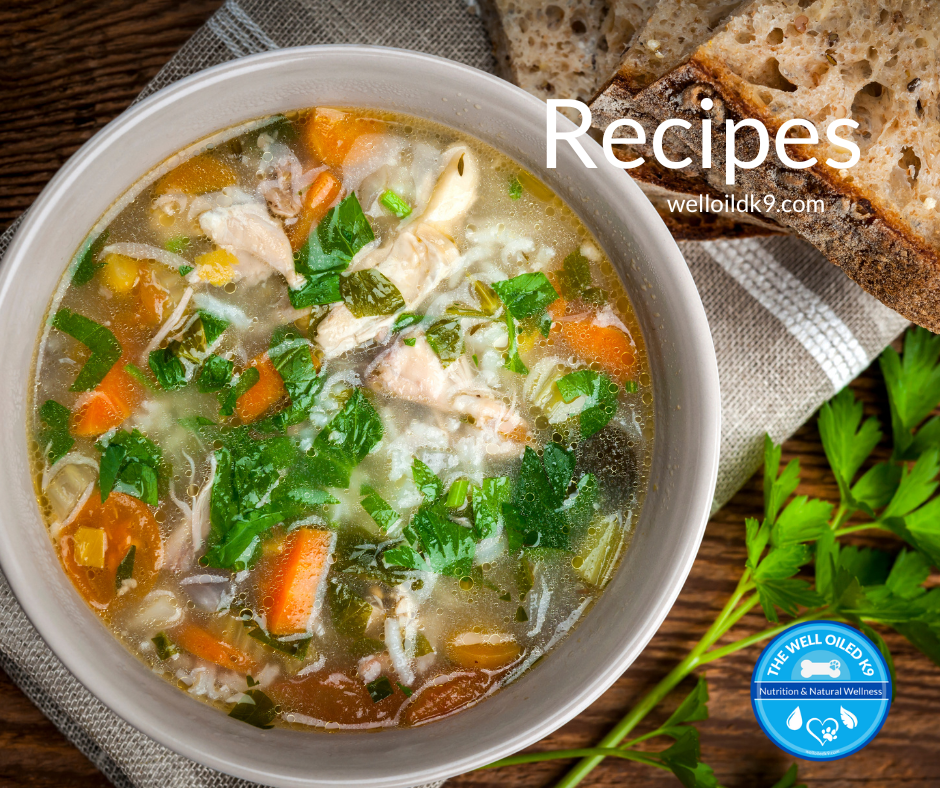
Vegetable Broth for Dogs: A Gentle Low-Fat Topper for Recovery, Hydration, and Better Nutrition
When your dog will not eat, is recovering from an upset stomach, or needs something gentle added to the bowl, it is easy to panic and start grabbing random foods.
Chicken. Rice. Broth. Scrambled egg. Pumpkin. Whatever someone on Facebook swears saved their dog in 2017.
Sometimes that works.
Sometimes it makes things worse.
A simple homemade vegetable broth can be a helpful middle ground. It adds moisture, aroma, gentle nutrients, functional herbs or functional mushrooms, and whole-food goodness without automatically dumping extra fat into the bowl. That can be especially useful for dogs who need low-fat support, dogs recovering from digestive upset, seniors, kibble-fed dogs, and dogs who need encouragement to eat.
This is not a full diet plan. It is not a cure. It is not a magic soup.
It is one practical tool you can keep in your freezer for the days when your dog needs a little extra support.
What are you hoping vegetable broth will help with?
You may just want a healthy topper. Or you may be here because your dog will not eat, is recovering from pancreatitis, is getting older, needs more hydration, or is dealing with a bigger health problem.
Those are very different situations. Choose what brought you here and I’ll point you toward the information that makes the most sense.
Not sure which one fits? Keep reading. The rest of the article explains when I use vegetable broth, when I would choose it over bone broth, ingredients to use and avoid, and how to make it.
Why Vegetable Broth Can Be Helpful for Dogs
Fresh vegetables can bring nutrients to your dog’s bowl in a way processed food simply does not.
Vegetables may offer:
Whole-food vitamins and minerals
Antioxidant compounds
Fiber to support the gut
Moisture for better hydration
Natural color and variety
A gentle way to add nutrients without relying only on synthetic vitamin and mineral premixes
This can be especially helpful for kibble-fed dogs, because most kibble is cooked, processed, shelf-stable, and fortified with synthetic vitamins and minerals. That does not mean every kibble-fed dog is doomed. It means the bowl can often be improved.
Vegetable broth is an easy first step.
Why This Is Different From Bone Broth
Bone broth can be wonderful in the right situation, but it is not always the best fit for every dog.
For dogs dealing with pancreatitis, nausea, vomiting, loose stool, gallbladder issues, or fat sensitivity, rich bone broth or greasy meat stock may be too much. Marrow bones, chicken skin, fatty meat scraps, and oily leftovers can turn a “healthy topper” into a problem fast.
Vegetable broth gives you another option.
It can provide moisture, flavor, and gentle nutrients without the heavier fat load that may come with meat-based broths.
This is especially important for dogs who need a low-fat topper.
Bone broth can be wonderful in the right dog, especially when you want more gelatin and collagen-rich connective tissue. If that is what you are looking for, read my Bone Broth for Dogs: Benefits, Recipe & When to Use It guide.
When I Would Consider Vegetable Broth
Vegetable broth may be helpful when your dog needs:
A low-fat food topper
Extra moisture in the bowl
A gentle appetite nudge
A way to soften kibble
Support after mild digestive upset
A bland but more nutrient-rich option than plain water
A freezer-ready option for senior dogs
A simple way to add whole-food nutrients
It may also be useful during recovery planning for dogs prone to digestive flares, including dogs who have had pancreatitis.
That said, if your dog has an active medical condition, especially pancreatitis, kidney disease, heart disease, diabetes, cancer, IBD, liver or gallbladder issues, do not assume “natural” automatically means appropriate. The details matter. The dog in front of us always changes the plan.
When Broth Is Not Enough
Please do not try to broth your way out of an emergency.
See your veterinarian promptly if your dog has:
Repeated vomiting
Bloody diarrhea
Severe or ongoing diarrhea
Signs of abdominal pain
A hunched posture or praying position
Collapse or extreme weakness
Pale gums
Refusing all food and water
Signs of dehydration
Known or suspected pancreatitis
Fever
A young puppy, senior dog, or medically fragile dog who is declining quickly
Veterinary care is important for diagnosis, fluids, pain control, nausea control, imaging, bloodwork, and stabilization when needed.
Once your dog is stable, that is where nutrition strategy, natural support, food planning, and recovery care can make a huge difference.
Why I Do Not Love “Just Add Chicken” Every Day
Adding a little fresh food to kibble can be a great idea.
But adding only chicken to the bowl every day is not the same thing as improving the diet in a balanced way.
Chicken adds protein and phosphorus, but it does not bring the full range of minerals, fiber, antioxidants, healthy fats, or plant compounds that many dogs need. Over time, daily meat-only additions can also shift the nutrient balance of the bowl.
This is why I like using thoughtful toppers instead of random extras.
Vegetable broth can be part of that strategy. It adds moisture, variety, and plant-based nutrients without turning the bowl into “kibble plus a pile of chicken.”
Read more: What Happens When You Add Chicken to Kibble Every Day
Dog-Safe Vegetable Broth Recipe
Do not get locked into the recipe. Use what you have, as long as it is dog-safe.
This is also a great way to use the vegetable scraps you would normally throw away after chopping food for your own meals. Think broccoli stalks, carrot ends, cauliflower pieces, leafy greens, celery tops, and herbs.
Just make sure they are not covered in butter, sauces, heavy salt, onions, or spicy seasonings.
Ingredients
Use a mix of dog-friendly vegetables such as:
Carrot
Celery
Sweet potato
Green cabbage
Kale
Spinach
Broccoli
Cauliflower
Collards
Zucchini
Green beans
Pumpkin
Grocery-store mushrooms such as button, cremini, shiitake, or maitake
Optional herbs:
Parsley
Cilantro
Basil
Thyme
Oregano
Ginger
Coriander
Small culinary amounts of garlic, only when appropriate for your individual dog
Use about:
1 large carrot, chopped
2 celery stalks, chopped
1 sweet potato, chopped
4 cabbage leaves or other leafy greens
1 cup grocery-store mushrooms
2 teaspoons total fresh herbs
7 cups water
Dried herbs are okay, but fresh herbs are usually more aromatic and vibrant.
Ingredients to Avoid
Do not use:
Onion
Leeks
Chives
Heavy salt
Spicy seasoning
Butter
Cooking oils
Rich sauces
Fatty meat scraps
Chicken skin
Cooked bones left in the final broth
Wild mushrooms
Anything moldy, spoiled, or questionable
When in doubt, leave it out.
Instructions
Add the vegetables, herbs, and water to a large stockpot.
Bring the pot to a gentle boil, then reduce to a low simmer.
Let it simmer for about 60 minutes.
Do not hard boil it to death. We are making broth, not punishing the vegetables.
Let the broth cool.
You can strain the liquid, or puree some of the cooked vegetables into the broth for extra fiber and texture.
Store in the refrigerator for short-term use or freeze in small portions.
Ice cube trays work beautifully for small dogs or for easy single-serving portions.
Low-Fat Recovery Version
For dogs recovering from pancreatitis, nausea, loose stool, or a digestive flare, keep this version very simple.
Use:
Water
Dog-safe vegetables
Gentle herbs if tolerated
Skip:
Marrow bones
Chicken wings
Chicken skin
Turkey necks
Fatty meat scraps
Greasy leftovers
Oils
Rich stock
If you do use any lean meat for aroma, cook it separately, chill the liquid, and skim off any fat before using it. For a dog with a pancreatitis history, I would be very careful here.
Start with a small amount. A sensitive gut does not need a soup party.
Optional Meat-Based Stock Version
For healthy dogs who tolerate it well, you can make a separate light meat stock and combine it with the vegetable broth.
Options may include:
Chicken hearts
Turkey gizzards
Lean chicken
Lean turkey
Bones used during simmering only, then fully removed
Always remove cooked bones before serving. Cooked bones should never be fed.
For dogs with pancreatitis, fat sensitivity, gallbladder issues, or a history of flares after rich foods, this is not the version I would reach for first.
How to Use Vegetable Broth
You can use vegetable broth as:
A kibble topper
A way to soften food
A hydration boost
A gentle appetite encourager
A freezer cube treat
A base for a bland recovery bowl
A way to mix in appropriate supplements when needed
I often use is during transition periods when dogs are not used to having vegetables directly in the bowl.
Start small, especially if your dog is not used to vegetables or fiber.
Too much too fast can cause gas, loose stool, or digestive grumbling. And nobody needs a gassy dog with opinions.
Whole-Dog Questions to Ask
Before assuming this broth is the whole answer, step back and look at the bigger picture.
Ask:
Is this a one-time appetite issue or a pattern?
Is my dog nauseous?
Is there vomiting or diarrhea?
Has my dog had pancreatitis before?
Is my dog on medications?
Are there liver, kidney, gallbladder, gut, or endocrine issues?
What treats, chews, oils, toppers, and table scraps are also being added?
Is my dog losing weight or muscle?
Is stool normal, soft, greasy, mucus-covered, or inconsistent?
Did stress, boarding, travel, vaccines, medications, or fatty food trigger this?
Is my dog bright and comfortable, or clearly not right?
Most pet parents answer the question they are asked. What they often need is someone who asks the questions they did not know to ask.
That is where a personalized plan becomes much more helpful than a random list of “safe foods for dogs.”
Natural Support May Go Beyond the Broth
Vegetable broth can be a great starting point, but some dogs need more than a topper.
Depending on the dog, I may be thinking about support for:
Digestive enzymes
Microbiome balance
Gut lining support
Minerals and electrolytes
Liver and gallbladder support
Inflammation support
Stress and nervous system patterns
Food intolerances
TCVM patterns such as dampness, heat, stagnation, digestive weakness, or deficiency
That does not mean every dog needs every supplement. Please do not turn your kitchen counter into a supplement buffet.
The goal is to choose what fits your dog’s situation.
You can browse support categories here: https://welloiledk9.com/products
Need Help Figuring Out What Belongs in Your Dog’s Bowl?
This broth is a simple food-based tool. It may help with hydration, appetite, and gentle nutrition.
But if your dog keeps refusing food, keeps having flares, has pancreatitis, has chronic gut issues, or reacts to everything you try, the broth is not the whole plan.
That is when we need to look at the full dog: diet history, symptoms, labs, medications, stool, appetite, weight, stress, triggers, and what has already failed.
Submit an inquiry and let’s see what I can do to help. No obligation — the inquiry callback is no cost to you.
https://welloiledk9.com/contact-me
Want deeper education, Q&A, and ongoing support?
https://welloiledk9.com/membership
Related Content
Natural support for dogs with digestive flares (coming soon)
When DIY Isn't Enough Already tried the basics? If this is happening with your dog and you're still stuck, I can help you figure out what deserves attention next. Want reliable education, live Q&A, and member resources? Explore Membership →
Request a Discovery Callback →