Natural Appetite Support During Illness and Recovery
When Your Dog Refuses Food, Start With Why
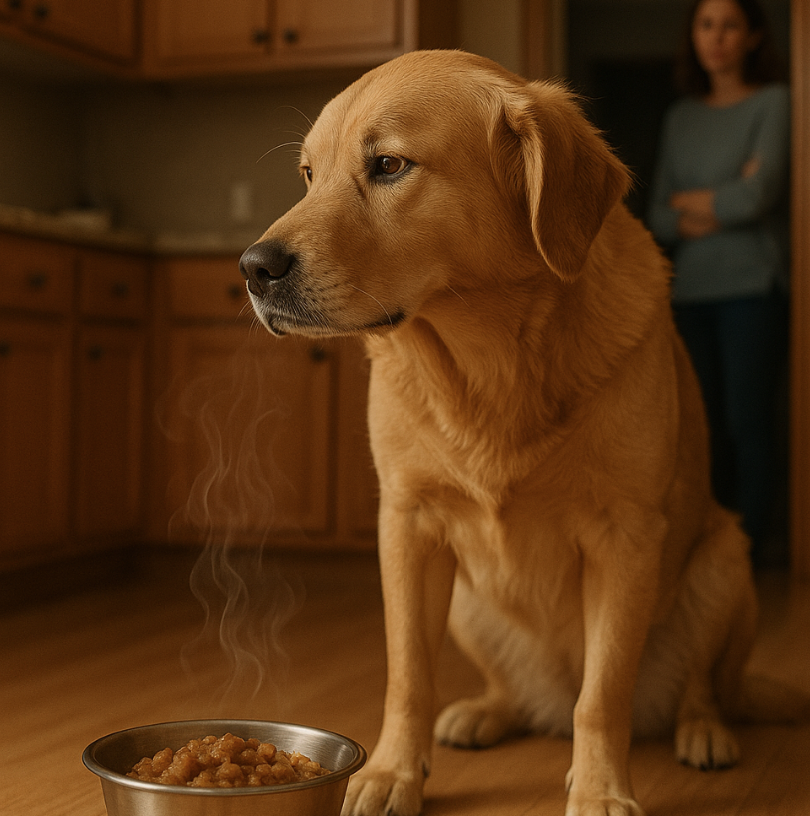
When your dog suddenly won't eat, it is hard not to panic—especially if they are a senior, recovering from surgery, dealing with pancreatitis, receiving chemotherapy or trying to regain strength after illness.
You warm the food. Offer the favorite treat. Add a topper. Hand-feed one bite and watch them chew as though the fate of the universe depends on whether they swallow it.
A skipped meal does not always mean an emergency. But appetite loss should not automatically be dismissed as stubbornness or picky eating either.
The problem may be nausea, pain, reflux, constipation, dental disease, dehydration, medication, illness—or something as simple as the food no longer smelling, tasting or feeling good to that dog.
What is making this dog decide that eating is a bad idea?
First Rule Out a Medical Reason Your Dog Won't Eat
Appetite loss is a symptom—not a diagnosis.
Nausea & GI Upset
Reflux, gastritis, pancreatitis, constipation, diarrhea, intestinal inflammation and other digestive problems can make food feel like a bad idea.
Pain
Abdominal pain, arthritis, spinal pain, dental pain, surgical pain and cancer-related discomfort can all suppress appetite.
Medication Effects
Antibiotics, anesthesia, chemotherapy and other medications can affect nausea, taste, digestion and willingness to eat.
Kidney, Liver & Endocrine Changes
Kidney disease, liver disease, Addison's disease, diabetes and other systemic problems may first show themselves through appetite changes.
Dental or Oral Pain
A dog may be hungry but unwilling to chew because of periodontal disease, a cracked or infected tooth, sore gums or another painful mouth problem.
Dropping food, chewing on one side or backing away after the first bite deserve a closer look.
Swallowing Problems
A dog who wants food but coughs, gags, repeatedly swallows or regurgitates may be dealing with a swallowing or esophageal problem rather than simple poor appetite.
What about a blockage?
A partial or complete intestinal obstruction or swallowed foreign object can cause food refusal, vomiting, abdominal pain, lethargy, bloating and inability to keep food or water down.
This is not an appetite-stimulant problem.
Repeated vomiting or retching, abdominal pain or swelling, collapse, severe weakness or concern that your dog swallowed a toy, sock, bone, corn cob or another object deserves prompt veterinary evaluation.
Sometimes the Problem Is the Food Itself
Same Food, Every Day, for Years
Some dogs happily eat the same meal forever. Others seem to eventually become bored or burned out on the same flavor, protein and texture.
Thoughtful rotation and variety may bring interest back without creating chaotic daily food changes.
Picky Eating, Rotation & Food Preference →Stale or Spoiled Food
Dogs may detect odor changes before we do.
Check freshness, storage, moisture exposure, refrigeration, bag damage and whether the food simply smells different from the last batch.
Rancid Fats in Kibble
Dry food contains fats that can oxidize with heat, air and time. An opened bag stored poorly or kept too long may become much less appealing.
If it smells stale, oily or different, replace it rather than disguising it.
Mold or Mycotoxin Concerns
Food contamination is another reason not to assume sudden refusal is behavioral.
If more than one animal eating the same food develops appetite loss, vomiting, lethargy or other unusual symptoms, stop and look at the food too.
Storage Mites
Warm, humid storage can encourage storage mites in dry food. They are more often associated with allergy concerns, but they are one more reason I pay attention to how long dry food has been open and how it is stored.
The Bowl Has Become a Pharmacy
Powders, oils, herbs, crushed medications and supplements can completely change the smell and taste of dinner.
If your dog eagerly eats plain food but refuses it after everything is mixed in, the dog may not have an appetite problem at all.
Protect the food.
When appetite is fragile, I often prefer giving supportive products separately when possible rather than making the one food the dog may eat taste like every supplement in the cabinet.
Your Dog May No Longer Want Food Prepared the Same Way
Dogs change. Digestion changes. Teeth change. Smell changes. What worked five years ago may not work today.
Your Dog May Simply Be Done With Raw
I believe strongly in fresh food, but I am not married to one preparation style.
A dog may eat raw beautifully for years and later prefer—or better tolerate— gently cooked food.
Aging, illness, digestive changes, dental discomfort, recovery and simple preference can all change what works.
Moving from raw to gently cooked isn't a failure. It is adapting the food to the dog.
My own very old dogs eventually moved from raw to gently cooked because that was what made sense for them then.
Senior Dog Nutrition & Feeding Changes →Cold Food vs. Warmed Food
Food straight from the refrigerator has less aroma.
A senior, recovering or nauseated dog may suddenly show much more interest when food is brought closer to room temperature or gently warmed.
Warm—not hot.
Texture Can Be the Problem
Hard kibble, large chunks, raw meaty bones or chewy food may suddenly become uncomfortable when teeth, gums, jaw strength or swallowing change.
Try minced, shredded, ground, mashed, blended or gently cooked food when appropriate.
If softer food suddenly restores appetite, still investigate the mouth.
Too Dry
Dry kibble may become less appealing because it provides less moisture, less aroma and requires more chewing.
Warm water, broth or moving toward moisture-rich fresh food can make a big difference.
Dog-Safe Vegetable Broth →Too Rich
A dog recovering from pancreatitis, GI upset, chemotherapy or another illness may want food but feel terrible after something rich or fatty.
Palatable is not automatically appropriate.
Pancreatitis Recovery Nutrition →Too Much at Once
A large meal can be overwhelming to a nauseated or recovering dog.
Small amounts offered more frequently may be easier to tolerate and may also fit some dogs dealing with reflux or acidity.
Feed the dog standing in front of you—not the feeding philosophy that worked perfectly five years ago.
A TCVM Lens
From a Traditional Chinese Veterinary Medicine perspective, preparation and energetic qualities of food may also matter.
An older, colder, more Yin or deficient dog may become less interested in cold or raw foods and respond better to warm, gently cooked meals.
A dog showing Heat, Dampness, digestive stagnation or another pattern may need a different strategy.
I use that pattern as another clue—not as a substitute for ruling out nausea, dental pain, obstruction, pancreatitis or other disease.
A Senior Dog Who Stops Eating Deserves a Closer Look
Older dogs may become more selective about temperature, texture, aroma, preparation style and food variety.
A dog who ate raw for ten years may now prefer gently cooked. A dog who ignored warm meals at eight may love them at fifteen.
But appetite loss should not automatically be blamed on age.
Dental pain, nausea, reflux, constipation, medications, kidney or liver changes, pain, cognitive changes, cancer and endocrine disease can all change eating.
Seniors also have something important at stake: lean muscle. Repeated poor intake can compound weakness quickly.
Address Nausea, Reflux, Pain and Digestive Discomfort
Sometimes the dog wants to eat. Their stomach is simply telling them that eating is a terrible idea.
- Lip licking
- Repeated swallowing
- Drooling
- Gulping or burping
- Eating grass
- Sniffing food and walking away
- Restlessness
- Hunched posture
- Wanting treats but refusing meals
- Reflux-type behavior
- Taking one bite and stopping
- Repeatedly approaching the bowl
A dog who eats cheese but refuses dinner can still be nauseated. A very tempting food can sometimes override discomfort for a few bites.
Nausea Control
If nausea is significant, appropriate veterinary anti-nausea medication may be useful.
I can also think about herbs, essential oils and other digestive support based on what the dog is showing me.
Reflux & Acidity
Meal size, long gaps between meals, fat level, food tolerance and GI irritation can contribute.
Food changes, soothing herbs and carefully selected essential oils may support digestive comfort.
Pain
Abdominal pain, arthritis, dental pain, surgery or cancer-related discomfort can suppress appetite.
Reduce the discomfort and the dog may become much more willing to eat.
Offer What They Will Eat—Within the Medical Guardrails
When a dog is sick, recovering or very old, I care less about winning an argument over the theoretically perfect bowl.
I want appropriate food going into the dog voluntarily.
Warm Fresh Food
Try a familiar gently cooked meat, egg, fish or another appropriate protein. Warming increases aroma and can be especially useful for seniors.
Start Tiny
Offer a teaspoon, spoonful or a few voluntary licks. If it stays down and they ask for more, offer more.
Broth
Warm broth can add aroma, moisture and flavor. Choose something appropriate for the dog's condition.
Dog-Safe Broth →Goat Milk
Plain raw or fermented goat milk may encourage licking while adding moisture and calories.
It may not fit every dog with pancreatitis, diarrhea, dairy intolerance or poor fat tolerance.
Goat Milk for Dogs →A Little Honey
A small amount may provide quick palatable energy and encourage licking when a dog has eaten very little.
It is supportive—not a meal—and is not appropriate for every dog.
Electrolytes
Vomiting, diarrhea, poor intake and illness can affect hydration and electrolyte balance.
An appropriate canine electrolyte product may be helpful in selected dogs.
Electrolytes for Dogs →During genuine illness or recovery, appropriate food the dog will eat can be more useful than the nutritionally perfect meal they refuse.
Sometimes I Can Support the Dog Even When I Can't Get a Meal Into Them
This is an important distinction.
Not everything has to disappear inside a bowl of food.
When appetite is poor, I may be able to use carefully selected support topically, aromatically, sublingually or along the gums, depending on the product and the dog.
That can be enormously useful because I am not depending upon the dog finishing dinner before I can begin supporting nausea, stress, discomfort or recovery.
Essential Oils
This is one of the things I value about essential oils.
I don't necessarily have to get another capsule, powder or supplement into an already reluctant dog.
Appropriately selected oils can be used through routes that don't depend on a full meal, including topical or aromatic use and, when the oil/product and dilution are appropriate for oral use, very small amounts along the gums or sublingually.
The particular oil, quality, route and dilution matter. This is not permission to put random undiluted essential oils into a dog's mouth.
CBD
CBD can also be a useful part of my appetite-support toolbox.
I am especially interested in it when pain, inflammation, anxiety, cancer-related discomfort or general physical distress may be helping shut appetite down.
I don't need to pretend CBD's only value is making a dog “hungry.” If it helps the dog become more comfortable, settled or willing to eat, that can be very meaningful.
And I often prefer giving it separately rather than hiding it in the one meal I desperately want the dog to accept.
Honey, Yogurt or Goat Milk
For an alert dog who can lick and swallow normally, a tiny amount placed on a finger, spoon or along the front gums may encourage licking and provide a little supportive energy or nourishment.
This is very different from filling the mouth with food or liquid.
Broth or Electrolytes
A tiny amount may sometimes be offered along the front of the mouth or gums to encourage licking in a dog who is alert and swallowing normally.
But this is supportive—not a way to correct significant dehydration. A dog who truly needs fluids needs enough oral intake or veterinary fluid support.
The key word is voluntary.
A smear on the front gums that the dog willingly licks and swallows is not the same thing as pushing a syringe full of food or liquid into the mouth.
Natural Support Can Do More Than Simply “Make Them Hungry”
The question is what is interfering with appetite—and which tool best fits that dog.
Essential Oils
Essential oils are one of my favorite tools because they can be selected around nausea, digestive discomfort, emotional stress, pain or the gut-brain connection—and I don't necessarily need the dog to eat first.
Depending on the situation, support may be aromatic, topical or through appropriately selected oral/mucosal use.
I also avoid overwhelming a nauseated dog with strong aroma. The dog gets a vote.
Essential Oils for Dogs →CBD
CBD is not something I dismiss just because I don't describe it as a pharmaceutical-style appetite stimulant.
Pain, inflammation, anxiety, cancer-related discomfort and general unease can all interfere with eating.
If CBD helps reduce one of those barriers, appetite may improve along with the dog's comfort.
Herbs
Herbs may be selected around nausea, stomach irritation, motility, reflux, liver and gallbladder support or nervous-system balance.
Ginger is one example I may think about around nausea, while other digestive patterns call for different herbs.
Herbs for Dogs →Homeopathy
The dog who stops eating after anesthesia may look very different from the dog who stops eating with nausea, constipation, grief, fright or pain.
The whole symptom picture guides the remedy choice.
Homeopathy for Dogs →Digestive & Microbiome Support
Illness, antibiotics, hospitalization, dietary change and stress can disrupt the gut.
Fermented foods, probiotics, prebiotics and other digestive support may have a place depending upon the dog.
Hydration Support
Moisture-rich food, broth, goat milk and appropriate electrolytes may all help selected dogs.
But significant dehydration requires more than something rubbed on the gums.
What About Entyce for Dogs?
Entyce® — capromorelin — is a prescription appetite stimulant that acts on the body's hunger-signaling pathway.
And yes, it can help a dog feel hungry.
For me personally, Entyce is closer to a last-resort or temporary bridge than my first move.
If I can help the dog eat by addressing nausea, pain, reflux, constipation, dehydration, dental comfort, food quality, temperature, texture, stress or the underlying illness, I would rather begin there.
Making a dog feel hungry doesn't necessarily fix why the dog stopped eating.
If the dog is nauseated but now hungry, the nausea still exists.
If chewing hurts, hunger does not fix the tooth.
If the dog has pancreatitis, reflux, constipation, pain or dehydration, those problems still matter.
When Would I Consider It?
- A fragile senior is losing weight or muscle.
- A recovering dog has gone too long without meaningful food.
- Cancer or chemotherapy has significantly flattened appetite.
- We have addressed nausea and pain but intake remains inadequate.
- The dog needs meaningful calories while we continue working the larger problem.
If Entyce is what helps a sick dog begin eating when nutrition needs to go in, use the tool.
Then make the most of that appetite with food that provides actual nourishment.
The goal isn't just hunger. The goal is nourishment.
Follow the Reason Your Dog Isn't Eating
Pancreatitis
Nausea, abdominal pain, hydration, fat tolerance and digestibility matter. Rich toppers may make the situation worse.
Pancreatitis Recovery Nutrition →Surgery or Anesthesia
Anesthesia, pain, medication, constipation, dehydration and nausea can all affect appetite after surgery.
Surgical Recovery FAQ →Cancer & Chemotherapy
Treatment can affect nausea, smell, taste, digestion, calories and muscle.
Cancer Nutrition Support →Senior Dog
Temperature, texture, raw vs. cooked, dental comfort and muscle loss all become more important.
Senior Dog Nutrition →Just Finicky?
A bright, hydrated and comfortable dog who selectively holds out for something better may need a different approach.
Picky Eating vs. Health Concern →Not Sure Why?
Start with the symptom or diagnosis and follow the relevant path.
Use the Resource Finder →Syringe Feeding Is Force-Feeding
When people become frightened because a dog isn't eating, one of the first things they often consider is putting food, yogurt, broth, water or a blended meal into a syringe.
I understand why. You are trying desperately to get something into your dog.
But once you start pushing food or liquid into the mouth with a syringe, you have moved from encouraging voluntary intake to force-feeding.
That matters because a weak, nauseated, sedated or poorly swallowing dog may aspirate food or liquid into the airway.
It can also turn the mouth and feeding experience into a battle and create an even stronger food aversion.
Do not syringe-feed a dog who is:
- Weak or poorly responsive
- Heavily sedated
- Coughing, choking or gagging
- Struggling to swallow
- Breathing rapidly or with effort
- Repeatedly vomiting or regurgitating
- Unable to hold the head normally
- Strongly resisting
What is different?
Allowing an alert dog to voluntarily lick a tiny amount of honey, yogurt, goat milk, broth or an appropriate electrolyte from your finger, a spoon or the front gums is not the same as squirting a syringe full of liquid toward the back of the mouth.
The same distinction matters with other support. A carefully chosen product used appropriately along the gums or sublingually is different from forcing volume into a dog who cannot or does not want to swallow.
Support the mouth. Don't turn it into a battleground.
If the dog cannot voluntarily take enough food or fluid to maintain themselves, that is the point where we need to look harder at nausea, pain, hydration and medically managed nutrition support.
Then We Need to Build the Dog Back Up
When the bowl finally gets licked clean, celebrate.
Then ask how we rebuild strength and get back to sustainable nutrition.
Usable Nutrition
Moisture-rich food, adequate protein, appropriate calories and eventually a properly balanced diet.
Digestive Recovery
Address nausea, reflux, stool quality, GI irritation, microbiome disruption and food tolerance.
Muscle & Strength
Illness and poor intake can cost muscle quickly, particularly in senior, underweight and medically fragile dogs.
When Appetite Tricks Aren't Enough
I keep deeper recovery nutrition support inside the member area because a short-term recovery food should not become an incomplete forever diet.
Diagnosis, protein choice, fat tolerance, kidney or liver changes, medications, appetite, stool, weight and recovery stage all affect what the dog needs.
When Should You Call the Vet?
- Repeated vomiting
- Unproductive retching
- Swollen or painful abdomen
- Blood in vomit or stool
- Severe diarrhea
- Severe weakness
- Collapse
- Pale, gray, blue or yellow gums
- Difficulty breathing
- Inability to keep water down
- Significant dehydration
- Known foreign-object or toxin exposure
- Worsening pain
- Rapid weight or muscle loss
Some dogs deserve earlier intervention.
Do not rely on a generic “wait 24 or 48 hours” rule for a puppy, diabetic dog, underweight dog, medically fragile dog, senior losing muscle, dog recovering from surgery, dog with pancreatitis or dog receiving chemotherapy.
Frequently Asked Questions
What can I give my dog to encourage them to eat naturally?
Start by asking why your dog isn't eating. Warm fresh food, broth, goat milk when appropriate, smaller meals, additional moisture, different textures and gently warmed food may all encourage voluntary intake.
I may also use essential oils, herbs, homeopathy, CBD, digestive support or electrolytes depending on what is interfering with appetite.
Can essential oils help a dog who won't eat?
Yes, essential oils are one of the tools I may consider when nausea, digestive discomfort, emotional stress or pain is interfering with appetite.
One advantage is that I do not necessarily need to hide them in food. Depending on the oil, product and situation, support may be aromatic, topical or through appropriately selected oral or mucosal use.
Can CBD help a dog who won't eat?
CBD can be very useful when pain, inflammation, anxiety, cancer-related discomfort or general distress is contributing to poor appetite.
I am less concerned with calling it a direct appetite stimulant than with whether helping the dog feel better allows the dog to become willing to eat.
Can I put honey, yogurt, broth or electrolytes on my dog's gums?
For an alert dog who can lick and swallow normally, a very small amount offered from a finger, spoon or along the front gums may encourage licking and provide some support.
That is very different from pushing larger amounts of food or liquid into the mouth.
Small amounts along the gums are supportive; they are not a substitute for meaningful hydration or nutrition when a dog is becoming weak or dehydrated.
Is syringe feeding a dog considered force-feeding?
Yes. Once food or liquid is being pushed into the mouth with a syringe, the dog is no longer choosing to lick and swallow voluntarily.
Syringe feeding can create aspiration risk in a weak, sedated, vomiting or poorly swallowing dog and may also create stronger food aversion.
Could my dog have an intestinal blockage?
A blockage can cause appetite loss with vomiting, retching, abdominal pain, lethargy, bloating or inability to keep food or water down. Suspected foreign-body ingestion deserves prompt veterinary evaluation.
Can dental disease make a dog stop eating?
Yes. Painful teeth, gums or oral disease can leave a dog hungry but unwilling to chew. Dropping food, chewing on one side or suddenly preferring soft food are important clues.
Should I warm my dog's food if they won't eat?
Often. Gentle warming increases aroma and may make food more appealing, especially for seniors, recovering dogs and dogs whose smell or digestion has changed.
My dog used to eat raw but doesn't want it anymore. What now?
A dog may eat raw beautifully for years and later prefer or better tolerate gently cooked food because of age, digestion, dental comfort, illness or changing preference.
Feed the dog standing in front of you rather than insisting on the preparation style that worked years ago.
My dog has pancreatitis and won't eat. What should I do?
Pancreatitis commonly causes nausea and abdominal discomfort. Address nausea, pain and hydration and offer small amounts of appropriate, digestible food suited to the dog's fat tolerance.
Why won't my dog eat after surgery or anesthesia?
Anesthesia, nausea, pain, medications, constipation, dehydration and fatigue can all affect appetite.
Warm soft food and small portions may help, but persistent refusal may mean nausea, pain or another recovery issue needs more support.
My dog won't eat during chemotherapy. What can I offer?
Chemotherapy may affect appetite through nausea, altered smell or taste, digestive upset, fatigue and food aversion.
Once nausea is addressed, warm foods, smaller meals, different textures, familiar proteins, broth and other moisture-rich foods may help.
Why is my senior dog suddenly not eating?
Senior dogs may develop changing preferences for food temperature, texture and preparation, but poor appetite can also be associated with dental pain, nausea, reflux, medications, organ changes, pain, cognition or cancer.
What is Entyce and when would I use it?
Entyce is a prescription appetite stimulant. For me, it is closer to a temporary bridge or last-resort tool than my first response.
I prefer to address nausea, pain, reflux, hydration, dental comfort, food quality and food preparation first when the dog's condition allows.
How long is too long for a sick dog to go without eating?
There is no universal safe number of hours. A healthy adult skipping one meal is very different from a diabetic dog, puppy, senior losing muscle, dog with pancreatitis, surgical patient or dog undergoing chemotherapy.
Getting Your Dog to Eat Is Only Half the Job
I want the bowl licked clean too.
But I don't want to celebrate the empty bowl and miss why your dog stopped eating.
Sometimes that means treating nausea or pain. Sometimes it means checking the teeth. Sometimes the kibble is stale. Sometimes the dog is tired of the same food. Sometimes a dog who ate raw for years now wants warm, gently cooked food.
And sometimes I can begin supporting the dog before I can get an entire meal into them.
First figure out what is getting between your dog and the food. Then make eating easier. Then rebuild the nutrition.
Educational Note
This information is provided for educational and wellness-support purposes and does not replace veterinary evaluation when a dog is ill.
Persistent appetite loss or appetite loss accompanied by repeated vomiting, abdominal swelling or pain, inability to keep water down, weakness, breathing changes, suspected foreign-body ingestion, dehydration or rapid weight loss should be evaluated promptly.
When DIY Isn't Enough Already tried the basics? If this is happening with your dog and you're still stuck, I can help you figure out what deserves attention next. Want reliable education, live Q&A, and member resources? Explore Membership →
Request a Discovery Callback →