Why Fresh Food Helps Dogs Heal
Real Food, Recovery and Whole-Dog Support
When a dog is dealing with allergies, digestive problems, pancreatitis recovery, ligament injury, muscle loss, kidney stress, heart concerns, chronic inflammation or simply that vague “my dog isn't thriving” feeling, food is one of the first places I look.
Not because food is magic fairy dust.
Because the body has to build, repair and recover with something.
The bowl influences protein intake, hydration, fats, minerals, amino acids, antioxidants, digestion, body weight, muscle maintenance and the nutritional environment surrounding recovery.
That is why I do not look at fresh food as a trendy upgrade. I look at it as part of the dog's recovery environment.
Fresh food is not the treatment for every disease.
It gives us the opportunity to build a more intentional nutritional foundation around the dog who actually has the disease, injury or recovery challenge.
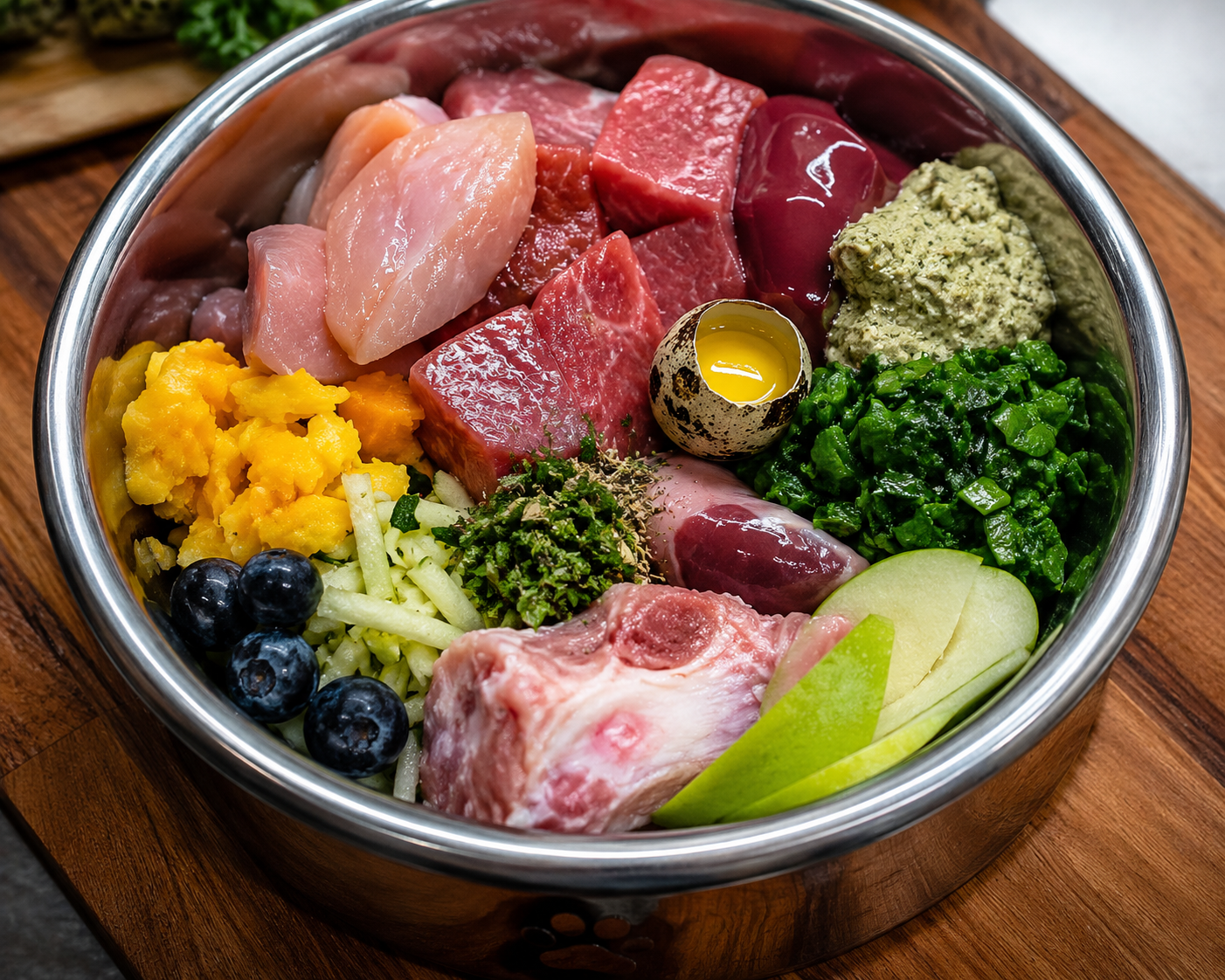
Fresh Food Gives Us More Control Over the Bowl
One of the biggest advantages of fresh feeding is not that one piece of broccoli or one ounce of beef somehow “heals” the dog.
It is that we can make intentional decisions about what goes into the meal.
That includes:
- Protein source and amount
- Fat level and fat quality
- Moisture
- Fiber
- Carbohydrate load
- Omega-3 intake
- Mineral balance
- Food sensitivities
- Digestibility
- Calories
- Individual food tolerance
And we can adjust those choices for age, weight, muscle condition, medications, lab trends, digestion, appetite and the dog's diagnosis.
That is where fresh food becomes useful—not because every dog needs the same “healthy bowl,” but because we can stop pretending every dog has the same nutritional needs.
Healing Requires Moisture
Moisture is one of the simplest differences between fresh food and dry food.
Water inside the meal can support hydration, digestion, stool quality and urinary health while reducing our dependence on the dog making up all of that moisture at the water bowl.
This becomes especially relevant when I am working around:
- Kidney concerns
- Urinary problems
- Constipation
- Senior dogs
- Poor appetite
- Digestive problems
- Recovery from illness or surgery
Moisture is not the whole recovery plan, but it is one of the nutritional basics I do not want to overlook.
Inflammation Management Starts in the Bowl
Inflammation is not automatically bad.
The body uses inflammation as part of normal defense and repair. The concern is when inflammatory signaling becomes chronic, excessive or poorly regulated.
Food is one part of that larger picture.
I look at the dog's overall diet rather than searching for one magical “anti-inflammatory food.”
Fresh feeding gives us more control over:
- Protein sources
- Fat quality
- EPA and DHA omega-3 intake
- Carbohydrate and starch load
- Antioxidant-rich whole foods
- Food sensitivities and intolerances
- Gut-supportive ingredients
- Calories and body condition
- TCVM warming and cooling food patterns when relevant
Those considerations may be particularly useful for dogs dealing with allergies, inflammatory skin problems, gastrointestinal inflammation, arthritis, ligament injuries, recurring ears, pancreatitis history or other conditions where inflammatory balance is part of the bigger picture.
Fresh Food and Inflammation in Dogs: Common Questions
Can fresh dog food help inflammation in dogs?
It can be part of an inflammation-supportive nutrition strategy, but fresh food does not automatically make inflammation disappear.
What I like about fresh feeding is the control it gives us over ingredients, protein source, fat quality, omega-3 intake, moisture, starch, calories and foods the individual dog may not tolerate well.
Those choices can matter when inflammation is being influenced by obesity, food reactions, gut problems, poor fatty-acid balance or an underlying health condition.
I still want to know why the dog is inflamed. Arthritis, allergic skin disease, inflammatory GI disease, pancreatitis, obesity and an autoimmune condition do not automatically need identical food plans.
What is the best food for a dog with inflammation?
There is no single best food for every dog with inflammation.
I generally favor a balanced, moisture-rich, minimally processed diet using appropriate animal protein, quality fats and purposeful whole foods when that approach fits the dog.
But protein tolerance, fat tolerance, calories, body condition, digestive health, medications and the underlying diagnosis can completely change what “best” means.
For a deeper food-specific discussion, read my Anti-Inflammatory Diet for Dogs .
What foods help support a healthy inflammatory response in dogs?
Rather than chasing one superfood, I look at the balance of the entire diet.
Depending on the dog, that may include quality animal protein, appropriate EPA and DHA omega-3s, moisture-rich foods, carefully selected vegetables and antioxidant-rich whole foods.
A food that is useful for one dog may be a terrible fit for another dog with pancreatitis, kidney disease, food intolerance or digestive problems.
Can kibble cause inflammation in dogs?
I would not say that every dog eating kibble is automatically inflamed.
What concerns me more is the complete nutritional picture: processing level, fat quality, carbohydrate load, moisture, calorie density, ingredient tolerance, body condition and how the individual dog is responding to the food.
If kibble remains part of your dog's diet, we can still improve the bowl rather than pretending the only choices are all kibble or all homemade.
Does my dog need a completely homemade diet to eat more fresh food?
No.
Some families move to a fully balanced homemade or commercial fresh diet. Others improve the existing base food with appropriate fresh additions, additional moisture or better-quality proteins and fats.
The important distinction is that once toppers and additions make up a meaningful portion of the calories, we need to think about nutritional balance rather than continuing to treat them as harmless little extras.
If inflammation itself is the bigger concern, continue with Chronic Inflammation in Dogs: Signs, Causes and Whole-Dog Support .
Processed Food Is Not the Same Thing as Recovery Nutrition
Convenience matters. Budget matters. Real life matters.
But when a dog is recovering, I want to ask more than whether the food meets minimum nutrient requirements.
I want to know:
- Can this dog digest it comfortably?
- Is the protein appropriate?
- Is the fat appropriate for this condition?
- Is the dog receiving enough moisture?
- Are calories supporting healthy weight and muscle?
- Does the food fit current labwork?
- Are there ingredients the dog repeatedly reacts to?
- Is the dog nauseated, itchy, painful or inflamed?
- Are we actually supporting recovery—or simply feeding calories?
That is the difference between feeding a diagnosis and feeding the dog.
Whole Foods Bring More Than One Nutrient
Meat, eggs, fish, appropriate organs, vegetables and other whole foods provide combinations of protein, fats, vitamins, minerals and other compounds rather than one isolated nutrient in a bottle.
Depending on the individual dog, I may use foods to help supply:
- Amino acids for muscle and tissue maintenance
- EPA and DHA omega-3 fatty acids
- Minerals
- Antioxidant-rich plant compounds
- Moisture
- Highly usable protein
That does not mean throwing every “superfood” into the bowl.
Good ingredients still have to fit together as a diet.
Energetic Food Has a Role Too
Traditional Chinese Veterinary Medicine gives me another way to think about food beyond protein, fat and calories.
Foods may also be considered warming, cooling or neutral and can be chosen around patterns such as heat, dampness, deficiency, digestive weakness or stagnation.
That does not replace veterinary diagnostics, labwork or nutritional balancing.
It gives me another lens when I am choosing foods for the individual dog.
An itchy, hot dog may not need the same food energetics as an older dog who is cold, weak and struggling to maintain weight.
“Like Supports Like”—Used Thoughtfully
Whole-food nutrition also lets us choose foods that naturally contain nutrients relevant to particular tissues.
For example:
- Quality muscle meats provide amino acids used for muscle maintenance and tissue repair.
- Oily fish can provide EPA and DHA for skin, joints, heart and inflammatory balance.
- Collagen-rich foods may contribute useful amino acids around connective tissue and recovery.
- Appropriate organ foods provide concentrated nutrients—but they still need to fit the complete recipe.
This is not permission to dump organ meat into every recovery bowl like confetti.
The amounts still matter.
Customization Is Where Fresh Food Really Wins
This is the biggest reason I use fresh food in health and recovery cases.
A dog with a ligament injury does not need the same bowl as a dog with pancreatitis.
A kidney dog does not need the same mineral strategy as a young itchy dog.
A senior losing muscle does not need the same calorie plan as an overweight dog whose joints are carrying too much load.
Ligaments, Joints & Muscle
I may look closely at protein, calories, body condition, omega-3s, antioxidants, minerals, collagen-building nutrients and maintaining lean muscle during restricted activity.
Pancreas & Digestive Recovery
Fat tolerance, meal size, protein choice, cooking method, nausea, enzymes, stool history and microbiome health may all influence the food plan.
Kidney & Urinary Support
Moisture, phosphorus, protein quality, calorie intake, appetite, minerals, urine findings and laboratory trends may all change what belongs in the bowl.
Heart Support
Heart disease may require consideration of sodium, body condition, protein, taurine, carnitine, omega-3s, medications and the actual heart diagnosis.
Fresh Food Can Support Better Digestion
Many dogs digest appropriately chosen fresh or gently cooked foods very well.
Pet parents may notice changes in:
- Stool quality
- Gas
- Appetite
- Reflux or nausea patterns
- Coat quality
- Food tolerance
- Energy
But this does not mean every sensitive dog should dive headfirst into a rich raw diet tomorrow morning.
Some dogs do better starting gently cooked. Some need lower fat. Some need a simplified protein plan. Some need underlying GI disease investigated first.
Again—the dog changes the answer.
Fresh Food Is Not Automatically Balanced
This is the part people sometimes want to skip.
Fresh does not automatically mean complete.
A lovingly prepared bowl of meat and vegetables can still be short on calcium, iodine, zinc, manganese, vitamin D, essential fatty acids or other nutrients.
Good intentions do not balance a recipe.
If you are already making your dog's food and want another set of eyes on it, my customized dog food and recipe support is designed for exactly that kind of work.
When Veterinary Care Comes First
Fresh food can support recovery. It is not a substitute for diagnosis, stabilization, surgery, pain control, IV fluids or other veterinary treatment when those are needed.
Seek veterinary care promptly for symptoms such as:
- Repeated vomiting
- Severe or bloody diarrhea
- Blood in vomit
- Collapse or profound weakness
- Difficulty breathing
- Pale or abnormal gum color
- A painful or swollen abdomen
- Seizures
- Severe pain
- Significant dehydration
- Suspected obstruction, poisoning or trauma
Vet first when the dog needs medical care. Then we can build nutrition and recovery support around the diagnosis.
Where Natural Support Fits
Fresh food is often my nutritional foundation, but it may not be the only supportive tool I consider.
Depending on the dog, that larger plan may include:
- Omega-3s
- Digestive support
- Microbiome support
- Herbs or Chinese herbs
- Homeopathy
- Essential oils
- Medicinal mushrooms
- CBD
- PEMF
- Reiki
- Massage or bodywork
- TCVM pattern support
That is a toolbox—not a shopping list.
Please do not turn your kitchen counter into a supplement parking lot.
The right tools depend on the dog, the diagnosis, medications, sensitivities and what we are actually trying to accomplish.
Why Generic Food Advice Falls Short
Most internet feeding advice comes from somebody else's dog.
Their dog may have thrived on raw. Yours may need cooked.
Their dog may have needed lower fat. Yours may already be losing too much weight.
Their dog may have tolerated beef beautifully. Yours may flare every time beef appears in the bowl.
Same symptom does not automatically mean same food plan.
This Is Where Personalized Support Helps
When I review a dog's food and health picture, I want to know much more than the brand name on the bag.
I may ask about:
- What changed before symptoms began
- Current foods and amounts
- Proteins already tried
- Treats, chews, toppers and extras
- Stool and digestion
- Nausea, reflux or grass eating
- Weight and muscle condition
- Current labwork
- Medications and supplements
- Previous diagnoses
- Pain and mobility
- Stress and behavior
- Inflammatory patterns
- Whether the current plan has simply become too complicated
That is the difference between merely feeding fresh food and using nutrition intentionally as part of a larger recovery plan.
Not Sure What Your Dog's Bowl Should Look Like Now?
If your dog is recovering from illness or injury, struggling with inflammation, losing muscle, having digestive problems or simply not doing well on the current food, tell me what is going on.
Bring the diagnosis, labwork, current food, medications, supplements and what you are noticing.
A Discovery Callback is the easiest place to determine whether a food review, customized diet or broader whole-dog consultation makes sense.
Request a Discovery Callback