
Bone Broth Benefits For Dogs
Bone broth gets talked about as though it is one magical liquid: throw some bones in a pot, cook them long enough, and suddenly you have a nutritional powerhouse for your dog.
It isn't quite that simple.
I use broth regularly, but what I make depends on what I am trying to accomplish for the dog in front of me. Sometimes I want a light meat broth for hydration and appetite. Sometimes I want stock. Sometimes I want a collagen-rich bone broth made with feet, necks, joints and connective tissue. And there are times when I do not want an animal-based broth at all and will choose a simple vegetable broth instead.
Those are not nutritionally identical, and richer does not automatically mean better.
See your vet for a diagnosis and then you and I can collaborate on a custom strategy for your dog's health.
The simple distinction:
Meat broth is primarily about the meat.
Stock is primarily about bones and connective tissue.
Collagen-rich bone broth is intentionally made to extract more gelatin from joints, cartilage, tendons and connective tissue.
Vegetable broth is primarily about hydration and flavor.
What Is Bone Broth for Dogs?
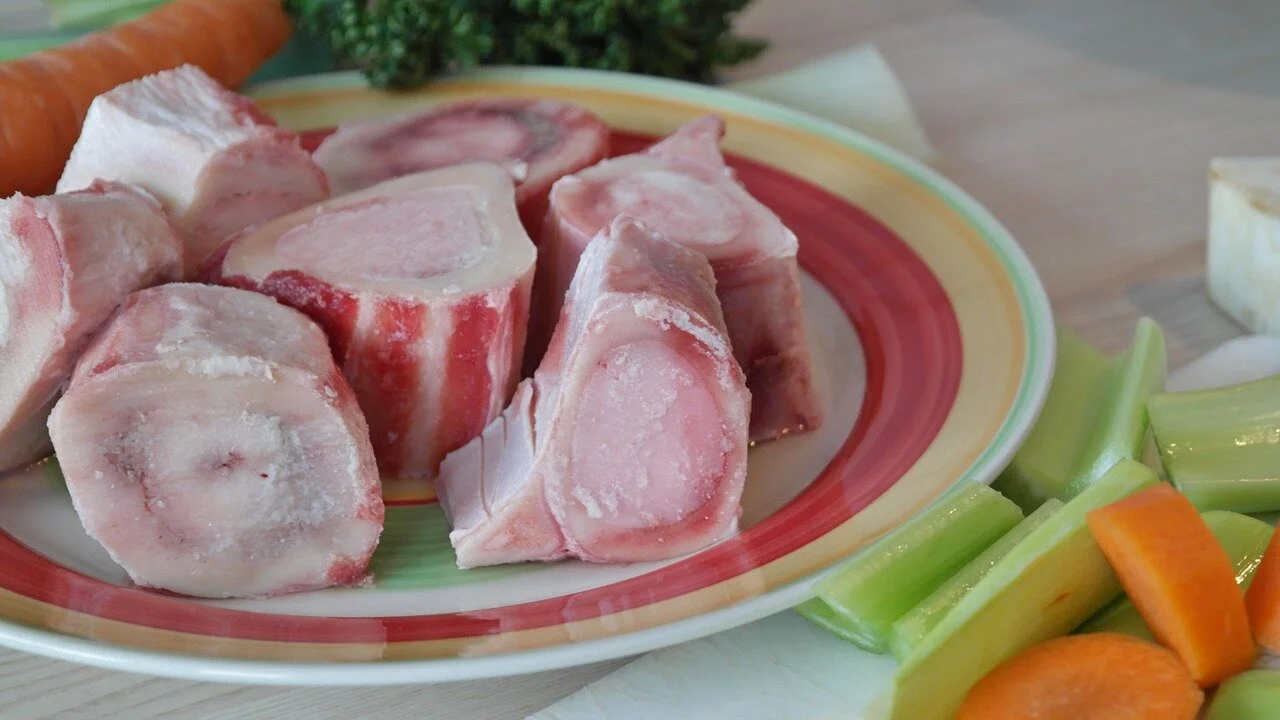
Bone broth is made by slowly cooking animal bones along with cartilage, joints, connective tissue and sometimes meat for an extended period of time.
The key word there is not actually bone.
It is connective tissue.
Cartilage, tendons, ligaments, skin, joints and other connective tissues contain collagen. With prolonged heat and moisture, collagen breaks down into gelatin.
That gelatin-rich result is one of the clearest things that separates a deliberately prepared bone broth from a simple meat broth.
But collagen is not the whole nutritional story, and it certainly does not make bone broth a complete meal.
Meat Broth vs Stock vs Collagen-Rich Bone Broth vs Vegetable Broth
Culinary terms can get muddy here, especially because people use broth, stock and bone broth interchangeably.
Technically, stock sits somewhere between a basic meat broth and what most people now call bone broth.
But for your dog, I care less about winning a culinary vocabulary contest and more about understanding what went into the pot and what you want the finished liquid to do.
| Meat Broth | Stock | Collagen-Rich Bone Broth | Vegetable Broth | |
|---|---|---|---|---|
| Main Focus | Meat, flavor and moisture | Bones plus some connective tissue | Joints, cartilage, tendons and connective tissue | Dog-safe vegetables and water |
| Typical Ingredients | Chicken, turkey, beef or other meat, sometimes with skin or bones | Carcasses, backs, necks and bones with some tissue attached | Feet, necks, knuckles, joints, cartilage-rich bones, tendons and connective tissue | Dog-safe vegetables such as carrots, celery, zucchini or green beans |
| Cooking Style | Usually shorter | Moderate to long | Longer cooking specifically intended to extract more gelatin | Usually shorter and gentle |
| Protein | Usually the best of these options when I want some meat-derived nutrition | Variable | Variable, and still not enough to replace the protein in a meal | Very little |
| Collagen / Gelatin | Some if skin and connective tissue are present | Usually more than a basic meat broth | This is where it stands out, especially when joints, feet, necks and cartilage are used | Essentially none |
| Fat | Can be lean or greasy depending on the meat and skin | Variable | Can be high when marrow bones, skin or fatty tissues are included | Very low unless oil is intentionally added |
| When I May Choose It | When I want hydration, aroma, appetite support and some meat-derived nutrition, especially during recovery | When I want more body and gelatin than a simple meat broth but do not necessarily need a very concentrated bone broth | When the dog is tolerating food and I specifically want a more gelatin- and collagen-rich topper | When I primarily want hydration and flavor with very little fat and no additional animal protein |
| Recovery Role | Often my first choice when I want to encourage eating while adding moisture and some animal-based nutrition | Useful as a middle ground, depending on what was used to make it | Supportive when collagen and gelatin fit the plan, but not the nutritional foundation of recovery | Useful when something exceptionally light is needed, but it does not provide the protein or calories required for recovery |
If I Cook a Whole Chicken, What Am I Making?
This is probably where most of the confusion starts.
If you put an entire chicken in a pot, simmer it and save the liquid, you have made a very useful meat broth.
That liquid receives flavor and nutrition from the meat, skin, fat, cartilage, connective tissue and small bones.
And sometimes that is exactly what I want.
If I am working with a dog who has not been eating well, a simple chicken or turkey meat broth can provide moisture, aroma and some meat-derived nutrition without creating the same richness as a marrow-heavy bone broth.
If you remove the edible meat and then continue cooking the carcass, backs, necks, joints, cartilage and remaining connective tissue for much longer, you begin moving toward stock.
If you intentionally build that pot around collagen-rich tissues such as feet, joints, necks, cartilage and tendons and cook it long enough to extract substantial gelatin, I would call that collagen-rich bone broth.
So simply seeing bones in the pot does not automatically tell me what kind of broth you made.
Collagen and Gelatin Are the Key Bone Broth Distinction
Collagen is abundant in cartilage, tendons, ligaments, skin and other connective tissues.
With prolonged cooking, that collagen breaks down into gelatin.
This is why a true collagen-rich bone broth will often become jiggly when refrigerated.
So yes, collagen and gelatin are one of the clearest practical distinctions between meat broth and bone broth.
But that does not mean collagen is the main reason broth helps a sick or recovering dog.
Does Collagen Help a Dog Recover?
Collagen-derived gelatin contains amino acids, especially glycine and proline, that the body uses as part of normal connective-tissue structure and repair.
That can make a gelatin-rich bone broth a useful addition to a recovery plan.
But I do not want to oversell it.
A dog does not rebuild muscle, heal an incision, regain lost weight or recover from illness because we gave them collagen broth.
Recovery requires adequate:
- Calories
- High-quality protein
- Fluids
- Essential fatty acids
- Vitamins and minerals
- Enough total food to meet the dog's needs
Collagen can support that bigger picture. It does not replace it.
Think of collagen-rich bone broth as supportive recovery nutrition, not complete recovery nutrition.
It may contribute fluid, palatability, gelatin and collagen-derived amino acids. The dog still needs enough actual food to meet protein, calorie and nutrient requirements.
Where Broth Really Helps During Recovery: Appetite and Hydration
This is often where broth earns its place.
Dogs who have been sick, hospitalized or through surgery frequently come home with a lousy appetite. They may be nauseated, tired, stressed or simply uninterested in the food sitting in front of them.
Warm broth adds aroma, moisture and flavor without requiring a dog to eat a huge meal.
I may use it to:
- Moisten a fresh-food meal
- Warm and soften food
- Increase aroma and palatability
- Encourage a dog to begin licking or eating
- Add fluid when drinking is poor
- Help transition from tiny amounts of food toward a more complete recovery meal
That can be extremely useful.
But getting a dog to drink broth is not the same thing as getting adequate nutrition into the dog.
Is Broth Enough for a Dog Who Will Not Eat?
Usually, no.
Broth can be a useful first step, especially when appetite is poor, but I generally think of it as a bridge back to food.
If your dog refused everything and then happily drank some warm meat broth, great. We got the door open.
But if another day passes and the dog is still essentially living on broth, now we need a different conversation.
A dog recovering from illness or surgery needs enough calories and protein to maintain muscle, support healing and regain strength.
Broth can help open the door to eating. It should not become the room the dog lives in.
If your dog continues refusing adequate food, is losing weight, becoming weaker, vomiting or simply is not rebounding after illness or surgery, contact your veterinarian and look more closely at the recovery nutrition plan.
Chicken Parts Can Make an Excellent Collagen-Rich Bone Broth
You do not need giant beef marrow bones to make bone broth.
Chicken parts can make an exceptionally gelatin-rich broth when you intentionally include parts such as:
- Feet
- Necks
- Backs
- Wing joints
- Cartilage
- Tendons
- Connective tissue around the joints
If my goal is collagen and gelatin, use more of those parts, than muscle meat. Including them is with marrow bone, often far more interesting to me than simply filling a pot with large marrow bones.
Does a Whole Chicken Make the Same Bone Broth as Marrow Bones?
No.
A whole-chicken broth gets much of its nutrition from meat, skin and connective tissue, along with smaller bones and joints.
A broth made primarily from large marrow bones contains considerably more marrow and can be much richer in fat.
But marrow is not what gives bone broth most of its gelatin.
Marrow is the soft tissue inside certain bones. It contributes fat, flavor and nutrients of its own.
Much of the gelatin we are looking for comes from collagen in cartilage, tendons, ligaments, skin and other connective tissues.
Marrow bones are not automatically better bones for bone broth.
If I want a gelatin-rich broth, I want plenty of joints, cartilage and connective tissue. Marrow adds richness, but it can also add considerably more fat.
What Nutritional Value Does Bone Broth Actually Have?
There is no universal nutritional analysis for bone broth.
Its nutritional value changes according to:
- The animal used
- The bones and tissues selected
- How much meat remains
- How much skin and fat are included
- The amount of water
- Cooking time and method
- How concentrated the finished broth becomes
- Whether the rendered fat is removed
Protein
Broth can contain protein, but the amount varies enormously.
A meat-rich chicken or turkey broth may actually be more useful than bone broth when what I need is some animal-derived nutrition along with hydration and appetite support.
But even a protein-containing broth does not replace the high-quality animal protein a recovering dog ultimately needs.
Fat — And Why Chicken Skin Changes the Broth
Chicken skin is naturally high in fat. When you cook it, much of that fat renders into the cooking liquid.
If you simmer an entire chicken with all of its skin and then save every drop of liquid, you may have made a very rich, greasy meat broth.
Once refrigerated, much of that rendered fat rises and firms into a layer on top.
I may remove most or all of that fat if I am making broth for a dog with:
- Pancreatitis
- Known fat intolerance
- Active digestive upset
- High triglycerides
- A medical reason for limiting dietary fat
A senior dog who is underweight and struggling to consume enough calories may require a completely different decision.
That's why I want to know what is actually in the broth and what this dog needs.
Should Dogs Eat the Cooked Chicken Skin?
I do not automatically take the cooked skin from a chicken and put it into the dog's bowl.
Cooked chicken skin can deliver a large amount of rendered fat very quickly.
If I intentionally want to increase fat and calories, I want to know how much I am adding and account for it in the rest of the meal.
Lean cooked chicken meat and a pile of greasy cooked chicken skin are not nutritionally interchangeable.
What About Calcium in Bone Broth?
Bones contain minerals, so some minerals may move into the broth while it cooks.
That is not why I use bone broth.
If a homemade diet needs calcium, I address calcium deliberately when I formulate or evaluate the diet.
Bone broth is not my calcium strategy.
Especially when we are talking about a splash being used as a topper, I do not treat that broth as though it is balancing the calcium in the bowl.
You can learn more about how I approach complete fresh-food nutrition through my canine nutrition and personalized food planning.
When I May Prefer Meat Broth for Recovery
If I am trying to get a recovering dog eating while also adding some animal-based nutrition, a simple chicken, turkey or other appropriate meat broth may make more sense than a rich bone broth.
I may use it to:
- Add moisture to recovery meals
- Improve aroma and appetite
- Soften fresh food
- Add some meat-derived nutrition
- Help increase intake without dramatically increasing meal volume
The broth helps us get started. Then I want to see the dog moving toward enough actual food to support recovery.
When I May Prefer Stock
Stock can be a useful middle ground.
It usually has more body and gelatin than a quick meat broth because bones and connective tissue have cooked longer, but it may not be as intentionally collagen-rich or concentrated as the bone broth I am describing here.
If I already have a chicken carcass, backs, necks or bones with some connective tissue attached, stock can be a very practical way to create a useful food liquid without turning every pot into a twenty-four-hour bone broth project.
When I May Prefer Collagen-Rich Bone Broth
Once a dog is tolerating food well, I may specifically choose a broth rich in joints, feet, necks, cartilage and connective tissue when I want more gelatin and collagen-derived amino acids in the plan.
That may be useful as part of support for connective tissues and overall recovery.
But I am still feeding the dog an appropriate meal alongside it.
When I May Prefer a Defatted Broth
If the dog would benefit from broth but I do not want a large amount of fat, I can prepare meat broth, stock or bone broth, refrigerate it and remove the hardened fat cap.
That lets me retain much of the moisture, flavor and gelatin without sending a layer of rendered grease into an already sensitive digestive system.
When Might Vegetable Broth Be Better?
Sometimes I do not need protein, marrow or collagen from the broth.
I simply want fluid and enough flavor to make food or water more appealing.
A simple vegetable broth may make more sense when:
- I want an exceptionally low-fat liquid
- The dog is not tolerating richer animal-based broths
- I am working around a particular animal-protein sensitivity
- I want hydration and flavor without adding another animal protein
- I am using broth temporarily before introducing more substantial nutrition
Vegetable broth is intentionally light.
That is its advantage — and its limitation.
Vegetable broth does not provide the protein and calories required to rebuild a recovering dog.
If the dog is losing weight or muscle, the plan eventually has to include appropriate protein, calories and complete nutrition.
Dog-Safe Vegetable Broth Ingredients
Depending on the dog, I may use foods such as:
- Carrots
- Celery
- Zucchini
- Green beans
- Bok choy
- Cabbage
- Parsley
Individual medical conditions still change the ingredient choices.
Be especially careful with commercial broth.
Human chicken, beef and vegetable broths commonly contain ingredients that do not belong in your dog's bowl. Read the ingredient panel rather than assuming a broth is dog-safe because it looks simple.
Never Feed the Cooked Bones Left From Broth or Stock
This deserves more than a small warning at the bottom of a recipe.
Do not hand your dog the cooked bones left over from making broth, stock or bone broth.
Cooked bones can break or splinter and create choking hazards or injuries to the digestive tract.
This includes the cooked chicken carcass.
Do not hand over cooked wings, legs, necks, ribs, backs or carcasses because they look softer after cooking.
For basic broth-making, keep it simple:
Cook the bones to make the liquid. Strain carefully. Keep any appropriate meat you intentionally plan to feed. Discard the cooked bones.
But What If Chicken Bones Are Cooked Until They Turn to Mush?
There is some nuance here.
Small poultry bones that are pressure-cooked or cooked for a very long time can eventually become soft enough to collapse between your fingers. Some intentionally formulated homemade diets use completely softened and homogenized bone as part of the recipe.
That is different from handing a dog a cooked chicken bone to chew.
But I do not teach pet parents that "cooked bones are safe if you put them in the blender."
A blender can also turn a hard cooked bone into smaller hard fragments. The bone would first need to be uniformly soft with no hard center or sharp pieces.
And once you include actual bone in the food, you have moved beyond making broth. You are now changing the mineral composition of the diet itself.
For the broth we are talking about here, my recommendation is simpler: strain the liquid and discard the cooked bones.
How I Make Collagen-Rich Bone Broth for Dogs
I do not believe you need a complicated recipe. I care more about choosing the right ingredients for the result you want.
Choose the Bones and Tissues Based on Your Goal
For a more gelatin-rich broth, I may use:
- Chicken feet, necks, backs or wings
- Turkey necks or backs
- Beef or lamb knuckles
- Joint bones
- Cartilage-rich pieces
- Connective tissue and tendons
- Some meaty bones
- Marrow bones when additional richness and fat are appropriate
I generally prefer a thoughtful mixture rather than filling the entire pot with marrow bones.
Decide How Much Fat You Actually Want
If I am using a whole chicken, I think about the skin before I start cooking.
Leaving all of the skin in the pot means more rendered fat in the finished broth.
For a lighter broth, I may remove much of the skin before cooking and then chill the finished broth so I can remove the remaining fat cap.
For a healthy dog who genuinely needs additional calories, I may make a different choice.
Add Water
Cover the bones and tissues with enough water to cook safely without diluting everything into gallons of flavored water.
A Little Apple Cider Vinegar Is Optional
Some people add a small amount of apple cider vinegar to the cooking water.
That's fine, but I do not consider vinegar the thing that makes bone broth valuable, and I am certainly not trying to turn the broth into a calcium supplement.
Cook Low and Slow
I may use a slow cooker, stockpot or pressure cooker depending on what I am making.
Poultry bones and connective tissue generally break down more readily than large beef bones. Instead of obsessing over one magic number of hours, I look at the ingredients, cooking method, concentration and the result I am trying to create.
Strain It Thoroughly
When cooking is complete, strain the liquid carefully.
I do not want a stray chicken rib, vertebra or other bone fragment hiding in what looks like harmless broth.
Chill It and Look at What You Made
Refrigerating the broth tells you quite a bit.
A collagen-rich broth may become firm and jiggly.
Rendered fat rises and becomes much easier to see and remove once cold.
Now I can decide whether that finished broth actually fits the dog I intended to make it for.
The Whole Dog Still Changes the Answer
When I am deciding which broth belongs in a dog's bowl, I am looking beyond whether someone told you that bone broth is "good for dogs."
I want to know the dog's age, current diet, weight and muscle condition, appetite, stool history, nausea patterns, medical diagnoses, medications, supplements, previous digestive issues, lab trends and how the dog is actually feeling.
I also look at bigger patterns involving the gut, liver, gallbladder, kidneys, endocrine system, inflammation and stress.
This becomes particularly important during recovery.
If days or even weeks have passed after illness, hospitalization or surgery and your dog still is not eating enough, regaining strength or returning to normal, we need to look beyond finding a topper they will lick.
We need to ask:
What nutrition are we actually getting into this dog?
Bone Broth may help us get there.
It should not become a substitute for that conversation.
So Which Broth Should You Give Your Dog?
Start with the reason you are using it.
If I want hydration, aroma and some meat-derived nutrition during recovery, I may lean toward a meat broth.
If I want something between a simple broth and a richer bone broth, stock may be exactly enough.
If I specifically want more gelatin and collagen-derived amino acids, I may make a collagen-rich bone broth using joints, feet, necks, cartilage and connective tissue.
If I want the benefits of broth but need much less fat, I may use a lean, thoroughly defatted meat broth, stock or bone broth.
If I primarily want hydration and flavor without adding much fat or another animal protein, vegetable broth may be the better tool.
And if a recovering dog is not getting enough calories, protein or overall nutrition, none of these broths should distract us from fixing the actual meal.
What I know is that the better question is not simply:
"Is bone broth good for dogs?"
It is:
"What does this dog need from the bowl right now?"
If you are trying to sort through your dog's diet, digestive issues, appetite, weight, recovery or homemade food plan, reach out and let's look at the bigger picture together.
Come, Sit and Stay Well.
bone broth for dogs | meat broth for dogs | chicken broth for dogs | stock for dogs | collagen rich bone broth for dogs | vegetable broth for dogs | broth for sick dogs | broth for dog recovery | broth for dog appetite | bone broth for senior dogs | low fat broth for dogs | homemade bone broth for dogs | stock vs bone broth | broth vs bone broth | bone broth nutrition | collagen in bone broth | marrow bones for bone broth | chicken skin for dogs | cooked chicken bones for dogs
This article is for educational purposes and is not a substitute for veterinary diagnosis or treatment. Dogs with persistent vomiting, significant appetite changes, dehydration, abdominal pain, unexplained weight loss, weakness or other concerning symptoms should be evaluated by a veterinarian.
Don’t want to make your own? Try this dog-friendly, high-quality version from Brutus Bone Broth
When DIY Isn't Enough Already tried the basics? If this is happening with your dog and you're still stuck, I can help you figure out what deserves attention next. Want reliable education, live Q&A, and member resources? Explore Membership →
Request a Discovery Callback →