Benefits of Rotating Your Dog’s Proteins
If your dog has eaten chicken every day for the last year, this article is for you.
I am a big believer in rotating foods when the individual dog tolerates it, and protein is one of the most useful places to create meaningful variety.
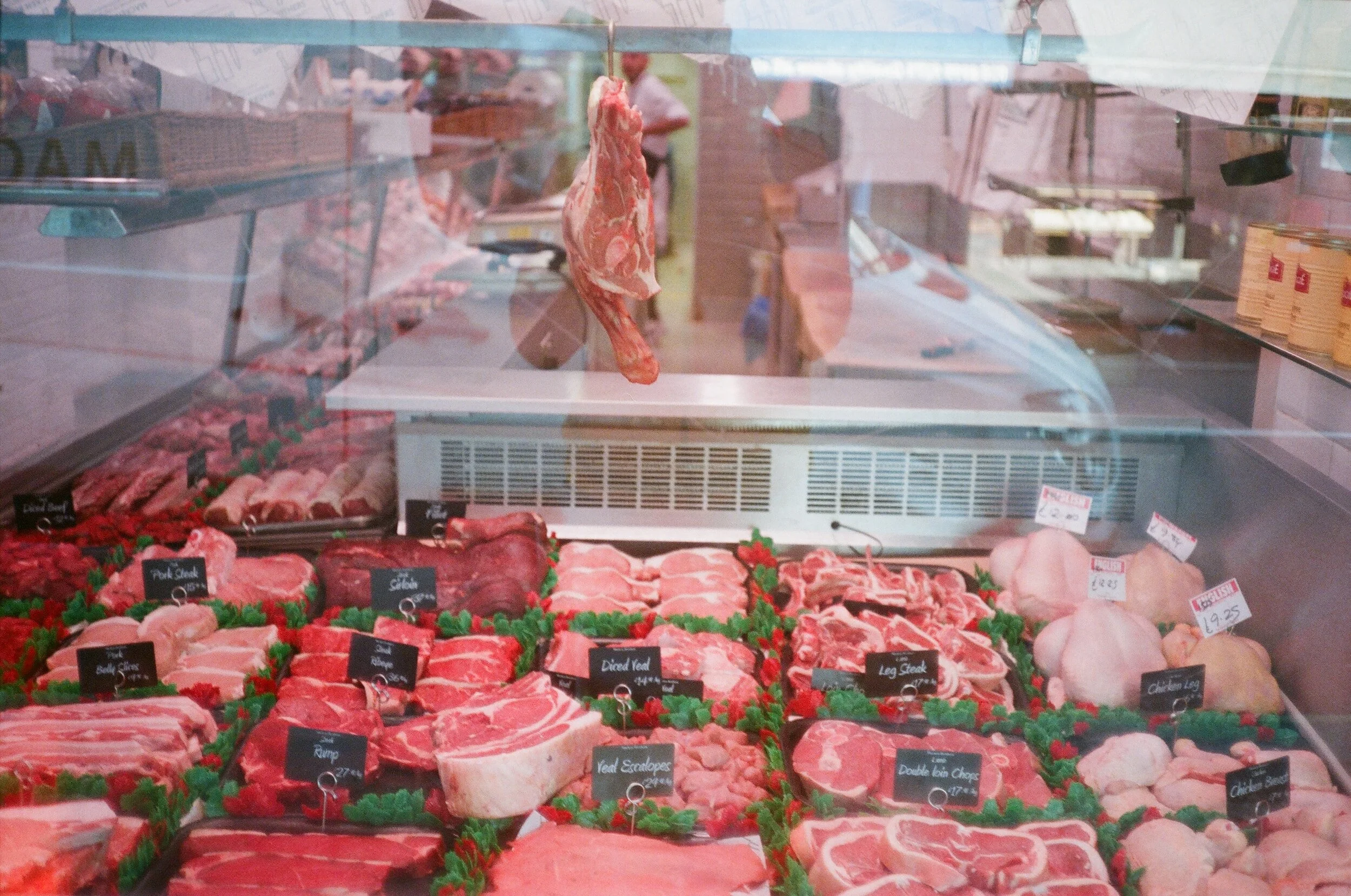
Beef is not nutritionally identical to turkey. Turkey is not the same as sardines. Lamb, pork, rabbit, venison and fish all bring different amino acids, minerals, naturally occurring fats and overall nutrient profiles to the bowl.
That is why protein rotation is more than changing flavors so your dog does not get bored.
There is another reason I like establishing several tolerated proteins early in life: it gives us options later. If your dog becomes a picky senior, needs a different diet during recovery or develops a health concern that changes which proteins make sense, we are not starting from scratch with foods the dog has never eaten.
We already know what belongs in our toolbox.
See your vet for a diagnosis and then you and I can collaborate on a custom strategy for your dog's health.
Why Do I Talk About Protein Rotation Separately?
I also talk about rotating dog food ingredients because I want variety across the entire diet — proteins, vegetables, organs, fats, fermented foods and other nutrient-dense additions.
But protein deserves a closer look because it makes up such a significant part of the fresh-food diets I recommend.
Changing the animal protein can change:
- The amino-acid profile
- The naturally occurring fat profile
- Mineral content
- Calorie density
- Digestibility
- TCVM food energetics
- Cost and availability
- How easy it is to identify a food sensitivity
So when I say “rotate proteins,” I am not simply asking you to buy a different flavor next month.
I am intentionally changing a major nutritional component of the diet.
Start Protein Variety Early — Before You Need It
One of the best times to establish protein variety is when your dog is healthy, hungry and digesting food well.
I would much rather know at age two that your dog comfortably eats beef, turkey, pork, fish and eggs than discover at age twelve that your dog has eaten one protein forever and now thinks every unfamiliar food is highly suspicious.
This becomes especially useful as dogs age or when health changes.
A senior may suddenly eat smaller meals or become more selective about texture and flavor. A recovering dog may need highly digestible fresh food. A new diagnosis may make one protein or fat profile more appropriate than another.
If we already know several proteins the dog enjoys and tolerates, I have far more flexibility when I customize the diet.
Maybe chicken is no longer the best fit. Fine — we already know beef and turkey work.
Maybe the dog needs a more calorie-dense protein while recovering weight. We have options.
Maybe I want to change the TCVM food energetics of the diet. Again, I have more than one protein to work with.
You are not just creating protein variety today. You are creating options for the dog you may be feeding years from now.
Different Proteins Bring Different Nutritional Strengths
All animal proteins provide essential amino acids, but they do not provide nutrients in exactly the same amounts.
The fat content can vary dramatically too.
A very lean turkey breast does not bring the same natural fat or calorie density as a fattier cut of beef. Red meats can contribute different amounts of iron, zinc and other minerals than poultry. Oily fish bring EPA and DHA in ways poultry generally does not.
Even within the same species, the cut counts. Chicken breast and chicken thigh are not nutritionally identical. Lean ground beef and a fattier cut of beef do not create the same bowl.
That is one reason I prefer not to build a lifetime diet around one animal protein unless the individual dog gives us a reason to keep things very simple.
Protein Rotation Also Changes the Natural Fat in the Diet
This is one of the pieces people often miss.
When you rotate animal proteins, you are usually changing more than the protein itself. You are also changing the naturally occurring fat that comes with that meat.
I generally prefer to preserve appropriate fresh animal fat with the muscle meat when it fits the individual dog rather than stripping every protein down to its leanest possible form.
Beef, lamb, pork, turkey, chicken and fish all influence the fat profile of the bowl differently.
Omega-3 EPA and DHA still deserve separate attention because they have specific nutritional and therapeutic roles, especially around inflammatory pathways, but they are not intended to replace the rest of the dietary fat coming from fresh animal foods.
Which Proteins Can You Rotate?
There is no universal list every dog has to work through.
Depending on availability, budget, tolerance and the individual dog's health, protein choices may include:
- Beef
- Turkey
- Chicken
- Pork
- Lamb
- Rabbit
- Venison
- Duck
- Goat
- Fish and other appropriate seafood
- Other responsibly sourced proteins available to you
Your dog does not need every protein on this list.
Even two or three well-tolerated proteins used thoughtfully can create much more useful variety than feeding the same chicken formula indefinitely.
How Often Should You Rotate Your Dog's Protein?
There is no single schedule every dog needs to follow, but I do want to give you something more useful than “it depends.”
For many healthy dogs who already tolerate a varied diet, changing the primary protein every 3–7 days is a very practical rhythm.
That does not mean you need to mark “Turkey Thursday” on the calendar for the rest of your dog's life.
Some families batch-cook beef for several days and make turkey for the next batch. Some fresh feeders rotate every few meals. Others use two or three tolerated proteins across the same week.
I care more about meaningful variety over time than rigid scheduling.
If Your Dog Eats Fresh, Raw or Homemade Food
Dogs who already eat a varied fresh-food diet often tolerate frequent protein changes very easily.
You might rotate every few meals, every several days or whenever you prepare the next batch.
If stool, appetite, skin and digestion remain good, I do not see a reason to make rotation unnecessarily complicated.
If Your Dog Eats Kibble
A kibble-fed dog who has eaten the same formula for years may do better with slower changes.
You might rotate to another tolerated single-protein formula with the next bag or every few weeks, depending on how your dog handles transitions.
Some dogs can change formulas easily. Others need a gradual transition.
If Your Dog Has a Sensitive Gut
Slow down.
A dog with chronic diarrhea, frequent vomiting, IBD-type symptoms, poor appetite or a history of reacting to foods may need to stay with a tolerated protein longer before another protein is introduced.
Rotation is supposed to broaden the diet — not keep the digestive tract in a constant state of upheaval.
When I Would Stop Rotating Temporarily
If we are doing an elimination diet, investigating a food reaction, recovering from acute digestive disease or trying to understand what is causing a flare, I may intentionally keep the protein consistent.
Sometimes fewer variables give us better information.
Do You Need to Transition Between Every Protein?
Not necessarily.
Dogs who regularly eat a varied fresh-food diet often tolerate protein changes easily because dietary variety is already normal for their digestive system.
A dog who has eaten the exact same processed food for years may need a slower introduction when we start bringing in new foods.
If protein changes consistently cause vomiting, diarrhea, significant gas or another digestive reaction, I do not simply conclude that rotation is bad.
I want to understand why the gut is struggling so much with food changes.
What About Protein Rotation for Dogs With Allergies?
This is where we have to stop treating rotation like a universal rule.
If I am trying to identify a food reaction, I may intentionally stop rotating for a period of time.
An elimination diet works because we reduce variables. If the dog eats chicken Monday, beef Tuesday, lamb Wednesday and turkey Thursday, it can become almost impossible to know which protein triggered a reaction.
Once we understand which proteins the dog tolerates, thoughtful rotation can become useful again.
This is also why I am cautious with multi-protein blends in dogs with unresolved allergies.
Multi-Protein Blends Are Not the Same as Protein Rotation
Some butcher grinds and commercial raw foods combine beef, chicken, pork and turkey into one product.
That sounds like wonderful variety.
But if your dog eats that exact same four-protein blend every day, you are still feeding the same mixture over and over.
You also lose some ability to know how your dog responds to each individual protein.
If you buy a butcher's dog grind, ask what is actually in it:
- Which proteins?
- What percentage of each?
- How much fat?
- How much bone?
- Which organs?
Convenience is useful.
Knowing what you are feeding is even more useful.
TCVM Gives Me Another Reason to Rotate Proteins
I do not choose animal proteins based only on protein grams and calories.
Traditional Chinese Veterinary Medicine also looks at food energetics.
Different proteins may be considered warming, cooling or neutral and may be chosen based on the dog's constitution, symptoms, season and overall pattern.
TCVM helps identify patterns such as heat, dampness, stagnation, deficiency, digestive weakness, stress or inflammation.
A dog showing significant heat may lead me toward a different protein strategy than a cold, deficient senior who needs more warming support.
This is another reason I do not believe every dog needs the exact same protein rotation.
Protein Rotation Can Be Seasonal Too
Rotation does not have to happen only on a weekly schedule.
Sometimes the season changes the foods I want to emphasize.
A protein that works beautifully for one dog during cooler weather may not be the one I emphasize during the heat of summer.
Seasonal availability can also make fresh feeding more affordable and realistic.
I would rather teach you how to make thoughtful substitutions than convince you there is one protein your dog must eat every day forever.
Protein Rotation Becomes Especially Useful With Senior Dogs
Seniors are one of the reasons I want you building food flexibility before you need it.
Older dogs may begin eating smaller meals while also losing muscle and dealing with joint disease, cognitive changes, digestive changes or other health concerns.
If I already know several proteins the dog loves and tolerates, I can adjust the food without introducing something completely unfamiliar during a stressful time.
Maybe the dog suddenly refuses chicken but happily eats beef.
Maybe I want a more calorie-dense protein because food volume has dropped.
Maybe the dog's diagnosis changes the type of protein or fat profile I want to emphasize.
Those are much easier conversations when the dog has spent a lifetime eating more than one food.
For seniors, quality protein and adequate calories still come first. I do not rotate simply for novelty if the dog is losing weight or muscle.
Recovery Is Another Time You Will Be Glad You Created Options
Illness, surgery and digestive recovery can temporarily change appetite, digestion and the type of food a dog handles best.
Those are not the moments I want to discover that your dog has only ever eaten one protein and refuses anything else.
If the dog already knows beef, turkey, eggs, fish or another appropriate protein, I have more familiar foods to work with while we adjust the diet.
Recovery may also call for highly digestible meals, smaller portions or a different fat level.
Variety established earlier gives me more ways to make those adjustments without making every change feel completely foreign to the dog.
Puppies Are a Great Time to Establish Food Variety
Assuming the puppy is healthy and the diet is properly formulated for growth, puppyhood can be an excellent time to introduce appropriate dietary variety.
I want puppies learning that food can look, smell and taste different.
That does not mean random feeding or throwing nutritional balance out the window.
Puppies have very specific nutritional needs, especially around calories, protein, calcium and phosphorus.
But within a sound nutritional foundation, introducing tolerated proteins early can help create a much more flexible eater later.
Can You Rotate Proteins If You Feed Kibble?
Yes, assuming your dog tolerates food changes well.
You may rotate among different single-protein formulas, or keep the kibble base more consistent while rotating appropriate fresh proteins and other whole-food additions.
What I do not love is buying four bags of food and mixing them together permanently in the same storage bin.
That removes much of the benefit of knowing which protein the dog is eating and how the dog responds to it.
If kibble is still the foundation of the bowl:
Protein Rotation Is Especially Useful in Homemade Feeding
Homemade feeding gives us tremendous flexibility.
Beef may be the main protein this week because it is on sale. Turkey may become the next batch. Sardines might show up elsewhere in the week. A third tolerated protein may rotate in later.
That flexibility can broaden the diet, but the nutritional foundation still has to be there.
Changing proteins does not automatically correct missing calcium, inadequate omega-3, missing organs or vitamin and mineral gaps.
Protein rotation is one part of the bigger homemade-food strategy.
How Do You Start Rotating Proteins?
Keep it simple.
If your dog has eaten chicken forever, you do not need to introduce six proteins this weekend.
Start with one additional appropriate protein.
Feed it in a way that makes it easy to see how the dog responds. Watch stool, appetite, skin, ears, itching, energy and digestion.
Once you know that protein works, you have another useful option in your rotation.
Then add another when it makes sense.
Over time you are building a list of foods you know your dog enjoys and handles well.
Want Help Building a Better Protein Rotation?
My Homemade Dog Food Course teaches you how proteins fit into the bigger diet along with fats, organs, calcium, omega-3s, vegetables, supplements, calories and overall variety.
The course is available stand-alone and is also included as part of the value of The WellOiledK9 Membership.
Explore the Homemade Dog Food Course →
Already making your dog's food and wondering whether your current proteins and rotation are creating the diversity you intended?
I also offer Recipe Reviews so we can look at what you are already feeding and identify practical changes.
Protein Rotation Is About Options, Not Rules
I do not want you feeding seven proteins because somebody told you seven was the right number.
I want you to understand why different animal foods bring different nutritional strengths and why establishing variety before you need it can make future feeding decisions much easier.
If your dog tolerates several proteins, use that flexibility.
If your dog needs a limited diet for a while, keep it simple.
If the season, the dog's age, a diagnosis or a TCVM pattern suggests a different direction, adjust.
And if your dog has eaten chicken every day because someone once told you chicken was healthy, maybe it is time to see what else belongs in the toolbox.
The variety you establish while your dog is healthy may become incredibly valuable when your dog is older, recovering or needs a completely different nutritional strategy.
Come, Sit and Stay Well.
Related Content
- Rotating Dog Food Ingredients
- What You Should Know About Making Homemade Dog Food
- Healthy Fats for Dogs: Why Fat Is Essential
- Omega-3 for Dogs: EPA, DHA & Therapeutic Use
- How to Add Fresh Vegetables to Your Dog's Food
- Simple Ways to Boost Nutrition in Your Dog's Kibble
- The Effects of a Vitamin & Mineral Deficient Diet in Dogs
- Canine Nutrition & Personalized Dog Food Support
Frequently Asked Questions About Rotating Proteins for Dogs
Should I rotate proteins for my dog?
I generally encourage protein rotation when the dog tolerates it. Different animal proteins bring different amino acids, minerals, fats and overall nutrient profiles to the diet, and establishing several tolerated proteins can give us more feeding options later in life.
How often should I rotate my dog's protein?
For many healthy dogs who tolerate food changes well, rotating the primary protein every 3–7 days is a practical starting point. Fresh-fed dogs may rotate every few meals, while kibble-fed or sensitive dogs may change proteins every few weeks or with each new bag. The goal is meaningful variety over time without disrupting digestion.
How many proteins should I rotate?
There is no required number. Even two or three well-tolerated proteins can create useful variety. I would rather use a smaller number of proteins thoughtfully than introduce many proteins without knowing how the dog responds.
Should I start rotating proteins when my dog is young?
When the dog is healthy and tolerates dietary variety, I like introducing appropriate proteins early. It helps build a list of familiar foods we can use later if the dog becomes a picky senior, needs a recovery diet or develops a health concern that changes the feeding strategy.
Does rotating proteins prevent food allergies?
I would not claim that protein rotation prevents food allergies. It can broaden the diet and reduce dependence on one protein, but a dog with suspected food reactions may need a limited diet while we identify what is tolerated.
Should dogs with food allergies rotate proteins?
Not while we are actively trying to identify a reaction. During an elimination diet, fewer variables are usually more useful. Once tolerated proteins are identified, rotation may become appropriate again.
Are multi-protein dog foods good for rotation?
Not necessarily. Feeding the same multi-protein blend every day is not the same as intentionally rotating individual proteins, and blended proteins can make food reactions harder to identify.
Why is protein variety useful for senior dogs?
Senior dogs may experience appetite changes, muscle loss, digestive changes or new diagnoses that alter what I want to feed. If the dog already knows and tolerates several proteins, we have more familiar options to work with when those changes occur.
Can I rotate proteins in homemade dog food?
Yes. Homemade feeding makes protein rotation very practical, but changing proteins does not replace the need to consider fat, calcium, organs, omega-3s, vitamins, minerals and the rest of the diet.
Rotate Your Proteins!
When DIY Isn't Enough Already tried the basics? If this is happening with your dog and you're still stuck, I can help you figure out what deserves attention next. Want reliable education, live Q&A, and member resources? Explore Membership →
Request a Discovery Callback →