

Your Dog Calmed Down—but Did His Nervous System?
The thunderstorm ended an hour ago. The guests went home. You are back from the vet, the groomer or the dreaded nail trim. Your dog is no longer barking, trembling or trying to climb into your skin, so it appears the stressful part is over.
But he is still following you from room to room.
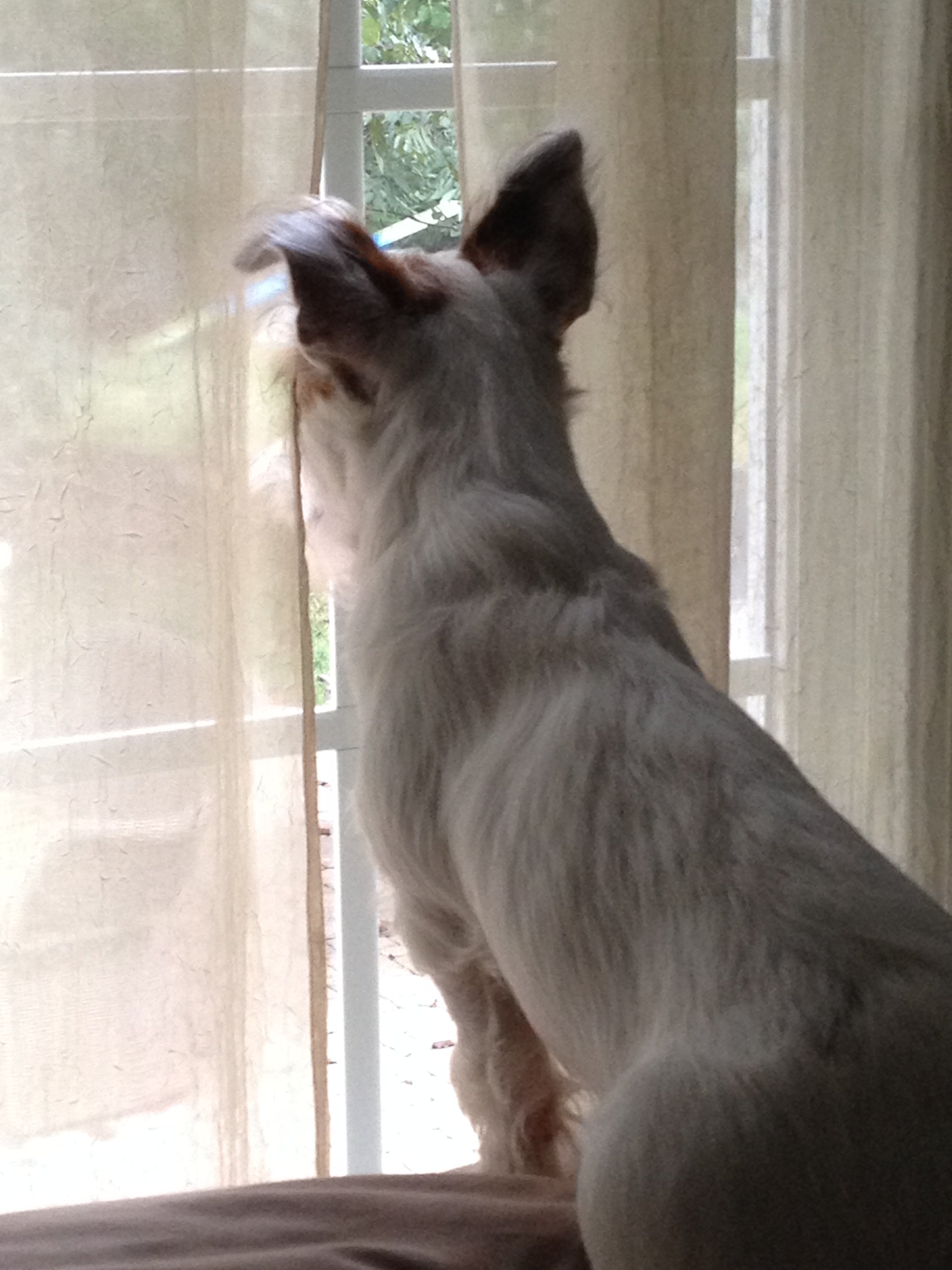
He lies down, then gets up again. He pants even though the house is cool. Every little sound makes his head snap around. He may lick his paws, refuse dinner, startle when touched or react sharply to something he would normally ignore.
The trigger is gone, but your dog’s body may still be waiting for the next bad thing to happen.
See your vet for a diagnosis and then you and I can collaborate on a custom strategy for your dog's health.
A Quiet Dog Is Not Always a Regulated Dog
Pet parents often measure stress by the behavior that was hardest to live with.
The barking stopped. The shaking stopped. The dog finally lay down.
That is certainly progress, but it does not always mean the nervous system has returned to a comfortable resting state.
Your dog may look quiet while still feeling internally alert. He may be listening for the next sound, watching every movement or sleeping so lightly that he never truly rests.
Dogs can also shift from obvious agitation into withdrawal. Instead of pacing and panting, they become unusually still, hide, avoid interaction or seem emotionally flat. That is not necessarily relaxation either.
What I know is that many dogs need support after the stressful event, not only while it is happening.
What Happens Inside Your Dog During Stress?
When your dog perceives danger, the body prepares to survive it.
Heart rate and breathing may increase. Muscles tighten. Digestion becomes less important than reacting quickly. Attention narrows toward the possible threat.
This response is useful when a dog needs to escape an actual danger. It becomes harder on the body when it is triggered repeatedly by storms, household conflict, pain, travel, unfamiliar dogs, grooming, veterinary handling or a schedule that never gives the dog enough time to recover.
The autonomic nervous system helps regulate these involuntary changes.
The sympathetic side supports action and survival: fight, flight, freezing or intense vigilance.
The parasympathetic side supports recovery: resting, digesting, sleeping, repairing and returning to a more settled state.
The goal is not to eliminate every stress response. Your dog needs the ability to become alert when something requires attention.
The problem begins when he has trouble coming back down.
Research evaluating stress in dogs commonly looks at changes in heart rate, heart-rate variability, cortisol and recognizable behaviors such as panting, lip licking, vocalization and a tucked tail. These signs do not tell us the entire emotional story, but they confirm that canine stress is not merely “bad behavior.” It involves measurable changes throughout the body.
The Stressor Ended. Why Is My Dog Still Struggling?
The nervous system does not work like a light switch.
Your dog cannot always move immediately from “that was terrifying” to “everything is fine now” simply because the thunder stopped or you pulled into the driveway.
The body may need time to process what happened. Recovery can be affected by:
The intensity and duration of the event
Whether several stressful things happened close together
Previous trauma or negative associations
Pain, nausea or physical discomfort
Age and cognitive changes
Sleep quality
Gut and digestive health
Medications
Hormonal, neurological or inflammatory conditions
How safe the environment feels after the event
Whether the dog has learned how to settle
A resilient dog may shake off a minor disruption fairly quickly. A sensitive dog, a dog in pain or one already carrying a full stress load may need much longer.
When Small Things Become the Last Straw
You may have heard the term trigger stacking.
It describes what can happen when multiple stressors accumulate before the dog has fully recovered from the previous ones.
A dog might start the morning with construction noise outside. Then the delivery driver rings the bell. Later, he has a difficult encounter with another dog on a walk. The children come home excited, dinner is late and someone tries to trim his nails.
The nail trim may appear to be what caused the growl or snap.
In reality, the dog’s ability to cope had been shrinking all day.
This explains why a dog may react strongly to something he handled well yesterday. The final event may not have been especially severe. It simply arrived when the nervous system had no room left.
This is also why punishment can make the situation worse. Correcting the final behavior does nothing to reduce the accumulated stress underneath it.
Every Stressful Experience Is Also Practice
Dogs become better at what they repeatedly experience.
That includes behaviors we want, such as settling on a bed, checking in with their person or walking calmly past another dog. It also includes patterns we do not want strengthened, such as panicking during storms, lunging on leash, fighting nail trims or becoming defensive at the veterinarian.
When a dog repeatedly enters the same intense stress response without enough support, recovery or a different outcome, the nervous system gets more practice following that pathway.
The dog may begin reacting sooner. The response may become stronger. It may take less of a trigger to set it off, and longer for the dog to recover afterward.
This is one reason pet parents sometimes say:
“He used to be a little nervous at the vet, but now he starts shaking in the parking lot.”
“She used to bark when dogs got close. Now she reacts as soon as she sees one across the street.”
“He tolerated nail trims when he was younger. Now I cannot touch his feet.”
The dog is not being stubborn or deciding to become difficult. His brain and body have learned to predict what is coming.
The parking lot predicts the examination room. The sight of another dog predicts tension and conflict. The nail clippers predict restraint, fear or discomfort.
Each experience can reinforce the association unless we deliberately begin changing it.
The Goal Is More Than Surviving the Moment
Of course, we need ways to help the dog during the stressful event.
We may need distance, quieter handling, pain control, environmental changes, selected essential oils, decompression or simply permission to stop before the dog becomes completely overwhelmed.
But getting through the moment is only the first layer.
The larger goal is to help the dog experience less stress the next time.
That may mean:
Recognizing the dog’s early signs before the reaction becomes explosive
Reducing exposure when the dog is already overloaded
Creating more distance from the trigger
Breaking difficult procedures into smaller pieces
Teaching the dog a predictable way to opt in or take a break
Pairing the experience with safety, choice and something the dog values
Practicing coping skills when the dog is calm enough to learn
Supporting pain, nausea or other physical problems that are lowering tolerance
Allowing enough recovery time before asking the dog to face another challenge
We are trying to change the dog’s expectation.
Instead of:
“This always becomes frightening, and I have to protect myself,”
we want the dog to begin learning:
“I recognize this situation. I have some control. My person notices when I am struggling. I know what to do, and I can recover.”
That shift does not usually happen because we distracted the dog once with a treat or diffused a calming oil during a crisis. It comes from repeated experiences that are genuinely more manageable.
Nervous-System Support and Behavior Work Belong Together
Essential oils may help lower the dog’s emotional volume enough for learning to become possible.
They may support settling, help create a familiar pre-event ritual or assist the dog during recovery afterward. Reiki, massage, PEMF, decompression and changes to the physical environment may also help the dog enter the experience with a little more capacity.
But nervous-system support is not a replacement for behavioral work.
A dog cannot learn a new response while he is completely overwhelmed. At the same time, calming support alone does not teach him what to do when the trigger appears again.
The two pieces need to work together.
Behavioral work may include:
Gradual desensitization to the trigger
Counterconditioning to create a different emotional association
Cooperative care for grooming, medication and veterinary handling
Teaching retreat, check-in or stationing behaviors
Building confidence through predictable, successful repetitions
Adjusting distance, duration and intensity so the dog can remain under threshold
Improving communication between the dog and the pet parent
The purpose is not to force the dog to tolerate more.
The purpose is to create experiences the dog can actually process without repeatedly dropping into panic, defense or shutdown.
Less Stress Next Time Is the Real Measure of Progress
Progress is not only that the dog stopped barking today.
Look at what happens the next time.
Did the dog recover faster?
Could he notice the trigger without immediately exploding?
Was he able to eat, sniff or respond to you?
Could the procedure stop before he panicked?
Did he return to normal more quickly afterward?
Was his reaction smaller, later or easier to interrupt?
Those changes tell us the dog is developing better coping skills rather than simply being contained through the event.
Over time, a well-designed plan may reduce the intensity of the stress response dramatically. Some dogs may eventually move through situations that once overwhelmed them with little difficulty.
Others may always need thoughtful accommodations, but they can still learn that they have safer options than panic, aggression or complete shutdown.
The goal is not a dog who never feels stress.
The goal is a dog who experiences less unnecessary stress, has skills for handling what does occur and knows how to return to balance afterward.
Signs Your Dog Has Not Fully Recovered
Some signs are obvious. Others are easy to dismiss because they do not look dramatic.
Your dog may:
Pace, pant or repeatedly change positions
Follow you closely or seem unusually clingy
Hide or withdraw
Remain watchful and unable to soften
Startle at quiet sounds
Bark or react more quickly than usual
Lick, chew or scratch himself
Refuse food or treats
Develop loose stool, gas or digestive upset
Shake off repeatedly when he is not wet
Yawn or lip lick outside of a sleepy or food-related context
Sleep poorly or wake often
Guard a bed, doorway or person
Resist being touched
Seem exhausted but unable to rest
Become unusually needy, irritable or disconnected
Panting, lip licking, vocalization and tucked-body postures are among the behaviors frequently recorded in canine stress research. No single sign proves stress, however, because pain, nausea, respiratory disease and other medical problems can look similar.
That overlap is important.
Do not assume a dog is “just anxious” when his behavior changes suddenly.
Pain and Illness Can Keep the Nervous System Activated
Sometimes the stressful event is obvious. Other times, the dog’s body is sounding an alarm because something does not feel right.
A dog who cannot settle may be experiencing:
Joint, spinal or muscular pain
Abdominal discomfort
Nausea or reflux
Urinary urgency
Skin inflammation or itching
Ear pain
Breathing difficulty
Medication side effects
Neurological changes
Cognitive decline
Fever or infection
Pain does not always look like crying or limping.
It can look like panting, clinginess, irritability, hiding, guarding, restlessness, appetite changes or suddenly refusing to be handled.
Stress and pain can also reinforce one another. Pain activates the nervous system. A dog who remains guarded and tense may then experience even more physical discomfort.
If your dog is suddenly acting unlike himself, especially without an obvious emotional trigger, begin with the possibility that he may be unwell.
Recovery Is Part of the Event
Most people prepare for the storm, veterinary appointment, car ride or grooming visit.
They do not always plan for what happens afterward.
Recovery support may include:
A quiet environment with fewer demands
Dimmer lighting and reduced household noise
Access to water and a comfortable resting place
A calm opportunity to eliminate
Distance from children, visitors or other pets
Sniffing and gentle movement if the dog wants it
Familiar bedding and routines
Avoiding unnecessary training or handling
Allowing sleep without repeatedly checking or touching the dog
Gentle bodywork when welcomed
Carefully selected aromatic support
The goal is not to entertain the dog or immediately “get him back to normal.”
Give the nervous system fewer things to process.
Sometimes the kindest recovery plan is a boring evening.
Do Not Force Relaxation
A dog cannot be commanded into nervous-system regulation.
You can teach a place cue, ask for a down or close him in a crate, but physical stillness does not guarantee internal calm.
Watch the quality of the rest.
Is the breathing becoming slower? Are the muscles softening? Is the dog resting on one hip rather than holding himself ready to spring up? Is his face relaxed? Can he sleep through ordinary household sounds?
Or is he technically lying down while scanning the room and jumping at every noise?
This distinction helps you decide whether the dog needs more obedience—or more recovery.
Often, it is recovery.
Where Scent and Essential Oils May Fit
This is one of the places where pet parents may not realize essential oils could be useful.
Dogs experience much of their world through scent. Their olfactory system is highly developed and connected with brain regions involved in memory, behavior, motivation and emotion.
A carefully chosen aroma may become part of the transition between activation and recovery.
That does not mean essential oils switch off the stress response, sedate the dog or erase what happened.
They may help create a quieter sensory environment, support emotional settling and become part of a familiar recovery ritual.
For example, I may consider:
Lavender when a dog is tense, restless or having difficulty transitioning into rest
Frankincense when grounding and emotional steadiness are part of the goal
Cedarwood for a dog who appears unsettled or insecure
Vetiver when the dog remains vigilant and disconnected from his body
Copaiba when physical discomfort may be contributing to the inability to settle
Roman chamomile for an emotionally sensitive dog carrying tension
These are directions, not a universal blend.
A dog who is frightened after fireworks, a senior pacing because of discomfort and a dog nauseated after a car ride may all look restless. They do not necessarily need the same support.
The reason the nervous system remains activated changes the plan.
Essential Oils Can Also Support Recovery When a Dog Is Unwell
Essential oils are often discussed only in relation to anxiety, but emotional regulation is valuable during illness, injury and recovery too.
A dog returning home after surgery may be sore, disoriented and unable to settle.
A dog recovering from digestive illness may feel nauseated and vulnerable.
A dog with a minor injury may remain guarded long after the immediate incident.
A dog who has undergone repeated examinations, procedures or medication may begin associating touch with discomfort.
In these situations, essential oils may be considered as one supportive layer around veterinary care.
They may help with:
Emotional decompression after a veterinary visit
Rest during recovery
Tension around gentle handling
Minor first-aid situations
Bodywork and physical comfort
Rebuilding a sense of familiarity and safety
Supporting a dog who feels unsettled while the medical picture is being investigated
They do not replace diagnosis, pain control, wound care, stabilization or prescribed treatment.
The role of aromatherapy is to support the dog living through the experience—not to pretend the experience does not require medical care.
The Aroma Should Be Introduced Before the Crisis
One mistake pet parents make is introducing a strong new scent when the dog is already overwhelmed.
Imagine being frightened and suddenly having an unfamiliar aroma placed directly under your nose. That may add sensory pressure rather than relieve it.
A recovery scent works best when the dog has already encountered it during calm, safe moments. When that aroma is paired repeatedly with rest, choice, easy behavioral exercises and experiences the dog can handle successfully, it may become part of a larger coping routine.
The oil is not teaching the behavior by itself. It may help create the emotional conditions in which the dog can notice, think, learn and recover.
You might introduce the closed bottle at a distance, observe the dog’s response and allow him to move closer or farther away. Later, the aroma can become associated with a quiet bed, gentle touch, Reiki, massage or rest.
Over time, the scent may become part of a predictable ritual:
The environment becomes quiet. The body is allowed to soften. Nothing difficult is about to happen.
That association can be more useful than reaching for an oil only when the dog is already panicking.
Read Introducing Essential Oils to Dogs the Right Way for more about scent imprinting and allowing your dog to participate.
Let Your Dog Say No
Not every calming oil calms every dog.
A dog may turn away from lavender, avoid cedarwood or become more alert around an aroma that another dog loves.
That response is information.
The scent may be too concentrated. The dog may have a negative association with it. The oil may not be the correct species or quality. The dog may simply prefer another aroma.
A dog who is already overstimulated should not be trapped in a room with a diffuser or have oil repeatedly placed under his nose.
Choice itself can help restore a sense of safety.
Read Essential Oil Self-Selection for Dogs for more about observing your dog’s response.
Your Nervous System Is in the Room Too
Dogs notice far more than the words we say.
Research has found relationships between stress measurements in dogs and their human companions, including synchronization in longer-term cortisol patterns. This does not mean you caused your dog’s anxiety, and it should never become another reason for a worried dog mom to blame herself.
It does mean your pace, breathing, tension and behavior may influence the recovery environment.
You do not need to perform perfect calmness.
Simply consider whether you are:
Hovering over the dog
Repeatedly asking if he is okay
Moving quickly around the room
Speaking in a high, worried voice
Inviting multiple family members to check him
Trying several remedies in rapid succession
Sometimes we become so determined to help that the dog never receives the quiet he needs.
Sit nearby. Breathe normally. Reduce the activity. Let the room become uneventful.
Your steadiness may become part of the support.
The Gut, Brain and Nervous System Are Not Separate Departments
Stress can affect appetite, digestion and stool quality. Digestive discomfort can also make a dog more restless, irritable and reactive.
That is why I look beyond the immediate behavior.
A dog who becomes anxious after meals may be uncomfortable.
A dog who cannot settle after antibiotics may be dealing with digestive disruption as well as the original illness.
A dog with chronic loose stool may have fewer physical reserves for handling stress.
Whole-dog nervous-system support may involve:
Food quality and digestibility
Meal timing
Hydration
The microbiome
Pain and inflammation
Sleep
Medications
Endocrine health
Liver and gallbladder function
Kidney and urinary health
Environmental stress
Emotional history
TCVM may help identify patterns such as heat, dampness, stagnation, deficiency, digestive weakness, stress or inflammation.
Muscle testing may help guide tolerance and direction in sensitive or complicated dogs.
Experience helps recognize patterns, ask better questions and avoid wasting time on random product guessing.
How Long Should Stress Recovery Take?
There is no universal clock.
Recovery may take minutes after a mild disturbance or much longer after an intense or prolonged experience. Age, temperament, pain, health, sleep, previous trauma and the number of recent stressors all affect the timeline.
Look for gradual movement toward the dog’s normal behavior:
Breathing slows
Muscles soften
Appetite returns
The dog can sleep
Ordinary sounds stop producing exaggerated reactions
The dog reconnects without clinging
Digestion normalizes
Handling becomes easier
The dog begins sniffing, stretching or engaging normally again
A dog who remains markedly distressed, will not eat, cannot sleep, develops digestive symptoms, appears painful or continues behaving abnormally should not simply be given more time and lavender.
That dog needs evaluation.
Building a Recovery Ritual
A recovery ritual should be simple enough that the dog recognizes it and calm enough that it does not become another project.
It may include:
Moving to a familiar quiet room
Lowering noise and activity
Offering water
Providing a comfortable bed
Allowing the dog to choose distance or closeness
Introducing a familiar selected aroma
Gentle Reiki, Raindrop, massage or touch if requested
A brief sniffing opportunity later
Protecting the dog from additional demands
Allowing uninterrupted sleep
You do not need to use every modality you own.
Choose the support that fits the dog in front of you.
Your Dog May Need Help Coming Back Down
The stressful event may last five minutes. The dog’s recovery may take much longer.
Watch what happens after the barking stops, after the guests leave and after you return home. That quieter period may tell you more about your dog’s nervous system than the dramatic event itself.
Essential oils, scent, bodywork, nutrition, rest and environmental changes may all have a place in helping a dog return toward balance.
But the first question remains:
Why is this dog having trouble recovering?
When we understand that, we can stop throwing random calming products at the problem and begin building support around the whole dog.
Related Content
As a Holistic Canine Health Practitioner and Certified Animal Aromatherapist, I can help you look at the behavior, health history, pain patterns, nutrition, environment and emotional clues together—and decide where essential oils and other supportive modalities may fit.
Contact Dana to discuss your dog’s nervous-system and recovery support.
dog nervous system stress | dog won’t calm down after stress | dog overstimulated and won’t settle | dog acting strange after stressful event | dog trigger stacking | signs of stress in dogs | how to calm a dog’s nervous system | dog anxious after vet visit | dog stressed after grooming | dog panting after visitors leave | dog stress recovery | essential oils for dog stress | dog nervous system regulation | dog unable to settle | dog acting different after boarding | dog recovery after stressful event | holistic support for anxious dogs | aromatherapy for dog stress | essential oils for dog recovery | dog sympathetic nervous system | dog parasympathetic nervous system |
When DIY Isn't Enough Already tried the basics? If this is happening with your dog and you're still stuck, I can help you figure out what deserves attention next.
Request a Discovery Callback →