

When Your Dog Won’t Settle
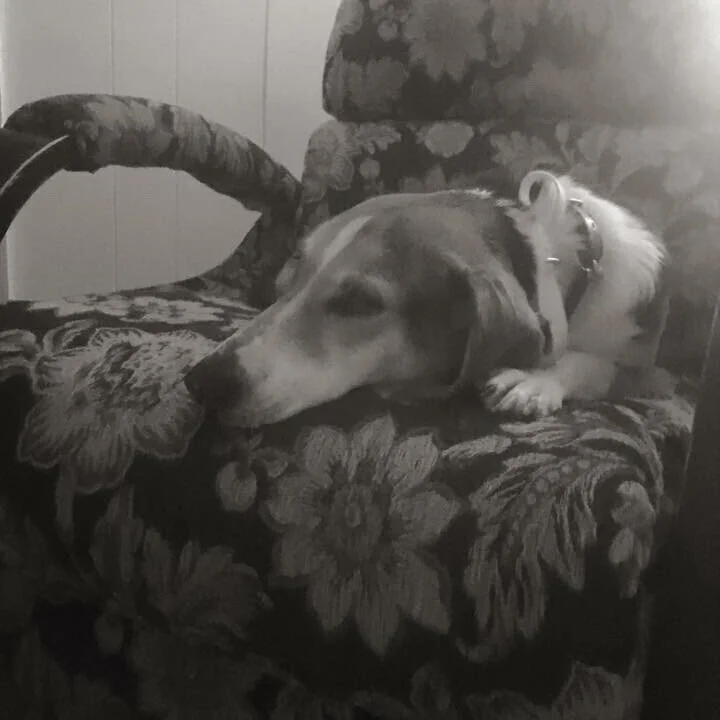
Finally, she settled.
Tessa’s Story of Pacing, Stress and Obsession
When a dog paces, pants, fixates on toys or seems physically incapable of switching off, the usual advice is to provide more exercise, more training and more enrichment.
Sometimes that helps.
Sometimes it creates a very fit dog who is still unraveling inside.
Tessa was one of those dogs.
She came to stay with me for behavior training after escalating tension developed between her and a new canine sibling. Their families had recently combined households, and Tessa was not adjusting well. What began as stress was starting to show up as aggression.
From the outside, it looked like a fairly typical behavior case involving household structure, boundaries and conflict between dogs.
Those pieces did need attention.
But within a few days, it became clear that Tessa was not simply testing limits or struggling to understand the rules.
Her body did not know how to settle.
This Was More Than a High-Energy Dog
Tessa paced constantly.
She panted when she could not access something she wanted. She shook when separated, even when another person was still nearby. She chased flickers of light and shadows as though she could not pull herself away.
Outside, she became fixated on a ball that had landed beyond the fence. Other toys, activities and opportunities were available, but she could not let that one ball go.
Her attention became stuck.
She was receiving exercise, enrichment, structure and behavior support, but the agitation continued. Her stress also began affecting the other dogs around her.
This was not a dog who simply needed another game of fetch.
What I was seeing looked less like unused energy and more like a nervous system stuck in overdrive.
When More Exercise Is Not the Answer
Exercise is important. Dogs need movement, outlets, enrichment and appropriate ways to use their bodies and brains.
But we also have to look at what happens after the activity.
Can the dog come back down?
Can she walk away from the toy?
Can she lie down without remaining alert to every movement?
Can she sleep deeply?
Can she recover after becoming excited or frustrated?
A regulated dog can become excited and then return to rest. A dog struggling with over-arousal may remain “on” long after the activity has ended.
Adding more stimulation to that dog can sometimes keep the cycle going.
The dog runs, chases or trains until physically tired—but the mind is still scanning, anticipating and searching for the next thing.
That distinction changes the plan.
Behavior Training Was Still Important
Tessa still needed clear structure.
She needed predictable routines, boundaries around resources, carefully managed interactions with the other dogs and humans who responded consistently.
Training was not irrelevant.
But training alone could not answer every question.
We also needed to consider:
Why was she unable to recover after becoming stimulated?
Why did frustration immediately turn into panting and agitation?
Why was she chasing light and shadows?
Why did separation create such a strong physical response?
Was physical discomfort contributing?
Was her diet supporting a steadier nervous system?
Was she sleeping deeply enough?
Was this a learned pattern, an emotional pattern or both?
What could help her body experience calm rather than merely obey a command?
A dog can learn to hold a down-stay while remaining internally overwhelmed.
That may look quieter, but it is not the same as truly settling.
The Moment I Reached for Essential Oils
Once I recognized that Tessa needed help shifting out of that heightened state, I reached for one of the most useful tools in my behavior and emotional-support work: essential oils.
I chose a grounding combination that included Lavender, Cedarwood and Stress Away.
This was not about filling the room with a pretty scent or trying to sedate her with aromatherapy.
I was looking for a change in her body.
Within minutes, Tessa’s breathing began to slow. Her muscles softened. The constant movement stopped, and she chose to rest.
Finally, she settled.
And honestly, everyone else in the house took a collective exhale too.
One calmer dog can change the whole room.
That Response Gave Me Information
The oils did not erase Tessa’s history, fix the household dynamics or complete her behavior plan in five minutes.
They did something equally valuable.
They showed me that her body was capable of shifting.
That moment gave us an opening.
When a dog can move out of constant over-arousal, even briefly, we have a better opportunity to reinforce rest, introduce new patterns and help the dog experience something besides agitation.
That is why I do not view essential oils as decorative extras in behavior work.
They may support:
Nervous-system regulation
Emotional grounding
Recovery after frustration or excitement
Deeper rest
Calming scent associations
Physical comfort
Transitioning between activity and downtime
Emotional release after stress or change
The oils did not replace Tessa’s training.
They helped make calm more accessible.
What Changed for Tessa
Tessa did not go home as a different dog with every challenge magically erased. That is not how meaningful behavior work usually looks.
She went home with a significant improvement in her ability to relax, regulate and settle in her own environment.
During her stay, we used essential oils alongside emotional-release techniques to help her move through the anxiety patterns keeping her body on constant alert. The goal was not simply to stop the pacing or interrupt the fixation. We wanted to help her nervous system experience a calmer state often enough that settling could become easier and more familiar.
As Tessa became more regulated, she was better able to:
Disengage from things she had been fixating on
Recover after excitement or frustration
Rest without constantly scanning the environment
Respond to direction instead of reacting from agitation
Settle around the other dogs with less tension
Accept routines and boundaries without becoming as overwhelmed
That shift gave us something to build on.
Her Pet Parents Continued the Work at Home
A dog may improve during a training stay, but lasting progress depends on what happens after she returns home.
Tessa’s pet parents continued supporting her with:
Predictable daily routines
Calming essential oils
Emotional-support techniques
Clear household rules
Consistent boundaries
Calm, direct communication
Appropriate exercise without constantly adding more stimulation
Intentional periods of rest and decompression
The rules and boundaries were not about becoming harsher with her. They reduced confusion.
An anxious dog often does better when the humans are clear, the routine is predictable and she does not feel responsible for managing every sound, movement, visitor, dog or change in the household.
Essential oils helped support Tessa’s emotional state. Structure helped her understand what was expected. Her pet parents’ consistency allowed those improvements to continue at home.
That combination was far more useful than simply trying to tire her out.
Emotional Release Was an Important Part of Her Progress
Some dogs carry tension long after the original stressful event has passed.
The household had changed. A new canine sibling had entered the picture. Tessa was struggling with frustration, separation and conflict, and her body appeared to remain braced for the next problem.
Emotional-release work gave us another way to support her beyond commands and corrections.
This may include:
Carefully selected essential oils
Scent-associated calming routines
Gentle touch or bodywork
Reiki or energy work
Breathing and grounding work with the pet parent
Allowing the dog to process without forcing interaction
Helping the body transition from alertness into rest
I also use Duration Work in my training programs
Emotional release does not mean we know every thought in the dog’s head or can erase her history. It means we recognize that behavior is connected to the body, emotions, environment and nervous system—not just obedience.
Tessa did not need someone to keep telling her to calm down.
She needed help learning what calm felt like. To actually have a relaxed state of mind.
Clear Communication Helped Her Feel Safer
Rules and boundaries sometimes get discussed as if they are the opposite of compassionate care. They are not.
Dogs like Tessa often benefit from knowing:
Where to rest
When play begins and ends
Which resources belong to whom
How interactions with other dogs will be managed
What behavior earns access to the things they want
That the humans will handle the household instead of leaving the dog to control it
When communication is inconsistent, the dog keeps guessing.
One person ignores or allows frantic behavior. Another person corrects it. Someone throws the ball because the dog will not stop staring at it. Someone else hides the ball after the obsession escalates. The dog receives five different answers and becomes even more agitated.
Tessa’s pet parents created clearer expectations and followed through calmly. That helped her stop carrying so much responsibility for what happened around her.
Why Tessa’s Story Is Not Just About Essential Oils
Essential oils were an important part of Tessa’s progress. I would not want to do this work without them.
But her results did not come from opening a bottle, letting her smell it once and declaring the case solved.
Her progress came from combining:
Essential oils
Emotional-release support
Behavior assessment
Nervous-system regulation
Clear rules and boundaries
Predictable routines
Thoughtful exercise
Rest and decompression
Consistent follow-through at home
This is the piece that gets lost when someone posts, “Use lavender,” underneath every anxiety question on Facebook.
Lavender may help. So may Cedarwood, Vetiver, Frankincense, Copaiba or a carefully selected blend.
But which oil? For what pattern? Used when? Paired with what routine? What is happening in the home? Is the dog painful? Is there conflict between dogs? Is the dog sleeping? Does she ever truly disengage?
Same symptom does not always mean the same plan.
Could Physical Health Be Contributing?
Before assuming pacing, panting or obsessive behavior is purely emotional, it is important to consider the whole dog.
Restlessness and behavior changes may also be associated with:
Pain or physical discomfort
Digestive upset or nausea
Itching or inflammation
Poor sleep
Medication effects
Hormonal or thyroid changes
Cognitive changes in senior dogs
Vision or hearing changes
Diet and nutrient imbalances
Major household or schedule changes
A sudden change in behavior deserves veterinary evaluation, especially when it is accompanied by appetite changes, digestive symptoms, sensitivity to touch, weakness, confusion or nighttime restlessness.
Veterinary diagnostics can help rule out pain, illness and neurological or endocrine concerns. Natural support, nutrition, essential oils and behavior work can then be used more thoughtfully based on what the individual dog needs.
What Tessa Taught Her Family
Tessa was not being difficult simply for the sake of being difficult. She wasn’t stubborn or spiteful.
Her behavior was communication.
The pacing, panting, shaking, fixation and inability to settle were telling us that her system was overwhelmed. Once we stopped treating every behavior as an isolated training problem, the plan became clearer.
She needed guidance—but she also needed help regulating.
She needed boundaries—but she also needed emotional support.
She needed activity—but she also needed to learn how to rest.
Her pet parents continued the routines, oils and clear communication after she returned home, and that follow-through helped preserve the progress she had made.
The goal was not a dog who never became excited or anxious again. The goal was a dog who could recover, settle and function more comfortably in her home.
That is a meaningful result.
Is Your Dog Unable to Settle?
Your dog’s pattern may look similar to Tessa’s, but that does not automatically mean the same oils or plan will be the right fit.
Start by asking:
When does the pacing or panting begin?
What happened immediately beforehand?
Can your dog disengage from toys or movement?
Does your dog sleep deeply?
Is the behavior worse around another dog?
Does separation trigger it?
Is your dog painful, itchy or uncomfortable?
What food, medications, supplements and calming products are already being used?
Are the household rules clear and consistent?
Can your dog relax without being physically exhausted first?
Most pet parents answer the questions they are asked. Sometimes progress begins when someone asks the questions they did not know to consider.
For a broader look at oils for different anxiety patterns, read Essential Oils for Dog Anxiety: Best Oils and How to Choose.
Want to go deeper with support for your dog through all life stages?
Join the client forum for ongoing support and resources!
Member Forum: https://members.welloiledk9.com
Downloads: https://welloiledk9.com/download
Visit My Affiliate Links for curated quality products mentioned above!
https://welloiledk9.com/affiliate-links
"Statements in this blog have not been evaluated by the FDA. Educational content only. Not intended to diagnose, treat, cure, or prevent any disease."
© 2025 Dana Brigman | Well Oiled K9 | All rights reserved.
Message me to get oils in your hands and on your dog! Quality Matters.
When DIY Isn't Enough Already tried the basics? If this is happening with your dog and you're still stuck, I can help you figure out what deserves attention next.
Request a Discovery Callback →