

Crystals and Essential Oils for Dogs: Safe Pairings and Uses
Incorporating the Power of Crystals and Essential Oils in Healing Practices for Dogs
Crystals and Essential Oils for Dogs
Traditional pairings, emotional intentions, practical ways to use them and the dog-safety considerations that should never be skipped.
Crystals and essential oils have been incorporated into spiritual, ceremonial and wellness practices across many cultures. Although they come from different parts of the natural world, both are often used to establish an intention and shape the atmosphere of a space.
For pet parents drawn to Reiki, meditation, massage, animal communication or energy work, crystals and essential oils may become part of a calming ritual shared with a dog. The goal is not to treat disease with a stone or assume a pleasant aroma replaces veterinary care. It is to create an environment that helps you slow down, become more present and pay closer attention to your dog.
Can Crystals and Essential Oils Heal Dogs?
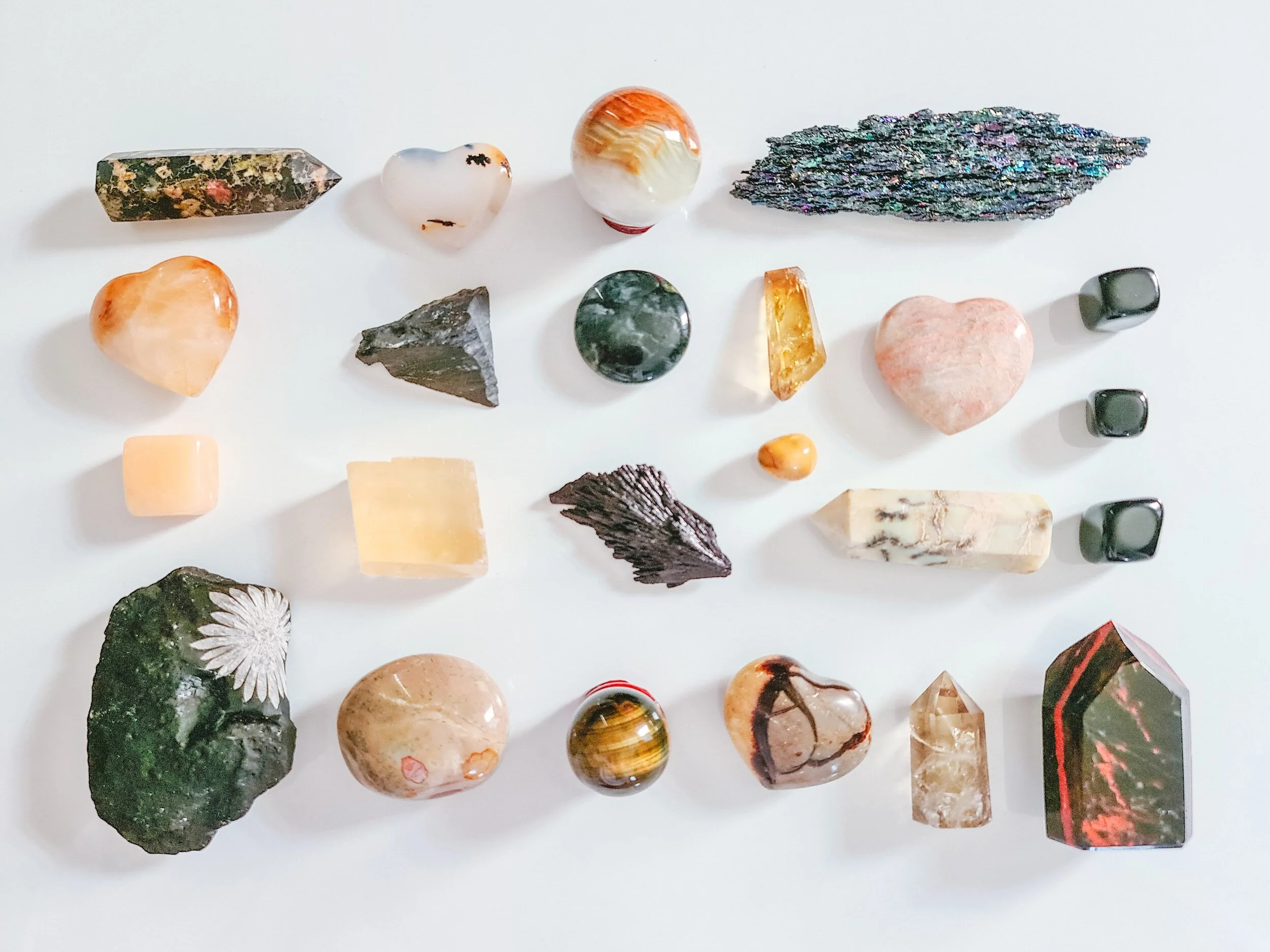
Crystals are traditionally associated with qualities such as calm, protection, confidence, clarity and emotional balance. Many people use them as visual or tactile reminders of the intention they want to bring into a session.
Crystals have not been established as a medical treatment. That does not mean they cannot hold personal, spiritual or symbolic meaning. It means we should be responsible about the claims attached to them.
Essential oils are concentrated aromatic compounds extracted from plants. Aromatherapy may be used as a complementary wellness practice, but the effects and safety considerations vary by oil, quality, concentration, method of use and the individual dog.
Your dog experiences aroma very differently than you do. Something that smells pleasantly subtle to you may be overwhelming to your dog. Your dog’s behavior—not the diffuser recipe—gets the deciding vote.
A Symbolic or Energetic Focus
- A visual focus during meditation or Reiki
- A reminder of an emotional intention
- A grounding object held by the pet parent
- Part of a calm and uncluttered wellness space
An Aromatic Component
- An aroma associated with a particular routine
- A sensory cue that quiet time is beginning
- Support for the emotional atmosphere of the space
- An additional element during meditation or bodywork
The benefit may come from the complete ritual rather than one individual item. You put away the phone, breathe more slowly, stop rushing and give your dog calm attention. Your dog notices when you stop buzzing around like a Labrador who found an unattended espresso.
Twelve Crystal and Essential Oil Pairings
These pairings are based on traditional crystal associations and commonly used aromatic intentions. They are not medical prescriptions, and the oil must still fit the individual dog, household and method of use.
You may also use the crystal by itself. A pairing is an idea—not a commandment carved into a mystical stone tablet.
Choose by Intention
Softer and Grounding Pairings
These may be useful starting points for a quiet shared space, although every oil still needs to be considered in the context of the individual dog.
Rose Quartz and Lavender
Rose quartz is traditionally associated with compassion, affection and emotional healing. Lavender has a soft floral aroma often connected with peaceful routines and relaxation.
Amethyst and Frankincense
Amethyst is often used during meditation and spiritual practices. Frankincense has a deep resinous aroma associated with reflection, prayer and emotional grounding.
Smoky Quartz and Vetiver
Smoky quartz is traditionally associated with grounding and releasing emotional heaviness. Vetiver has a deep earthy aroma often used when the intention is to slow down and become more settled.
Lapis Lazuli and Roman Chamomile
Lapis lazuli is traditionally associated with wisdom, expression and self-awareness. Roman chamomile has a soft herbal aroma commonly used in calming and emotional-wellness practices.
Black Tourmaline and Cedarwood
Black tourmaline is frequently placed near entryways, meditation areas or resting spaces as a symbol of grounding and energetic protection. Cedarwood has a warm woody aroma often associated with steadiness.
Green Aventurine and Copaiba
Green aventurine is traditionally associated with the heart, optimism and emotional renewal. Copaiba has a soft resinous aroma that may fit a quiet, comforting wellness atmosphere.
Brighter or More Individualized Pairings
These aromas may feel brighter, stronger or more stimulating. They deserve additional thought in puppies, seniors, seizure-prone dogs, scent-sensitive dogs and medically complicated dogs.
Citrine and Lemon
Citrine is traditionally associated with confidence, abundance and positive energy. Lemon has a fresh aromatic profile many people associate with brightness and clarity.
Clear Quartz and Peppermint
Clear quartz is traditionally viewed as an amplifier of intention. Peppermint has a strong, bright aroma associated with alertness and mental clarity.
Sodalite and Eucalyptus
Sodalite is often associated with communication and clear thought. Eucalyptus has a penetrating aroma commonly connected with openness and clarity.
Tiger’s Eye and Bergamot
Tiger’s eye is traditionally associated with strength, courage and grounded confidence. Bergamot has a bright citrus aroma often used in emotional-wellness practices.
Moonstone and Geranium
Moonstone is traditionally associated with change, cycles, intuition and emotional balance. Geranium has a distinctive floral aroma often connected with emotional harmony.
Carnelian and Orange
Carnelian is traditionally associated with confidence, vitality and creative energy. Orange has a bright aroma many people associate with warmth and cheerfulness.
The crystal and the oil do not have to stay married. You can use a crystal that fits your intention without using the suggested oil. You can also choose a different essential oil based on your dog’s history, preferences and response.
How to Use Crystals Around Your Dog
A crystal does not need to touch your dog to become part of the wellness space.
Hold the Intention Yourself
Hold a crystal during meditation, Reiki, journaling or quiet time with your dog.
Create a Safe Focal Point
Place one larger crystal on a shelf or table where it can be seen but not chewed or swallowed.
Use It as Your Reminder
Carry a crystal during training or veterinary appointments as a cue to slow your own breathing and regulate your energy.
Your calm presence can affect how you hold the leash, read your dog’s signals, respond to stress and move through a difficult situation. The crystal may simply help bring you back to that intention.
Essential Oil and Crystal Safety Around Dogs
Essential Oil Safety
- Choose pure, properly identified essential oils.
- Allow your dog to leave the room freely.
- Maintain appropriate ventilation.
- Avoid applying undiluted oil without a clear reason.
- Keep bottles, blends and diffusers out of reach.
- Do not add oils to food or water based on a public recipe.
- Introduce one new aromatic variable at a time.
- Watch the dog rather than assuming the pairing is calming.
- Consider age, medications, health history and sensitivity.
- Account for cats and other animals sharing the home.
Crystal Safety
- Keep small stones and crystal chips out of reach.
- Do not attach loose crystals to your dog’s collar.
- Do not place crystals in food or water bowls.
- Avoid crystal grids on the floor.
- Choose stable pieces without sharp or crumbling edges.
- Avoid dyed, coated, brittle or flaking stones near dogs.
- Supervise sessions in which crystals are present.
- Do not make crystal drinking elixirs for dogs.
- Remember that large stones can still damage teeth.
- Store the collection like something your dog may steal.
Curious dogs swallow ridiculous things. A polished stone can become a choking hazard or intestinal obstruction. A larger crystal may still crack a tooth if your dog decides it looks like an expensive chew toy.
Let Your Dog Participate in the Decision
Your dog does not need to understand the intention behind the session. Your dog does need to feel safe and retain the ability to move away.
Signs Your Dog May Be Comfortable
- Choosing to remain nearby
- Approaching voluntarily
- Softer facial muscles
- Relaxed breathing
- Settling onto one hip
- Stretching, sighing or resting
Signs to Stop or Create More Space
- Leaving or attempting to leave
- Turning the head away repeatedly
- Lip licking or repeated yawning
- Panting unrelated to heat
- Pacing, hiding or restlessness
- Coughing, sneezing or rubbing the face
Do not restrain your dog beside a diffuser or insist that the dog stay inside a crystal layout. That is not a shared healing session. That is an unwilling participant waiting for the meeting to end.
A Simple Shared Wellness Session
This does not need to become an elaborate ceremony. Quiet, simple and voluntary is usually better.
Prepare the Space
Choose a quiet, ventilated room. Remove unnecessary distractions and place one larger crystal safely out of reach.
Choose One Intention
Keep it simple: calm, connection, confidence, reassurance, emotional recovery or grounded support.
Let Your Dog Choose
Sit quietly, regulate your breathing and allow your dog to decide where to rest and when to leave.
You might also incorporate Reiki, Healing Touch, animal communication, quiet music, gentle massage, calm touch when welcomed or simply sitting together without trying to fix anything.
The most valuable part of the session may be becoming quiet enough to notice what your dog has been communicating all along.
A Complementary Practice, Not a Replacement for Care
Crystals and essential oils may become meaningful parts of a personal or shared wellness ritual, but they should not be used to diagnose disease or delay needed veterinary care.
Changes in behavior, appetite, sleep, mobility, breathing, digestion or emotional tolerance can have physical causes. Anxiety may be influenced by pain, nausea, endocrine disease, neurological changes, sensory decline, inflammation, medication effects or previous trauma.
A peaceful room may support your dog. It cannot tell us why your dog suddenly started pacing all night, refusing food, hiding or behaving differently.
As a Holistic Canine Health Practitioner and Certified Animal Aromatherapist, I look at the whole dog before recommending aromatic or energetic support. Age, health history, medications, seizure risk, organ function, behavior, home environment and the dog’s individual response all influence the plan.
Why You Will Not Find Essential Oil Dosing Here
I do not provide public dosing or one-size-fits-all essential oil recipes because I do not know your dog’s diagnosis, weight, medications, organ function, seizure history, sensitivities, diet, tolerance or what else may already be in use.
The right choice involves more than matching an oil to an emotion or selecting a crystal by color. Personalized guidance helps us avoid random product guessing and build support around the individual dog.
Need Help Looking at the Whole Dog?
We can look beyond one symptom or one product and build a more thoughtful wellness strategy around your dog’s health history, sensitivities, medications, diet and emotional patterns.
Related Reading
These statements have not been evaluated by the Food and Drug Administration. This information is for educational purposes and is not intended to diagnose, treat, cure or prevent disease. It does not replace veterinary diagnosis, emergency care or prescribed treatment.
When DIY Isn't Enough Already tried the basics? If this is happening with your dog and you're still stuck, I can help you figure out what deserves attention next.
Request a Discovery Callback →