

Sharing Essential Oils With Your Dog Safely
One Wellness Kit for Both of You
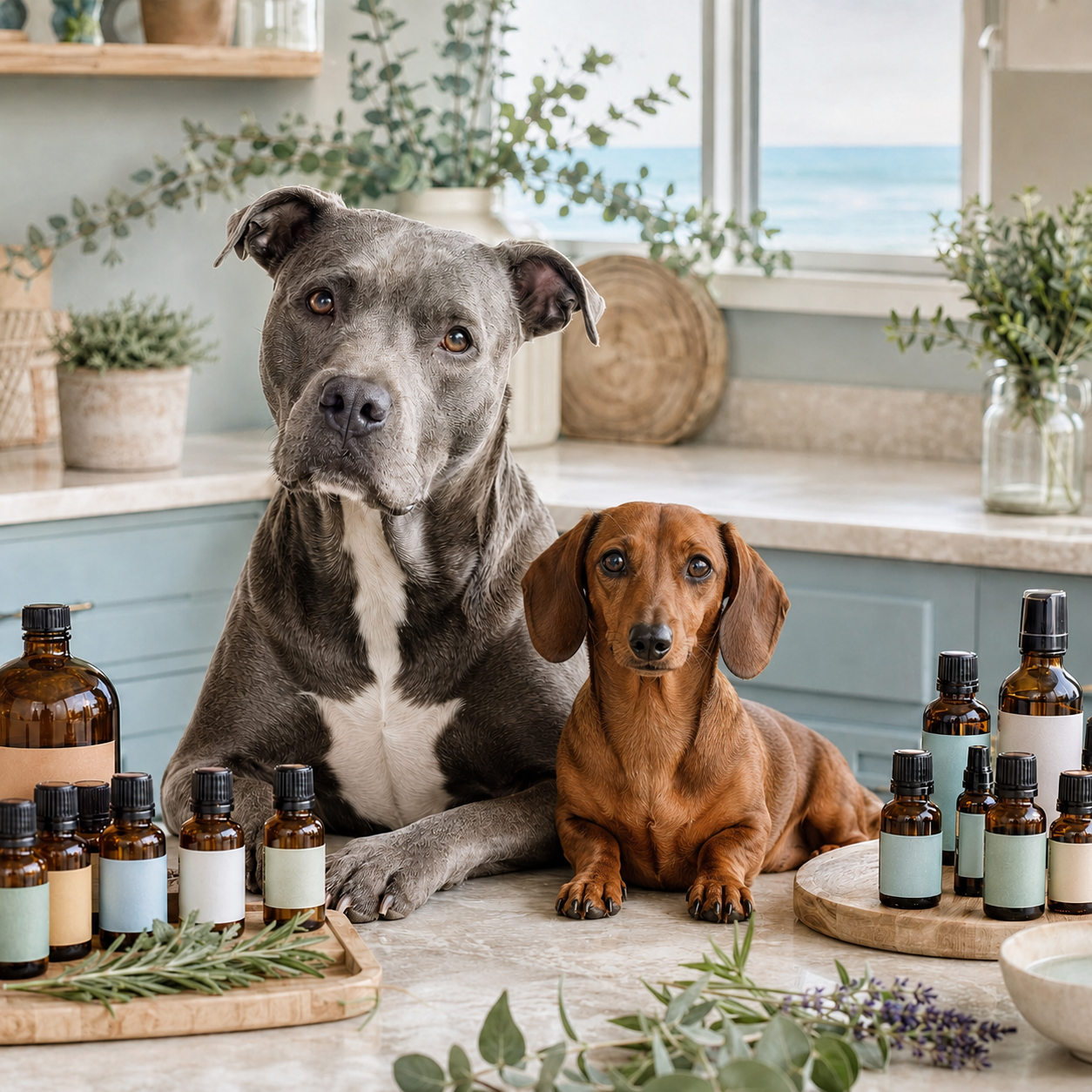
When dog moms first become interested in essential oils for dogs, one of the first concerns I hear is cost.
Do I need a separate collection for my dog? Do I need special canine blends? Am I about to buy 47 tiny bottles and build another medicine cabinet?
No.
One of the greatest advantages of high-quality essential oils is that many of the same oils can support both you and your dog. You may use them differently, dilute them differently, or choose a different method of application—but you are often starting with the same bottle.
That means you can create one practical essential oil first aid and wellness kit for your household instead of purchasing a separate product for every person, pet, symptom, and Tuesday afternoon crisis.
Can Dogs Use the Same Essential Oils as Humans?
In many situations, yes.
Lavender does not become a completely different plant because you are using it with your dog. Frankincense does not require a canine passport. Copaiba, cedarwood, chamomile, peppermint, lemon, and many other versatile oils may have a place in both human and canine wellness routines.
The difference is in how they are used.
Dogs have a much stronger sense of smell than we do. Their size, age, current health, medications, organ function, sensitivities, and reason for using the oil all influence the plan.
A Great Dane and a six-pound senior dachshund should not automatically receive the same application just because they both have four legs.
Sharing essential oils safely includes:
Choosing high-quality essential oils rather than fragrance oils
Introducing oils gradually
Diluting appropriately for the dog and application
Considering age, size, medications, health history, and sensitivity
Selecting the right application method
Watching how the individual dog responds
The same bottle may support both of you. That does not mean you always use the same amount or apply it in exactly the same way.
For additional guidance, read Safe Essential Oils for Dogs: Understanding Dilution.
Are Essential Oils for Dogs Expensive?
They can look expensive when you only compare the price of the bottle.
What is often missed is how little you use.
Essential oils are highly concentrated. Many applications require only a small amount, especially when an oil is added to a roller, massage oil, balm, misting spray, or other diluted product.
They also tend to last a long time when stored properly.
You may replace a few favorites more frequently because you use them regularly. This commonly happens with oils being used for:
Emotional and nervous system support
Kidney support
Joint and mobility support
Inflammatory balance
Respiratory wellness
Skin support
Ongoing senior care
Recovery routines
Frankincense for all the things
Yes, frankincense gets its own category. Once you understand how versatile it is, you will understand why.
Compare one collection of oils with buying:
One calming product for yourself
Another calming product for your dog
A separate digestive product
A separate respiratory product
A separate skin product
A separate joint product
Another product for travel
Yet another product for seasonal support
That stack of individual products adds up quickly.
A carefully chosen essential oil collection can be a budget saver because the same oils may fill several roles for more than one member of the household.
Build One Shared Essential Oil First Aid Kit
You do not need every oil ever distilled.
A practical starter collection should focus on versatile oils and blends that can serve more than one purpose. The goal is not to own the largest oil collection in the neighborhood. The goal is to have useful tools when you actually need them.
You can explore the properties of individual oils in 25 Common Essential Oils and Their Uses for Dogs.
First Aid and Skin Support
A few versatile oils can become part of your household first aid supplies for occasional skin irritation, minor scrapes, bug bites, seasonal discomfort, and recovery support.
Lavender, frankincense, copaiba, and tea tree are examples of oils I may consider, depending on the dog and the situation.
They may be incorporated into a properly prepared:
Roller
Balm
Misting spray
Massage oil
Compress
Topical blend
Essential oils are not a replacement for veterinary care when a wound is deep, infected, actively bleeding, caused by an animal bite, or otherwise serious. They are one part of a larger first aid toolbox.
Emotional Support for Both Ends of the Leash
This is one of the best examples of why sharing essential oils makes sense.
Dogs constantly observe us. They notice our breathing, voice, body tension, movement, frustration, excitement, and emotional shifts.
When the human in the house is running on stress and caffeine, the dog rarely responds by becoming the picture of Zen.
Your dog may mirror your tension, become more vigilant, struggle to settle, or react more strongly to activity in the home. That does not mean you caused your dog’s emotional or behavioral issues. Please do not add a guilt spiral to your list of things to manage.
It does mean that supporting your own nervous system can improve the emotional environment around your dog.
You may use a grounding roller on yourself before:
A thunderstorm
Fireworks
A veterinary appointment
A training session
Guests arriving
Travel
Working through separation concerns
Handling a stressful event
As you move through the house, sit with your dog, or cuddle on the couch, you become a gentle human diffuser.
Some oils commonly considered for emotional and calming support include:
Lavender
Frankincense
Cedarwood
Roman chamomile
Vetiver
Copaiba
Valerian
Peace & Calming
Stress Away
The right choice depends on whether the pattern involves fear, restlessness, over-arousal, grief, environmental stress, noise sensitivity, obsessive behavior, or difficulty settling.
A generic “calming oil” recommendation may not be enough. The individual emotional pattern gives us better direction.
Learn more in Essential Oils for Dog Anxiety, Stress, and Obsessive Behavior.
One Digestive Support Product for Both of You
Stress does not stay neatly inside the brain. It often lands directly in the digestive system—for dogs and humans.
Instead of keeping one digestive product for yourself and another for your dog, a thoughtfully selected digestive essential oil blend may become part of both wellness kits.
Digestive oils and blends may be considered for occasional:
Queasiness
Gas
Travel-related stomach upset
Digestive discomfort
Appetite changes
Stress-related digestive patterns
The method and amount may differ, but the same bottle may serve both of you.
That does not mean every episode of vomiting, diarrhea, or loss of appetite should be managed at home with an essential oil.
Repeated vomiting, abdominal pain, bloating, blood, weakness, dehydration, possible obstruction, toxin exposure, or suspected pancreatitis requires veterinary attention.
Essential oils may support digestive comfort. They do not diagnose why the digestive problem is happening.
One Respiratory and Seasonal Wellness Product
One respiratory-support blend may also be useful for multiple members of the household.
Depending on the individual, oils may be used aromatically or incorporated into appropriately prepared topical applications to support:
Comfortable breathing
Seasonal wellness
Clear airways
Environmental challenges
The body’s natural clearing processes
Immune wellness
When diffusing around dogs, use less than you would use for a room full of humans. Your dog should also be able to leave the area.
You do not need to turn your living room into a botanical fog bank. More aroma is not automatically more effective.
Coughing, labored breathing, pale or blue gums, collapse, choking, or obvious respiratory distress needs veterinary care—not another drop in the diffuser.
Joint, Muscle, and Inflammatory Support
Essential oils may also become part of a plan for active dogs, senior dogs, dog moms with sore backs, and anyone who discovers muscles they forgot they had after doing yard work.
Frankincense, copaiba, marjoram, lavender, peppermint, and targeted blends may be considered as part of a broader wellness plan.
That plan may also include:
Appropriate movement
Weight management
Fresh food
EPA and DHA
Massage or bodywork
PEMF
Red light or cold laser
Rehabilitation
Veterinary diagnostics when needed
An oil being used frequently for joint discomfort, recovery, inflammatory support, or an ongoing health concern may need to be replaced sooner.
That is not wasted product. It means the bottle became an active tool rather than expensive shelf décor.
Read more about Essential Oils With Anti-Inflammatory Properties for Dogs.
And Then There Is Frankincense
Frankincense tends to be one of the oils dog moms replace more often.
It may be considered for:
Emotional grounding
Nervous system support
Skin wellness
Senior dog support
Immune wellness
Inflammatory balance
Recovery routines
Cellular wellness
Meditation, Reiki, and emotional work
It is also useful for the human who bought it “for the dog” and then quietly started using it for everything herself.
Frankincense earns its reputation because it fits into so many wellness conversations. When someone asks which oils belong in a small, versatile starter kit, frankincense is rarely sitting on the sidelines.
Read Frankincense Essential Oil for Dogs for a deeper look at why I consider it one of the most useful oils to keep in the house.
Quality Is Where Cheap Can Become Expensive
A cheap bottle is not a bargain when it contains synthetic fragrance, undisclosed ingredients, poor-quality plant material, contaminants, or very little of the botanical compound you thought you were purchasing.
The words natural, pure, and therapeutic on the label do not automatically tell you:
Where the plants were grown
How they were harvested
How the oil was distilled
Whether the oil was tested
Whether synthetic ingredients were added
How the oil was stored before bottling
This becomes especially important when you plan to use the oil with both yourself and your dog.
I use and teach with Young Living because I want to understand where the plants came from and how the oils were produced. I am not interested in playing essential oil roulette with a dog’s sensitive system to save a few dollars.
Buy fewer oils if needed—but buy oils you can trust.
You can learn more about the Young Living essential oils and blends I use with dogs.
You Do Not Need a Giant Collection
Start with the concerns you are most likely to face.
For one family, that may include:
Emotional and calming support
Digestive support
Minor first aid
Seasonal respiratory support
Joint and muscle support
Another household may need to focus on:
Senior dog wellness
Skin problems
Noise sensitivity
Travel
Immune support
Recovery after activity
Chronic health support
A small group of carefully selected oils can cover a surprising amount of ground.
Once you understand the properties of each oil, you stop thinking of it as one bottle for one symptom.
That is when essential oils become practical—and far more budget-friendly.
How to Share Essential Oils With Your Dog Safely
Essential oil safety is not about being terrified of every bottle. It is about understanding what you are using and respecting how concentrated it is.
Keep these basics in mind:
Introduce one new oil or blend at a time.
Begin with a small amount.
Dilute appropriately for the dog and application.
Avoid the eyes, inside the nose, ear canal, and other sensitive areas.
Do not force a dog to remain beside a diffuser.
Keep bottles where curious dogs cannot chew or knock them over.
Consider medications, pregnancy, seizure history, age, and organ function.
Remember that cats require different considerations than dogs.
Stop and reassess if your dog appears uncomfortable or develops an unexpected response.
Some oils also require greater consideration around dogs with seizures, pregnancy, significant sensitivities, or certain medical conditions.
For a more complete discussion, read Essential Oils to Avoid or Use With Extra Consideration Around Dogs.
Education changes the conversation.
Build a Wellness Kit You Will Actually Use
Essential oils do not need to become another expensive hobby or shelf full of mystery bottles.
Choose a few high-quality, versatile oils. Learn what they do. Learn how to use them with yourself and your dog. Keep them accessible for emotional support, first aid, digestive comfort, seasonal wellness, joint support, and those everyday moments when you want another option.
One wellness kit. Two members of the family. Far more uses than most pet parents realize.
Explore my recommended essential oils and other natural wellness products:
Shop Essential Oils and Natural Wellness Products
Want to understand essential oils, herbs, homeopathy, and natural first aid instead of guessing your way through them?
Learn More About My Essential Oils, Herbs, and Homeopathy Remedies Class
Suggested Reading
When DIY Isn't Enough Already tried the basics? If this is happening with your dog and you're still stuck, I can help you figure out what deserves attention next.
Request a Discovery Callback →