

Is Frankincense Essential Oil Safe for Dogs?
If you told me I could keep only one essential oil in my dog wellness toolbox, frankincense would be awfully hard for me to give up.
Not because it is the famous “king of oils.”
And definitely not because frankincense magically fixes every dog problem from anxiety to arthritis to cancer.
I keep reaching for it because it is incredibly versatile.
Over the course of a dog's life I may consider frankincense essential oil for emotional grounding, nervous-system support, senior wellness, recovery, skin support, bodywork, Reiki, respiratory comfort, difficult transitions and broader whole-dog wellness.
It is one of those oils that can grow with the dog.
But the reason I use it changes — and so can the way I use it.
See Your Veterinarian for an official diagnosis. Then you and I can work together on a support and recovery strategy.
Essential oils can complement veterinary care. They do not replace diagnosis, imaging, laboratory work, surgery, pain management, seizure medication, cancer treatment or emergency care.
Is Frankincense Essential Oil Safe for Dogs?
Frankincense is one of the gentler essential oils I commonly work with in dogs.
But I don't think the most useful safety question is simply:
“Is frankincense safe?”
I want to know:
- Which frankincense product?
- What botanical species?
- What quality?
- What route?
- How concentrated?
- For what purpose?
- How old is the dog?
- How large is the dog?
- What medications is the dog taking?
- Are liver, kidney, respiratory or neurological problems present?
A healthy 80-pound adult dog is not the same aromatherapy case as a frail 10-pound senior taking five medications.
Concentrated essential oils are biologically active substances, and inappropriate exposure can cause problems.
That is why I teach intentional aromatherapy, not “just use a drop.”
What Is Frankincense?
Frankincense comes from the aromatic resin produced by trees in the Boswellia genus.
Several different Boswellia species are used to produce frankincense products.
For example:
- Boswellia carterii
- Boswellia sacra
- Boswellia frereana
- Boswellia serrata
The species, growing conditions, resin and distillation can influence the resulting chemistry and aroma.
This is one reason I want the botanical identity on the bottle rather than simply the word Frankincense in pretty lettering.
Frankincense Essential Oil Is Not the Same as Boswellia
This distinction needs to stay in the article because it gets muddled online constantly.
Frankincense essential oil comes from Boswellia resin, but it is not chemically identical to:
- Whole frankincense resin
- Boswellia powder
- Boswellia extracts
- Boswellia joint supplements
Boswellic acids are among the compounds of interest in Boswellia extracts and have been studied for inflammatory and joint support.
Those heavier compounds are not the same as the volatile aromatic chemistry collected in distilled frankincense essential oil.
There is canine research supporting certain Boswellia preparations for dogs with osteoarthritis and chronic joint or spinal disease.
That does not mean we can take every Boswellia study and claim the same clinical result for frankincense essential oil.
I may use both.
I just use them for different reasons.
What Do I Use Frankincense Essential Oil for With Dogs?
I think this is where frankincense becomes much more interesting than a simple “calming oil.”
In my own aromatherapy work, frankincense appears in several different categories.
Emotional Grounding and Anxiety Support
Frankincense is one of the oils I may consider for:
- Fear and insecurity
- Grief
- Restlessness
- Emotional shutdown
- Trauma patterns
- Rescue adjustment
- Stress after illness or hospitalization
- Major household changes
I particularly like frankincense when I want grounding without making the aromatic experience overly complicated.
With anxious dogs, however, I still want to ask what is underneath the behavior.
Pain? Gut problems? Poor sleep? Cognitive decline? Constant environmental stress?
The oil may help support regulation.
The rest of the dog still needs attention.
Read: Dog Anxiety & Whole-Body Natural Support
Nervous-System and Neurological Support
Frankincense also appears frequently in my neurological aromatherapy toolbox.
Depending on the case, I may consider it within broader support for:
- Nervous-system recovery
- Neurological sensitivity
- Post-seizure recovery
- Age-related cognitive changes
- Trauma and nervous-system overload
I want to be very clear about what that means.
Frankincense is not seizure medication.
I do not advise a dog parent to stop anticonvulsant medication because frankincense is in the house.
New seizures, prolonged seizures, cluster seizures or a major change in seizure pattern require veterinary attention.
What aromatherapy can do is give me another complementary tool for supporting the dog around the neurological condition and during recovery.
Senior Dogs and Cognitive Support
Senior dogs are one of the reasons frankincense gets used so often in my house.
Aging dogs may have overlapping concerns:
- Changes in sleep
- Nighttime pacing
- Cognitive decline
- Anxiety
- Mobility discomfort
- Slower recovery
- Changes in vision or hearing
- More medications
Frankincense may become one piece of a plan that also includes fresh food, MCT support where appropriate, omega-3s, herbs, homeopathy, CBD, PEMF, massage, Reiki, movement and other individualized senior support.
Read: Senior Dog Health & Longevity Support
Recovery After Illness, Injury or Surgery
Recovery is another place where I often consider frankincense.
The dog recovering from surgery or illness may be dealing with:
- Pain
- Anxiety
- Poor sleep
- Reduced appetite
- Digestive disruption
- Medication effects
- Reduced mobility
- Emotional stress
I may use frankincense alongside the tools appropriate for that particular dog, which could include homeopathy, nutrition, CBD, PEMF, cold laser, red light, massage, Reiki or rehabilitation.
Read: Dog Surgery & Recovery Support
Skin and Tissue Support
Frankincense may also be incorporated into properly formulated topical skin-support strategies.
Depending on the condition, I may consider it around:
- Dry or irritated skin
- Aging skin
- Scar and tissue support
- Healed areas after injury or surgery
- Minor skin concerns
But I want to know what the skin problem is first.
An allergy flare, yeast problem, bacterial infection, hot spot, suspicious lump and healing incision are not the same thing.
I do not recommend repeatedly putting frankincense on an unknown lump instead of figuring out what the lump is.
Respiratory and Emotional Breathing Support
Frankincense may also fit into selected aromatic routines when the goal is calm breathing, emotional settling or respiratory comfort.
But respiratory distress is never an essential-oil experiment.
Labored breathing, blue or pale gums, collapse, abdominal effort while breathing or major sudden respiratory changes need veterinary care.
Reiki, Bodywork and Emotional Transitions
Frankincense is also one of the oils I frequently pair with energy work.
I may incorporate it during:
- Reiki
- Gentle bodywork
- Recovery sessions
- Grief support
- Hospice and transition support
- Emotional settling after trauma or major change
These are times when I often want the environment simple and grounding, not filled with six different oils competing for everybody's attention.
What About Frankincense for Dogs With Cancer?
This is probably one of the biggest areas where frankincense claims get ahead of the evidence.
There is significant interest in Boswellia and frankincense chemistry in laboratory and human research.
That is not the same thing as having canine clinical evidence showing that frankincense essential oil shrinks tumors or cures cancer.
I will not tell a dog mom:
“Put frankincense on that lump and it will disappear.”
That is not responsible aromatherapy.
I do use frankincense in selected whole-dog cancer-support plans.
Its job may involve:
- Emotional grounding
- Comfort
- Nervous-system support
- Skin wellness
- Recovery around treatment or surgery
- Reiki and quality-of-life support
And it may be combined with nutrition, functional mushrooms, Western or Chinese herbs, homeopathy, CBD, omega-3s and other individualized modalities.
Read: Essential Oils for Dogs With Cancer
Read: Natural Cancer Support for Dogs
How I Use Frankincense With Dogs
There is more than one application method, and the method should fit the purpose.
Aromatic Use
Frankincense may be used aromatically to support grounding, emotional balance and a calmer environment.
I want ventilation and I want the dog able to move away.
I do not trap a dog beside a diffuser because I have decided relaxation is mandatory.
Direct Aromatic Introduction
I may also allow a dog to investigate the aroma in a controlled way.
The dog can approach, pause, turn away or return.
I watch the response.
Softer expression, sighing, stretching, settling or choosing to remain nearby gives me information.
Avoidance gives me information too.
Topical Use
Frankincense may be incorporated into an appropriately prepared topical application.
Depending on why I am using it, that may involve areas such as:
- The spine
- Chest
- Feet
- A selected bodywork area
- Healthy surrounding skin when appropriate
I avoid the eyes, inside the ears, nose, genital area, fresh surgical incisions and unidentified open lesions.
Internal Use
Internal essential-oil use is a much more individualized decision.
I do use internal essential oils in selected situations when the product, dog, route and goal make sense.
That is not permission to begin dropping an unknown frankincense oil into every dog's food or water.
Internal use requires more consideration of:
- Product quality
- Diagnosis
- Weight
- Medications
- Liver and kidney function
- Diet
- Other supplements and herbs
- What else is already in the protocol
Why I Prioirtize Quality Of The Oil
Essential-oil quality is part of the safety conversation.
I am selectetive in brand use for my own dogs and in my aromatherapy work because I want consistency in sourcing, plant identity, production and the product I am actually putting into a protocol.
I also want dog parents to understand that brand quality does not replace aromatherapy education.
A quality bottle can still be used badly.
I want to know:
- Botanical species
- Plant source
- Distillation method
- Testing practices
- Storage
- Freshness
- Whether fillers or synthetic fragrance have been added
Then I want to know what job the oil has in the dog's plan.
Sacred Frankincense vs Frankincense
You may also see Sacred Frankincense.
Sacred Frankincense commonly refers to Boswellia sacra.
Standard Frankincense products may be produced from another Boswellia species.
The oils are related, but their aromatic and chemical profiles are not identical.
I may choose between them according to the dog, the purpose and the rest of the aromatherapy plan.
I don't think every dog parent needs three different frankincense bottles just because three exist.
What I Know
Frankincense is useful because it is versatile.
That does not mean it should be turned into a cure-all.
If the dog is anxious, I want to know why.
If the dog hurts, I want to know why.
If the dog has seizures, I want the neurological picture.
If there is a lump, I want to know what the lump is.
If the dog has cancer, I want the pathology, food, medications, organ function and complete support plan.
Frankincense can have a lot of jobs. It should still have a reason for being there.
Frequently Asked Questions About Frankincense for Dogs
Is frankincense essential oil safe for dogs?
Frankincense is one of the gentler essential oils I commonly consider for dogs, but safety still depends on product quality, concentration, route, the reason for use and the individual dog's health.
What are the benefits of frankincense for dogs?
I may consider frankincense for emotional grounding, nervous-system support, senior wellness, recovery, skin support, bodywork, Reiki, grief and whole-dog wellness. The goal determines how I use it.
Can frankincense help dogs with anxiety?
Frankincense is one of the grounding oils I use for selected dogs dealing with fear, hypervigilance, grief, restlessness, trauma or difficulty settling. I also evaluate pain, sleep, digestion and environmental stress when anxiety is chronic.
Can frankincense be used with a dog that has seizures?
Frankincense is one of the oils I may consider within broader nervous-system and post-seizure recovery support. It is not a replacement for anticonvulsant medication. New, cluster or prolonged seizures require veterinary care.
Can frankincense help a senior dog with dementia?
I may consider frankincense within a larger senior cognitive-support plan. I also look at sleep, pain, nutrition, sensory loss, medications and other neurological changes rather than treating cognitive decline with one oil.
Can frankincense help arthritis or joint pain in dogs?
Frankincense essential oil may be one comfort-support tool, but it should not be confused with standardized Boswellia extracts that have been studied in dogs with joint disease. Arthritis support may also involve food, omega-3s, herbs, CBD, PEMF, laser, massage and veterinary pain management.
Is frankincense essential oil the same as Boswellia?
No. Frankincense essential oil, whole resin and Boswellia extracts contain different chemical profiles. Research on Boswellia extracts cannot automatically be used as evidence for the distilled essential oil.
Can frankincense shrink a tumor on a dog?
I do not tell pet parents that frankincense essential oil will shrink a tumor. There is not adequate canine clinical evidence to make that promise. A new or changing lump deserves veterinary evaluation and diagnosis.
Can frankincense be used for a dog with cancer?
I may include frankincense within a broader cancer-support plan for emotional grounding, comfort, skin wellness, recovery and quality-of-life support. It does not replace diagnosis, surgery, oncology or pain management.
Can I put frankincense on my dog's lump?
I want to know what the lump is first. A lipoma, mast cell tumor, cyst, abscess and insect reaction are not interchangeable. Diagnosis first; then we can decide what topical support makes sense.
Can frankincense help my dog after surgery?
Frankincense may fit into an individualized recovery strategy once the dog's surgical needs, pain control and wound care are appropriately managed. I may combine it with nutrition, homeopathy, PEMF, laser, massage, Reiki or other recovery tools.
Can frankincense be used on a dog's wound or incision?
I do not recommend putting essential oil directly into a fresh incision, deep wound or unidentified open lesion. First determine whether the area needs veterinary wound care, closure, medication or other treatment.
Can I diffuse frankincense around my dog?
Frankincense may be used aromatically with appropriate ventilation and the dog free to leave the area. I avoid continuous forced exposure and watch how the individual dog responds.
Can I diffuse frankincense every day?
I don't believe every dog needs continuous daily diffusion. Frequency depends on why the oil is being used, how the dog responds, respiratory health and what other aromatic products are already in the environment.
Can I put frankincense essential oil directly on my dog?
Frankincense may be used topically when appropriately prepared for the individual dog. There is no one topical concentration or frequency that fits every age, size, diagnosis and health history.
Where do you apply frankincense on dogs?
Depending on the goal and formulation, I may consider areas such as the spine, chest, feet or a selected bodywork area. I avoid eyes, inside the ears, nose, genital tissues, fresh incisions and unidentified open lesions.
Can dogs ingest frankincense essential oil?
Internal essential-oil use requires individualized consideration. I do not recommend randomly adding frankincense to a dog's food or water. Product quality, diagnosis, weight, medications, organ function and the rest of the dog's protocol need to be reviewed.
Is frankincense safe for puppies?
Frankincense may be considered for puppies, but puppies are smaller and still developing, so I take a more conservative approach to route and exposure.
Is frankincense safe for senior dogs?
Frankincense is one of the oils I frequently use in senior wellness, but senior dogs may also have kidney or liver changes, medications, cognitive changes or chronic disease. Those factors influence how I use it.
What is Sacred Frankincense?
Sacred Frankincense commonly refers to essential oil produced from Boswellia sacra. Other frankincense oils may come from other Boswellia species, and their aromatic and chemical profiles are not identical.
Are Young Living frankincense oils safe for dogs?
I use Young Living essential oils with my own dogs because sourcing, product identity and consistency are important to me. Brand quality does not eliminate the need to choose the right route, purpose and application for the individual dog.
Can frankincense interact with my dog's medications?
With medically complicated dogs, I want to review the entire medication, supplement and essential-oil list. Aromatic exposure, topical use and internal use are different situations, so route also influences the interaction conversation.
What are signs my dog does not tolerate an essential oil?
Stop exposure and pay attention to signs such as coughing, repeated sneezing, drooling, vomiting, skin irritation, marked avoidance, unusual lethargy, wobbliness, tremors or breathing changes.
Significant or progressive symptoms warrant veterinary attention.
Can I use frankincense if I also have cats?
A multi-pet household requires additional thought because cats process some essential-oil constituents differently and may be exposed through diffusers, surfaces or grooming a treated dog.
Why Personalized Aromatherapy Helps
What I don't want you doing after reading this article is buying frankincense and trying every possible use on the same dog.
I want the opposite.
Learn what the oil does.
Understand what your dog needs.
Then decide whether frankincense actually belongs in that plan.
As a Certified Animal Aromatherapist and Holistic Canine Health Practitioner, I may also use TCVM patterns, behavior history, nutrition, muscle testing, body assessment and the dog's response to help narrow which modalities deserve attention.
Sometimes frankincense is exactly where I start.
Sometimes another oil is a much better fit.
Want to Learn How to Actually Use Essential Oils With Your Dog?
Knowing that frankincense is “good for dogs” doesn't tell you when to use it, what to pair it with or when another tool makes more sense.
That's the part I teach.
My Natural Remedies Class covers essential oils along with other practical natural-remedy categories so you can make better decisions instead of collecting bottles and hoping one of them is the answer.
Explore the Natural Remedies Class Request a Discovery CallbackRelated Content
A Note About Dosing
No dosing or universal dilution is provided here because every dog's case is different.
The right approach depends on the dog's age, weight, diagnosis, medications, liver and kidney function, neurological and respiratory history, intended route, sensitivity and what else the dog may already be using.
That is especially important with puppies, seizure-prone dogs, medically complicated seniors and dogs receiving multiple medications.
Educational Disclaimer: The information provided by The Well Oiled K9 is for educational and wellness-support purposes only and is not a substitute for veterinary diagnosis, treatment, medication, surgery or emergency care. Essential oils and other complementary modalities are not intended to diagnose, treat, cure or prevent disease. Significant essential-oil exposure or symptoms such as vomiting, weakness, tremors, loss of coordination, breathing difficulty or neurological changes require veterinary guidance.
References: MSD Veterinary Manual — Essential Oil Toxicoses in Animals | Boswellia Resin Extract in Canine Joint & Spinal Disease | Boswellia-Containing Supplement in Canine Osteoarthritis
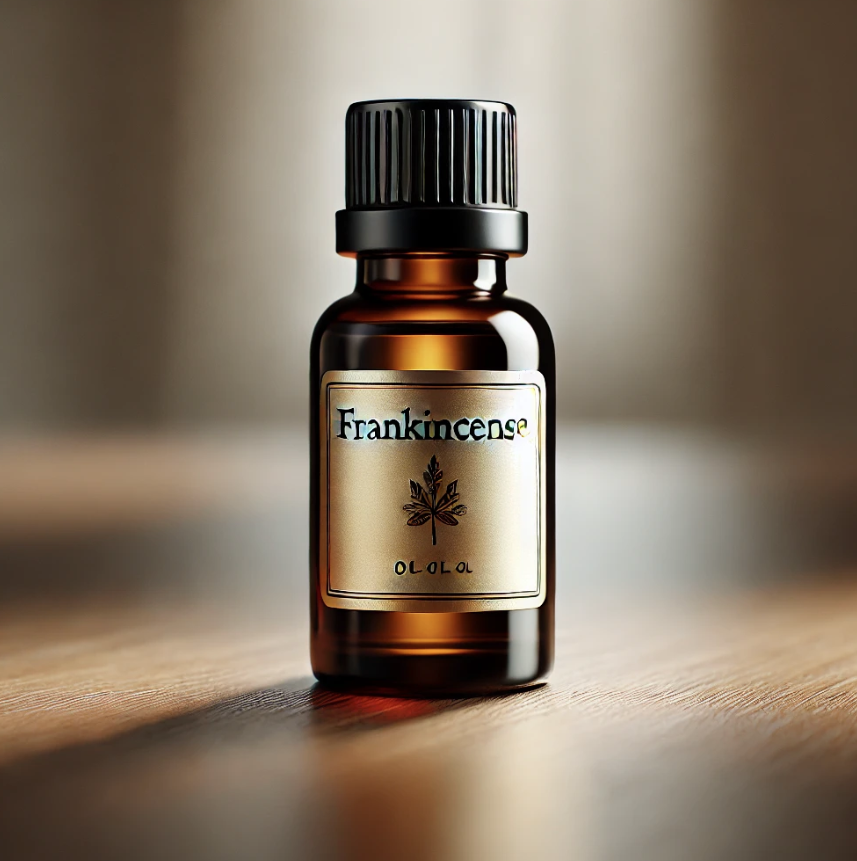
If you can only have 1 essential oil, choose Frankincense Essential Oil for Dogs
When DIY Isn't Enough Already tried the basics? If this is happening with your dog and you're still stuck, I can help you figure out what deserves attention next.
Request a Discovery Callback →