

Safe Use of Herbs for Dogs: What Every Pet Parent Should Know
Herbs can be a wonderful part of your dog’s wellness plan. They may offer nutritional support, soothe irritated tissues, support digestion, help the body manage inflammation, calm an overworked nervous system, or provide targeted support during illness and recovery.
But let’s get one thing out of the way:
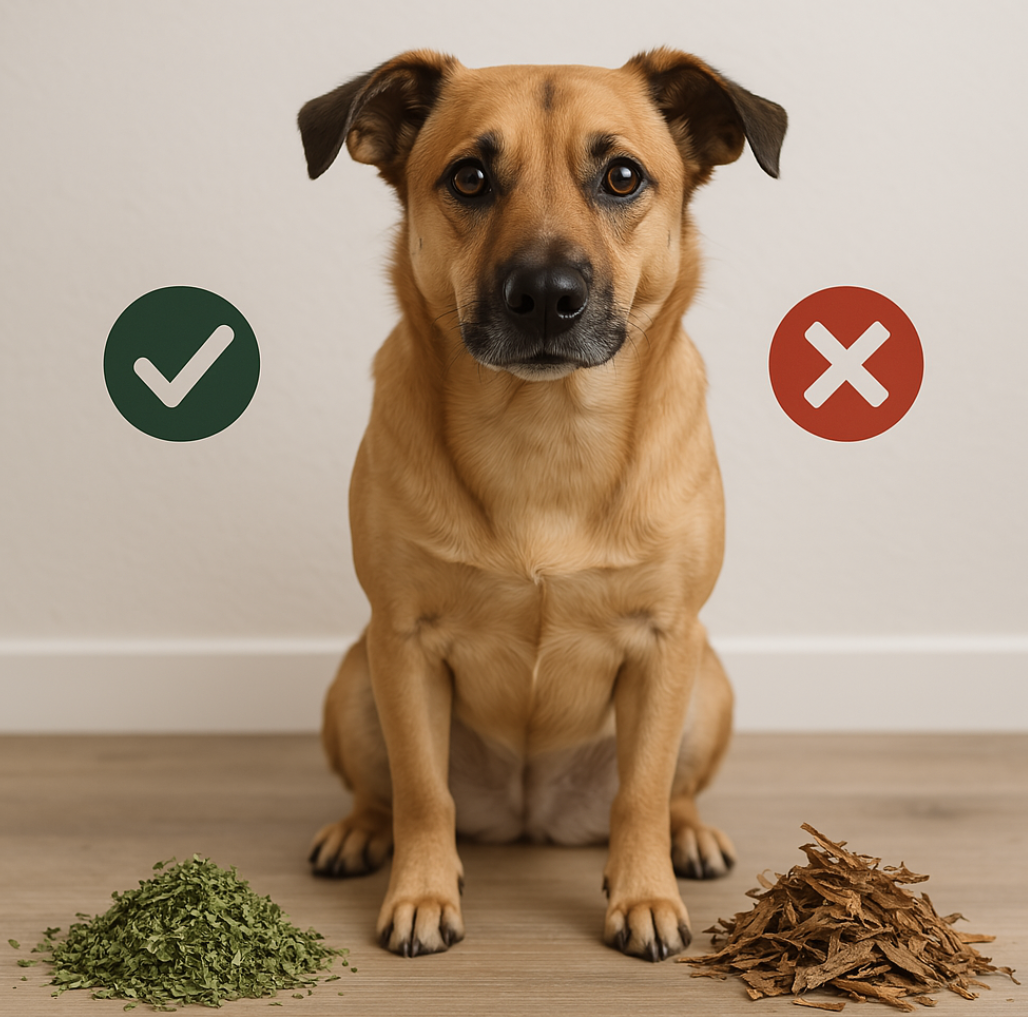
Natural does not automatically mean safe, gentle, appropriate, or harmless.
Herbs contain biologically active compounds. That is precisely why they can be useful—and why we need to choose them thoughtfully.
The right herb depends on more than the symptom written in the Google search box. Your dog’s age, weight, medications, health history, diet, current symptoms, and the form and quality of the herb all matter.
Why Pet Parents Use Herbs for Dogs
Herbs may be considered as part of a larger wellness plan for:
Digestive and intestinal comfort
Liver, kidney, and urinary support
Skin and seasonal concerns
Joint comfort and mobility
Nervous system regulation
Immune-system support
Healthy circulation
Nutritional and mineral support
Recovery and senior wellness
Some herbs are primarily nutritive and may be used much like food. Others have stronger therapeutic actions and require more care.
A little fresh parsley added to a meal is not the same as a concentrated herbal extract. A tea, powder, capsule, glycerite, and alcohol tincture may all contain the same plant but deliver very different amounts and constituents.
To understand those differences, read Herbal Preparations for Dogs.
Start With the Dog, Not the Symptom
It is tempting to ask:
What herb is good for itching?
What herb calms dogs?
What herb supports the liver?
What can I give for loose stool?
What herb helps inflammation?
Those are reasonable starting questions, but they are not enough to choose a remedy.
Two dogs can have the same symptom for completely different reasons.
Restlessness may be related to fear, pain, digestive discomfort, hormonal changes, cognitive decline, medication effects, or an overstimulated nervous system.
Loose stool may be associated with diet, parasites, infection, food intolerance, pancreatic dysfunction, stress, microbiome imbalance, or intestinal inflammation.
Itching may involve fleas, mites, yeast, environmental exposure, food intolerance, immune dysfunction, skin-barrier damage, or something entirely unrelated to allergies.
The herb that helps one dog may be ineffective—or inappropriate—for another dog showing what appears to be the same problem.
This is why herbalism is not simply matching one herb to one symptom. We need to understand what the body is doing, what may be driving the problem, and what kind of support should come first.
“Dog-Safe” Does Not Mean Safe for Every Dog
You will see plenty of lists online describing certain plants as “dog-safe.” That label is helpful, but incomplete.
An herb may be generally considered appropriate for dogs and still be a poor choice for:
A pregnant or nursing dog
A very young puppy
A frail senior
A dog preparing for surgery
A dog with liver or kidney disease
A dog with a bleeding or clotting disorder
A dog with seizures
A dog with autoimmune disease
A dog taking prescription medication
A dog with an allergy to that plant family
A dog who is dehydrated or medically unstable
The amount, plant part, preparation, duration, and reason for using the herb all matter.
Even culinary herbs can cause problems when they are used in concentrated amounts or given to a dog whose health status makes them inappropriate.
Herbs Can Interact With Medications
Herb and medication interactions are not limited to one or two notorious plants.
Depending on the herb, it may affect:
Blood clotting
Blood sugar
Blood pressure
Sedation
Urination and fluid balance
Immune activity
Digestion and nutrient absorption
Liver enzymes involved in drug metabolism
The absorption or elimination of medication
Use additional caution when your dog takes:
Anticoagulants or medications affecting clotting
Insulin or other blood-sugar medication
Seizure medication
Sedatives or anti-anxiety medication
Diuretics
Heart or blood-pressure medication
Steroids
Immunosuppressive drugs
Thyroid medication
Chemotherapy drugs
Multiple medications or supplements
This does not mean herbs and medication can never be used together. It means the combination should be considered intentionally rather than assumed to be harmless.
Keep a written list of everything your dog receives, including food supplements, herbs, mushrooms, essential oils used internally, CBD, homeopathic products, and medications. Share that list with the professionals helping you make decisions.
Be Careful Before Surgery or Dental Procedures
Some herbs may influence clotting, blood pressure, sedation, blood sugar, or the way anesthesia and other medications are processed.
Tell your veterinarian about all herbal products your dog receives before:
Surgery
Dental cleaning
Biopsy
Endoscopy
Imaging requiring sedation
Any procedure involving anesthesia
Your veterinarian may recommend stopping certain products beforehand. Do not assume a supplement is irrelevant simply because it was purchased from the natural-health aisle.
Use the Correct Plant and Plant Part
Common names can be confusing.
Two plants may share a similar common name while having very different chemistry. The root, leaf, flower, seed, bark, and berry from the same plant may also have different uses and safety considerations.
A good herbal product should clearly identify:
The common name
The Latin botanical name
The plant part used
The amount of each ingredient
The type of preparation or extract
Other ingredients in the product
“Herbal blend” on the front of the bottle is not enough information.
You should know what is actually in the product before you put it into your dog.
The Form of the Herb Matters
Herbs may be offered as:
Fresh plants
Dried cut herbs
Powders
Capsules
Infusions or teas
Decoctions
Glycerites
Alcohol tinctures
Standardized extracts
Infused oils
Salves, rinses, compresses, or poultices
These forms are not automatically interchangeable.
A liquid extract may be much more concentrated than a tea. A standardized capsule may deliver a different amount of active compounds than a spoonful of whole-herb powder. A product intended for topical use may not be suitable for internal use.
Do not copy the dose from one product and apply it to another product simply because both labels contain the same herb.
For a closer look at fresh herbs, dried herbs, and concentrated extracts, read How to Safely Add Herbs to Your Dog’s Bowl.
Quality Is Part of Safety
A perfectly appropriate herb can still be a poor choice if the product is contaminated, incorrectly identified, badly stored, or loaded with unnecessary ingredients.
Look for products that provide:
The botanical name
The plant part
Clear ingredient amounts
Transparent sourcing
Lot or batch information
An expiration or best-use date
Testing for mold, bacteria, pesticides, and heavy metals
Information about the extraction method
Minimal fillers, flavors, sweeteners, and artificial ingredients
Be cautious with proprietary blends. When a company does not tell you how much of each herb is included, it becomes difficult to evaluate the product or compare it with another formula.
Price is not the only measure of quality, but the cheapest mystery powder online is not where I would begin experimenting with a medically fragile dog.
Read more in Why Herb Quality Matters for Your Dog.
Introduce One New Thing at a Time
When possible, introduce one new herb or product at a time.
If you add four herbs, a mushroom blend, a probiotic, two new foods, and an oil in the same week, you will have no idea which one helped—or which one caused a problem.
Keep notes on:
The product and brand
The date you started it
The amount given
Stool quality
Appetite
Energy
Sleep
Itching or skin changes
Thirst and urination
Restlessness or sedation
Any new or unusual behavior
Some changes are obvious. Others are gradual and easy to miss unless you track them.
Watch for Signs That an Herb Is Not Agreeing With Your Dog
Possible signs of intolerance or an adverse response may include:
Vomiting
Diarrhea or constipation
Loss of appetite
Excessive thirst or urination
Itching, redness, or swelling
Unusual bruising or bleeding
Restlessness or agitation
Excessive sedation
Weakness
Changes in heart rate or breathing
Changes in seizure activity
Behavior that is noticeably different from normal
Stop the new product and reassess if your dog develops a concerning change.
Seek veterinary help promptly for severe vomiting or diarrhea, facial swelling, breathing difficulty, collapse, seizures, uncontrolled bleeding, extreme weakness, suspected poisoning, or any rapidly worsening symptom.
Herbs should never delay emergency care.
Not Every Herb Needs to Be Rotated or Cycled
You may have heard that all herbs should be rotated every few weeks. That is too simplistic.
Some herbs are used briefly. Some are used seasonally. Some nutritive herbs may be suitable for longer periods. Others require breaks, monitoring, or reassessment.
Duration depends on:
The herb
The preparation
The purpose
The dog’s response
Current medications
The dog’s health status
Whether the underlying problem has changed
Do not continue an herb indefinitely simply because it seemed helpful at first. But do not stop or rotate a useful herb based on an arbitrary calendar rule either.
Use it with a reason, monitor the response, and periodically ask whether it is still needed.
Do Not Use Herbs to Avoid a Diagnosis
Herbs may provide meaningful support, but they should not be used to cover up unexplained or worsening symptoms.
Repeated vomiting, ongoing diarrhea, weight loss, excessive thirst, jaundice, breathing changes, seizures, persistent coughing, unusual bleeding, severe pain, collapse, or a rapidly growing lump need proper evaluation.
There is a time to reach for supportive herbs, and there is a time to get diagnostics.
Often, those two things can work together. But the herb should not become a reason to postpone finding out what is wrong.
This is especially important when using herbs in urgent situations. Read Using Herbs in Your Dog’s First-Aid Kit for a broader look at where herbal support may fit—and where veterinary care comes first.
Herbs Are Usually One Layer of the Plan
Herbs rarely work in isolation from the rest of the dog’s life.
Depending on the concern, a complete wellness plan may also include:
Fresh-food nutrition
Digestive and microbiome support
Appropriate exercise and movement
Pain assessment
Environmental changes
Nervous-system support
Essential oils
Homeopathy
Medicinal mushrooms
PEMF or red-light therapy
Massage, Reiki, or other bodywork
Veterinary diagnostics and treatment
The goal is not to throw every available modality at the dog.
More is not always better. Sometimes more is simply more—and your dog’s body still has to process it.
Choose the tools that make sense, introduce them thoughtfully, and pay attention to the response.
To better understand when herbs and essential oils may each have a role, read Herbs vs. Essential Oils for Dogs.
For a broader look at integrating natural approaches, visit Pairing Herbs With Other Holistic Modalities.
A Simple Safety Checklist
Before giving your dog an herb, ask:
Do I know exactly which plant and plant part this is?
Do I know why I am using it?
Is the form appropriate for the intended use?
Is the product clearly labeled and made by a trustworthy company?
Could it interact with my dog’s medications or health conditions?
Is my dog pregnant, nursing, very young, frail, or preparing for a procedure?
Am I adding only one new product at a time?
Do I know what changes I will monitor?
Do I know when to stop?
Am I using this to support the dog—or to avoid investigating a persistent symptom?
If you cannot answer several of those questions, pause before adding the herb.
That pause is not fear. It is good judgment.
Dana’s Thoughts
I love herbs. I use them with my own dogs, teach about them, and include them in wellness plans when they fit.
But I do not believe every dog needs another supplement—or that every symptom needs an herbal answer.
Sometimes an herb is exactly the support the dog needs. Sometimes food needs to change first. Sometimes pain, stress, gut health, medication effects, or environmental exposure needs attention. Sometimes we need bloodwork, imaging, or a veterinary diagnosis before adding anything else.
Herbs can be gentle, powerful, nourishing, and incredibly useful.
They still deserve respect.
The goal is not to collect the largest natural-remedy cabinet. The goal is to understand what you are using, why you are using it, and whether it is helping the dog standing in front of you.
Go Beyond “Which Herb Is Good for That?”
Public articles can teach you what an herb is commonly used for and introduce important safety considerations.
But using herbs confidently requires more than a list from the internet.
Inside the Remedies Class, you will learn how to:
Identify what kind of support the dog may actually need
Compare herbs with similar uses
Select the right plant part and preparation
Understand practical dosing ranges
Make infusions, decoctions, powders, glycerites, oils, salves, and other preparations
Recognize contraindications and possible medication concerns
Decide whether an herb should be used briefly, seasonally, or longer term
Combine remedies thoughtfully without creating a kitchen-sink protocol
Use herbs in first aid while recognizing when veterinary care comes first
Layer herbs with nutrition, homeopathy, essential oils, mushrooms, and other modalities
Work through real-world examples instead of relying on “use this for that” charts
The class is designed to help you make better decisions—not simply memorize a longer list of remedies.
You will also receive practical reference material you can return to when you are comparing herbs, choosing a preparation, or deciding what belongs in your dog’s plan.
Ready to move beyond random recommendations and actually understand how to use natural remedies?
Explore Membership and the Remedies Class
Educational information only. This content is not intended to diagnose, treat, cure, or prevent disease or replace individualized veterinary care.
When DIY Isn't Enough Already tried the basics? If this is happening with your dog and you're still stuck, I can help you figure out what deserves attention next.
Request a Discovery Callback →