

Using Herbs, Essential Oils, and Other Holistic Modalities Together
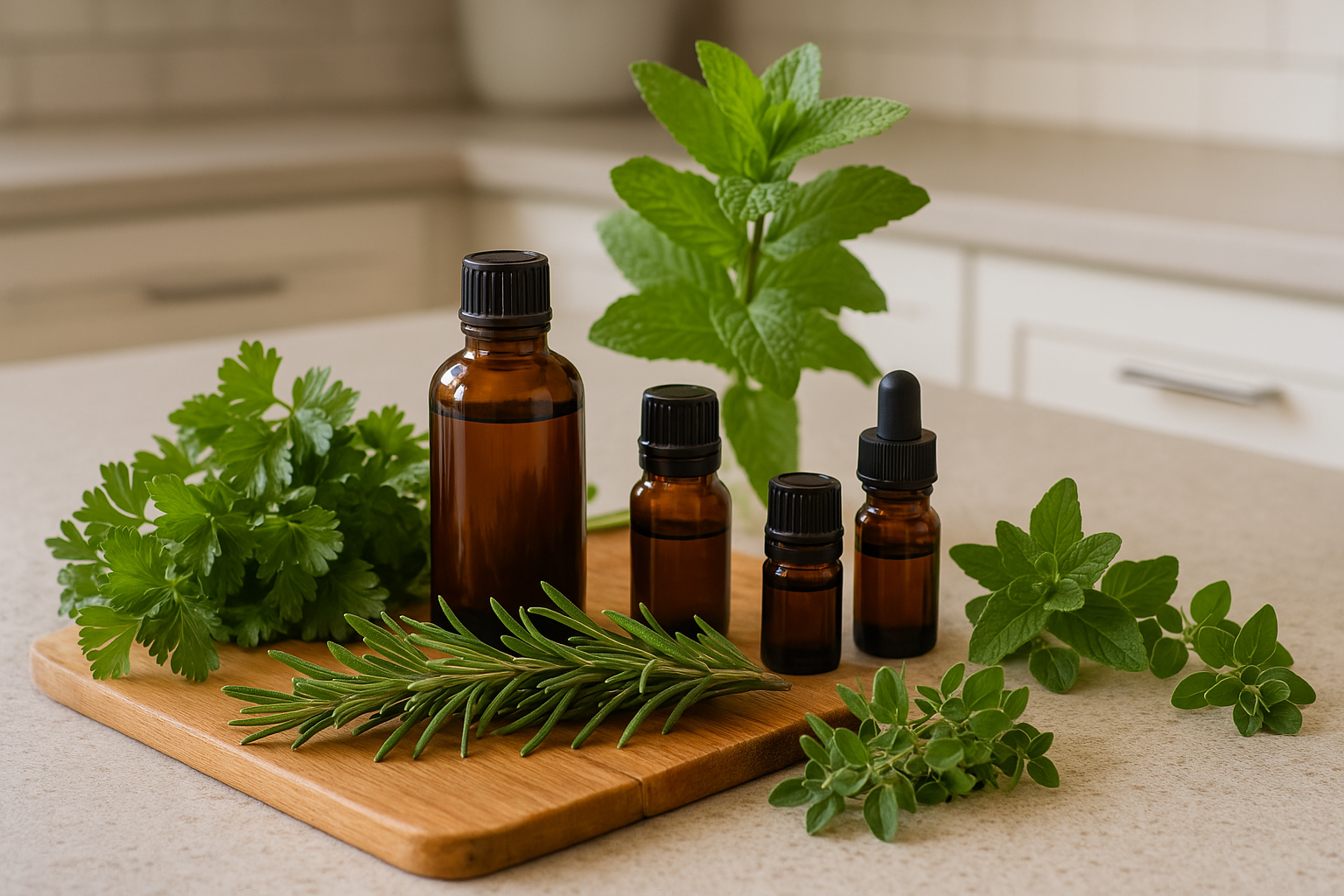
Herbs and essential oils can work beautifully together—but they are only two tools within a much larger wellness plan.
Depending on the dog, I may also consider nutrition, homeopathy, medicinal mushrooms, PEMF, massage, red light, Reiki, behavior support, environmental changes, veterinary diagnostics, or prescribed treatment.
The goal is not to use every available modality.
The goal is to understand what the dog needs, decide which support should come first, and layer additional tools only when they have a clear purpose.
Because more is not always better.
Sometimes more is simply more—and the dog’s body is left trying to process a countertop full of good intentions.
Herbs and Essential Oils Do Different Jobs
Herbs and essential oils may come from the same plant, but they contain different plant compounds and are used in different forms and amounts.
Herbs may include the leaf, flower, root, bark, seed, berry, or whole plant. Depending on the preparation, they may provide:
Vitamins and minerals
Fiber
Mucilage
Bitter compounds
Flavonoids
Tannins
Polysaccharides
Alkaloids
Volatile aromatic compounds
Other medicinal plant constituents
Essential oils contain the concentrated volatile aromatic compounds produced by certain plants. They do not contain the full range of nutrients, fiber, or water-soluble compounds found in the whole herb.
This is why a cup of ginger tea, a ginger tincture, fresh ginger added to food, and ginger essential oil are not interchangeable.
They may come from the same plant, but they do not deliver the same compounds or serve exactly the same purpose.
For a closer comparison, read Herbs vs. Essential Oils for Dogs.
Why Use More Than One Modality?
A dog’s symptoms rarely exist in isolation.
A dog with digestive trouble may also be anxious, painful, inflamed, undernourished, or struggling with microbiome imbalance.
A dog with joint stiffness may also have muscle loss, poor footing, excess weight, spinal discomfort, or fear of movement.
A reactive dog may also be dealing with gut irritation, chronic pain, sleep disruption, sensory overload, hormonal imbalance, or an overworked nervous system.
One modality may address one part of the problem while another supports a different layer.
That can be useful—but only when we understand what each tool is contributing.
A layered plan should not mean:
Adding multiple products with the same ingredients
Starting five new remedies at once
Using an herb, oil, mushroom, and supplement simply because each one is described as anti-inflammatory
Continuing every product indefinitely
Avoiding diagnostics because natural support seems easier
Assuming every symptom needs another remedy
A good layered plan is intentional, not crowded.
Start With the Foundation
Before layering herbs, oils, or other modalities, look at the basics.
These may not be flashy, but they often matter more than the newest supplement.
Consider:
Is the dog eating an appropriate fresh, balanced diet?
Are they getting enough high-quality protein?
Are they well hydrated?
Is digestion working properly?
Is there an unresolved source of pain?
Are medications contributing to symptoms?
Is the dog sleeping well?
Are they getting appropriate movement?
Are there environmental exposures or stressors?
Is further testing needed?
No herb, oil, or energy modality can fully compensate for poor nutrition, untreated pain, chronic dehydration, or a condition that has not been properly identified.
Sometimes the most holistic thing we can do is run the bloodwork.
Pairing Herbs and Essential Oils
Herbs and essential oils often work well together because they may support the dog through different routes.
Herbs may be used internally, in food, as teas, tinctures, glycerites, powders, or topical preparations.
Essential oils may be used aromatically, topically, or in carefully considered circumstances, internally.
Here are a few ways they may complement one another.
Digestive Support and Nervous-System Regulation
Digestive concerns and stress often feed into each other.
A dog with nausea, loose stool, reflux, or intestinal irritation may also become restless, clingy, unable to settle, or fearful around food.
An herbal plan may include soothing or digestive herbs such as:
Marshmallow root
Slippery elm
Ginger
Chamomile
Fennel
Plantain
Essential oils may be selected for aromatic or topical nervous-system support, helping the dog settle while the digestive plan addresses the gut more directly.
The oil does not replace investigating the digestive problem, and the herb does not automatically resolve the emotional response created by repeated discomfort.
Both layers may matter.
Joint and Mobility Support
A dog with stiffness may benefit from internal herbal support while essential oils are used topically as part of massage or bodywork.
An herbal plan may include herbs traditionally considered for inflammatory balance, circulation, or connective-tissue support.
A topical essential-oil blend may be used around specific areas before:
Massage
PEMF
Red-light therapy
Gentle stretching
Mobility exercises
This gives each modality a different job.
The herb may provide ongoing systemic support. The oil and bodywork may offer more targeted support around a particular area.
But neither should replace determining whether the dog is dealing with arthritis, ligament instability, spinal pain, neurological change, or another cause of reduced mobility.
Skin and Topical Support
Herbs and essential oils may also be combined in topical preparations.
For example:
Calendula may be infused into an oil or prepared as a wash.
Plantain may be used in a rinse, compress, or salve.
Chamomile may be prepared as a soothing infusion.
A carefully selected essential oil may be added in an appropriate amount for more targeted support.
The carrier, herb, essential oil, concentration, location, and whether the dog can lick the area all matter.
A topical blend should not be applied blindly to every rash, sore, wound, or hot spot.
Skin changes may involve infection, mites, yeast, allergy, irritation, endocrine disease, or another condition requiring a different plan.
Longer-Term Support and Situational Support
Sometimes herbs are chosen for steadier, longer-term support, while essential oils are used around a specific event.
For example, a dog with an overworked nervous system may receive an individualized herbal formula as part of an ongoing plan.
Essential oils may then be used around:
Thunderstorms
Fireworks
Travel
Veterinary visits
Grooming
Visitors
Separation
Changes in routine
The herb may help nourish or regulate the nervous system over time. The oil may be used more situationally.
This does not mean herbs are always slow or essential oils are always fast. It means they may be assigned different roles within the same plan.
Adding Nutrition to the Plan
Nutrition is not simply another modality placed beside herbs and oils.
It is often the foundation underneath everything else.
Food may influence:
Inflammation
Digestion
Skin health
Immune function
Hormone production
Muscle maintenance
Brain health
Detoxification
Medication tolerance
Recovery
A dog experiencing chronic itching may not need only an anti-itch herb or calming oil. The diet, gut barrier, microbiome, fatty-acid intake, protein sources, and environmental exposures may all need attention.
A senior dog losing muscle may need better protein and calorie intake before another “senior vitality” herb is added.
A dog with digestive trouble may need the food plan corrected before we ask herbs to soothe the same irritation day after day.
The remedy should support the foundation—not distract us from fixing it.
Combining Herbs With Homeopathy
Herbs and homeopathy are different systems.
Herbs contain measurable plant compounds and are generally selected for their nutritional, physiological, or medicinal actions.
Homeopathic remedies are selected according to the dog’s individual symptom pattern, response, and overall presentation.
They may sometimes be used within the same wellness plan, but I do not recommend piling several homeopathic remedies on top of multiple herbs simply because each one appears related to the same concern.
The questions should be:
What is the primary goal?
Which modality best matches the pattern?
Is one remedy enough?
How will we know whether it is helping?
Could adding more make the response harder to interpret?
A well-chosen homeopathic remedy may not need to be repeated frequently or combined with a long list of other remedies.
The fact that remedies are natural does not mean they should all be used at once.
Combining Herbs With Medicinal Mushrooms
Medicinal mushrooms may offer immune, neurological, cardiovascular, metabolic, and resilience support depending on the species and extract.
They are often paired with herbs in plans involving:
Cancer support
Senior wellness
Immune balance
Cognitive health
Respiratory concerns
Recovery
Stress resilience
But herbs and mushrooms may overlap in their intended purpose.
For example, a dog may already be receiving several products marketed for immune support. Adding more immune-active ingredients is not automatically appropriate—particularly with autoimmune disease, allergies, immunosuppressive medication, or certain cancer treatments.
Quality also matters.
Look at:
The mushroom species
Fruiting body versus mycelium
Beta-glucan content
Extraction method
Added starch
Other herbs already included
Medication compatibility
Mushrooms can be powerful additions, but they should not become another mystery scoop in an already crowded bowl.
Pairing Herbs With PEMF and Red Light
PEMF and red-light therapy may support circulation, cellular function, comfort, recovery, and mobility.
They pair naturally with herbal plans because they work through very different mechanisms.
For example, a mobility plan might include:
Nutrition and adequate protein
Omega-3 fatty acids
An individualized herb
PEMF
Red-light therapy
Massage
Appropriate movement
The herb does not make PEMF more effective, and PEMF does not automatically improve herbal absorption.
They simply address different layers of the dog’s needs.
This distinction matters.
We do not need to invent a dramatic explanation for why modalities can work together. Sometimes they complement each other because one supports circulation and comfort while another provides internal plant compounds.
That is enough.
Pairing Herbs With Massage and Bodywork
Massage may support:
Circulation
Muscle comfort
Relaxation
Body awareness
Recovery
Mobility
Nervous-system regulation
Herbs and essential oils may sometimes be used around bodywork.
For example:
An herbal topical preparation may be used for local tissue support.
A diluted essential-oil blend may be applied before massage.
Internal herbs may support inflammation or circulation.
Massage may help the dog relax, move more comfortably, and tolerate gentle rehabilitation.
Bodywork also gives us useful information.
A dog may react to a specific area, guard part of the body, compensate through another limb, or reveal tension that was not obvious while standing still.
That information may change the wellness plan entirely.
Pairing Herbs With Reiki and Energy Work
Reiki and other energy-based approaches may provide emotional support, relaxation, connection, and nervous-system regulation.
They do not replace nutrition, diagnostics, or treatment.
But they may be useful when a dog is:
Stressed
Recovering
Highly sensitive
Grieving
Fearful
Painful
Nearing the end of life
Struggling to settle
Herbs may support the physical body while Reiki supports the emotional and energetic experience.
Essential oils may also be incorporated aromatically or topically where appropriate.
Sometimes the dog needs less stimulation, not more. A quiet Reiki session may be more useful than adding another supplement.
Pairing Herbs With Behavior Support
Behavior is not separate from health.
Pain, gut discomfort, inflammation, hormonal changes, medication effects, poor sleep, sensory overload, and nutritional imbalance can all influence behavior.
A dog who is reactive, aggressive, fearful, restless, or unable to settle may need more than training.
Herbs and essential oils may support:
Nervous-system regulation
Recovery after stress
Sleep
Digestive comfort
Situational stress
Emotional balance
But they should not be used to sedate a dog into tolerating a situation that is overwhelming or unsafe.
Behavior support may also require:
Better management
Reduced exposure
Decompression
Appropriate enrichment
Pain evaluation
Sleep support
Nutrition changes
Professional training
Veterinary behavioral care
The goal is not to suppress communication.
The goal is to help the dog feel and function better.
Pairing Natural Support With Veterinary Care
Holistic care should not require choosing between natural support and veterinary medicine.
Herbs, oils, nutrition, bodywork, and energetic modalities may sometimes complement:
Medication
Surgery
Rehabilitation
Chemotherapy
Dental care
Diagnostic testing
Pain management
Emergency treatment
The key is communication.
Keep a complete list of everything your dog receives, including:
Medications
Supplements
Herbs
Mushrooms
CBD
Essential oils used internally
Food additions
Homeopathic remedies
Share that information with the professionals involved.
Some herbs and supplements may influence clotting, sedation, glucose, blood pressure, urination, immune activity, or medication metabolism.
Natural support should strengthen the plan—not create an avoidable conflict within it.
Choose a Lead Modality
One of the easiest ways to avoid a kitchen-sink protocol is to decide which modality is leading the plan.
For example:
Nutrition-led plan: Food and digestion are the foundation. Herbs, enzymes, probiotics, or oils are added only where needed.
Herb-led plan: A specific herbal preparation addresses the primary concern. Other modalities support comfort, recovery, or nervous-system regulation.
Behavior-led plan: Management and behavior work lead. Nutrition, herbs, oils, pain support, and nervous-system tools are used to help the dog succeed.
Mobility-led plan: Pain evaluation, movement, rehabilitation, and home setup lead. Herbs, PEMF, massage, oils, and nutrition support the mobility plan.
Veterinary-treatment-led plan: Diagnostics and prescribed treatment are central. Natural tools are selected to support tolerance, recovery, comfort, and overall resilience.
Every plan does not need an official label. But it helps to know what you are actually trying to accomplish.
Introduce Changes One at a Time
When possible, do not begin several new remedies on the same day.
Introduce one change, observe the dog, and keep notes.
Track:
Appetite
Stool
Vomiting or nausea
Thirst and urination
Energy
Sleep
Mobility
Itching
Restlessness
Sedation
Pain
Behavior
Overall comfort
If the dog improves, you want to know what helped.
If the dog becomes worse, you need to know what changed.
Starting six products at once turns the process into guesswork.
When to Simplify the Plan
Sometimes the most effective update is removing things.
Consider simplifying when:
The dog receives several products with overlapping ingredients
No one can explain why each product is being used
The dog has developed digestive upset
Appetite has declined
The dog seems overstimulated or excessively sedated
Medications have changed
Bloodwork has changed
The original concern has resolved
The routine has become impossible to maintain
You cannot tell which product is helping
A remedy should continue to earn its place in the plan.
“Because we have always used it” is not enough.
Dana’s Thoughts
I use herbs, essential oils, nutrition, homeopathy, mushrooms, PEMF, massage, Reiki, and other modalities regularly.
But I do not use all of them for every dog.
Sometimes an herb is the right choice.
Sometimes an essential oil gives us the support we need around a specific event.
Sometimes the dog needs food, movement, pain relief, better diagnostics, or simply fewer products.
My job is not to recommend the largest number of natural remedies.
It is to look at the dog’s history, symptoms, medications, diet, environment, emotional state, and current needs—and choose the modality that makes the most sense.
The best wellness plan is not the one with the most moving parts.
It is the one where every part has a reason for being there.
Learn How to Build a Thoughtful Remedies Plan
Public articles can introduce herbs, essential oils, homeopathy, mushrooms, bodywork, and other supportive modalities.
They cannot tell you exactly which combination fits your dog, what should come first, how much to use, how long to use it, or how to troubleshoot the plan when the response is not what you expected.
That deeper work is what we explore inside the Remedies Class.
You will learn how to:
Compare herbs, essential oils, and other natural modalities
Decide which modality should lead the plan
Understand when combining remedies makes sense
Recognize when products are redundant
Select appropriate plant parts and preparations
Work with practical dosing and dilution ranges
Make teas, decoctions, glycerites, infused oils, salves, and other preparations
Consider medication interactions and health conditions
Introduce remedies in a logical sequence
Monitor the dog’s response
Simplify a plan that has become too complicated
Layer nutrition, herbs, oils, homeopathy, mushrooms, PEMF, massage, and other support thoughtfully
Recognize when veterinary diagnostics or treatment should come first
The goal is not to memorize every possible remedy.
It is to understand which tool fits the dog, what role it plays, and whether it belongs in the plan at all.
Ready to move beyond random recommendations and start building more intentional wellness plans?
Learn More About Membership and the Remedies Class
Educational information only. This article is not intended to diagnose, treat, cure, or prevent disease or replace individualized veterinary care.
When DIY Isn't Enough Already tried the basics? If this is happening with your dog and you're still stuck, I can help you figure out what deserves attention next.
Request a Discovery Callback →