Herbal Preparations for Dogs: Teas, Powders, Tinctures, Glycerites, and More
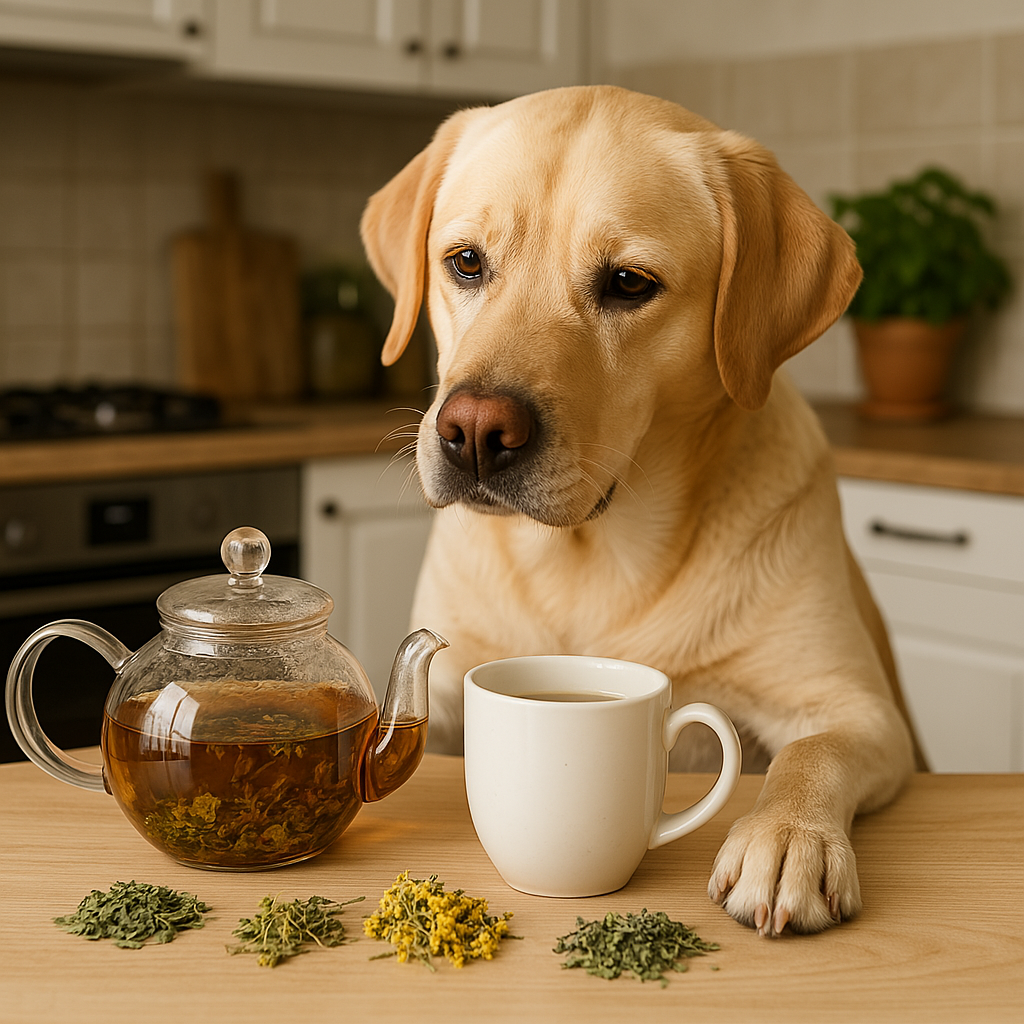
Choosing an herb is only part of the decision.
How that herb is prepared can change:
Which plant compounds are available
How concentrated the remedy is
How quickly it may be absorbed
How easily your dog accepts it
How long it can be stored
How much may be appropriate
Whether it fits the dog’s health needs
A fresh herb, dried powder, tea, glycerite, alcohol tincture, and standardized extract may all carry the same plant name—but they are not the same remedy.
You cannot assume they have the same strength or use the same amount simply because the label says “dandelion,” “ginger,” or “milk thistle.”
Understanding the basic forms will help you read labels, ask better questions, and avoid treating every herbal product as interchangeable.
Why Herbal Preparation Matters
Plants contain many different types of compounds.
Some dissolve easily in water. Others are better extracted in alcohol, glycerin, vinegar, or oil. Some remain part of the whole plant material when it is powdered and consumed.
The part of the plant also matters.
Leaves and flowers are generally prepared differently from dense roots, bark, seeds, or berries. Even two parts of the same plant may have different properties.
For example:
Dandelion leaf and dandelion root are not used in exactly the same way.
Ginger powder and ginger essential oil do not contain the same range of compounds.
A marshmallow-root tea may behave differently from a concentrated commercial extract.
A standardized milk-thistle capsule is not equivalent to sprinkling ground seed over food.
This is why dosing and preparation instructions should be tied to the specific product or preparation—not copied from a different form of the herb.
Fresh Herbs
Fresh herbs are used much like fresh foods.
They may provide flavor, moisture, vitamins, minerals, chlorophyll, fiber, and naturally occurring plant compounds.
Examples of fresh herbs sometimes used with dogs include:
Parsley
Basil
Cilantro
Thyme
Rosemary
Mint
Fresh ginger
Dandelion greens
Fresh herbs are generally less concentrated than dried powders or extracts, but that does not mean unlimited amounts are appropriate.
The correct plant must be identified, washed well, and free from pesticides, lawn chemicals, mold, and contamination.
Fresh herbs are most appropriate when the goal is gentle culinary or nutritive support rather than a concentrated medicinal effect.
For ideas on adding herbs to meals thoughtfully, read How to Safely Add Herbs to Your Dog’s Bowl.
Dried Cut Herbs
Dried cut herbs may include leaves, flowers, roots, berries, seeds, or bark that have been harvested and dried.
They may be:
Added to food in small amounts
Used to prepare an infusion or decoction
Added to herbal blends
Used in compresses or rinses
Ground into powder
Drying removes much of the water, so dried herbs are more concentrated by volume than fresh herbs.
They also vary in quality.
A dried herb should still have recognizable color, aroma, and plant character. Herbs that look uniformly brown, smell musty, contain excessive dust, or have been sitting in a clear plastic bag for years may have lost much of their value.
Storage away from heat, light, air, and moisture helps preserve quality.
Herbal Powders
Powders are made by grinding dried plant material.
They may be:
Mixed into food
Placed into capsules
Added to a paste or ball
Incorporated into a topical preparation
Included in a commercial supplement
Powders allow the dog to consume much of the whole plant material, including constituents that may not extract fully into water.
They can also be convenient.
But powders have limitations:
They may be difficult to hide in food.
Bitter herbs may reduce appetite.
Fine powders are exposed to air and may lose quality faster.
A measuring spoon does not tell you the actual concentration.
Different herbs have very different weights and densities.
Some dogs do not digest coarse plant material well.
Powders may absorb moisture and become contaminated if stored poorly.
A teaspoon of one herb may weigh considerably more or less than a teaspoon of another.
This is one reason volume measurements should not be treated as universal dosing instructions.
Capsules and Tablets
Capsules and tablets are convenient commercial forms.
They may contain:
Whole-herb powder
Concentrated extract
Standardized extract
Multiple herbs
Added vitamins or minerals
Fillers, binders, coatings, or flavoring
Always read the full label.
Do not assume the amount listed on the front tells the entire story.
Check whether the product contains:
Whole herb or extract
The plant part used
An extraction ratio
Standardized active compounds
Additional ingredients
A proprietary blend
Human-sized serving directions
A capsule designed for an adult person may not be appropriate as one whole dose for a small dog.
Capsules can sometimes be opened and divided, but that depends on the product. Extended-release, enteric-coated, or specialized capsules should not automatically be opened or altered.
Herbal Infusions
An infusion is similar to a strong herbal tea.
It is generally used for softer plant material such as:
Leaves
Flowers
Delicate aerial parts
Some finely cut herbs
Hot or room-temperature water draws out water-soluble plant compounds.
Infusions may be considered for herbs such as:
Chamomile
Nettles
Calendula
Lemon balm
Oatstraw
Peppermint
Plantain leaf
They may be offered in different ways depending on the herb and dog, including mixed into food, added to water, or used topically as a rinse or compress.
Infusions are not simply weak tinctures.
They contain a different range of plant compounds and usually have a much shorter usable life.
The exact preparation time, herb-to-water ratio, storage, serving amount, and suitability depend on the herb and intended purpose.
Those are the details we work through inside the Remedies Class.
Herbal Decoctions
A decoction is generally used for tougher plant material that requires more than simple steeping.
This may include:
Roots
Bark
Dense seeds
Tough berries
Woody plant material
Examples may include:
Dandelion root
Burdock root
Marshmallow root
Astragalus root
Ginger root
Certain medicinal barks
A decoction uses heat and time to extract compounds from harder plant material.
However, not every root should be treated the same way.
Some herbs contain delicate constituents that may be damaged by prolonged heat. Others release more mucilage or other compounds when prepared with cool or room-temperature water.
The word “root” does not automatically mean “boil it.”
That distinction is one reason preparation should be herb-specific rather than based on a generic online recipe.
Cold Infusions
Some herbs are prepared in cool or room-temperature water rather than hot water.
This method may be chosen when the goal is to extract soothing mucilage or preserve heat-sensitive compounds.
Marshmallow root is a common example.
Cold infusions may produce a thicker, slippery liquid because of the mucilage released from the plant.
That texture is part of the intended preparation—not a sign that something has gone wrong.
Cold infusions also have a limited shelf life and require appropriate storage and handling.
Alcohol Tinctures
An alcohol tincture is a concentrated liquid extract made by soaking plant material in alcohol.
Alcohol can extract compounds that may not dissolve well in water. It also helps preserve the finished product.
Tinctures are popular because they:
Are concentrated
Require a relatively small serving volume
Have a longer shelf life
Are easy to measure by drops or milliliters
Can be made from many different plant parts
But not all tinctures have the same strength.
The label may include an extraction ratio such as:
1:2
1:5
1:10
Those numbers describe the relationship between the plant material and liquid used during extraction.
A 1:2 tincture and a 1:5 tincture should not automatically be given in the same amount.
Other factors include:
Fresh herb versus dried herb
Alcohol percentage
Plant part
Extraction method
Whether the finished extract is standardized
The dog’s health status and medications
Some pet parents are uncomfortable giving alcohol-based extracts.
Depending on the product and situation, the alcohol may sometimes be reduced before administration—but the exact method and whether it is appropriate depend on the herb, product, and dog.
Do not assume every tincture can be altered without affecting quality or dosing.
Herbal Glycerites
A glycerite is a liquid herbal extract made with vegetable glycerin, sometimes with water or another solvent.
Glycerites are often chosen because they:
Do not rely primarily on alcohol
Have a naturally sweet taste
May be easier to give to some dogs
Can be useful for certain herbs and constituents
However, glycerin does not extract every plant compound as effectively as alcohol.
A glycerite is not automatically equivalent to an alcohol tincture.
It may have a different:
Potency
Extraction ratio
Shelf life
Chemical profile
Serving amount
The sweet taste may improve acceptance, but it may not be appropriate for every dog, particularly when blood-sugar regulation is a concern.
Read the label carefully rather than assuming “alcohol-free” means universally better.
Herbal Vinegars
Vinegar may be used as a solvent for certain herbs, particularly when the goal includes extracting minerals.
Herbal vinegars may be used in food, diluted for topical use, or included in other preparations.
They may not be appropriate for dogs with:
Significant digestive irritation
Reflux
Oral discomfort
Sensitivity to acidic products
The final concentration matters, and vinegar should not be applied undiluted to damaged or highly irritated skin.
Infused Herbal Oils
An infused herbal oil is made by extracting plant material into a carrier oil.
Common carrier oils may include:
Olive oil
Coconut oil
Jojoba
Sunflower oil
Other stable plant oils
Herbs such as calendula, plantain, chamomile, or comfrey leaf may be infused into oil for topical use.
An infused herbal oil is not the same thing as an essential oil.
Infused oils contain plant compounds that dissolve into the carrier oil. Essential oils are concentrated volatile aromatic extracts.
This distinction matters because an infused oil may be used as:
A topical preparation
A massage oil
A salve ingredient
A carrier for a carefully selected essential oil
The quality of the plant material, carrier oil, preparation, moisture control, and storage all affect safety.
Improperly prepared infused oils can spoil or grow mold.
The step-by-step process belongs in hands-on herbal education—not a casual paragraph telling everyone to stuff fresh plants into oil and hope for the best.
Salves and Balms
Salves and balms are semi-solid topical preparations.
They are often made from:
An herbal-infused oil
Wax or another thickening ingredient
Optional essential oils
Other skin-supportive ingredients
They may be considered for:
Dry paw pads
Elbows
Minor skin irritation
Small areas needing protective support
Massage
Seasonal skin care
Before applying a salve, consider:
Whether the skin is broken or infected
Whether the area needs to breathe
Whether the dog will lick it
Whether an ingredient is safe if ingested
Whether the product may trap moisture or bacteria
Whether the dog actually needs veterinary wound care
Do not seal a deep, infected, draining, or contaminated wound under a homemade balm.
Pretty tins do not replace good wound assessment.
Herbal Rinses and Washes
An herbal infusion or decoction may sometimes be cooled and used as a topical rinse, wash, or compress.
Herbs often considered for topical preparations include:
Calendula
Chamomile
Plantain
Green tea
Thyme
Marshmallow root
Chickweed
The appropriate herb depends on the condition of the skin.
A soothing preparation for dry irritation may not be appropriate for a moist, infected, or rapidly spreading skin problem.
Topical herbs may also cause sensitivity.
Test a small area when appropriate and stop if the dog develops increased redness, itching, swelling, or discomfort.
Compresses
A compress involves applying cloth or another suitable material soaked in an herbal preparation to a specific area.
Compresses may be warm or cool depending on the goal.
They may be considered for:
Localized discomfort
Minor swelling
Skin irritation
Gentle tissue support
Relaxation
Temperature matters.
Never apply a compress hot enough to burn the dog, and do not use heat over an area where it may worsen bleeding, acute inflammation, infection, or another underlying problem.
Poultices
A poultice uses moistened plant material or herbal powder applied to the skin.
Poultices may be used traditionally for:
Minor skin irritation
Insect bites
Localized swelling
Drawing or soothing support
Superficial tissue concerns
They are messy, easy for dogs to lick, and not appropriate for every wound.
A poultice should not replace veterinary care for:
Deep punctures
Animal bites
Abscesses
Significant bleeding
Burns
Foreign bodies
Infected wounds
Tissue damage
Wounds requiring closure
The exact herb, preparation, application time, and covering method matter.
Standardized Herbal Extracts
A standardized extract is processed to provide a stated amount of a particular plant compound.
For example, a product may list a percentage of:
Silymarin
Curcuminoids
Boswellic acids
Other identified constituents
Standardization can make products more consistent, but it does not automatically make them superior.
Whole herbs contain many compounds that may work together. Standardized extracts focus on one or several measurable constituents.
The best choice depends on the goal.
A standardized extract may be useful when a consistent concentrated amount is important. A whole-herb preparation may be preferred when broader plant support is desired.
Again, these products cannot be dosed interchangeably.
Combination Herbal Formulas
Commercial herbal formulas may combine several herbs intended to support a particular body system or concern.
Examples include blends marketed for:
Joints
Digestion
Liver support
Urinary health
Calming
Immune support
Senior wellness
A well-designed formula may be useful.
But more ingredients do not automatically make a stronger product.
Before using a blend, ask:
Are all ingredients clearly listed?
Are individual amounts disclosed?
Is it a proprietary blend?
Does it duplicate products my dog already receives?
Do all the herbs make sense for my dog?
Could any ingredient conflict with medication?
Is the formula intended for short-term or ongoing use?
Is the product mostly meaningful herbs—or flavoring and filler?
A blend may contain one useful herb and five others your dog does not need.
That is not necessarily a better choice than a carefully selected single herb.
Can You Substitute One Herbal Form for Another?
Not without considering the differences.
You should not automatically substitute:
Powder for tincture
Tincture for glycerite
Tea for standardized extract
Fresh herb for dried herb
Root for leaf
Infused oil for essential oil
Human serving directions for canine use
Even when the plant name is identical, the concentration and compounds may be very different.
Conversions require information about:
Product strength
Extraction ratio
Plant part
Fresh or dried material
Standardization
Intended purpose
Dog’s weight and health status
Guessing is not a conversion method.
Choosing the Best Preparation for Your Dog
The best form depends on the dog and the goal.
Consider:
What plant compounds are needed?
Is this nutritive or medicinal support?
Is the remedy intended for internal or topical use?
Does the dog accept liquids, powders, or capsules?
Is a concentrated product needed?
Is the dog taking medication?
Is the dog medically fragile?
Does the dog have digestive sensitivity?
Does the product contain alcohol, glycerin, sweeteners, or fillers?
Is the goal short term or ongoing?
Can the pet parent administer it consistently?
A theoretically perfect remedy is not helpful if the dog refuses every meal containing it.
Sometimes the best preparation is the one that offers the needed support and can actually be used successfully.
Quality and Label Reading
Before buying an herbal product, look for:
Common and botanical plant name
Plant part used
Whole herb or extract
Extraction ratio, when applicable
Standardized constituents, when applicable
Amount per serving
Full ingredient list
Alcohol or glycerin content
Lot or batch number
Expiration or best-use date
Clear storage instructions
Transparent sourcing
Testing for mold, microbes, pesticides, and heavy metals
Be cautious when the label says only:
Herbal complex
Proprietary blend
Natural calming formula
Detox support
Ancient remedy
Veterinary strength
Those are marketing phrases, not useful product information.
Read Why Herb Quality Matters for Your Dog for more help evaluating products.
Safety Still Comes First
The form of an herb does not remove its potential risks.
Before using any herbal preparation, consider:
Pregnancy or nursing
Puppy or senior status
Liver and kidney function
Seizure history
Blood-sugar concerns
Blood pressure
Bleeding or clotting disorders
Autoimmune disease
Upcoming surgery
Prescription medications
Other supplements and herbal blends
A tincture may be more concentrated than expected. A powder may duplicate another product. A soothing mucilaginous herb may affect medication absorption. A diuretic herb may be inappropriate for a dehydrated dog.
Read Safe Use of Herbs for Dogs before beginning a concentrated herbal product.
Dana’s Thoughts
Herbal preparations are not complicated because herbalists enjoy making things difficult.
They are different because plants contain different compounds—and those compounds respond differently to water, alcohol, glycerin, oil, heat, time, and processing.
Sometimes I want the whole powdered herb.
Sometimes I want a soothing water preparation.
Sometimes I need a concentrated extract.
Sometimes a topical infused oil makes far more sense than giving anything internally.
And sometimes the product in the prettiest bottle is the least useful option because it does not tell me the plant part, concentration, or actual ingredient amounts.
The preparation should fit the purpose, the herb, and the dog.
Not just the shelf it happened to be sitting on.
Learn to Make and Use Herbal Preparations
This public article helps you understand the differences between common herbal forms.
Inside the Remedies Class, we take the next step.
You will learn how to:
Choose the best preparation for different herbs and plant parts
Understand when to use an infusion, decoction, cold infusion, powder, glycerite, tincture, oil, salve, rinse, compress, or poultice
Work with practical herb-to-liquid ratios
Prepare remedies step by step
Handle and store preparations properly
Recognize spoilage and contamination
Calculate practical dosing ranges
Interpret tincture and extraction ratios
Compare fresh and dried plant material
Use alcohol-based and alcohol-free extracts appropriately
Add essential oils to topical preparations safely
Build simple formulas without creating unnecessary ingredient piles
Consider medications, health conditions, and contraindications
Decide when a commercial product makes more sense than making your own
Recognize when an herbal preparation is not the right next step
The goal is not merely to collect recipes.
It is to understand why a particular preparation fits the herb, the purpose, and the dog.
Ready to move from reading herbal labels to actually understanding what they mean?
Learn More About Membership and the Remedies Class
Educational information only. This article is not intended to diagnose, treat, cure, or prevent disease or replace individualized veterinary care.
When DIY Isn't Enough Already tried the basics? If this is happening with your dog and you're still stuck, I can help you figure out what deserves attention next.
Request a Discovery Callback →