

How to Diffuse Essential Oils Around Dogs Without Fear
If you have the internet and a dog, you have probably seen the warnings.
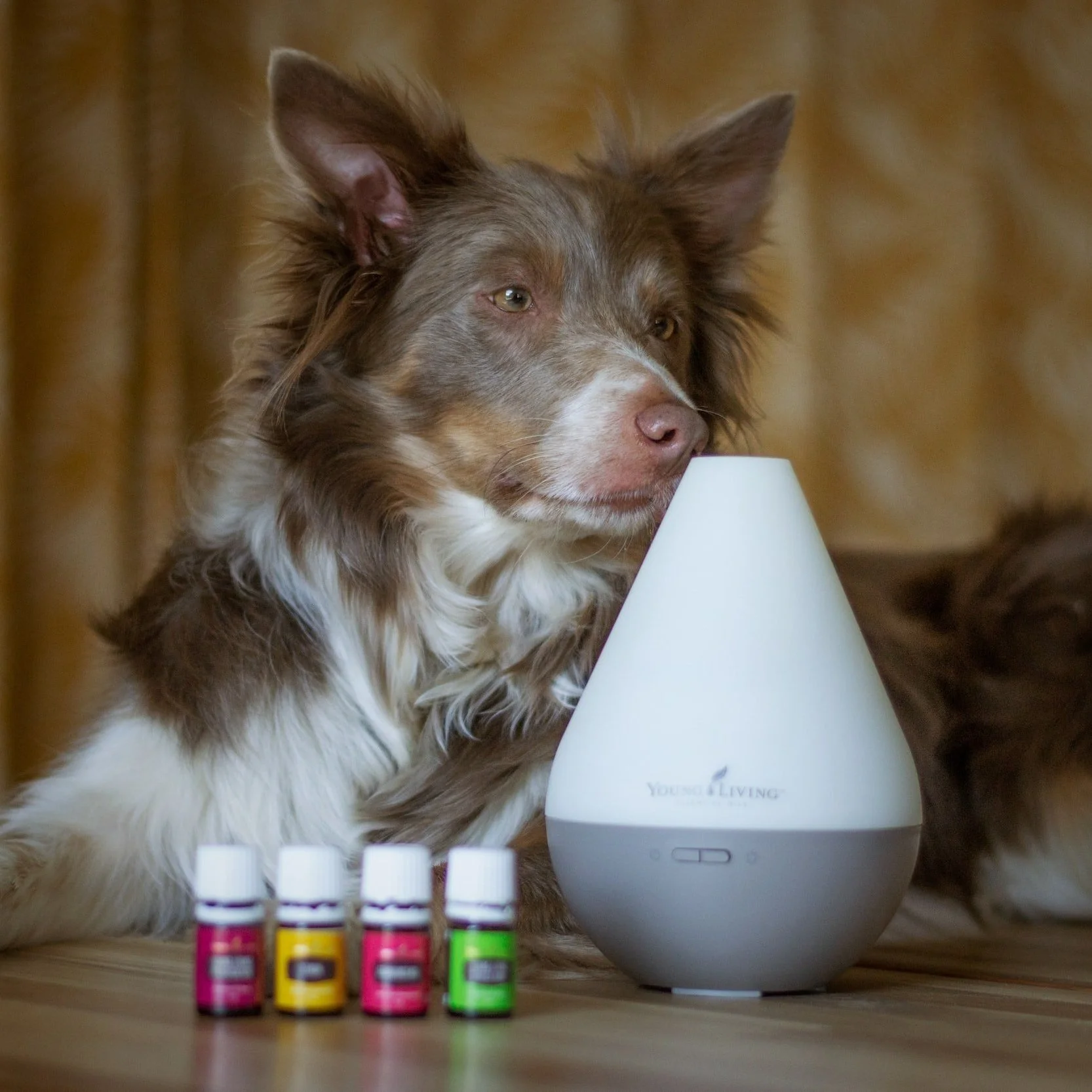
“Never diffuse oils around pets.”
“Essential oils are toxic to dogs.”
“Tea tree will kill your dog.”
“Cats and essential oils should never be in the same zip code.”
And then, five minutes later, someone plugs in an artificial fragrance warmer, sprays Febreze on the dog bed, lights a synthetic candle, and calls the house “fresh.”
Make it make sense.
This blog is part two in my diffusion series. The first article explained how diffusion actually works in your home, how far essential oils may travel, and how much your dog may be exposed to. This one is the practical side: how to diffuse around dogs with confidence, what to avoid, when to be more cautious, and why fear-based advice is not the same thing as educated safety.
Essential oils are not just pretty smells. They are concentrated plant compounds with real properties. They may support emotional balance, respiratory comfort, immune wellness, air purification, relaxation, focus, grounding, and overall home wellness. That is exactly why we respect them.
Respect is not fear.
Essential Oils Are Not Air Fresheners
This is where many people get off track.
Essential oils can make your home smell wonderful, but they are not the same thing as a plug-in fragrance, room spray, or scented candle. They have natural chemical constituents that give them their properties.
That is why lavender may be chosen for calm.
Frankincense may be chosen for grounding and wellness support.
Citrus oils may be chosen for freshness and emotional lift.
Eucalyptus may be chosen for respiratory and seasonal support.
Cleansing oils may be chosen for purification.
The goal should not be “what scent do I want to smell all day?” The better question is:
What am I trying to support?
When you start there, diffusion becomes intentional instead of random.
Why the Fear Around Essential Oils and Dogs Got So Loud
Some of the concern around essential oils is understandable. Poor-quality oils, adulterated oils, overuse, inappropriate topical application, and lack of education can absolutely create problems.
But the internet also loves a dramatic warning.
A dog had a reaction, so all oils are dangerous.
A cat became ill, so all diffusion is toxic.
Someone used the wrong product in the wrong way, so now every bottle of lavender is treated like a chemical weapon.
That is not education. That is panic with a keyboard.
Most fear-based posts leave out the details that matter most:
What oil was used?
Was it pure essential oil or fragrance oil?
Was it adulterated?
How much was used?
Was it diffused or applied topically?
Was the pet trapped in the room?
How long was the diffuser running?
Was the animal already sick?
Were there other chemicals in the home?
Were cats, birds, puppies, seniors, or fragile pets involved?
Those details change the whole story.
What Normal Diffusion Looks Like
Diffusing does not mean your dog is inhaling undiluted essential oil. The oil is dispersed into the room over time through water vapor and air movement. Some aromatic compounds remain in the air. Some settle onto nearby surfaces. Some dissipate. (But by the way, sometimes we use bandanas, direct inhale from the cap, or even tenting in certain situations)
That does not mean you should run a diffuser all day with no thought. It does mean normal, mindful diffusion is very different from dumping oil on your dog or using strong synthetic fragrance products 24/7.
A good starting point for many dog homes is:
5 drops in a 100 ml diffuser
10 drops in a 200 ml diffuser
Intermittent diffusion
Open door or exit route
Good airflow
Observation of your dog’s response
This is not a “more is better” situation. More is often just more.
Use Intermittent Diffusion
Intermittent diffusion is one of the simplest ways to reduce overexposure.
Instead of running a diffuser nonstop for hours, use it in cycles. Many diffusers already have an intermittent setting, such as running for a short time and then pausing.
That break allows the air to clear, gives your dog’s body a rest, and keeps the room from becoming too saturated.
A good practical approach is:
Diffuse for a short period
Pause
Let the room air out naturally
Watch how your dog responds
Skip days when you do not need it
Daily, all-day diffusion of the same oil is not usually necessary. Your dog does not need to live inside a permanent cloud of lavender, no matter how much the internet wants lavender to fix everyone’s nervous system.
Rotate Oils Instead of Using the Same One Over and Over
Oil rotation is another smart habit.
Using the same oil every single day for long stretches can create repetitive exposure. Rotating oils allows you to vary the aromatic compounds while still supporting your goal.
For example, if your goal is calm, you might rotate among oils or blends known for emotional grounding, relaxation, or nervous system support instead of using the same single oil every day.
If your goal is seasonal respiratory comfort, you may rotate among conifers, resins, or other appropriate oils rather than relying on one oil repeatedly.
Rotation also helps you notice what your dog prefers.
Some dogs relax beautifully with one oil and leave the room when another is diffused. That is useful information. Your dog is not being dramatic. Well, maybe a little — but still, listen.
Always Give Your Dog an Exit Route
This is one of my biggest rules.
Do not trap your dog in a closed room with a diffuser running.
Dogs should be able to move away from the aroma. That means:
Leave the door open
Avoid crate-only diffusion unless you are closely supervising and know the dog tolerates it well
Do not place the diffuser directly beside the dog’s face
Do not aim the mist at the dog’s bed
Let the dog choose distance
Choice changes the conversation.
If your dog gets up and leaves, respect that. Do not chase them around the house with the diffuser like you are blessing them against their will.
Watch the Dog in Front of You
General guidelines are helpful, but your dog’s response is more important than a chart.
Signs your dog may not be comfortable with diffusion include:
Leaving the room
Avoiding the diffuser area
Squinting
Watery eyes
Sneezing
Coughing
Reverse sneezing
Drooling
Lip licking
Restlessness
Hiding
Acting dull or “off”
Increased anxiety
Pawing at the face
If you notice these signs, turn off the diffuser, open a window if needed, and let your dog move into fresh air.
If your dog has breathing difficulty, weakness, tremors, collapse, vomiting, seizures, or severe behavior changes, contact your veterinarian or animal poison control. That is not the time to crowdsource opinions from Facebook.
Dogs Who Need a More Conservative Approach
Some dogs do beautifully with essential oils. Others need a lighter, more careful plan.
Use more caution with:
Puppies
Senior dogs
Toy breeds
New dogs in your home
Dogs with seizures
Dogs with respiratory disease
Dogs with liver or kidney concerns
Dogs with cancer
Dogs with mast cell issues
Dogs with significant allergies
Dogs recovering from illness or surgery
Dogs on multiple medications
Dogs who are chemically sensitive
That does not mean essential oils must be avoided for these dogs. In fact, I use well-selected and well-purposed for all of these conditions. It means you adjust the plan.
Use fewer drops. Diffuse for shorter periods. Increase airflow. Rotate oils. Skip days. Choose oils carefully. Watch the dog.
A medically fragile dog may still benefit from essential oils, but the approach should be thoughtful, not casual.
What About Cats in the Home?
Even though this article is dog-centered, many dog homes also have cats. So yes, cats need to be part of the conversation.
Cats are more sensitive to many compounds than dogs because their detoxification pathways are very different. That does not mean every essential oil molecule in the air is automatically dangerous to your cat. It does mean you need to be more mindful. And it really means quality matters even more.
In homes with cats:
Use intermittent diffusion
Use fewer drops
Keep doors open
Never trap the cat in the room
Avoid heavy diffusion in tiny closed spaces
Avoid allowing mist to settle where cats sleep or groom
Be careful with oils that are not appropriate for feline exposure
Do not apply essential oils topically to cats unless guided by someone trained in feline aromatherapy
Watch for hiding, drooling, coughing, wobbliness, vomiting, watery eyes, or acting abnormal
Don’t be surprised if you find your cat wrapped around the diffuser though.
If you have birds, rabbits, or other sensitive animals in the home, your diffusion plan should be based on the most sensitive species in the house, not the most resilient dog.
What to Avoid When Diffusing Around Dogs
This is where common sense keeps everyone out of trouble.
Avoid:
Synthetic fragrance oils
Bargain oils with unknown sourcing
Oils labeled only as “fragrance” or “perfume”
Diffusing nonstop all day
Using the same oil every day for weeks or months
Trapping pets in a closed room
Placing the diffuser right beside your dog’s face
Letting mist fall heavily on bedding
Diffusing during chemical cleaning, painting, pest treatments, or heavy indoor chemical exposure
Assuming “natural” means unlimited
Ignoring your dog’s behavior
Using oils because a random internet post said they fix everything
Also avoid layering too many scented products at once. Diffuser plus scented candle plus plug-in plus dryer sheets plus floor cleaner plus carpet powder is not a wellness routine. That is indoor air chaos.
Tea Tree Oil: Let’s Talk About It
Tea Tree oil gets dragged into almost every pet essential oil debate.
The problem is that most warnings are missing nuance.
Tea Tree is commonly associated with skin cleansing and topical support, so diffusing it may not always be necessary or appropriate. That does not mean the oil is automatically evil. It means you should understand why you are using it.
The bigger issue is quality. Tea Tree oil is often adulterated, and low-quality or contaminated products are a real concern. When people use poor-quality oils, use too much, apply them incorrectly, or use them around fragile pets without education, problems are much more likely.
So my position is simple:
Know why you are using Tea Tree
Use only high-quality oil from a reputable source
Avoid casual, repeated diffusion just because
Be extra cautious with cats and fragile pets
Do not use it topically without proper education and dilution
Watch the animal in front of you
Tea Tree is not my first choice for general “make the house smell nice” diffusion. That is not fear. That is purpose.
Better Questions to Ask Before You Diffuse
Before you turn on the diffuser, ask:
Am I diffusing for scent, emotion, respiratory support, purification, or wellness?
Is this oil appropriate for that goal?
Is this oil appropriate for the animals in my home?
How big is the room?
Is there airflow?
Can my dog leave?
Are there cats or other sensitive pets nearby?
Is my dog healthy, senior, seizure-prone, respiratory-compromised, or medically fragile?
Am I using this oil too often?
Have I rotated oils recently?
Is there already a heavy chemical load in the house today?
Read More About the “What Oils To Avoid List”
Those questions will get you much farther than a fear meme.
Essential Oils Versus Conventional Home Fragrance
I will always be more concerned about constant exposure to synthetic fragrance products than mindful use of high-quality essential oils.
Plug-ins, scented candles, wax melts, carpet powders, room sprays, scented laundry products, and “fresh” home products may smell clean, but that does not mean they are clean.
And “unscented” does not always mean chemical-free. Sometimes it just means masking agents were used so your nose does not complain.
Your dog is breathing that environment all day. They are walking on cleaned floors, sleeping on washed bedding, licking paws, and living close to surfaces where residues settle.
So no, I am not going to panic over a few drops of lavender or frankincense diffused thoughtfully while pretending synthetic fragrance is harmless. That math does not math.
How to Diffuse More Safely Around Dogs
Here is the simple version:
Use high-quality essential oils: Avoid fragrance oils, mystery oils, and bargain oils with poor sourcing.
Start low: More drops do not mean better results.
Use intermittent diffusion: Let the diffuser cycle on and off instead of running continuously.
Rotate oils: Avoid using the same oil day after day for long periods.
Keep the room ventilated: Airflow helps prevent the room from becoming too saturated.
Give your dog a choice: Keep doors open and allow your dog to leave.
Watch your dog’s response: Behavior tells you whether the plan is working.
Use more caution with fragile pets: Puppies, seniors, seizure dogs, respiratory dogs, cats, and medically complex pets need a more careful approach.
Avoid chemical stacking: Do not diffuse during painting, pest control, heavy cleaning, or strong fragrance exposure.
Choose oils with purpose: Emotional support, respiratory comfort, air purification, and wellness support are different goals.
When You Need More Than Diffusion
Diffusion can be a wonderful tool, but it is not always the best method for every goal.
For deeper support, you may need a more targeted plan that includes:
Properly diluted topical use
Bandana or collar methods
Hydrosols
Raindrop-style bodywork
Nervous system support
Respiratory support
Gut and immune support
Nutrition changes
Herbs
CBD
Homeopathy
Environmental cleanup
Diffusion is one tool. It is not the entire natural wellness cabinet.
The Bottom Line
You do not have to be afraid of diffusing essential oils around dogs.
You do need to be educated.
Use quality oils. Use a reasonable amount. Diffuse intermittently. Rotate oils. Keep doors open. Be more cautious with cats and fragile animals. Watch your dog.
Essential oils are powerful because they have properties. That is why they can support emotion, wellness, purification, respiratory comfort, and more. It is also why we use them with respect.
Fear-based advice tells you to avoid everything.
Educated use teaches you how to choose better.
Want Help Using Essential Oils for Your Dog?
If you are trying to support your dog’s anxiety, breathing, allergies, immune system, senior comfort, first aid kit, or overall wellness, the oil choice and method should fit your dog.
Submit an inquiry and let’s see what I can do to help. No obligation — the inquiry callback is no cost to you.
Better Yet — Take My Remedies Class — available on demand to my community members!
Diffusing Essential Oils Safely for Dogs, Diffusing Essential oils Safely for Cats, Is it safe to diffuse oils around dogs,
See also oils to avoid with dogs.
Learn more about using essential oils safely with cats
Want more information — Join me in my membership community for access to my remedies class (essential oils, herbs, homeopathy, first aid, botanicals)
When DIY Isn't Enough Already tried the basics? If this is happening with your dog and you're still stuck, I can help you figure out what deserves attention next.
Request a Discovery Callback →