

Using Oils With Your Cats
Search essential oils and cats and you can go from:
“Lavender is wonderful for cats.”
to:
“One molecule of lavender in the same zip code will kill your cat.”
Neither extreme is particularly useful.
Cats are different from dogs and humans. Their metabolism, small body size, grooming behavior and routes of exposure mean essential oils deserve additional thought in a feline or multi-pet household.
That does not mean every bottle of essential oil has to leave the house.
It does mean I pay close attention to:
oil chemistry + concentration + route + duration + ventilation + the individual cat + total household exposure.
See Your Veterinarian for an official diagnosis. Then you and I can work together on an appropriate support strategy.
Essential oils should never be used to delay veterinary care for a sick cat. Cats showing respiratory distress, tremors, weakness, repeated vomiting, severe drooling, collapse or neurological changes need prompt veterinary attention.
Why Are Cats More Sensitive to Essential Oils?
Cats metabolize some compounds differently from dogs and humans.
One important difference involves limited glucuronidation capacity — a liver detoxification pathway involved in processing and eliminating certain compounds.
Cats are also small, they groom extensively, and anything landing on the coat may eventually become an oral exposure.
So when I think about essential-oil safety for cats, I am not only asking:
“Did somebody put this directly on the cat?”
I am also thinking about:
- Diffuser droplets settling onto the coat
- Oil transferred from human hands
- A cat licking a treated dog
- Shared bedding
- Oil spills
- Household cleaners containing essential oils
- Continuous versus occasional exposure
- Respiratory disease such as feline asthma
Quality Is Important — But Quality Is Not the Whole Safety Question
I am extremely particular about essential-oil quality.
I want to know:
- What plant is actually in the bottle?
- What botanical species?
- How was it grown and distilled?
- Has it been adulterated?
- Are synthetic fragrances present?
- Can the company document its sourcing and testing?
But I also want to make an important distinction:
Purity does not make inappropriate concentration, chemistry or exposure harmless.
A beautifully produced essential oil is still concentrated plant chemistry.
Quality helps me know what I am working with. Education tells me how — or whether — I want to use it around the cat.
Can You Diffuse Essential Oils Around Cats?
This is probably the question I hear most often.
In a multi-pet household, I prefer a conservative approach to diffusion.
If essential oils are being diffused:
- Use short, intermittent sessions rather than continuous diffusion.
- Provide good ventilation.
- Allow the cat to leave the area freely.
- Keep an oil-free room or area available.
- Do not put the diffuser beside the cat's bed, food, water or litter box.
- Keep the diffuser where it cannot be knocked over.
- Use extra caution with kittens, frail seniors and cats with respiratory disease.
- Stop if the cat begins coughing, drooling, squinting, vomiting, hiding or acting abnormal.
A diffuser is not automatically harmless simply because nothing is being rubbed directly onto the cat.
Ultrasonic and nebulizing diffusers can disperse small oil-containing particles into the environment, and those particles may eventually land on fur or surfaces.
The Treated Dog Can Expose the Cat Too
This is a big one in my world because many households have both dogs and cats.
If I apply an essential-oil blend to a dog and the cat immediately curls up against the wet application site and starts grooming the dog, we just changed the cat's exposure.
Until a topical application has absorbed and dried appropriately:
- Prevent the cat from licking the treated dog.
- Be thoughtful about shared bedding.
- Wash your own hands after handling concentrated oils.
- Keep open bottles and application materials out of reach.
Are Some Essential Oils Better Choices Around Cats?
I prefer the phrase lower concern rather than creating a permanent internet list called “cat-safe essential oils.”
Why?
Because route, concentration, frequency, health status and individual sensitivity can turn a reasonable choice into an unreasonable exposure.
Depending on the situation, gentler oils I may consider in feline or multi-pet aromatherapy include:
- Frankincense
- Lavender
- Roman Chamomile
- Copaiba
- Cedarwood
- Helichrysum
- Melissa in selected situations
That is not an invitation to put them undiluted onto a cat.
Which Essential Oils Need More Caution Around Cats?
Some oils have stronger chemistry, documented poisoning reports, or constituents that make me much more cautious with feline exposure.
Examples commonly requiring avoidance or practitioner-level consideration include:
- Tea Tree / Melaleuca
- Wintergreen
- Sweet Birch
- Pennyroyal
- Cinnamon
- Clove
- Oregano
- Thyme chemotypes high in thymol or carvacrol
- Peppermint
- Eucalyptus
- Pine oils
- Ylang Ylang
- Concentrated citrus oils
Again, chemistry and route count.
“This oil has been used in a house that contains cats” is not the same statement as:
“Apply this oil directly to your cat.”
What About Thieves or Immunity-Type Essential Oil Blends Around Cats?
This question deserves its own answer because these blends are popular.
Thieves-style or Immunity-type blends often contain stronger oils such as clove, cinnamon, eucalyptus, rosemary or similar constituents.
I do not use these as casual direct feline blends.
A diluted household cleaning product used with ventilation and the cat away from wet surfaces is a very different exposure from:
- Putting concentrated blend onto the cat
- Adding it to food or water
- Continuous diffusion in a closed room
- Allowing a cat to walk across freshly treated surfaces and groom its paws
This is exactly why context is more useful than simply asking whether a product is “safe” or “toxic.”
Do I Recommend Internal Essential Oils for Cats?
Internal essential-oil use in cats is not a casual DIY recommendation.
If internal use is being considered for a specific medical purpose, I want appropriate veterinary and trained practitioner involvement.
I do not recommend adding random drops of essential oil to a cat's drinking water or food because someone saw a recipe online.
What About Topical Essential Oils on Cats?
Topical use requires much more caution than simply smelling an oil from across a ventilated room.
Cats groom themselves.
That means topical exposure can easily become oral exposure.
I do not publish a universal feline dilution or dosing chart because:
- Oil chemistry differs.
- The purpose differs.
- Cat size differs.
- Age and health differ.
- Application location differs.
- Grooming access differs.
- Medications and organ function differ.
What I Actually Want Cat Parents to Understand
I don't think the useful conversation is:
“Essential oils are perfectly safe for cats.”
And I don't think it is:
“Every essential oil will poison your cat.”
Cats deserve a more intelligent answer.
Essential oils are potent. Cats process some chemistry differently. Route and concentration can dramatically change risk. Diffusion is different from ingestion. A dry treated surface is different from an oil spill. A healthy adult cat is different from an asthmatic or medically fragile cat.
Good aromatherapy is knowing the difference.
Essential Oils and Cats: Frequently Asked Questions
Are essential oils safe for cats?
Essential oils require more caution with cats than with many other species. Cats metabolize some compounds differently and can be exposed through inhalation, skin contact and grooming. I do not consider every essential oil automatically unsafe, but I also do not consider any oil automatically appropriate regardless of concentration, route or the individual cat.
Can I use essential oils if I own a cat?
Yes, owning a cat does not automatically mean every essential oil must leave your house. Household use should account for ventilation, concentration, duration, spills, treated surfaces, the cat's ability to leave the area and indirect exposure from people or other pets.
Can I diffuse essential oils around cats?
If you choose to diffuse in a cat household, I recommend a conservative approach: short intermittent sessions, good ventilation, an oil-free escape area and careful observation. I avoid continuous diffusion in small closed spaces, particularly around cats with asthma or other respiratory disease.
Is lavender essential oil safe for cats?
Lavender is one of the gentler oils I may consider in feline or multi-pet aromatherapy, but “gentler” does not mean use it in unlimited amounts. Route, concentration and the individual cat still count. I would not use concentrated lavender directly on a cat as a casual DIY practice.
Is frankincense essential oil safe for cats?
Frankincense is another oil I may consider a lower-concern option when appropriately used. I still evaluate the product, route, concentration, purpose and cat rather than calling any bottle universally safe.
Is copaiba essential oil safe for cats?
Copaiba may be considered in carefully selected feline aromatherapy situations and is generally one of the gentler oils in my toolbox. That does not mean I recommend undiluted topical or internal use without individualized guidance.
Is peppermint essential oil safe for cats?
Peppermint is not one of my casual feline choices. Its chemistry and strong aroma warrant additional caution, particularly with direct exposure or concentrated diffusion. If peppermint is being used elsewhere in the household, I would keep the cat's total exposure low and provide ventilation and choice.
Is eucalyptus essential oil safe for cats?
Eucalyptus is another oil I approach cautiously in homes with cats. Concentrated or direct exposure is not something I recommend as a DIY feline practice. Cats with respiratory problems deserve even more conservative aromatic exposure.
Is tea tree oil safe for cats?
Concentrated tea tree oil has documented poisoning reports in cats and dogs. I do not recommend undiluted tea tree oil or casual direct feline application. Its legitimate uses in animal aromatherapy do not erase the risk from inappropriate concentration or exposure.
Are lemon and citrus essential oils safe around cats?
Concentrated citrus oils are another category where I use additional caution. Species, processing method, constituent profile, route and concentration all count. I would not assume that because a home smells pleasantly like lemon, concentrated citrus oil is appropriate for direct feline use.
Is rosemary essential oil safe for cats?
Rosemary is not usually one of my first-line feline oils. Its chemistry can vary by chemotype, and that is one reason botanical name and chemical profile are more useful than simply reading “rosemary” on the front of a bottle.
Can I diffuse Thieves or an Immunity blend around cats?
Thieves-style blends often contain several stronger oils. I do not use them as direct feline blends. If a stronger blend is being used elsewhere in a multi-pet household, I favor conservative, well-ventilated use with the cat free to leave rather than continuous exposure in a closed space.
Are Young Living essential oils safe for cats?
I use and teach with Young Living because sourcing, product identity and quality are important to me. But brand quality does not replace species-specific aromatherapy knowledge. A pure essential oil is still concentrated chemistry. I choose the oil, route and exposure according to the cat and the intended purpose.
Can essential oils hurt a cat through a diffuser?
They can if exposure is excessive or the cat is particularly sensitive. Active diffusers disperse aromatic compounds and small droplets into the air. Strong or prolonged exposure can cause respiratory irritation, and droplets settling on fur may later be swallowed during grooming.
What are signs of essential-oil toxicity or intolerance in cats?
Concerning signs can include drooling, vomiting, weakness, wobbliness, unusual sleepiness, tremors, coughing, wheezing, difficulty breathing, skin irritation, squinting, behavioral changes or seizures. Significant or persistent symptoms require prompt veterinary care.
What should I do if my cat gets essential oil on its fur?
Prevent the cat from grooming the contaminated area and contact your veterinarian or an animal poison-control service promptly for product-specific advice. Do not intentionally induce vomiting or improvise an antidote. Have the bottle or ingredient list available so the professionals know exactly what the cat encountered.
What if my cat licks essential oil?
Oral exposure to concentrated essential oil deserves prompt veterinary or poison-control guidance. The oil, amount, concentration and cat's health all influence risk. Do not wait for obvious symptoms before asking for advice when a meaningful concentrated exposure is known.
Are essential oils safe around cats with asthma?
Cats with asthma or other respiratory disease deserve additional caution. Strong odors and airborne particles may irritate sensitive airways. I would discuss aromatic exposure with the cat's veterinarian and generally avoid turning a sick cat's primary living area into an aromatherapy room.
Are essential oils safe for kittens?
Kittens are small and physiologically immature, so I take an especially conservative approach. Routine direct topical or internal essential-oil use is not something I recommend without individualized professional guidance.
Are essential oils safe for senior cats?
Age alone does not tell me yes or no. I want to know about kidney function, liver function, respiratory disease, medications, frailty and the reason the oil is being considered. A healthy adult cat and a medically complicated 18-year-old cat are not the same aromatherapy case.
Can my cat be exposed to oils I put on my dog?
Yes. A cat can lick the treated dog, rub against a wet application area or share contaminated bedding. In dog-and-cat households, I consider the cat when planning the dog's topical essential-oil use too.
Can I put essential oils in my cat's water?
I do not recommend adding random essential oils to a cat's drinking water. Oil does not simply dissolve evenly into water, and internal feline use deserves individualized veterinary or trained practitioner guidance.
Can I put essential oils directly on my cat?
Direct topical use is not something I recommend casually. Cats groom extensively, so a topical product can quickly become an oral exposure. The oil, concentration, location, health history and reason for use all need to be considered first.
What essential oils are safest for cats?
I prefer “lower concern” rather than promising a universal safe list. Depending on the situation, I may consider oils such as frankincense, lavender, Roman Chamomile, Copaiba, cedarwood or helichrysum. Appropriate use still depends on the individual cat, route and concentration.
Do essential oils build up in a cat's liver?
Cats have differences in hepatic metabolism that can make certain compounds more difficult to process. That is one reason repeated, concentrated or unnecessary exposure concerns me more than occasional, thoughtfully managed aromatic exposure.
Are fragrance oils and essential oils the same thing?
No. Fragrance oils may contain synthetic aromatic chemicals and do not necessarily have the same composition as a true essential oil. I avoid vague “fragrance” and “parfum” ingredients whenever I am trying to create a lower-tox household for animals.
Are plug-in air fresheners safer than essential oils for cats?
Not automatically. Plug-ins, scented candles, sprays and fragranced cleaners can add continuous aromatic exposure too. My goal is not simply to remove essential oils while leaving every other synthetic fragrance running 24 hours a day. I look at the entire household exposure picture.
If You Think Your Cat Has Been Exposed to Too Much Essential Oil
Turn off the diffuser or remove the source of exposure. Move the cat into fresh air if inhalation is the concern. Prevent grooming if oil is on the coat.
Then contact your veterinarian, emergency clinic or an animal poison-control service for product-specific instructions.
Do not induce vomiting unless a veterinary professional specifically tells you to.
My Approach to Essential Oils in a Multi-Pet Home
I am primarily a Holistic Canine Health Practitioner and Certified Animal Aromatherapist, but plenty of dog households also contain cats.
So when I build an aromatherapy strategy for the dog, I want to know who else shares the house.
The right question is not:
“Can I use oils if I have a cat?”
The better questions are:
- Which oil?
- Why are we using it?
- How concentrated is it?
- How is it being applied?
- How long is the exposure?
- Can the cat move away?
- Could the cat groom it from the dog or a surface?
- Does this cat have respiratory, liver, kidney or other health problems?
That is how I get from fear to useful aromatherapy.
Have Dogs, Cats and Essential Oils in the Same House?
You do not need a Facebook argument.
You need to know which oils you are using, why you are using them and how every animal in the household may be exposed.
If you want help creating a thoughtful multi-pet essential-oil strategy, submit an inquiry and let's see what I can do to help.
No obligation — the inquiry callback is no cost to you.
Request a Discovery Callback Explore the Natural Remedies ClassRelated Content
A Note About Dosing
No dosing or universal feline dilution chart is provided here because every cat and every essential oil is different.
Appropriate use depends on the specific oil and chemistry, intended purpose, route, concentration, cat's weight and age, respiratory health, liver and kidney function, medications, total household exposure and what else the cat may already be exposed to.
Educational Disclaimer: This article is educational and is not a substitute for veterinary diagnosis, treatment, emergency care or individualized toxicology advice. Essential oils are concentrated plant substances and can cause adverse effects through inhalation, skin exposure or ingestion when used inappropriately. Contact your veterinarian or an animal poison-control service promptly if significant exposure or signs of toxicity are suspected.
References: MSD Veterinary Manual — Essential Oil Toxicoses in Animals | VCA — Essential Oil Poisoning in Cats
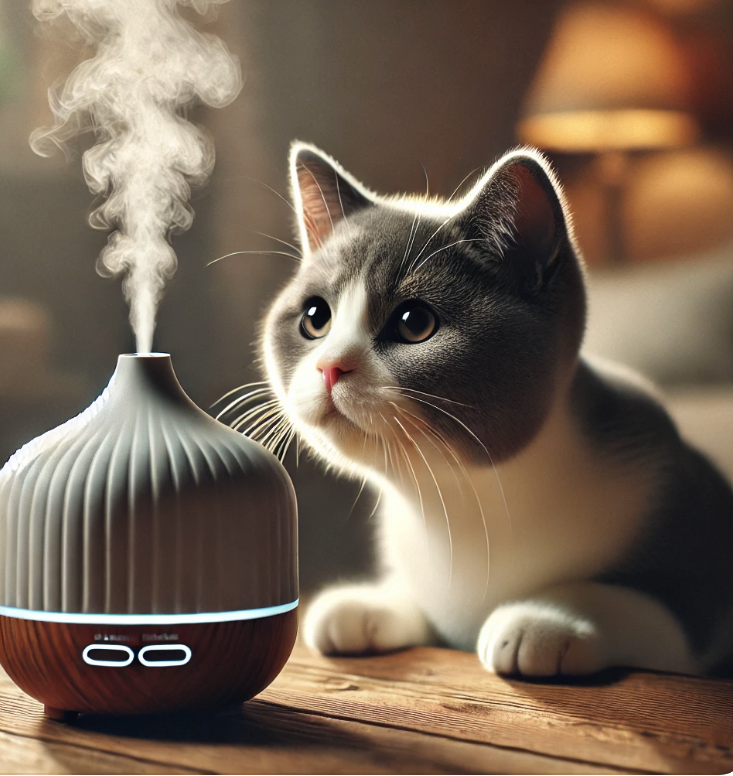
Yes, homes with cats can still use essential oils!
When DIY Isn't Enough Already tried the basics? If this is happening with your dog and you're still stuck, I can help you figure out what deserves attention next.
Request a Discovery Callback →