
Omega-3 Sources for Dogs: Fish, Algae, Flax, Chia & What Each One Actually Provides
“Omega-3” sounds like one nutrient, but that little phrase can describe very different fats coming from very different foods.
This becomes especially important when a pet parent tells me, “I don't want to use fish oil, so I bought flax oil instead.” Flax absolutely contains omega-3. So do chia, hemp and camelina. But that does not mean they provide the same forms of omega-3 — or do the same job — as sardines, fish oil, krill or an algae product that supplies EPA and DHA.
If you are simply looking at the words “source of omega-3” on the front of a package, you can miss a very important distinction.
See your vet for a diagnosis and then you and I can collaborate on a custom strategy for your dog's health.
The Big Distinction: ALA Is Not the Same as EPA and DHA
The three omega-3 fatty acids you will hear about most often are ALA, EPA and DHA.
Plant foods such as flax, chia, hemp and camelina provide omega-3 primarily as ALA — alpha-linolenic acid. Dogs can convert some ALA into EPA and DHA, but that conversion is limited and is not something I rely on when I specifically want meaningful EPA and DHA intake.
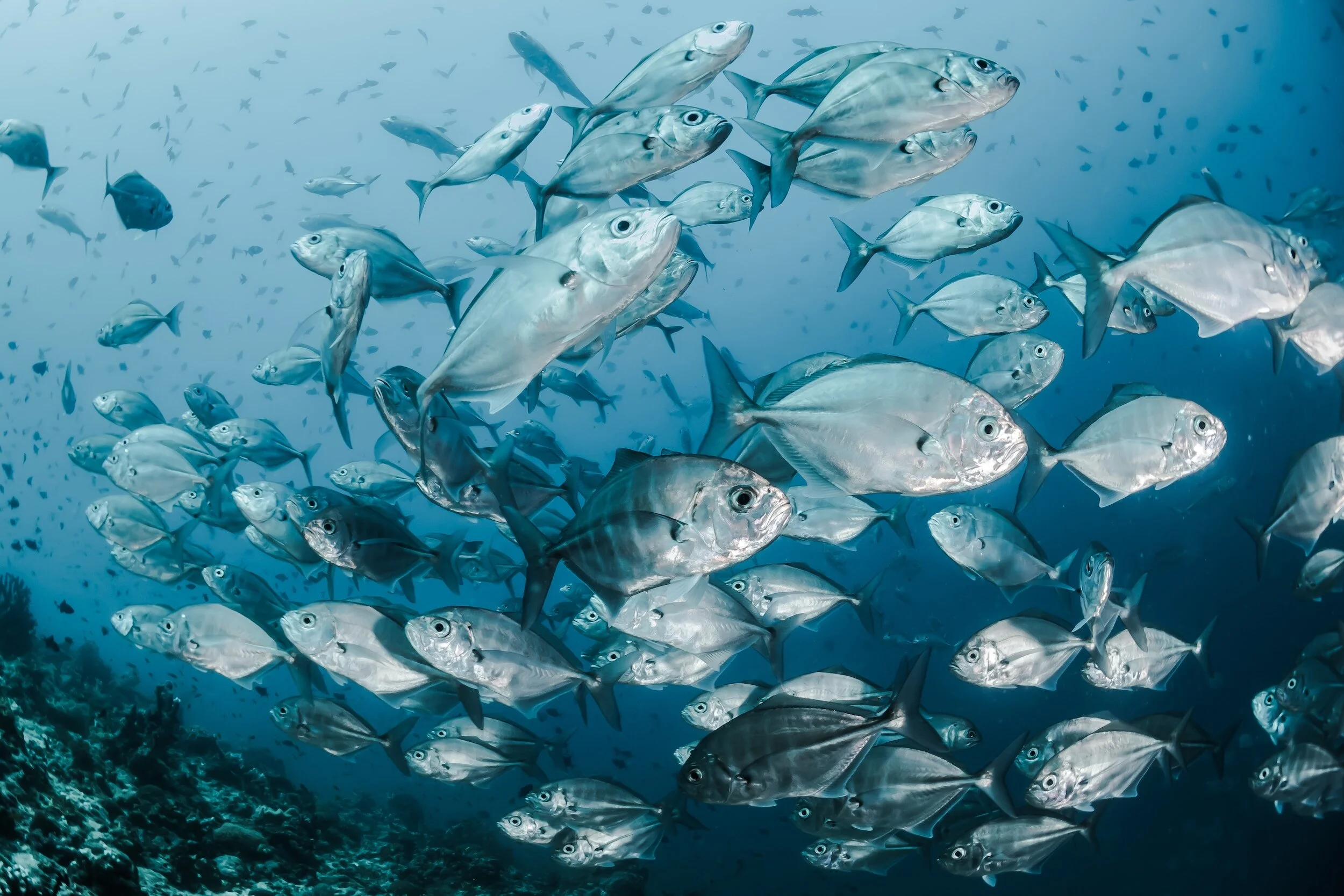
Fish, oily seafood and certain algae products can provide EPA and DHA directly.
That distinction becomes especially important when I am thinking about inflammatory pathways, skin, joints, brain and nervous-system support or another therapeutic reason for using omega-3.
A food can honestly contain omega-3 and still not provide the EPA and DHA I am actually looking for.
For the deeper discussion about EPA, DHA, inflammation and therapeutic use: Read: Omega-3 for Dogs — EPA, DHA & Therapeutic Use →
Omega-3 Sources for Dogs at a Glance
| Source | Main Omega-3 Form | What I Like About It | What to Know |
|---|---|---|---|
| Oily Fish | EPA + DHA | Whole-food source with protein and additional nutrients | Less precise when trying to reach a specific therapeutic EPA/DHA amount |
| Fish Oil | EPA + DHA | Can provide concentrated, measurable EPA and DHA | Quality, freshness, oxidation and concentration vary widely |
| Krill Oil | EPA + DHA | Provides long-chain omega-3s, much of it associated with phospholipids | Still a marine animal source and often provides fewer total mg per serving |
| Green-Lipped Mussel | Marine omega-3s including EPA/DHA and other fatty acids | Interesting whole marine ingredient often used in joint-support strategies | Not my first choice when I need a precise high EPA/DHA target |
| Algae Oil | DHA and, in some products, EPA + DHA | Direct long-chain omega-3 without using fish | Products vary enormously; some contain mostly DHA and little or no EPA |
| Flax / Flax Oil | ALA | Whole-food plant option with useful nutritional qualities | Not equivalent to giving EPA and DHA directly |
| Chia Seeds | ALA | ALA plus fiber and other nutrients | Useful food, but not a direct EPA/DHA replacement |
| Camelina Oil | ALA | Plant-based omega-3 source with a relatively favorable fatty-acid profile | Still primarily ALA |
| Hemp | ALA plus omega-6 | Can contribute useful fats and other nutrients | Not a meaningful direct source of EPA/DHA |
| Cod Liver Oil | EPA + DHA | Provides marine omega-3 | Also provides vitamins A and D, so I do not treat it like ordinary fish oil |
Whole Oily Fish: One of My Favorite Food-Based Sources
Sardines, anchovies, herring, mackerel and salmon can provide EPA and DHA directly while also bringing protein and other nutrients to the bowl.
I particularly like small oily fish such as sardines and anchovies when they fit the dog because we are feeding an actual food rather than simply an isolated oil.
For a healthy dog needing general nutritional support, whole fish may be a very practical way to contribute omega-3.
The limitation shows up when I want a specific therapeutic EPA/DHA amount. Feeding enough fish to reach a high target may add more food, calories, minerals or total fat than I want. At that point, a concentrated product may make more sense.
Fish Oil: Useful Because I Can Measure the EPA and DHA
Fish oil becomes particularly useful when I want to know exactly how much EPA and DHA a dog is receiving.
But “fish oil” alone does not tell me enough.
One teaspoon of one product may contain dramatically more EPA and DHA than a teaspoon of another. That is why I turn the bottle around and look for the actual milligrams of EPA and DHA rather than choosing by the total amount of oil advertised on the front.
Quality also counts. EPA and DHA are fragile fats that can oxidize, so I care about sourcing, processing, packaging, storage and freshness.
Krill Oil: Still EPA and DHA, But Delivered a Little Differently
Krill is another direct marine source of EPA and DHA. One distinction is that much of the omega-3 in krill is associated with phospholipids rather than existing only as triglycerides or ethyl esters, depending on the product.
Krill also naturally contains astaxanthin, an antioxidant pigment that gives krill its reddish color.
I still look at the same important number: how many milligrams of EPA and DHA is the dog actually receiving?
A product can sound impressive because it says “krill” on the label while providing a relatively small amount of EPA and DHA. Source never replaces label reading.
Green-Lipped Mussel: More Than Just an Omega-3 Source
Green-lipped mussel is interesting because it contains marine fatty acids along with other naturally occurring compounds, which is one reason it shows up so often in joint-support products.
I tend to think of green-lipped mussel as a whole joint-support ingredient that happens to contribute useful marine fats, rather than my primary tool for delivering a large, precisely measured EPA/DHA amount.
That distinction keeps us from expecting one ingredient to do every job.
Algae Oil: The Fish-Free Source Pet Parents Often Overlook
Algae is especially important for pet parents who do not want to use fish oil or whose dogs do not tolerate fish.
Unlike flax, chia or camelina, certain algae products can provide long-chain omega-3 directly. That makes algae fundamentally different from simply choosing another plant oil.
There is one catch: read the label.
Some algae oils are primarily DHA. Others provide both EPA and DHA. If I specifically want meaningful EPA along with DHA, I need to choose an algae product that actually provides both.
This can be a very useful fish-free route, but I would not assume every bottle labeled “algae omega-3” has the same fatty-acid profile.
If fish itself is the issue: Read: Omega-3 for Dogs Without Fish →
Flaxseed: Healthy Food, Different Omega-3
Flax is where a lot of confusion begins.
Flaxseed and flaxseed oil absolutely contain omega-3, primarily as ALA. Flax can be a useful food and may bring fiber, lignans and other nutritional benefits depending on how it is used.
What I do not do is treat flax as nutritionally interchangeable with a direct source of EPA and DHA.
If the goal is simply to include plant-based ALA in a diverse diet, flax can fit beautifully. If I am intentionally using EPA and DHA for inflammatory, neurologic, skin or joint support, flax alone is not where I stop.
Chia Seeds: More Than Omega-3, But Still Primarily ALA
Chia is another useful whole-food ingredient. It provides ALA along with fiber, minerals and other nutrients.
That can make chia a nice addition to the broader diet, especially when I am building diversity rather than searching for one supplement to solve a problem.
But the same distinction applies: the omega-3 in chia is not the same as feeding EPA and DHA directly.
Camelina Oil: A Plant-Based Omega-3 Oil, Not Fish Oil in Disguise
Camelina gets a lot of attention as a plant-based omega-3 oil, and it can certainly have a place in a dog's diet.
It provides ALA and has a different fatty-acid profile from many commonly used vegetable oils. That does not make it a direct substitute for EPA and DHA.
This is where I want pet parents reading past the phrase “rich in omega-3.”
The better question is: which omega-3?
Hemp: Useful Fatty Acids, But Not My EPA/DHA Source
Hemp contains both omega-6 and omega-3 fatty acids and can contribute to a varied diet.
But if I am looking specifically for EPA and DHA, hemp is not how I get there. Its omega-3 contribution is primarily ALA.
Again, that does not make hemp bad. It simply gives it a different job.
Cod Liver Oil Is Not the Same Thing as Regular Fish Oil
Cod liver oil supplies EPA and DHA, but it also naturally contains significant amounts of vitamins A and D.
That changes how I think about it.
If I increase cod liver oil trying to chase a higher EPA/DHA target, I am also increasing vitamins A and D. Those nutrients need to be considered in the context of the entire diet.
So while cod liver oil can absolutely be useful in the right situation, I do not automatically use it interchangeably with a concentrated fish-body oil.
If You Want Plant-Based Omega-3, Ask What You Are Actually Trying to Replace
This is the question I wish more pet parents were encouraged to ask.
If you are avoiding fish oil because of preference, sustainability, palatability or a sensitivity to fish, simply buying flax oil may not replace what you intended to remove.
If the nutritional goal is ALA, plant sources give us several choices.
If the nutritional or therapeutic goal is direct EPA and DHA, then I am looking at fish, other marine sources or an appropriate algae-derived product.
“Plant-based omega-3” and “fish-free EPA/DHA” are not automatically the same thing.
What About Ahiflower and SDA?
You may also come across newer plant omega products containing SDA — stearidonic acid, such as Ahiflower.
SDA is interesting because it sits farther along the metabolic pathway from ALA toward EPA, so it can be converted to EPA more efficiently than ALA alone.
But it still does not directly provide the same complete EPA/DHA profile that I get from an appropriate marine or algae source, particularly when DHA is part of my goal.
I see it as another tool, not proof that every plant omega source is now equivalent to EPA and DHA.
The Best Source Depends on Why I Am Using Omega-3
I do not have one omega source that every dog needs.
If I am adding nutrient diversity to a healthy dog's diet, whole sardines, chia or another whole food may fit beautifully.
If I am intentionally trying to reach a therapeutic EPA/DHA amount, I am much more interested in a concentrated product where I can calculate the actual milligrams.
If the dog cannot tolerate fish, algae may give me an important fish-free route to direct long-chain omega-3.
If the dog has pancreatitis or another reason to tightly control total fat, concentration becomes even more important because all of these oils are still fats.
Read: Can Dogs With Pancreatitis Have Fish Oil or Omega-3? →
Read the Back of the Bottle, Not Just the Front
Whether the source is fish, krill or algae, I want to know what the product actually provides.
Look for:
- The exact omega-3 source
- EPA in milligrams
- DHA in milligrams
- Serving size
- Total oil needed to provide that amount
- Storage instructions
- Testing for oxidation and contaminants when applicable
If the product tells you it contains “omega-3” but does not tell you whether that means ALA, EPA, DHA or some combination, you do not have enough information to compare it intelligently.
Omega-3 Is Still Only One Part of the Fat Picture
I also do not want this article accidentally convincing you that your dog should get all dietary fat from an omega supplement.
When appropriate for the individual dog, I still want naturally occurring fat coming from fresh animal foods along with the other fats needed to build a complete diet.
EPA and DHA have a specific job. ALA has a job. Other dietary fats have jobs too.
The Whole Dog Still Decides What Belongs in the Bowl
The right omega source depends on more than whether a bottle is popular. I look at the dog's diet, age, weight, digestive tolerance, allergies, inflammatory concerns, joint health, cognitive or neurologic needs, pancreatitis history, medications, supplements and the reason we are using omega-3 in the first place.
A dog eating sardines regularly may need something different from a dog on a poultry-heavy processed diet. A seizure dog receiving therapeutic EPA and DHA has a very different goal from a healthy puppy getting occasional oily fish. A pancreatitis dog may need an especially concentrated source so we can deliver EPA and DHA without adding unnecessary oil volume.
This is why I care much more about what the source actually provides and what we are trying to accomplish than about finding one universally “best” omega-3.
So Which Omega-3 Source Should You Choose?
Start with the goal.
- Want whole-food nutritional variety? Small oily fish may be a wonderful option.
- Need measurable therapeutic EPA and DHA? Look for a concentrated product that clearly lists both.
- Need a fish-free EPA/DHA option? Look closely at algae products and confirm whether they provide DHA only or both EPA and DHA.
- Want to add plant-based omega-3 to the diet? Flax, chia, camelina and hemp can provide ALA, but do not assume they replace direct EPA and DHA.
- Considering cod liver oil? Remember that vitamins A and D come with it.
The label has to answer more than “Does this contain omega-3?”
The better question is: Which omega-3 does it provide, and does that match what my dog actually needs?
When You Need More Than a Generic Omega Recommendation
As a Holistic Canine Health Practitioner, I look at omega-3 as part of the complete nutritional strategy — not as an isolated bottle added to every dog's bowl.
Sometimes the best choice is sardines. Sometimes it is concentrated fish oil. Sometimes it is algae. Sometimes the plant source is there for another nutritional reason entirely.
The individual dog, the full diet and the goal determine which direction makes sense.
Different Sources. Different Forms. Different Jobs.
That is what I want you to remember the next time you see “rich in omega-3” written across the front of a package.
Flax is not bad because it provides ALA. Chia is not inferior because it is not fish oil. Algae is not automatically the same as every other algae product. Krill is not automatically stronger because it sounds fancy.
They are simply different.
Once you know whether you are looking for ALA, EPA, DHA or a whole food that brings several benefits at once, choosing an omega source becomes much easier.
Come, Sit and Stay Well.
Related Content
Frequently Asked Questions About Omega-3 Sources for Dogs
What is the best source of omega-3 for dogs?
There is no single best source for every dog. If I specifically want EPA and DHA, I generally look toward oily fish, fish oil, krill or an appropriate algae product. Plant sources such as flax and chia can still be useful but primarily provide ALA.
Can dogs get omega-3 from plants?
Yes. Flax, chia, hemp and camelina all provide plant-based omega-3, primarily as ALA. Dogs can convert some ALA into EPA and DHA, but I do not consider those foods equivalent to providing EPA and DHA directly when that is my nutritional or therapeutic goal.
Is flaxseed oil as good as fish oil for dogs?
They are different. Flaxseed oil primarily supplies ALA, while fish oil can supply EPA and DHA directly. Which one makes sense depends on what you are trying to accomplish.
Can my dog get EPA and DHA without eating fish?
Yes. Certain algae-derived oils provide DHA, and some products provide both EPA and DHA. Always check the label because algae products vary significantly in their fatty-acid profile.
Is algae omega-3 good for dogs?
Algae can be a very useful fish-free source of long-chain omega-3. I look specifically at how much EPA and DHA the product provides rather than assuming every algae oil is equivalent.
Are chia seeds a good omega-3 source for dogs?
Chia seeds provide ALA along with fiber and other nutrients. They can be a useful whole-food addition, but they are not a direct replacement for EPA and DHA when those long-chain fatty acids are the goal.
Is camelina oil a good omega-3 source for dogs?
Camelina oil provides plant-based ALA and can have a place in a balanced diet. I simply do not treat its ALA content as interchangeable with direct EPA and DHA.
Is krill oil better than fish oil for dogs?
Not automatically. Krill provides EPA and DHA and has some unique characteristics, including phospholipid-associated omega-3s and naturally occurring astaxanthin. I still compare products by the actual EPA and DHA amount, quality and suitability for the individual dog.
Can I give my dog cod liver oil instead of fish oil?
Cod liver oil provides EPA and DHA but also contributes vitamins A and D. Because increasing the oil also increases those vitamins, I do not treat it as a simple interchangeable substitute for ordinary fish-body oil.
Why does the type of omega-3 matter?
ALA, EPA and DHA are all omega-3 fatty acids, but they are metabolized and used differently. When I specifically want long-chain EPA and DHA for inflammatory, neurologic, skin or joint support, I prefer a source that directly provides them.
When DIY Isn't Enough Already tried the basics? If this is happening with your dog and you're still stuck, I can help you figure out what deserves attention next. Want reliable education, live Q&A, and member resources? Explore Membership →
Request a Discovery Callback →