

Supporting Your Dog’s Liver, Tendons, Skin, and Emotions in Spring: TCVM Wood Element Care for Dogs
Spring, the Wood Element, and Your Dog’s Ability to Flow
Take The Quiz
Spring is the season of new growth, movement, renewal, and change.
The days get longer. The weather shifts. Plants wake up. Pollen starts flying around like it has a personal vendetta. Dogs want to move more, sniff more, explore more, and sometimes act like they have never heard a single word you have said in their entire life.
In Traditional Chinese Veterinary Medicine, spring is the season of the Wood Element, which runs approximately from March 21 through June 21.
Wood is associated with:
Growth
Movement
Flexibility
Planning
Decision-making
Vision
Tendons and ligaments
The Liver
The Gallbladder
Emotional regulation
The smooth flow of energy through the body
When Wood is balanced, a dog is flexible, confident, focused, athletic, decisive, and able to move through life with ease.
When Wood becomes imbalanced, things can get stuck, tense, hot, itchy, reactive, or explosive.
Wood dogs are often the dogs who feel big feelings in their body. They do not just get frustrated. They become frustration with fur.
What Is a Wood Dog in TCVM?
In TCVM 5 Element Theory, each dog has constitutional tendencies. These tendencies can influence personality, behavior, physical vulnerabilities, seasonal patterns, and how the dog responds to stress.
A Wood dog often has a strong presence.
These dogs may be confident, driven, athletic, opinionated, focused, intense, or highly aware of their environment. They often like movement, structure, challenge, and having a job to do.
A balanced Wood dog is purposeful and capable.
An unbalanced Wood dog can become frustrated, reactive, pushy, rigid, tense, itchy, or emotionally explosive.
Wood dogs often have big “I have plans” energy.
And if those plans are interrupted? Good luck, Susan.
The Personality of a Wood Dog
Wood dogs are often natural leaders. They may not always be the loudest dog in the room, but they usually know exactly what they want.
Common Wood dog traits may include:
Confidence
Determination
Athleticism
Strong opinions
Quick decision-making
High drive
Strong prey drive
Territorial tendencies
Intolerance of frustration
Desire for control or predictability
Sensitivity to restriction
Fast emotional reactions
Strong sense of personal space
These dogs often do best when they have clear structure, appropriate outlets, and a human who understands that “more obedience” is not always the answer.
Many Wood dogs are not trying to be difficult. Their system is simply wired for action, direction, and forward movement.
When that energy flows well, they are incredible.
When it gets blocked, they can become a red-hot mess.
The Liver and Gallbladder in TCVM
The Wood Element corresponds with the Liver and Gallbladder.
In TCVM, the Liver is responsible for the smooth flow of Qi, or vital energy, throughout the body. It is also connected to blood storage, tendons, ligaments, eyes, nails, emotional regulation, and the ability to adapt to change.
The Gallbladder is associated with decision-making, courage, and direction.
This is why Wood imbalance may show up in both the body and behavior.
A dog with Wood imbalance may have tight muscles, tendon strain, ligament issues, itchy skin, red eyes, irritability, frustration, reactivity, digestive stress, or sudden attitude changes.
The Liver does not just “detox.” That word gets overused. In TCVM, the Liver is also about flow.
When the Liver is supported, the dog can move, process, regulate, and adapt.
When the Liver is stagnant, everything gets more dramatic.
Signs Your Dog May Be a Wood Dog
Your dog may have a Wood constitution if they are intense, driven, athletic, focused, easily frustrated, or deeply affected by restriction.
Wood dogs often like to know what is happening and what comes next. They may struggle when routines change, when movement is blocked, or when they feel physically or emotionally constrained.
Common Wood dog signs include:
Strong drive
Intense focus
Reactivity toward dogs, people, sounds, or movement
Frustration on leash
Barrier frustration
Territorial behavior
Sensitivity to being handled or restrained
Strong opinions about grooming, nail trims, or bodywork
Tendon or ligament vulnerability
Tight muscles
Red or itchy skin
Ear inflammation
Eye redness or discharge
Digestive upset during stress
Restlessness when under-exercised or overstimulated
A balanced Wood dog can be a powerhouse.
An unbalanced Wood dog may feel like a pressure cooker with paws.
Wood Element Imbalance in Dogs
Wood imbalance can show up in several ways, but the most common patterns I think about are stagnation, excess, and deficiency.
Wood likes movement. It likes flexibility. It likes clear direction.
When Wood gets stuck, it builds pressure. When that pressure turns into heat, you may see red, hot, inflamed, reactive symptoms.
Liver Qi Stagnation in Dogs
Liver Qi stagnation is one of the most common Wood patterns.
This is the dog who feels stuck, tense, frustrated, or emotionally pressurized.
Signs may include:
Irritability
Reactivity
Leash frustration
Barking at windows or fences
Restlessness
Muscle tension
Digestive upset during stress
Alternating appetite
Sighing or groaning
Sensitivity to touch
Resistance to restriction
Worsening symptoms during seasonal changes
These dogs often need movement, but not chaos.
There is a difference between healthy movement and overstimulation. Throwing a ball 47 times for a tense Wood dog may not “get the energy out.” It may just create a fitter maniac.
Excess Wood or Liver Heat in Dogs
When stagnation builds long enough, it can create heat.
This is where I think of those red-hot flare-ups.
Excess Wood or Liver Heat may show up as:
Sudden attitude changes
Snappiness
Reactivity
Frustration
Restlessness
Red, itchy, inflamed skin
Hot spots
Red ears
Red eyes
Paw licking
Heat intolerance
Agitation
Stress diarrhea
Strong odor
Skin that feels hot to the touch
These dogs may flare emotionally and physically at the same time.
The dog gets itchier, more reactive, more restless, and less tolerant. The skin is yelling. The behavior is yelling. The Liver is in the group chat with caps lock on.
Wood Deficiency in Dogs
Wood deficiency may be less obvious than excess, but it matters.
A dog with deficient Wood may not have enough strength, flexibility, or resilience in the systems Wood governs.
Signs may include:
Weak tendons or ligaments
Poor flexibility
Stiffness
Slow recovery after activity
Brittle nails
Poor coat quality
Low confidence
Hesitation
Lack of direction
Fatigue after movement
Reduced ability to adapt to change
Subtle digestive weakness
These dogs may need nourishment, gentle movement, and deeper support instead of more intensity.
Not every Wood dog needs to be “cooled down.” Some need to be built up.
Why Spring Can Be Hard on Wood Dogs
Spring is active. Everything is moving upward and outward.
Plants grow. Pollen rises. Weather shifts. Dogs feel the seasonal change. Their bodies may start pushing out stored winter stagnation. Their routines may change as humans spend more time outdoors.
For Wood dogs, spring can amplify both physical and emotional patterns.
You may notice:
More itching
More reactivity
More leash frustration
More barking
More skin flare-ups
More digestive upset
More sensitivity to environmental triggers
More tendon or ligament strain
More impatience
More “absolutely not” behavior
Spring is also when many dogs become more active after a slower winter.
That sudden increase in movement can stress the tendons, ligaments, joints, and muscles, especially in dogs who are already tight, inflamed, under-conditioned, or carrying extra weight.
This is why spring dog care should include more than flea prevention and allergy panic.
It should include Liver support, tendon support, skin support, emotional regulation, nutrition, and smart movement.
The Water Element’s Influence on Wood
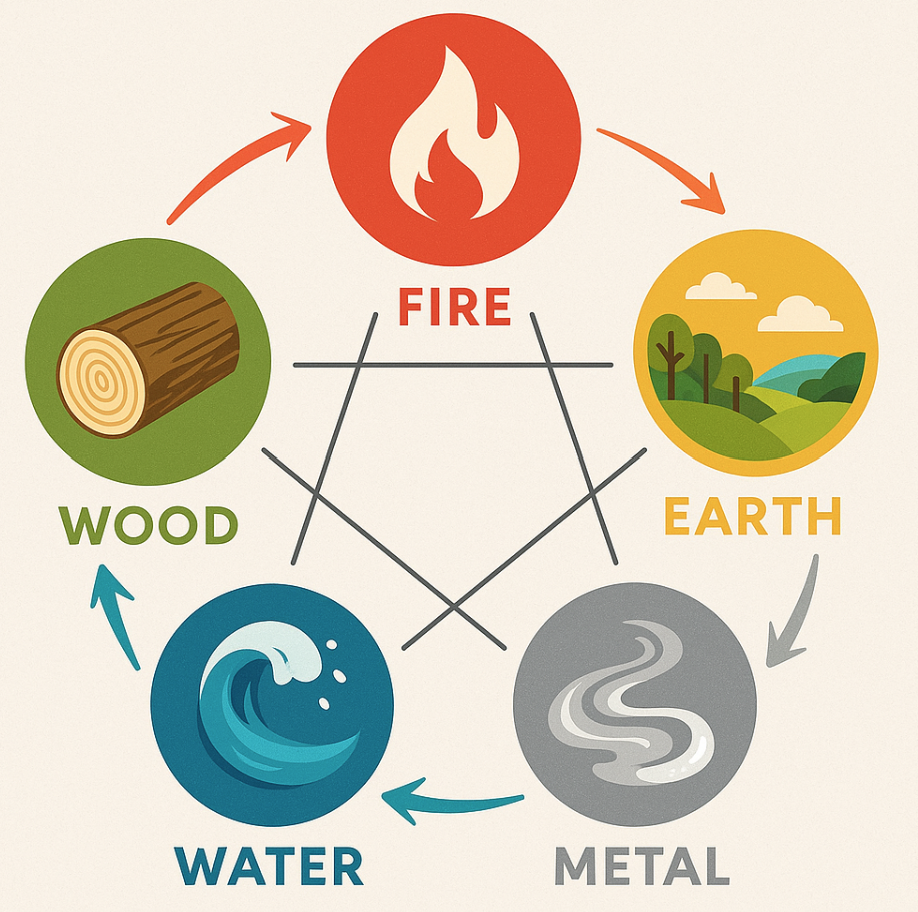
In the Five Element cycle, Water feeds Wood.
This relationship is important.
Water is connected to the Kidneys, deep reserves, bones, aging, fear, willpower, and the body’s foundational energy. Wood depends on Water for nourishment, flexibility, and growth.
Think of a tree.
If the roots do not have enough water, the tree becomes dry, brittle, stressed, and less flexible. It may still stand, but it does not bend well. It cracks under pressure.
The same idea applies to dogs.
When Water is strong, Wood has what it needs to grow, move, adapt, and stay flexible.
When Water is weak, Wood may become dry, brittle, tense, undernourished, or unstable.
This can show up as:
Tendon and ligament weakness
Stiffness
Reduced flexibility
Fear-based reactivity
Poor stress resilience
Fatigue
Aging-related weakness
Chronic tension
Worsening anxiety under stress
Poor recovery after activity
Less ability to adapt to change
This is why some Wood dogs do not just need Liver support. They also need deeper Kidney/Water support.
If the dog is older, fearful, depleted, chronically stressed, recovering from injury, or running on empty, supporting Wood without supporting Water may not be enough.
You cannot grow a strong tree with dry roots.
When Wood Affects Fire
Wood also feeds Fire.
This is where Wood and Fire can overlap.
When Wood is balanced, it supports healthy Fire: joy, connection, circulation, emotional warmth, and steady enthusiasm.
When Wood is excessive, stagnant, or hot, it can overfeed Fire.
That may show up as:
Anxiety
Restlessness
Poor sleep
Overexcitement
Emotional intensity
Panting
Heat intolerance
Clinginess
Stress diarrhea
Red-hot skin or ears
Reactivity that worsens in heat or excitement
In real life, a dog may not fit neatly into one element.
A dog may have Wood frustration feeding Fire anxiety. Or Water weakness failing to nourish Wood, leading to brittle tendons, poor resilience, and reactive behavior.
This is why I look at patterns instead of labels.
The label gives us a starting point. The dog gives us the truth.
Skin Flare-Ups and the Wood Element
Skin issues are one of the biggest places I see Wood imbalance show up.
Red, itchy, inflamed skin often has a heat component. In spring, this may be aggravated by pollen, environmental allergens, food sensitivities, poor detox capacity, gut imbalance, or immune stress.
Wood/Liver patterns may be involved when you see:
Red itchy skin
Hot spots
Red paws
Paw licking
Inflamed ears
Red eyes
Spring allergy flares
Irritability with itching
Skin that worsens with stress
Skin that worsens after rich or warming foods
Strong body odor
Greasy coat
Yeasty patterns
This does not mean the Liver is “bad” or failing.
It means the body may need better support for flow, inflammation balance, digestion, drainage, and immune regulation.
Skin is often the smoke alarm. The fire is usually deeper.
Behavior Flare-Ups and the Wood Element
Wood imbalance can also show up behaviorally.
This is especially true for dogs who are already intense, driven, sensitive, athletic, reactive, or easily frustrated.
Behavior signs may include:
Leash reactivity
Fence fighting
Barking at movement
Frustration when restrained
Snapping when touched
Impulse control struggles
Growling when space is invaded
Increased sensitivity to noise or motion
Difficulty transitioning from excitement to calm
Conflict with other dogs in the home
Resource guarding that worsens with stress
This does not mean every reactive dog is a Wood dog.
But when reactivity has a hot, frustrated, explosive, tense quality, Wood should be considered.
Training still matters. Boundaries still matter. Management still matters.
But if the dog’s body is inflamed, tense, itchy, undernourished, sleep-deprived, or running hot, behavior work becomes harder than it needs to be.
You cannot “obedience” your way out of a dysregulated nervous system.
Tendons, Ligaments, and the Wood Element
Wood governs the tendons and ligaments.
This makes Wood Element support especially important for dogs with:
CCL injuries
Tendon strain
Ligament weakness
Tight muscles
Stiff movement
Athletic stress
Poor flexibility
Repetitive strain
Recovery after injury
Aging mobility changes
In spring, dogs often become more active after winter. More running, jumping, twisting, playing, swimming, and hiking can increase strain.
A Wood dog may be mentally ready to launch themselves into spring.
Their body may need a slower plan.
Support should include:
Gradual conditioning
Warm-ups before activity
Strength and mobility work
Healthy body weight
Anti-inflammatory nutrition
Omega-3 support when appropriate
Joint and connective tissue support
Avoiding weekend-warrior exercise patterns
Dogs do not understand “ease back into it.”
That is our job.
Cooling and Liver-Supportive Foods for Wood Dogs
Food is one of the best places to start with Wood Element support.
Dogs with Wood imbalance often benefit from foods that support the Liver, reduce heat, nourish blood, and promote healthy flow.
Helpful Proteins for Wood Dogs
Depending on the dog’s individual needs, helpful protein options may include:
Turkey
Rabbit
Duck
Whitefish
Sardines in moderation
Eggs if tolerated
Leaner proteins for dogs who run hot
Some dogs with heat patterns do not do well on very warming proteins. If your dog flares with certain foods, track patterns.
Green Foods for the Wood Element
Green foods are especially connected to Wood.
Helpful options may include:
Dandelion greens
Broccoli sprouts
Parsley
Cilantro
Wheatgrass
Spirulina
Chlorella
Leafy greens
Green beans
Zucchini
Green foods can support detox pathways, digestion, minerals, and antioxidant intake.
Start small, especially with dogs who have sensitive digestion.
Foods That May Aggravate Wood Heat
Some dogs with excess heat or inflammatory patterns may flare with foods that are too rich, warming, greasy, processed, or inflammatory.
Potential triggers may include:
Highly processed kibble
High-starch diets
Artificial additives
Food dyes
Excessive chicken for some dogs
Greasy foods
Too many warming foods
Poor-quality fats
Repeated exposure to food sensitivities
This does not mean every dog needs the same diet.
It means if your dog is flaring every spring, food needs to be part of the conversation.
Allergy season is not only about pollen.
Hydration and Moisture for Wood Dogs
Wood needs Water.
Dryness and depletion can make Wood more brittle, tense, and reactive.
Hydration support may include:
Adding water to meals
Feeding fresh food or fresh toppers
Offering bone broth
Adding moisture-rich vegetables
Using appropriate omega-3 fats
Offering herbal teas when appropriate
Avoiding chronically dry diets
If your dog eats kibble, spring is a good time to add moisture intentionally.
A dry body is not a flexible body.
Herbs That May Support the Wood Element
Herbs can be helpful for Wood dogs, but they should be chosen based on the dog’s pattern.
Some dogs need cooling and clearing. Some need nourishing. Some need digestive support. Some need stress support.
Common herbs used in Wood-related support may include:
Milk Thistle
Milk thistle is commonly used to support normal liver function and antioxidant pathways. It may be helpful during seasonal transitions, toxin exposure, medication use, or when deeper liver support is needed.
Dandelion
Dandelion leaf and root may support digestion, liver function, bile flow, and fluid balance. Dandelion greens also fit beautifully with Wood season.
Burdock Root
Burdock is often used for skin, liver, and lymphatic support. It may be helpful in dogs with chronic skin patterns or sluggish elimination.
Nettles
Nettles may support seasonal allergy responses, minerals, and overall resilience. They can be helpful for dogs who struggle with spring environmental stress.
Turmeric
Turmeric may support a healthy inflammatory response, but it is not ideal for every dog. Some dogs run too hot, have sensitive digestion, or do not tolerate it well.
Schisandra
Schisandra is often used for liver support, stress resilience, and adaptogenic support. It may be appropriate for some dogs who need deeper constitutional support.
Herbs are not random sprinkles.
The right herb can be incredibly useful. The wrong herb for the wrong dog can muddy the picture.
Essential Oils for Wood Element Support
Essential oils can be a helpful tool for Wood dogs when they are selected and introduced thoughtfully.
For Wood Element dogs, I often think in categories:
Liver and emotional flow
Calming frustration
Grounding reactivity
Tendon and ligament support
Skin comfort
Essential Oils for Emotional Flow and Frustration
These oils may be useful for dogs with tension, frustration, irritability, or emotional stuckness:
Lavender
Roman chamomile
Bergamot
Geranium
Frankincense
Vetiver
These oils may help support emotional regulation and a calmer nervous system.
Essential Oils for Tendons, Ligaments, and Movement
For dogs needing movement and connective tissue support, oils often considered include:
Copaiba
Lemongrass
Frankincense
Cypress
Helichrysum
Marjoram
Lemongrass is one I often associate with ligament support, but it needs to be used thoughtfully and properly diluted.
Essential Oils for Skin Flare Support
For red, itchy, irritated, or reactive skin patterns, oils may include:
Lavender
Copaiba
Roman chamomile
Frankincense
Geranium
Skin oils should be chosen carefully. Do not slap essential oils onto angry skin and hope for the best. Angry skin has opinions, and it will share them.
How to Use Essential Oils Safely with Dogs
Essential oils may be used through:
Gentle diffusion
Diluted topical application
Custom sprays
Application to bedding
Petting application
Supportive bodywork or acupressure
Start low and slow.
Watch your dog’s response. If your dog avoids the oil, leaves the area, drools, squints, coughs, pants, becomes restless, or acts uncomfortable, stop and reassess.
Do not apply oils near the eyes, nose, genitals, or irritated skin unless you have appropriate guidance.
Do not use oils internally without professional support.
And please do not treat essential oils like Febreze with a college degree.
Lifestyle Support for Wood Dogs
Wood dogs need movement, but they need the right kind of movement.
They also need predictability, structure, decompression, and appropriate outlets for their drive.
Helpful lifestyle support includes:
Daily walks with sniffing time
Structured movement
Strength and mobility exercises
Scent work
Food puzzles
Problem-solving games
Calm decompression after activity
Predictable routines
Clear boundaries
Avoiding constant overstimulation
Bodywork when tolerated
Gentle stretching or range-of-motion support
Wood dogs often do well when they have a job.
That job does not have to be dramatic. It can be scent games, place work, structured walking, carrying a light backpack when appropriate, or learning calm patterns.
What they do not usually do well with is chaos, boredom, unclear rules, or constant frustration.
Training and Behavior Support for Wood Dogs
Wood dogs are often smart, capable, and intense.
They need training that is clear, fair, and consistent. They do not need constant confrontation.
For Wood dogs, behavior support should focus on:
Reducing frustration
Teaching impulse control
Creating predictable routines
Building recovery after arousal
Rewarding calm choices
Supporting the nervous system
Avoiding excessive pressure
Managing triggers
Using decompression walks
Teaching settle skills
A Wood dog who is constantly corrected but not supported may become more frustrated.
A Wood dog who is given structure, outlets, and clear communication can become a rock star.
Acupressure for Wood Element Support
Acupressure can support Wood dogs, especially dogs with tension, frustration, muscle tightness, or emotional pressure.
Commonly considered points may include Liver-related points, Gallbladder-related points, and points used for calming or moving stagnant energy.
For pet parents, the safest starting place is often gentle bodywork rather than trying to be an acupressure wizard overnight.
You can begin with:
Slow petting along the sides of the body
Gentle circles over tight muscles
Light touch around the shoulders and hips
Calm breathing while touching your dog
Stopping before your dog becomes irritated
Wood dogs may be touch-sensitive.
Respect that.
If your dog says no, believe them.
When Wood Imbalance Needs a Deeper Look
If your dog has repeated spring flare-ups, chronic itch, recurring ear issues, tendon injuries, intense reactivity, or worsening digestive stress, it is time to look deeper.
Wood imbalance may be connected to:
Diet
Gut health
Environmental triggers
Chronic inflammation
Poor detox capacity
Pain
Hormonal patterns
Vaccine or medication stress
Emotional stress
Lack of appropriate movement
Overstimulation
Water/Kidney depletion
Aging changes
This is why I do not love chasing symptoms one at a time.
The skin flare, the leash reactivity, the tight body, and the digestive upset may all be part of the same larger pattern.
How to Tell If Your Dog Needs Wood Element Support
Your dog may benefit from Wood Element support if spring brings noticeable changes in behavior, skin, movement, digestion, or emotional regulation.
Ask yourself:
Is my dog itchier in spring?
Are the ears red or inflamed?
Is my dog more reactive or frustrated?
Does my dog struggle with leash frustration?
Is my dog tense or tight through the body?
Has my dog had tendon or ligament issues?
Does my dog flare with stress?
Are symptoms red, hot, sudden, or explosive?
Does my dog struggle with transitions or changes?
Does my dog seem physically or emotionally stuck?
Patterns matter.
One bad walk does not make your dog a Wood dog. But repeated patterns tell a story.
Supporting the Wood Dog Naturally
A Wood dog does not need to be shut down.
They need direction, flow, nourishment, flexibility, and support.
The goal is not to remove their drive or dull their personality. The goal is to help their body and nervous system stay balanced so they can move through life without constant tension, inflammation, frustration, or flare-ups.
A Wood Element support plan may include:
Liver-supportive foods
Green foods
More moisture
Omega-3 support
Gut support
Skin support
Thoughtful herbs
Essential oils
Strength and mobility work
Predictable routines
Appropriate exercise
Nervous system support
Water/Kidney support when needed
Wood dogs can be amazing partners.
They just need their energy moving in the right direction.
Take the Wood Dog Quiz
Not sure if your dog is a Wood dog?
Take the quiz and look at your dog’s constitution, personality, seasonal tendencies, physical patterns, and emotional responses.
Your dog may be mostly Wood, or Wood may simply be the element that gets challenged during spring.
Either way, understanding your dog’s elemental pattern can help you make better choices with food, movement, herbs, essential oils, training, and seasonal support.
Final Thoughts: Spring Dog Care Is About Flow
Spring dog care is not just about pollen, fleas, and muddy paws.
It is about supporting your dog’s Liver, Gallbladder, tendons, ligaments, skin, digestion, emotional regulation, and ability to move through change.
For Wood dogs, spring can bring energy, drive, growth, and movement.
It can also bring itching, reactivity, frustration, red-hot flare-ups, tendon strain, and emotional pressure.
The good news is that small changes can make a big difference.
More moisture. Better food. Green support. Smarter movement. Calmer routines. Thoughtful herbs. Properly used essential oils. Less frustration. More flow.
That is how we help dogs eat better, feel better, and live longer.
If your dog struggles with spring allergies, itchy skin, reactivity, tendon or ligament issues, frustration, or seasonal flare-ups, schedule a consultation so we can look at the whole dog and create a support plan that actually fits.
Schedule a consultation: https://welloiledk9.com/questionnaire
Or join the member forum for more seasonal wellness education, natural remedy guidance, and ongoing support:
When DIY Isn't Enough Already tried the basics? If this is happening with your dog and you're still stuck, I can help you figure out what deserves attention next.
Request a Discovery Callback →