CCL Tear Recovery: Rehab, Nutrition and Holistic Support
Poppy's CCL Story • Conservative Care • Canine Rehabilitation
When Poppy injured her CCL, I did what many determined dog moms do: I started supporting her from every reasonable angle. We used rest, essential oils, homeopathy, PEMF, cold laser and fresh food. She improved—but every time she returned to harder activity, the limp returned too.
That was the clue I needed. Comfort and healing support were helping, but they had not rebuilt the strength, stability and confidence she needed to use the knee well. Structured canine rehabilitation became the missing piece.
See your veterinarian for a diagnosis and then you and I can collaborate on a custom strategy for your dog's health. A dog suddenly limping on a back leg may have a cruciate injury, but paw injuries, fractures, hip problems, luxating patellas, spinal pain and other conditions can look similar.
What Is a CCL Tear in a Dog?
The cranial cruciate ligament—CCL or CrCL—is one of the stabilizing structures inside a dog's knee, technically called the stifle. Pet parents often call it a torn ACL in a dog because the ligament performs a job similar to the human ACL.
CCL disease is not always one dramatic snap during a game of fetch. The ligament may weaken over time, partially tear and eventually rupture more completely. That instability can lead to pain, inflammation, altered movement, muscle loss, meniscal damage and progressive arthritis.
Signs dog moms commonly notice
- Sudden or intermittent limping on a back leg
- Holding the affected leg up or barely touching the toes down
- Difficulty rising, using stairs or getting into the car
- A change in how the dog sits, sometimes with one leg kicked outward
- Stiffness after rest that improves slightly once moving
- Loss of thigh muscle on the affected side
- Improvement with rest followed by another flare after running or playing
That last pattern was part of Poppy's story. She would look better, do more, and then limp again. It was not stubbornness and it was not necessarily proof that nothing was helping. It told me the knee and the body around it were not ready for the workload.
Can a Dog Recover From a CCL Tear Without Surgery?
Some dogs can do well with conservative management, but not every dog is a good candidate. The decision depends on the degree of instability, whether the tear is partial or complete, the dog's size, age, activity level, body condition, pain, meniscal involvement, other orthopedic problems and whether the family can follow a structured restriction and rehabilitation plan.
Larger, highly active dogs and dogs with substantial knee instability are more likely to be directed toward surgical stabilization. A partial tear in a smaller, older, medically complicated or less active dog may lead to a different conversation. Poppy's successful non-surgical recovery is her story—not a promise that every CCL tear should skip surgery.
The American College of Veterinary Surgeons notes that rehabilitation may strengthen the muscles around the knee and may sometimes help delay surgery in dogs with partial tears. It also explains that pain can persist when instability continues. You can read its overview of cranial cruciate ligament disease.
Poppy Improved With Rest—But Rest Was Not Rehab
During Poppy's early recovery, I restricted activity and used the tools I knew could support comfort and the healing environment. We used carefully selected essential oils, Arnica and Ruta homeopathy, PEMF, cold laser and nutrition focused on fresh food and a healthy inflammatory response.
After roughly eight weeks, she looked substantially better during ordinary daily movement. But vigorous activity brought the limp back. I was reaching the point where I thought surgery might be our next step.
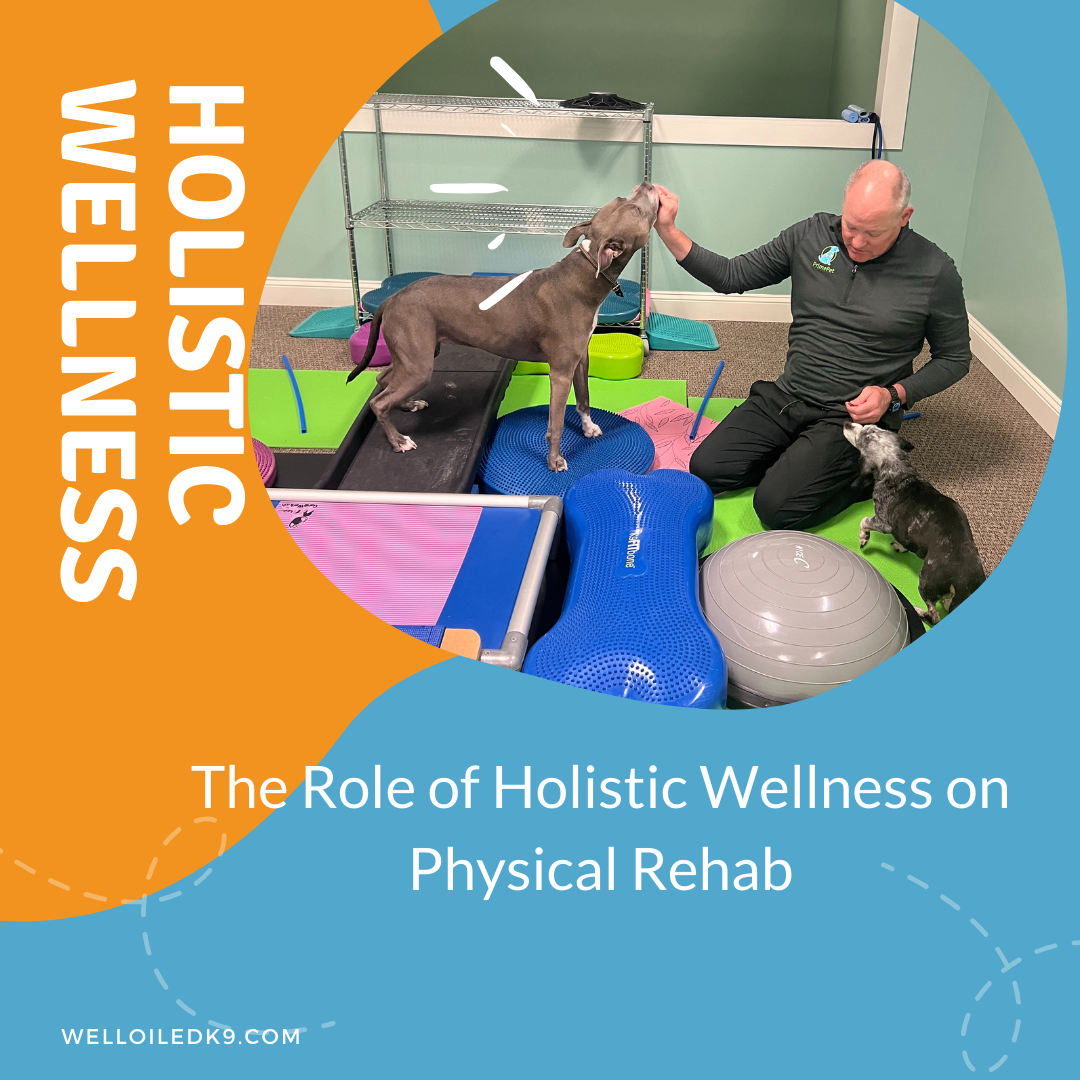
Then I connected with a veterinary rehabilitation therapist. Rehab helped us rebuild muscle, improve how she loaded and used the leg, restore confidence in the knee and manage the progression back toward activity. That work—not endless rest—was the turning point.
What I know now is that a comfortable dog is not automatically a strong dog. Pain relief can make movement possible, but it does not by itself restore lost muscle, balance, coordination or safe movement patterns.
That lesson now shapes how I look at every mobility case as a holistic pet health coach and canine nutritionist: support the painful area, but also look at the muscle, food, body weight, nervous system, compensation and the dog's ability to use the body.
What CCL Rehabilitation Actually Needs to Accomplish
A qualified canine rehabilitation plan is individualized and changes as the dog progresses. The early phase is not the time to copy a random exercise video and turn the living room into canine CrossFit.
Depending on the injury and whether surgery was performed, rehabilitation may address:
- Safe pain and inflammation management
- Appropriate activity restriction without unnecessary long-term deconditioning
- Comfortable range of motion
- Gradual weight-bearing on the affected leg
- Thigh, hip and core strength
- Balance, coordination and proprioception
- Gait quality rather than simply walking farther
- Compensation through the back, shoulders, hips and opposite leg
- A measured return to stairs, running, play and normal life
The plan can include controlled leash walking, guided therapeutic exercises, underwater treadmill work, manual therapy or other rehab modalities. The right exercise and timing depend on the dog. Too little movement can cost muscle; too much too soon can set recovery back.
For the broader connection between knees, muscle, spine, compensation and movement, visit my Dog Joint, Spine and Mobility Problems guide.
Canine Rehabilitation Is Not Only for CCL Tears
Poppy's CCL injury is the story that brought rehabilitation into sharp focus for me, but the same larger lesson applies to many dogs: reducing pain is useful, yet restoring safe function may require more.
Professional canine rehabilitation may be considered for dogs dealing with:
IVDD and spinal recovery
Once the dog is medically stable and cleared for rehabilitation, the plan may address safe movement, strength, coordination, body awareness and compensation. Read my IVDD and spinal-health guide.
Recovery after surgery
Orthopedic, spinal and other procedures can require carefully staged movement, pain support, muscle preservation and a safe return to ordinary activity.
Arthritis and senior weakness
Older dogs may need help preserving strength, balance, range of motion and confidence—not simply another product labeled “senior joint support.”
Hip, knee and soft-tissue problems
Hip dysplasia, luxating patella, strains, tendon injuries and chronic compensation may all affect how the dog loads and moves through the entire body.
The exact rehabilitation plan belongs with the veterinarian, surgeon and qualified rehabilitation professional. My role is to help strengthen the recovery foundation around that work through nutrition, body composition, supplements, essential oils, CBD, homeopathy, PEMF and other individualized wellness support.
Already Going to Rehabilitation
If your dog is receiving care at a veterinary rehabilitation practice—you do not need me to duplicate the work they are doing.
Rehabilitation services include therapeutic exercise, laser therapy, massage, aqua therapy and PEMF for pets recovering from injuries, surgery, spinal problems, arthritis and other mobility challenges. Their team evaluates function and builds the physical rehabilitation plan.
In other words, this is not veterinary rehab versus holistic support. For many local dogs, it can be skilled veterinary rehabilitation plus a more intentional nutrition and natural-wellness strategy.
I work with pet parents in North Myrtle Beach, Myrtle Beach, Conway, the Grand Strand and Brunswick County, as well as online with families nationwide.
How Natural Support Fits Into CCL Recovery
I do not use one modality and expect it to do every job. Rehabilitation builds function. Other tools may support comfort, recovery, sleep, stress regulation, circulation, nutrition and the dog's willingness to participate.
| Support | Where it may fit | What it does not replace |
|---|---|---|
| Physical rehabilitation | Strength, gait, balance, range of motion, coordination and progressive return to activity | Diagnosis, stabilization when needed or adequate pain control |
| Fresh-food nutrition | Protein for muscle, appropriate calories, omega-3s and a stronger foundation for recovery | Mechanical knee stability or progressive exercise |
| PEMF | Noninvasive support for comfort, circulation, recovery and the larger mobility plan | Rebuilding muscle or correcting an unstable knee |
| Cold laser or red light | Targeted supportive care around recovering tissue, muscles and areas of compensation | Diagnosis, surgical stabilization or rehab progression |
| CBD | May support comfort, inflammatory balance, rest and stress in selected dogs | Strength, coordination or a complete pain-management plan |
| Essential oils | Individualized support around physical comfort, muscle tension, emotional stress and hands-on care | Veterinary pain control, knee stability or rehab |
| Homeopathy and herbs | Selected according to the dog's symptoms, constitution, medications and stage of recovery | A one-size-fits-all CCL protocol |
Nutrition Is Part of Rehabilitation
Recovery asks the body to repair, preserve muscle and manage inflammation while activity may be temporarily restricted. That makes the bowl part of the rehab plan—not decoration around a joint supplement.
Adequate protein
Muscle helps stabilize and move the body. I want enough usable protein to help preserve lean tissue unless another medical condition changes the plan.
Healthy body composition
Extra weight increases the mechanical demand on an injured knee. But aggressive calorie cutting that strips away muscle is not the goal either.
Intentional omega-3 support
Quality, dose, the rest of the diet, medications and the individual dog's tolerance all affect whether an omega-3 strategy is appropriate.
Fresh-food foundation
Fresh animal protein, appropriate fats and thoughtfully chosen whole foods can provide a more useful recovery foundation than chasing one trendy “joint” ingredient.
Food decisions still need context. A dog with pancreatitis, kidney disease, allergies, digestive problems, obesity or multiple medications may need a substantially different recovery diet. Read more about why I use fresh food to support recovery and how I approach chronic inflammation in dogs.
How I Used PEMF and Cold Laser With Poppy
PEMF mats and cold laser became valuable parts of Poppy's support. They gave me ways to work with her comfort and recovery without asking an already sore dog to perform more physical work.
I still did not treat either device as a replacement for movement or professional rehab. Device type, intensity, placement, treatment time, frequency and the dog's stage of healing all affect how a modality should be incorporated. The prettiest device advertisement is not a treatment plan.
I continue to use PEMF, laser and other hands-on modalities with my own dogs because they fit naturally beside nutrition, strengthening and appropriate daily movement. That combination is also why my authoritative mobility resource looks beyond a single painful joint.
CBD May Support Comfort—But Comfort Is Not Stability
Full-spectrum CBD may be one tool I consider when pain, inflammation, poor rest or stress is making recovery harder. A dog who is more comfortable may sleep better and participate more willingly in appropriate movement.
CBD does not repair an unstable knee, rebuild a weak thigh or tell us whether surgery is needed. Product quality, medications, liver health, sensitivity and the dog's response should all be considered. More is not automatically better.
For a deeper discussion, read Using CBD for Dog Joint Pain and my overview of CBD and the canine endocannabinoid system.
Essential Oils Were Part of Poppy's Plan
Through my canine aromatherapy training, I selected and layered oils around Poppy's changing needs. Copaiba, frankincense, lemongrass and, yes, wintergreen were among the oils I considered for physical comfort, muscles, ligaments and the emotional strain of restriction.
That is not an invitation to put four oils on every limping dog. Oil quality, dilution, application, age, seizure history, medications, liver function, respiratory health and individual sensitivity can change the decision. Wintergreen in particular is not a casual “Pinterest recipe” oil.
Aromatherapy may support comfort and help a dog settle into the recovery process. It does not make an unstable joint stable. Learn more about essential-oil amount, frequency and individual tolerance for dogs.
Homeopathy, TCVM and the Whole Dog
Arnica montana and Ruta graveolens were useful parts of Poppy's individualized homeopathic support. I chose them for her symptom picture and recovery stage—not simply because a chart said “CCL equals Ruta.”
TCVM can also help identify patterns such as heat, dampness, stagnation, deficiency, digestive weakness, stress or inflammation. Those patterns may influence food, herbs, hands-on care and the way I build the larger support plan.
Muscle testing may help guide tolerance and direction in sensitive or complicated dogs. Experience helps recognize patterns, ask better questions and avoid wasting time on random product guessing.
Do Not Forget the Rest of the Body—or the Other Knee
A dog protecting one knee shifts weight elsewhere. The opposite rear leg, hips, back, shoulders and neck may all take on extra work. Over time, compensation can become its own source of pain and altered movement.
My whole-dog questions include:
- Is the dog losing muscle or simply losing weight?
- Is the dog using the injured leg or avoiding it?
- Are slippery floors, stairs or jumping causing repeated setbacks?
- Is pain controlled well enough for safe, appropriate movement?
- Has the gait changed through the spine or front end?
- Is the opposite knee beginning to look stiff or vulnerable?
- Are digestive problems, poor appetite, stress or medications complicating recovery?
- Is the current food plan protecting muscle and controlling calories appropriately?
Runners or yoga mats, trimmed nails, ramps, controlled access to furniture and a supportive harness may be humble changes, but humble changes can prevent a dog from turning the kitchen floor into a skating rink.
When Your Dog Needs Prompt Veterinary Reassessment
Contact your veterinarian or orthopedic team if your dog has severe or escalating pain, will not bear weight, suddenly worsens after improving, develops notable swelling, cries out during movement, becomes unable to stand, has a new clicking or popping concern, or shows signs that do not fit the expected recovery pattern.
After surgery, incision changes, discharge, fever, marked lethargy, loss of appetite or sudden deterioration also deserve prompt attention. Natural support should work alongside necessary diagnostics, stabilization, pain control and surgical care—not delay them.
Dog CCL Tear Recovery FAQ
Is a CCL tear the same as a torn ACL in a dog?
They are commonly used to mean the same type of knee problem. Dogs have a cranial cruciate ligament, usually shortened to CCL or CrCL. Pet parents frequently call it a dog ACL because it performs a function similar to the human anterior cruciate ligament.
Can a dog recover from a CCL tear without surgery?
Some dogs can regain good function through conservative management, especially in selected partial tears, but not every dog is a good candidate. Knee stability, tear severity, size, activity level, pain, meniscal involvement, body condition and the ability to follow a structured rehabilitation plan all influence the decision.
How long does dog CCL tear recovery take?
Think in months rather than days. The timeline varies with the injury, whether surgery was performed, the dog's age and size, muscle loss, pain, other health concerns and consistency with rehabilitation. Looking better during a short walk does not necessarily mean the knee is ready for running, jumping or rough play.
Why is my dog still limping after weeks of rest?
Rest may reduce irritation, but it does not automatically correct instability or rebuild muscle, balance and gait. Continued limping can also reflect a more complete tear, meniscal injury, arthritis, compensation or another diagnosis. This deserves veterinary reassessment and, when appropriate, a qualified rehabilitation evaluation.
Does a dog need rehabilitation after CCL surgery?
Rehabilitation is commonly used after CCL surgery to support a controlled return to function, rebuild strength and address gait and compensation. The surgeon and rehabilitation professional should determine timing and progression for the individual dog.
Can I do dog CCL rehab exercises at home?
Home exercises are often part of recovery, but they should be selected for the dog's diagnosis and stage of healing. An exercise that is useful later may be inappropriate early on. Ask a rehabilitation professional to show you what to do, what good form looks like and when to progress.
Can rehabilitation help a dog with IVDD?
Rehabilitation may be part of recovery for some dogs with IVDD, but the dog first needs an appropriate veterinary diagnosis and medical or surgical plan. Timing and exercises depend on neurologic status, pain, stability and stage of recovery. A dog with acute pain, paralysis or worsening neurologic signs needs prompt veterinary care—not a home exercise routine.
What can I add to my dog's professional rehabilitation plan?
Depending on the dog, complementary support may include an individualized food strategy, adequate protein, healthy body composition, omega-3s, selected supplements, CBD, essential oils, homeopathy, PEMF, stress support and changes to the home environment. These choices should fit the diagnosis, medications, digestive tolerance and rehabilitation plan rather than being added randomly.
Do you provide canine physical rehabilitation in Myrtle Beach?
I do not replace a veterinary rehabilitation facility, diagnose orthopedic or neurologic conditions, or prescribe physical-therapy exercises. I provide complementary canine nutrition and holistic health support that can work alongside a veterinarian, surgeon or rehabilitation practice such as PrimePet Rehabilitation Therapy in Myrtle Beach.
Can PEMF help a dog with a CCL injury?
PEMF may be incorporated as noninvasive support for comfort, circulation and recovery. I use it as one component of a larger mobility plan. It does not stabilize the knee or replace strengthening, controlled movement, veterinary care or surgery when surgery is needed.
Can CBD help a dog with a torn CCL?
CBD may support comfort, inflammatory balance, rest or stress in selected dogs, but it does not repair or stabilize a torn ligament. Product quality, medications, health history and response should guide its use.
What should I feed a dog recovering from a ligament injury?
The plan should support lean muscle, healthy body composition and the dog's overall medical needs. Adequate protein, appropriate calories, quality fats and an intentional omega-3 strategy may be considered, but pancreatitis, kidney disease, allergies, digestive problems and medications can change the answer.
Will my dog get arthritis after a CCL tear?
Arthritic change is common after CCL disease. Appropriate stabilization, rehabilitation, healthy body composition, muscle preservation, pain management and long-term mobility support may help protect function even though no plan can promise that arthritis will never develop.
Recovery Is More Than Waiting for the Limp to Stop
If your dog has a CCL injury, IVDD, post-surgical weakness, arthritis or another mobility problem, I can help you look at the parts that often receive too little attention: fresh-food nutrition, muscle preservation, body condition, omega-3s, CBD, essential oils, homeopathy, PEMF, supportive products and how those pieces fit beside veterinary treatment and professional rehabilitation.
I do not diagnose the tear or replace an orthopedic or rehabilitation professional. I help you make the rest of the plan make sense for your dog.
Request a Discovery Callback Start the Consultation QuestionnaireRelated Resources
dog CCL tear recovery without surgery | torn ACL in dogs | dog ACL tear recovery | dog CCL rehab | canine cruciate ligament injury | conservative management for dog CCL tear | dog limping on back leg | dog still limping after CCL rest | canine rehabilitation Myrtle Beach | dog physical therapy Myrtle Beach | holistic support alongside dog rehab | canine nutrition for rehabilitation | IVDD rehabilitation support | dog spinal injury recovery | dog surgery recovery nutrition | senior dog rehabilitation | dog mobility support Myrtle Beach | canine nutritionist Myrtle Beach | PEMF for dogs Myrtle Beach | nutrition for dog ligament recovery | PEMF for dog CCL injury | CBD for dog CCL pain | essential oils for dog mobility | cold laser for dog knee injury | arthritis after dog CCL tear | TPLO versus conservative management | how long does dog CCL recovery take | how to help a dog with a torn ACL at home |
Educational note: This article is educational and does not diagnose, treat, cure or prevent disease or replace individualized veterinary, orthopedic or rehabilitation care. Seek prompt veterinary help for severe pain, inability to stand, sudden worsening or other urgent changes. Statements about supplements, CBD and essential oils have not been evaluated by the FDA. The FDA has not approved CBD for use in animals.