How to Build an Anti-Inflammatory Diet for Dogs
If your dog is itchy, stiff, overweight, dealing with recurring digestive problems, slowing down with arthritis or living with another chronic condition, you have probably heard:
“Feed an anti-inflammatory diet.”
I agree.
In fact, food is one of the first places I look when a dog is chronically inflamed.
Your dog eats every single day. That makes the bowl one of the most consistent influences we have over moisture, protein, fat quality, body weight, gut health, nutrient intake and exposure to ingredients that may simply not be working for that dog.
And I am not neutral about the starting point: fresh food is best.
That may mean raw, gently cooked, balanced homemade, appropriately prepared commercial fresh food or a thoughtful transition away from heavily processed dry food.
The exact version depends on the dog.
What Is the Best Anti-Inflammatory Diet for Dogs?
My preference is a fresh, moisture-rich, minimally processed diet built around foods the individual dog tolerates well.
I want appropriate animal protein, quality fats, useful EPA and DHA omega-3s, fresh whole foods, good moisture and as little unnecessary inflammatory burden as practical.
But I do not hand every inflamed dog the same recipe.
Fresh, customized food gives us enormous flexibility. I can change the protein, fat, fiber, starch, moisture, calories, vegetables, minerals and even the TCVM energetic direction of the food around the dog standing in front of me.
That is very different from trying to find one bag labeled sensitive skin, joint support or healthy weight and hoping it happens to solve the problem.
Sometimes Changing the Food Makes a Huge Difference
Not every dog needs twenty supplements and a complicated protocol.
Sometimes the food itself is one of the biggest things standing in the dog's way.
I have seen dogs improve dramatically when we:
- Move away from heavily processed kibble
- Remove a protein the dog is repeatedly reacting to
- Reduce excessive starch
- Improve fat quality
- Add meaningful moisture
- Stop feeding the same ingredients day after day for years
- Move toward foods that better fit the dog's TCVM pattern
- Remove a collection of treats and extras that were undermining the main diet
Does that mean fresh food cures every inflammatory disease? Of course not.
It means sometimes we have been asking an inflamed body to become healthier while feeding it the wrong foundation every day.
Before we pile more things ON the bowl, I want to make sure the bowl itself is not part of the problem.
Kibble and the Problem of Energetically Dead Food
This is where my holistic view differs significantly from conventional “a nutrient is a nutrient” feeding advice.
I do not consider highly processed dry food nutritionally or energetically equivalent to fresh whole food simply because both can be made to meet a nutrient profile.
Kibble is repeatedly processed, heated, dried, stored and ultimately fed as a low-moisture product designed largely around convenience and shelf stability.
Fresh food gives us moisture, aroma, natural texture, recognizable whole ingredients and the ability to change the bowl as the dog changes.
From a holistic and energetic perspective, I also think there is a meaningful difference between feeding fresh, vital food and relying almost entirely on what I call energetically dead food.
I go much deeper into that here: Energetically Dead Dog Food & Food Frequencies .
And no, this does not mean every dog has to eat raw.
A dog with poor digestion, certain medical conditions or a TCVM Cold or deficient pattern may do beautifully on appropriately formulated gently cooked food.
Fresh is the principle. The preparation is individualized.
What Does Inflammation Actually Mean?
Inflammation itself is not always bad.
The body uses an inflammatory response when it needs to fight infection, respond to injury and repair damaged tissue.
The problem is persistent inflammatory pressure—the body never quite getting out of firefighting mode.
That can be part of the picture with:
- Allergies and chronic itching
- Yeast and recurring ears
- Arthritis and joint disease
- Obesity
- Chronic digestive disease
- Recurring food reactions
- Dental disease
- Chronic infection
- Some immune-mediated diseases
- Some metabolic disorders
The diagnosis matters because I do not feed an arthritic senior, a dog with pancreatitis and an itchy young dog exactly the same way simply because all three have an inflammatory component.
Read the broader discussion here: Chronic Inflammation in Dogs: Symptoms, Causes & Whole-Dog Support .
What Actually Belongs in an Anti-Inflammatory Bowl?
What Are the Best Anti-Inflammatory Foods for Dogs?
I dislike “10 magic foods” lists because they make pet parents think adding blueberries and turmeric to the same problematic diet somehow fixes it.
Still, there are foods I may deliberately use when they fit the dog.
Oily Fish
Sardines and other appropriate oily fish can provide EPA and DHA along with whole-food nutrition.
Sometimes I use food. Sometimes a quality omega-3 supplement gives us better dosing control.
Fresh Animal Proteins
Appropriate meats, fish and eggs provide amino acids needed for muscle, tissue repair and overall resilience.
Protein choice is one place where individual tolerance and TCVM energetics become particularly useful.
Prepared Green Vegetables
Zucchini, leafy greens, broccoli, celery and other dog-appropriate vegetables may provide fiber and phytonutrients depending on the dog's digestion and energetic pattern.
Berries
Small amounts of dog-safe berries can add antioxidant-rich whole-food compounds.
They are useful additions—not a treatment plan.
Functional Culinary Herbs
Turmeric, ginger and other culinary herbs may fit some dogs, but they are not energetically appropriate for every inflammatory pattern.
Foods Chosen for the TCVM Pattern
This is one reason I love customized fresh feeding: we can choose ingredients for conventional nutritional needs and the energetic pattern of the dog.
TCVM Food Energetics Matter When Managing Inflammation
Traditional Chinese Veterinary Medicine gives us another way to look at inflammation that goes beyond protein, fat and carbohydrate percentages.
A red, hot, itchy, restless dog may show a very different pattern from an older arthritic dog who is cold, depleted, weak and losing muscle.
Both dogs have inflammation.
I would not automatically put the same foods in both bowls.
Heat Patterns
When a dog shows obvious Heat—red skin, hot spots, panting, irritation, agitation or certain inflammatory patterns—I may lean toward proteins and foods traditionally considered more neutral or cooling.
Depending on the individual dog, that might include:
- Turkey
- Duck
- Rabbit
- Some fish
- Zucchini
- Celery
- Leafy greens
Dampness
Yeasty skin, greasy coat, chronic ear debris, mucus, certain digestive patterns and weight problems may make me think more about Dampness and how the current diet is contributing.
Deficiency or Cold
An older, depleted or chronically ill dog may need more nourishing or warming support rather than blindly being fed from a “cooling foods for inflammation” chart.
TCVM does not replace nutrition science or veterinary diagnostics.
It gives me another layer for customizing the diet—and fresh food gives me the flexibility to actually use it.
This is one of the biggest advantages of fresh, customized food: I am not trapped inside somebody else's formula.
We can change the protein, fat, vegetables, moisture, minerals, food energetics and overall direction as the dog's needs change.
Does Kibble Cause Inflammation in Dogs?
I am going to answer this in a more useful way than simply yes or no.
I do not believe feeding a highly processed, low-moisture dry food as the nutritional foundation of a chronically inflamed dog is our best option when better food is practical and available.
That does not mean every dog eating kibble will immediately develop an inflammatory disease.
It means kibble gives me less control over:
- Ingredient freshness
- Processing
- Moisture
- Protein rotation
- Starch load
- Fat freshness and quality
- TCVM food energetics
- Individual ingredient tolerance
And sometimes simply replacing that processed foundation with fresh, appropriate food creates a noticeable change in skin, stool, energy, appetite, body condition or comfort.
That is not something I am willing to pretend does not happen simply because we cannot reduce every dog's response to one inflammatory blood marker.
Read: Energetically Dead Dog Food and Why Fresh Food Helps Dogs Heal .
Do Carbohydrates and Starches Matter?
Yes, I think they matter.
Dry kibble requires starch for manufacturing, and many commercial foods rely heavily on grains, potatoes, peas and other carbohydrate ingredients.
I generally prefer not to make starch the nutritional foundation of an inflamed dog's diet.
This is especially true when I am also dealing with:
- Obesity
- Yeast
- Insulin resistance or diabetes
- Chronic itching
- Metabolic dysfunction
- Some digestive patterns
That does not mean I believe one teaspoon of sweet potato is going to set every dog on fire.
I use carbohydrates strategically when they make sense.
What I do not want is a dog living primarily on processed starch while we simultaneously spend a small fortune trying to calm inflammation with supplements.
What Foods May Be Contributing to Inflammation?
Food reactions are individual.
If I repeatedly see the same symptoms after the same ingredient, I am not going to keep feeding it simply because somebody tells me that food is theoretically healthy.
I pay attention to patterns involving:
- Itching
- Red skin
- Yeast
- Recurring ears
- Gas
- Loose stool
- Nausea
- Reflux
- Changes in behavior or restlessness after meals
Sometimes removing the wrong food is more useful than adding another “anti-inflammatory” supplement.
And Yes, I Look Hard at Chicken
Chicken is everywhere in commercial dog food.
It appears in foods marketed as beef, salmon, lamb and limited ingredient. It shows up in treats, chews, broth, supplements and flavorings.
In itchy, yeasty, hot or repeatedly food-reactive dogs, chicken is one of the first proteins I scrutinize.
TCVM also considers chicken a warming protein, which can make it a poor energetic choice for some dogs already showing significant Heat.
That does not mean I need to prove chicken is universally inflammatory to every dog on Earth before I remove it from the bowl of a dog who is repeatedly telling me it is not working.
Read more: Dog Food Allergy vs. Intolerance .
Omega-3s Deserve a Real Place in the Plan
EPA and DHA from marine sources are among the nutritional tools I use most deliberately for dogs dealing with inflammatory conditions.
They may be especially useful around:
- Joint health
- Skin health
- Brain health
- Cardiovascular support
- Inflammatory balance
But the front of a fish-oil bottle is not enough.
I want to know the actual EPA + DHA being supplied and how that fits the dog's weight, food, medications and fat tolerance.
Body Fat Is Inflammatory Too
We cannot talk about anti-inflammatory food and ignore obesity.
Excess adipose tissue is metabolically active and contributes to inflammatory signaling.
So for some dogs, one of the most effective things we can do is:
feed better food AND feed the right amount of it.
A fresh diet can still be overfed.
I want a dog lean enough to move comfortably and muscular enough to support the joints and body we are trying to protect.
Gut Health Is Part of the Inflammatory Picture
The gut, microbiome, intestinal barrier and immune system are constantly communicating.
That is why I pay attention to the gut in dogs dealing with chronic skin issues, allergies, yeast, food reactions and digestive inflammation.
But gut support does not mean dumping every probiotic, fermented food and prebiotic fiber into the bowl at once.
Sometimes the first gut intervention is simply: stop feeding what is irritating the dog.
Read: Dog Gut Health & the Microbiome .
The Condition Changes the Anti-Inflammatory Diet
I care about body weight, muscle preservation, EPA/DHA, adequate protein, antioxidants and food that supports movement rather than adding more load.
Protein history, food energetics, gut health, starch load, omega-3s and individual food reactions may all influence where I begin.
Digestibility, protein tolerance, fat, fiber and microbiome support may matter more than simply adding “anti-inflammatory foods.”
Fat tolerance changes everything. A rich anti-inflammatory bowl is still a bad bowl if the pancreas cannot tolerate it.
Phosphorus, protein quality, hydration, calories, laboratory findings and appetite all need to be built into the food plan.
Food consistency, calories, body condition, fiber, carbohydrate choices and coordination with insulin management become important.
I care about reducing inflammatory burden while also protecting appetite, calories, protein intake, muscle and treatment tolerance.
Fresh Is Best. Customized Is Better.
Moving away from processed food can be a huge first step.
But once your dog has allergies, arthritis, digestive disease, pancreatitis, kidney disease, diabetes, cancer or another chronic condition, the next question becomes:
What should fresh food look like for THIS dog?
That is where I can help.
I look at the diagnosis, symptoms, body condition, current food, medications, supplements, labwork, food history, digestion and TCVM pattern so that we can build a food strategy around the individual dog rather than another generic anti-inflammatory menu.
Request a Discovery CallbackHerbs, Essential Oils and Other Natural Support
Food is foundational, but sometimes the dog needs more support.
Depending on the diagnosis and the dog's individual pattern, I may also consider:
- Western herbs
- Chinese herbs
- Essential oils
- Homeopathy
- Medicinal mushrooms
- CBD
- PEMF
- Cold laser or red-light support
- Massage and lymphatic support
- Movement and rehabilitation
- Stress and nervous-system support
But I do not want the supplement plan doing all the heavy lifting while the dog continues eating food that is not serving him.
Fix the bowl first.
How to Start an Anti-Inflammatory Diet
1. Look at the Base Food
Is most of the diet dry, heavily processed food? If so, that is one of the first things I want to address.
2. Look at the Ingredients
Which proteins are being repeated? How much starch is present? Are there ingredients that repeatedly line up with symptoms?
3. Move Toward Fresh
Raw, gently cooked, balanced homemade or quality commercial fresh food can all be options depending on the dog.
4. Match the Food to the Dog
Use diagnosis, digestion, fat tolerance, body condition and TCVM energetics to decide what belongs in the bowl.
5. Clean Up the Extras
Treats, chews, peanut butter, biscuits and table scraps can quietly undo an otherwise thoughtful food plan.
6. Keep It Nutritionally Complete
Once fresh food becomes a meaningful portion of the diet, calcium, iodine, trace minerals, essential fats and vitamins need to be addressed.
Can I Make Homemade Anti-Inflammatory Dog Food?
Yes.
In fact, customized homemade food gives us tremendous flexibility when we are working with a chronic health problem.
We can adjust:
- Protein
- Fat
- Carbohydrates
- Fiber
- Moisture
- Calories
- Minerals
- Omega-3 intake
- TCVM warming, cooling or neutral foods
- Ingredients the dog tolerates—or does not
That flexibility is one of the biggest reasons I use fresh food.
But meat plus vegetables is not automatically balanced.
If you want help building or reviewing a fresh-food plan, see: Customized Dog Food & Nutrition Support .
Frequently Asked Questions About Anti-Inflammatory Food for Dogs
What is the best food for dogs with inflammation?
I generally prefer a fresh, moisture-rich, minimally processed diet customized to the individual dog. Appropriate animal protein, marine omega-3s, fresh whole foods, healthy body condition, good gut support and foods that fit the dog's health and TCVM pattern all matter.
Can changing from kibble to fresh food help an inflamed dog?
Yes. I often see meaningful changes when the processed base food or problematic ingredients are removed and replaced with appropriately selected fresh food. The response depends on the dog and the underlying cause of inflammation, but changing the bowl can be a powerful first step.
What are good anti-inflammatory foods for dogs?
Depending on the dog, I may use appropriate oily fish, quality animal proteins, prepared vegetables, antioxidant-rich berries, useful fibers and other fresh whole foods. I choose them as part of a complete diet rather than relying on one superfood.
Does kibble cause inflammation in dogs?
Not every dog eating kibble will develop an inflammatory disease, but I do not consider heavily processed, low-moisture dry food the ideal nutritional foundation for a chronically inflamed dog when fresh food is practical. Fresh feeding gives us much greater control over ingredients, moisture, protein, fats, starch and food energetics.
Why does TCVM matter when choosing anti-inflammatory foods?
TCVM considers food energetics as well as nutrients. A hot, itchy, restless dog may benefit from a different food direction than an older, cold, depleted dog with arthritis. Fresh customized food gives us the ability to choose warming, cooling or neutral ingredients around the individual dog's pattern.
Are carbohydrates inflammatory for dogs?
I generally prefer not to make starch the foundation of an inflamed dog's diet, particularly when obesity, yeast, diabetes or metabolic issues are present. Some thoughtfully selected carbohydrate sources can still have a place in an individualized fresh-food recipe.
Is chicken inflammatory for dogs?
Chicken is one of the first proteins I scrutinize in itchy, yeasty, hot or food-reactive dogs because it is fed so frequently and is considered warming in TCVM. Whether it belongs in the diet should be decided around the individual dog's response and pattern.
Can I make homemade anti-inflammatory dog food?
Yes. Homemade food gives us tremendous flexibility over protein, fat, moisture, starch, vegetables, minerals and TCVM food energetics. The final diet still needs to be nutritionally balanced and appropriate for any medical conditions the dog has.
Related Inflammation & Nutrition Resources
Change the Bowl. Then Customize the Bowl.
If your dog is itchy, stiff, yeasty, inflamed, overweight or living with a chronic diagnosis, improving the food can be one of the most powerful places to begin.
And if you are already feeding fresh but still struggling, the next step may be figuring out whether the protein, fat, food energetics, gut support, calories or other pieces need to change.
Tell me what your dog is eating and what you are seeing.
Request a Discovery Callback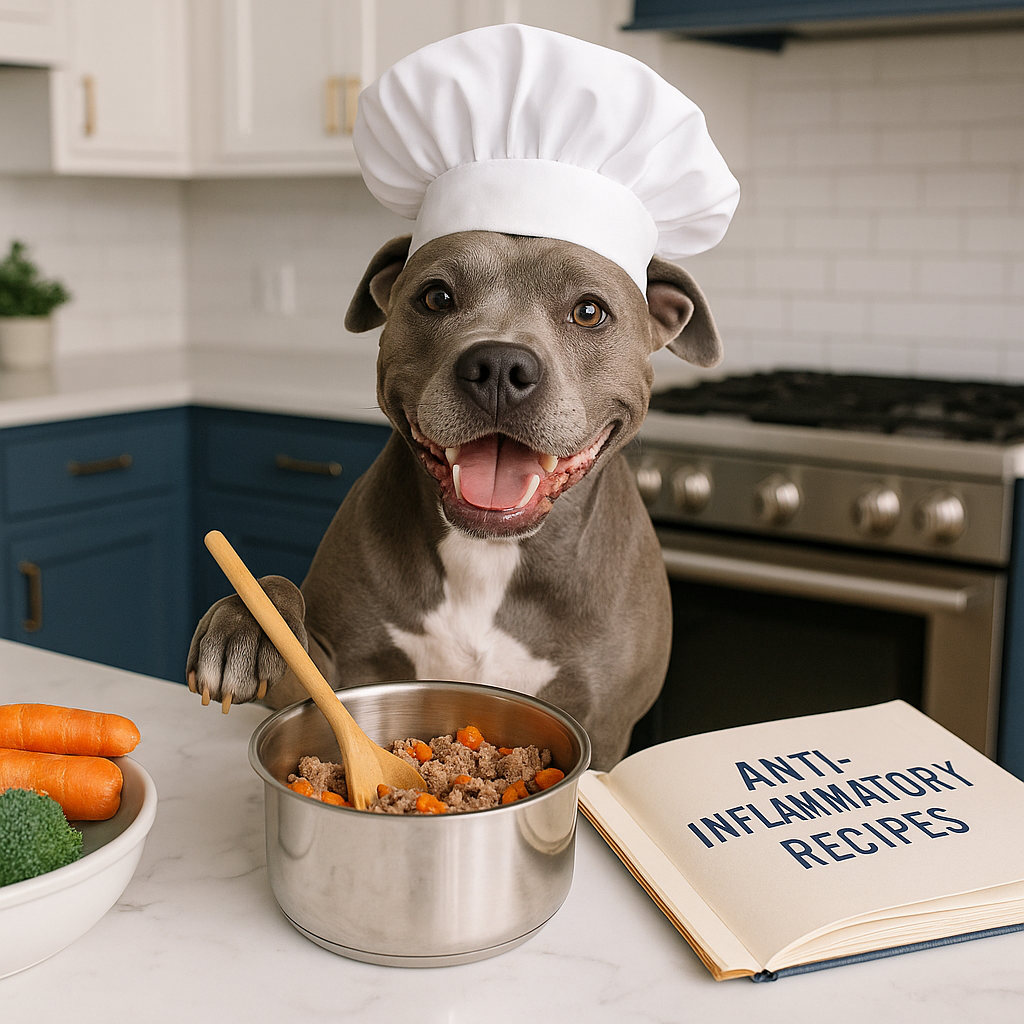
When DIY Isn't Enough Already tried the basics? If this is happening with your dog and you're still stuck, I can help you figure out what deserves attention next. Want reliable education, live Q&A, and member resources? Explore Membership →
Request a Discovery Callback →