Senior Dog Health & Longevity | Nutrition, Mobility & Natural Support
Aging Is Not a Disease
A senior dog is not simply an adult dog with more candles on the birthday cake. Their nutritional needs change. Muscle changes. Digestion changes. Hormones, circulation, cognition, mobility, sleep, recovery and the way they tolerate food can all change too.
That does not mean every change should be blamed on age.
My goal with senior dogs is to preserve as much strength, comfort, curiosity, mobility and quality of life as possible—while identifying problems early enough that we still have something to work with.
Nutrition is a huge piece of that. So are movement, muscle, brain support, pain management, essential oils, herbs, homeopathy, PEMF, laser, massage, lymphatics, low-tox living and knowing when something deserves a closer look.
Senior wellness is not about keeping a dog alive at any cost. It is about helping them continue to participate in their own life for as long as their body allows.
Two of My Dachshunds Lived Beyond 20
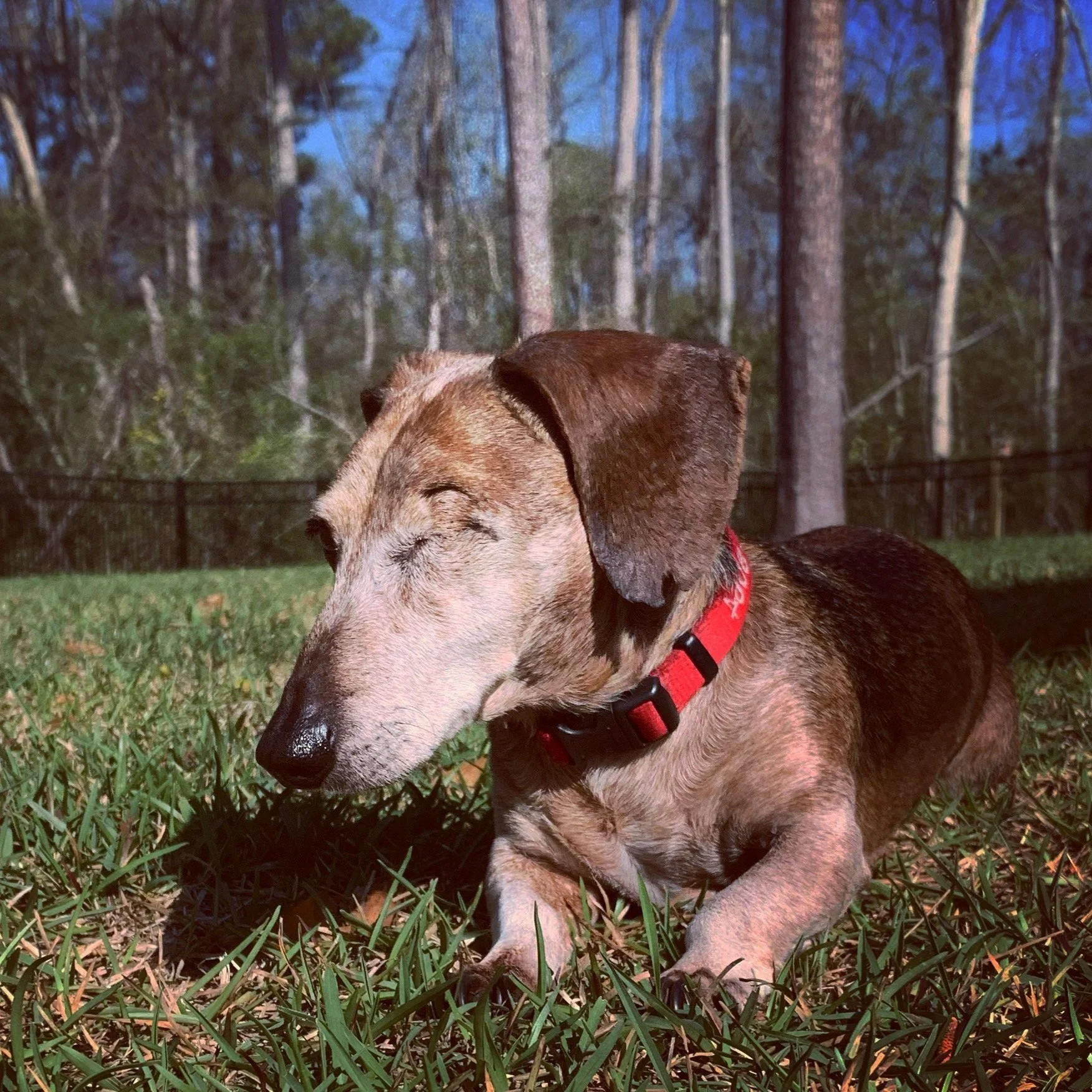
Howie and Huey both lived beyond twenty years old.
I am not going to tell you there was one magic food, herb, oil, supplement or therapy that made that happen. There wasn't.
What did matter was continuing to adjust what I was doing as they changed.
They ate raw food for years. Later, gently cooked food made more sense for their older bodies, so that is what I fed.
That lesson carries into almost everything I do with senior dogs: feed and support the dog standing in front of you, not the dog—or the philosophy—that worked perfectly five years ago.
What Is Actually Changing in Your Senior Dog?
“She's getting old” tells me very little. I want to know what is changing.
Eating & Digestion
Less appetite, more pickiness, reflux, nausea, constipation, diarrhea, weight change or a sudden preference for warmer or softer food.
Dog Won't Eat? →Muscle & Mobility
Difficulty rising, less jumping, slipping, stiffness, slower walks, hind-end weakness or visible muscle loss.
Mobility Support →Brain & Behavior
Pacing, staring, altered sleep, getting stuck, anxiety, confusion, house-training changes or seeming less connected.
Cognitive Changes →Weight & Body Condition
Older dogs can gain fat while losing muscle, or become too thin because of illness, poor appetite or reduced digestion.
Senior Nutrition →Recovery
Older dogs may take longer to recover from illness, surgery, overexertion or periods of poor intake.
Lumps, Organs & Disease
New masses, increased thirst, urinary changes, coughing, weakness, breathing changes or altered bloodwork deserve attention—not a shrug because the dog is old.
The Foundations of Healthy Aging
Eat Well
Maintain adequate protein, calories, hydration and enjoyment of food while adjusting texture and preparation as the dog changes.
Senior Dog Nutrition →Keep Muscle
Muscle protects mobility, balance, metabolic health and independence. Older dogs need reasons and opportunities to keep using it.
Mobility & Muscle →Keep Moving
Movement supports circulation, lymphatics, joints, digestion, cognition and quality of life—even when movement needs to be adapted.
Movement & Supportive Modalities →Support the Brain
Nutrition, MCTs, sleep, enrichment, pain control and natural nervous-system support all belong in the cognitive-health conversation.
Senior Brain Health →Reduce Unnecessary Burden
Older bodies may have less reserve. I pay attention to environmental exposure, unnecessary chemicals and the total burden we ask the body to process.
Low-Tox Living →Notice Changes Early
The earlier we notice appetite loss, muscle wasting, cognitive changes, pain or organ changes, the more options we usually have.
Find Resources by Concern →Senior Dog Nutrition: Don't Take Nutrition Away Because the Dog Got Old
One of the biggest mistakes I see is assuming that an older dog automatically needs less protein, bland food or a generic “senior” diet.
Senior dogs need enough usable protein to help maintain muscle. They need calories appropriate for the body in front of us. They need hydration. They need digestibility. And they need food they are actually willing to eat.
Sometimes that means changing preparation style.
A dog who thrived on raw food for years may eventually prefer warm, gently cooked food. A dog who once ate anything may begin caring very much about texture, temperature and variety.
Old dogs are Yin dogs: warm their food, their bones and their spirit.
At eighteen, nineteen or twenty, the theoretically perfect food is not useful if the dog refuses to eat it.
Inflammaging: When Aging and Inflammation Intersect
Aging is associated with changes in immune regulation and inflammatory signaling. This is sometimes referred to as inflammaging.
That does not mean inflammation causes every problem an older dog develops. But chronic low-grade inflammation can become part of the bigger picture when we are thinking about mobility, cognition, metabolic health, recovery and resilience.
This is one reason my senior plans are rarely limited to treating symptoms one at a time.
Keep the Senior Dog Moving
Mobility is not simply “Does my dog have arthritis?”
I look at joints, muscles, spine, nerve function, pain, compensation, body weight, grip, confidence and how much usable strength the dog still has.
Muscle
Aging dogs can lose muscle quickly, especially after illness or inactivity. Protein and safe strength-building matter.
Comfort
Pain affects far more than walking. It can affect sleep, appetite, cognition, mood and willingness to interact.
Supportive Modalities
PEMF is one of the modalities I use often with senior dogs, especially around mobility, comfort and recovery. Cold laser, massage, essential oils, lymphatic work and appropriate movement may also belong in the plan.
Support movement before every walk becomes difficult.
I would rather maintain movement and muscle while a senior dog is still functioning well than wait until weakness and compensation are firmly established.
This is where modalities such as PEMF can be especially useful: they can fit alongside nutrition and movement without requiring a frail or sore senior to perform strenuous exercise.
Support the Aging Brain
Pacing at night, staring, seeming lost, getting stuck behind furniture or suddenly becoming anxious are not changes I want to dismiss with “he's just old.”
I also do not assume every behavioral change is canine cognitive dysfunction.
Pain, hearing loss, vision changes, urinary urgency, medications, poor sleep and other medical issues can look very similar.
Nutrition
Brain health still starts with food, adequate calories, essential fats and maintaining a stable nutritional foundation.
MCT Support
MCTs can be one part of the nutritional strategy I consider for aging brain and cognitive support.
MCT Oil for Dogs →Whole Nervous System
Essential oils, enrichment, good sleep, appropriate movement, comfort support and other whole-body modalities may belong in the bigger plan.
Cancer Awareness & Organ Health in Senior Dogs
Cancer, kidney disease, liver changes, heart disease, endocrine disease and other chronic conditions become more common as dogs age.
That does not mean I spend every day hunting for disease.
It means I pay attention to changes and use appropriate wellness testing to establish trends before a dog is obviously sick.
Know Their Normal
Body weight, muscle condition, appetite, thirst, stools, urine, energy, breathing and behavior all give useful information.
Watch Trends
A single lab result is one snapshot. Trends over time can tell a much more useful story.
Don't Ignore Lumps
New or changing masses deserve evaluation. “She's old” is not enough information to tell us what a lump is.
Quality of life and longevity are not opposites.
Supporting longevity means protecting function and quality of life—not chasing a number on the calendar.
Natural Support for Senior Dogs
I do not expect one modality to do everything. Senior dogs often benefit from several complementary tools used for different reasons.
| Tool | Where It May Fit | Go Deeper |
|---|---|---|
| Nutrition | Muscle, weight, digestion, hydration, appetite, brain support and overall resilience | Senior Nutrition → |
| PEMF | Mobility, comfort, recovery, relaxation and maintaining function | Mobility Support → |
| Essential Oils | Mobility, cognition, nervous system, sleep, appetite, nausea, circulation and comfort | Senior Dog Oils → |
| Herbs | Digestive, cognitive, circulatory, organ and whole-body support based on the individual dog | Herbs for Senior Dogs → |
| Homeopathy | Individualized support based on the dog's complete symptom picture | Homeopathy → |
| Cold Laser | Mobility, localized comfort, recovery and tissue support | Mobility Support → |
| Massage | Muscle tension, compensation, circulation, comfort and body awareness | Mobility Support → |
| Lymphatic Support | Movement, circulation and whole-body fluid dynamics | Lymphatic Drainage → |
The goal is not to collect more therapies. The goal is to choose the right support for the problem the dog is actually experiencing.
Low-Tox Living Becomes Even More Relevant With Age
I cannot eliminate every chemical, pollutant, medication or environmental exposure from a dog's life—and that is not the goal.
I do think it makes sense to reduce unnecessary exposure when we can, especially in a dog whose liver, kidneys, immune system and overall reserve may already be working harder.
I look at the cumulative picture: food, household products, lawn and pest chemicals, unnecessary medications, parasite products and the dog's individual health history.
Changes I Would Not Automatically Dismiss as Aging
- Sudden or persistent loss of appetite
- Rapid weight loss
- Visible muscle wasting
- New weakness or collapse
- Major changes in thirst or urination
- New coughing or breathing changes
- Persistent vomiting or diarrhea
- Sudden confusion or behavior change
- New nighttime pacing
- Significant mobility decline
- Persistent pain
- New or rapidly changing lumps
- Pale, gray, blue or yellow gums
- A dog who simply seems markedly different
Senior dogs often need earlier investigation, not less.
Their reserve may be lower and they may compensate for disease quietly. By the time a very old dog looks obviously sick, the problem may have been developing for some time.
Healthy Aging Is Bigger Than One Senior-Dog Article
Nutrition, muscle, movement, cognition, organ health, cancer awareness, PEMF, essential oils, herbs, homeopathy, low-tox living and proactive monitoring all overlap.
That is why I created deeper longevity resources rather than expecting one page to answer every question about an aging dog.
Where Should You Go Next?
My Dog Isn't Eating
Start with nausea, pain, food quality, dental changes, illness and whether the food itself needs to change.
Appetite Support →My Dog Is Weak or Stiff
Look at muscle, joints, spine, pain, PEMF, movement and supportive therapies.
Mobility Support →My Dog Seems Confused
Look at cognition, sleep, pain, sensory changes, MCTs and nervous-system support.
Cognitive Support →I Want Better Nutrition
Start with protein, muscle, hydration, calories, food preparation and what your senior is actually willing to eat.
Senior Dog Nutrition →I Want Natural Support
Explore oils, herbs, homeopathy, PEMF, lymphatics and the other modalities that may fit your dog.
Use the Resource Finder →I Need a Bigger Plan
If several things are changing at once, it may be time to step back and look at the whole dog rather than one symptom.
Personalized Support →Learn, Go Deeper or Get Individual Help
Keep Learning
Use the public articles and Resource Finder to follow the specific symptoms or concerns you are seeing.
Use the Resource Finder →Go Deeper
Membership is where I can go further into specific tools, protocols, remedies and how I think through what belongs together.
Explore Membership →Need Help With Your Dog?
If your senior has several diagnoses, medications, changing appetite, mobility issues or a complicated health picture, individual support may make more sense.
View Services →Not sure whether you need individual support?
If you want to talk first, the contact page is for a discovery callback. If you are ready to get started, use the intake.
Frequently Asked Questions
At what age is a dog considered senior?
There is no single birthday that makes every dog senior. Size, breed, genetics and individual health matter. Large and giant breeds often show age-related changes earlier than smaller dogs.
I care less about the label than I do about changes in muscle, mobility, digestion, appetite, cognition and overall resilience.
Should senior dogs eat less protein?
Not automatically. Older dogs need adequate usable protein to help preserve lean muscle. Certain medical conditions may require individual adjustments, but age by itself is not a reason to take good nutrition away.
Is it normal for senior dogs to lose muscle?
Muscle loss becomes more common with age, but that does not mean we should ignore it. Nutrition, activity, pain, neurologic changes and underlying disease can all affect muscle.
Maintaining muscle is one of my biggest senior-health priorities.
Where does PEMF fit into senior dog care?
PEMF is one of the supportive modalities I use often with senior dogs, particularly around mobility, comfort, recovery and maintaining function.
I generally think about it as one piece of the larger mobility and whole-body plan rather than as a stand-alone senior protocol.
Why won't my senior dog eat?
Older dogs may change their preferences for temperature, texture and preparation style, but appetite loss can also be associated with nausea, pain, dental disease, medications, kidney or liver changes, cancer, constipation and many other problems.
My senior dog used to eat raw but now prefers cooked food. Is that okay?
Yes. Some dogs who did beautifully on raw food for years later prefer or better tolerate gently cooked food.
Changing preparation style to fit the current dog is not failure.
What natural support do you use for senior dog mobility?
Depending on the dog, my mobility toolbox may include nutrition, protein and muscle support, PEMF, essential oils, cold laser, massage, lymphatic work, weight management and appropriate movement.
What natural support do you use for senior dog cognition?
I may look at food, MCT oil, sleep, enrichment, pain, sensory changes, essential oils, herbs, homeopathy and other nervous-system support based on what the dog is showing.
Is slowing down always just part of getting old?
No. Arthritis, spinal disease, pain, muscle loss, heart or lung changes, endocrine disease, anemia, cancer and other health issues may all look like a dog who is simply “slowing down.”
A meaningful change deserves context.
Support the Senior Dog You Have Today
The plan that worked at ten may need to change at fourteen. The food that worked at twelve may need to change at eighteen. And the tools I use today may not be the tools I need six months from now.
That is normal.
Senior care is about paying attention, adapting early and preserving function wherever we can.
For me, that means good food, muscle, movement, brain support, PEMF, essential oils, herbs, homeopathy, massage, lymphatics, low-tox living and appropriate veterinary care all have a place at the table.
Educational Note
This information is provided for educational and wellness-support purposes and does not replace veterinary diagnosis or treatment.
Sudden weakness, collapse, breathing difficulty, persistent vomiting, significant appetite loss, rapidly changing lumps, marked pain, neurologic changes or other major changes in a senior dog should be evaluated appropriately.
For pet parents near North Myrtle Beach and the surrounding Grand Strand area, I offer senior dog nutrition and natural wellness support focused on mobility, cognitive health, kidney and liver awareness, inflammation, digestion, muscle maintenance, and quality of life. Aging is not a diagnosis, and senior dogs deserve more than “he’s just old.”
When DIY Isn't Enough Already tried the basics? If this is happening with your dog and you're still stuck, I can help you figure out what deserves attention next.
Request a Discovery Callback →