

Essential Oils Class for Dogs | Online Canine Aromatherapy Course
Learn How to Use Essential Oils for Your Dog Safely and Confidently
You may already have essential oils sitting in a cabinet. You may use them for yourself and wonder whether they could also support your dog. Or perhaps you have searched online and found so many conflicting warnings, recipes and “safe oil” lists that you are now less confident than when you started.
One person says lavender is safe for every dog. Another says you should never diffuse anything around pets. Someone else posts a recipe containing six oils, no dilution instructions and enough confidence to make it sound official.
No wonder dog parents are confused.
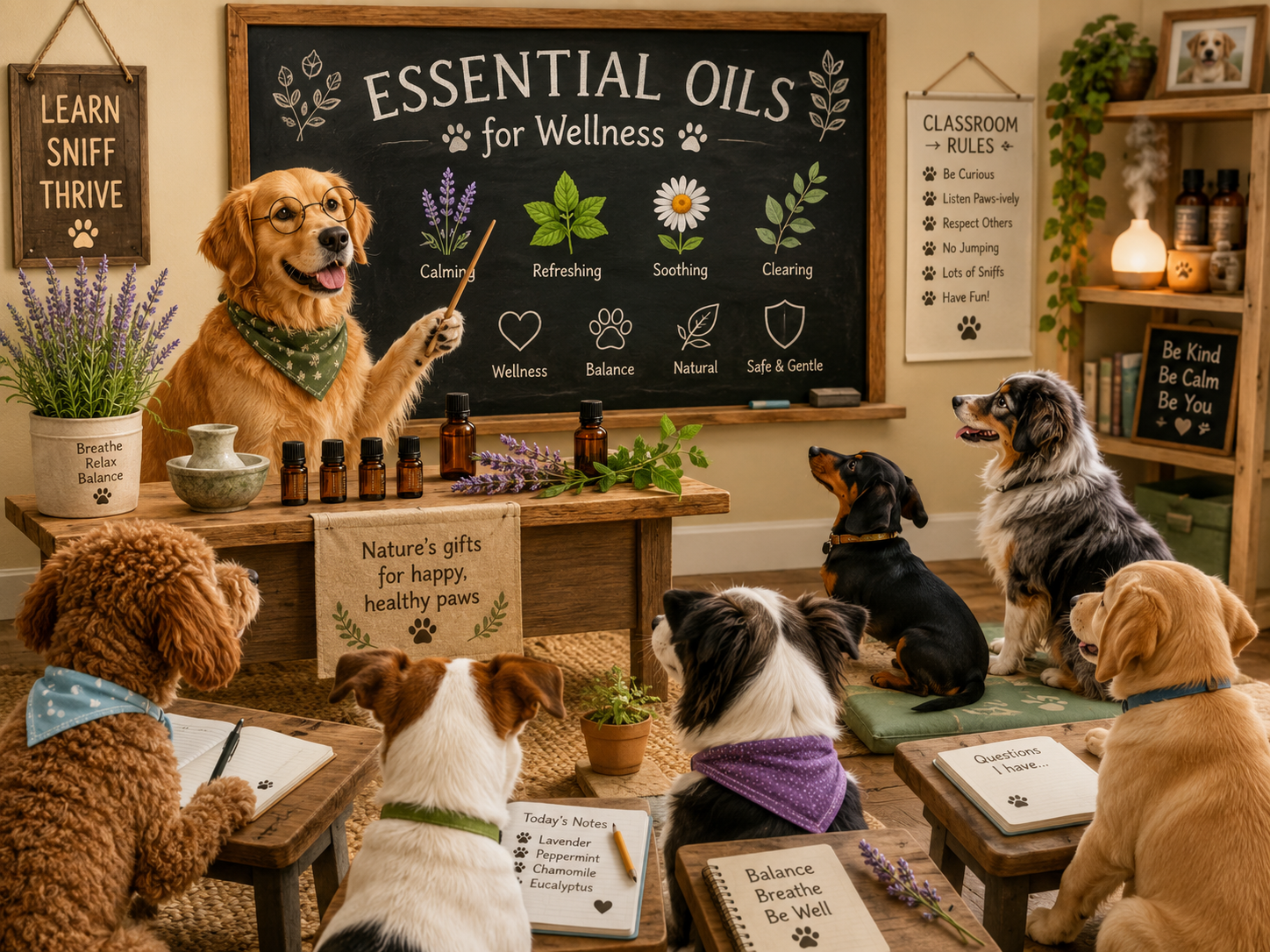
This self-paced online essential oils class for dogs will help you understand what essential oils are, how they may be used with dogs and how to make safer, more thoughtful choices for the individual dog in front of you.
See your vet for a diagnosis and then you and I can collaborate on a custom strategy for your dog’s health.
This Is More Than a List of Essential Oils Safe for Dogs
A list may tell you the name of an oil. It cannot tell you whether that oil is appropriate for your dog, the situation or the way you plan to use it.
Essential oil safety for dogs depends on more than whether an oil appears on a green or red chart. The quality of the oil, concentration, application method, frequency, health history and individual sensitivity can all change the answer.
This canine aromatherapy course helps you move beyond random recipes and fear-based advice so you can begin using essential oils with more knowledge, purpose and confidence.
You will learn how to think through questions such as:
Should this oil be diffused, applied topically or used another way?
Does it need to be diluted?
Which carrier may be appropriate?
How frequently should it be used?
Is this suitable for a puppy, senior or medically complicated dog?
What signs suggest that your dog likes or dislikes the oil?
When is a simple home remedy reasonable?
When does your dog need veterinary care or individualized support?
The goal is not to memorize every essential oil. It is to understand enough to make better decisions.
What You Will Learn
Essential Oil Quality and Safety for Dogs
Not every bottle labeled “pure” is the same, and marketing language does not always tell you what is actually inside the bottle.
We will discuss what to consider when choosing essential oils for dogs, including sourcing, plant identification, extraction, quality and the information an essential oil company should be able to provide.
You will also learn why essential oil safety involves the entire situation—not one ingredient pulled out of context.
A Little Essential Oil Chemistry Without the Headache
You do not need to become a chemist before using aromatherapy for dogs. You should, however, understand why different essential oils behave differently.
We will look at essential oil chemistry in practical terms so you can begin to understand why one oil may be chosen for emotional support while another may be considered for skin, respiratory, digestive or musculoskeletal support.
No lab coat required.
How to Use Essential Oils on Dogs
This section covers the primary ways essential oils may be shared with dogs, including aromatic and topical application.
You will learn how application method changes exposure, why more is not automatically better and why allowing the dog some choice can be an important part of aromatic use.
We will also discuss considerations for diffusing essential oils around dogs, including ventilation, duration, room size, sensitivity and multi-pet homes.
Essential Oil Dilution and Application
Many dog parents are handed a recipe but never taught why it was diluted that way—or whether it fits their dog at all.
The class explains dilution, carrier oils and application considerations in a way that is practical for home use.
You will learn why the plan may change based on:
The essential oil being used
The reason it is being used
The application area
The dog’s age and size
Current health conditions
Medications and supplements
Previous reactions or sensitivity
How often the remedy may be needed
This gives you a better foundation than blindly copying a recipe created for somebody else’s dog.
Condition-Specific Essential Oil Support
Essential oils are not a substitute for a diagnosis or necessary veterinary treatment. They may, however, become one part of a broader support plan.
The course explores general aromatherapy considerations for common situations dog parents encounter, which may include:
Anxiety, fear and emotional overwhelm
Fireworks and thunderstorms
Skin and coat support
Ear and paw care
Muscles, joints and physical comfort
Digestive discomfort
Respiratory comfort
Seasonal support
Senior-dog wellness
Recovery and rest
Everyday first-aid situations
You will learn how to consider the purpose of the remedy without assuming every dog with the same symptom needs the same oil.
Essential Oil Remedies and Home Kits
A cabinet full of essential oils is not the same as knowing what to reach for.
You will learn how to create practical essential oil remedies and organize a useful home kit for your dog. The focus is on remedies you understand and are comfortable using—not collecting bottles that looked interesting during a late-night shopping spiral.
Reference guides are included so you do not have to rely on memory every time something comes up.
Raindrop Technique for Dogs
The course introduces Raindrop Technique and how essential oils may be incorporated into a supportive wellness experience for dogs.
You will learn about the purpose of Raindrop, general application considerations and why the technique should be adapted for the individual dog rather than treated as a rigid recipe.
Raindrop may be considered as part of broader support for physical comfort, relaxation, emotional balance and overall wellness.
Why Learn Canine Aromatherapy From Me?
I am a Certified Animal Aromatherapist and Holistic Canine Health Practitioner with years of experience using essential oils as part of whole-dog wellness support.
I do not look at essential oils in isolation.
I consider the dog’s diet, medications, health history, stress patterns, age, sensitivities, environment and other support already being used. What I know is that the best essential oil plan is not always the one with the most oils. It is the one that makes sense for that dog.
My role is to help you understand the oils, ask better questions and feel more confident using them—without pretending a bottle replaces proper veterinary care.
This Online Essential Oils Class Is for You If…
You want to use essential oils for your dog but do not know where to begin.
You already own oils but are unsure which ones are appropriate for dogs.
You are nervous about essential oil safety and want grounded education rather than blanket warnings.
You want to understand dilution and application instead of copying random recipes.
You are interested in natural remedies for common dog-care situations.
You want to build an essential oil kit you will actually know how to use.
You want reliable reference materials you can return to later.
You value having an experienced educator available when your dog’s situation becomes more complicated.
This Class Is Not…
This class is not a professional animal aromatherapy certification and does not qualify a student to diagnose or treat animals professionally.
It is practical education for dog parents who want to understand how essential oils may be used safely and thoughtfully at home.
It is also not a replacement for veterinary diagnostics, emergency treatment, surgery, stabilization, pain control or necessary medication.
Natural support works best when we understand what we are supporting.
Learn at Your Own Pace
This is a self-paced online essential oils course for dog owners.
You can work through the material on your own schedule and return to the lessons and reference guides when you need them. You do not have to absorb everything in one sitting, and there will not be a pop quiz waiting to judge you for forgetting a chemistry term.
The purpose is to help you use the information—not merely finish the course.
Stop Guessing and Start Understanding
Essential oils can become valuable tools in your dog’s wellness cabinet, but confidence should come from education—not from whoever made the loudest social-media post.
This class will help you understand essential oils for dogs, use them with greater care and begin building remedies that have a clear purpose.
You will also know when a general remedy may be enough and when your dog needs individualized support.
[ENROLL IN THE ESSENTIAL OILS CLASS]
Need More Personalized Support?
A class can give you a strong foundation. It cannot account for every diagnosis, medication, organ issue, sensitivity or complicated health history.
When you need help deciding how essential oils may fit into your dog’s larger health strategy, you can work with me privately. Together, we can consider the whole dog rather than guessing from one symptom.
essential oils for dogs | online essential oils class for dogs | canine aromatherapy course | aromatherapy for dogs | essential oil safety for dogs | how to use essential oils on dogs | essential oils course for dog owners | safe essential oils for dogs | essential oil remedies for dogs