

Turmeric For Dogs
You start noticing the little things…
Your dog hesitates before jumping. Walks get shorter. That “bounce” just isn’t there like it used to be.
I’ve been there with my own dogs… and this is usually where most pet parents get handed a joint supplement and sent on their way.
But here’s the piece that often gets missed:
Supporting joints and actually helping your dog feel better are not always the same thing.
And this is exactly where turmeric starts to stand out.
What Is Turmeric?
Turmeric is a bright yellow root (you’ve probably used it in your kitchen) that contains an active compound called curcumin.
Curcumin is where the magic happens…
Supports a balanced inflammatory response
Helps with joint discomfort and stiffness
Acts as a powerful antioxidant
Supports overall cellular health
This isn’t just a “joint supplement.”
This is whole-body support — especially for dogs dealing with inflammation.
What This New Study Actually Showed (And Why It Matters)
A 6-week study compared:
Turmeric extract
vsGlucosamine + Chondroitin (your typical joint combo)
Results:
Dogs on turmeric had less pain and limping
Better movement and weight-bearing
Improved activity levels
Better overall quality of life
Both groups improved…
…but turmeric consistently performed better.
Here’s the part most people overlook:
Joint supplements like glucosamine focus on cartilage support
Turmeric focuses on inflammation and pain
Those are two completely different goals.
And if your dog is still uncomfortable…
you already know which one matters most in the moment.
Why This Changes How We Should Think About Joint Support
Most conventional approaches go straight to:
But here’s the reality I see in practice…
Cartilage support = long game
Pain and inflammation = what your dog feels right now
If we only support structure but ignore inflammation…
we’re missing half the picture.
This is why turmeric can be such a valuable piece of the puzzle.
Symptoms Where Turmeric May Be Helpful
You might consider adding turmeric support if your dog is showing:
Slowing down on walks
Stiffness getting up
Limping or favoring a leg
Reluctance to jump or climb stairs
General signs of inflammation (skin, gut, joints)
This isn’t just about arthritis…
inflammation shows up in a lot of ways.
What About Black Pepper — Is It Really Needed?
You’ve probably heard this before:
“Turmeric only works if you add black pepper.”
That comes from human research showing that piperine (from black pepper) increases curcumin absorption.
But here’s where we need to look at dogs a little differently…
Dogs process compounds differently than humans
Many high-quality turmeric products are already formulated for absorption
Black pepper, thought not toxic, can be irritating for some dogs (especially gut-sensitive ones), you may need to experiment.
So no…
it’s not always required.
In fact, many well-formulated canine products:
Use fats or oils to improve absorption
Use enhanced curcumin extracts
Bottom line:
You don’t need to force black pepper into your dog’s routine to make turmeric “work.”
What Is Golden Paste
Golden Paste is a traditional way of preparing turmeric using:
Turmeric
A fat source (like coconut oil)
Black pepper
The fat helps with absorption, which is why this method became popular.
You’ll see a lot of pet parents making this at home…
but consistency, sourcing, and dosing can get tricky fast.
This is where I usually see better results with:
Professionally formulated turmeric blends
Consistent quality and absorption support built in
Natural Support Options to Pair With Turmeric
Turmeric works best when it’s not doing all the heavy lifting alone.
Think in layers:
Nutrition
Fresh, less processed diets
Anti-inflammatory protein choices
Balanced fats (omega-3s)
Herbs
Boswellia
Anti-inflammatory herbal blends
Liver-supporting herbs (important for processing inflammation)
Essential Oils
Oils that support inflammation and mobility (Frankincense, Copaiaba)
Topical or internal use depending on your approach
Functional Mushrooms
Help modulate immune response
Support long-term inflammation balance
Common Conventional Options (And Their Limits)
Most dogs are offered:
NSAIDs (for pain relief)
Glucosamine/chondroitin (for joint structure)
These absolutely have their place…
but they don’t always address the full picture.
NSAIDs = symptom relief
Joint supplements = structural support
Neither fully addresses inflammation at a deeper level.
Top 5 Things You Can Start Doing Today
If your dog is slowing down, start here:
Add anti-inflammatory foods into meals (fresh toppers go a long way)
Consider introducing turmeric in a dog-appropriate form
Evaluate your current joint supplement — is it helping how your dog feels?
Support gut health (inflammation often starts there)
Reduce environmental toxins that contribute to inflammation
Bonus: in addition to turmeric do a quick search on my site for “joint” and “pain” for more options.
Visit https://welloiledk9.com/affilaite-links for access to Fullscript to order Turmeric Tincture.
In Traditional Chinese Veterinary Medicine, turmeric is considered warming. That can be helpful for cold, stiff, or sluggish dogs, but it may not be the best fit in large amounts for dogs who already run “hot,” especially those with heat signs such as excessive panting, red skin, inflammation, restlessness, or heat intolerance. In those dogs, use turmeric thoughtfully and balance it with cooling foods and herbs when appropriate.
To better understand warming, cooling, and neutral foods—and how to recognize whether your dog tends to run hot or cold—read my guide to TCVM Food Energetics for Dogs.
Turmeric
Supporting The Natural Inflammatory Response With Turmeric For Dogs
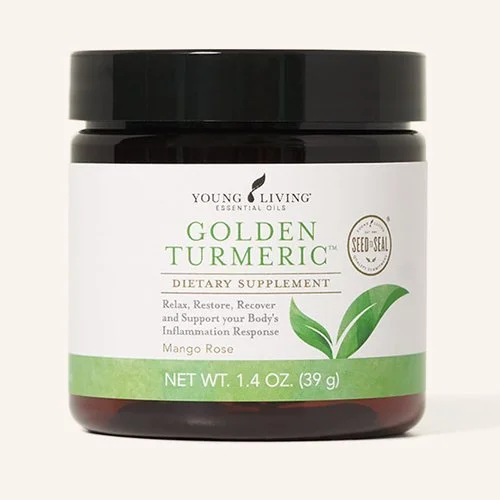
If you prefer ready-made options, you can explore turmeric-based Golden Turmeric.
Yes, Golden Turmeric is safe for dogs. It’s a great source of prebiotics & antioxidants as well.
When DIY Isn't Enough Already tried the basics? If this is happening with your dog and you're still stuck, I can help you figure out what deserves attention next.
Request a Discovery Callback →