
Vagus Nerve in Dogs: Anxiety, Digestion & Stress Support
If your dog struggles with anxiety, reactivity, sound sensitivity, digestive upset, poor stress recovery, or that “always on edge” feeling, the nervous system may be part of the picture.
The vagus nerve is one of the main communication lines between the brain, gut, heart, lungs, and immune system. It helps the body shift out of fight-or-flight and back into rest, digest, repair, and recover mode.
That does not mean every anxious dog needs a “vagus nerve reset.” And it definitely does not mean we should start poking, icing, shocking, or over-handling dogs who are already stressed.
But it does mean this is a missing piece worth understanding — especially for dogs with chronic stress, gut issues, noise sensitivity, trauma history, inflammation, or poor recovery after excitement.
What Is the Vagus Nerve?
The vagus nerve is the longest cranial nerve in the body. It runs from the brainstem through the neck, chest, and abdomen.
It is a major part of the parasympathetic nervous system, often called the “rest and digest” system.
This system helps the body:
Calm down after stress
Regulate digestion
Support normal heart rate and breathing
Communicate between the gut and brain
Support immune balance
Move into repair and recovery
When the vagus nerve is functioning well, your dog may recover from stress more easily, digest food more comfortably, and settle more naturally.
When the nervous system is dysregulated, the body may stay stuck in fight-or-flight longer than it should.
Can You Reset Your Dog’s Vagus Nerve?
Not exactly.
The vagus nerve is not a light switch.
You are not flipping your dog from chaos to calm with one ice pack, one massage point, or one essential oil.
A better goal is to support vagal tone over time. That means helping your dog’s body become more flexible, more resilient, and better able to shift out of stress and back into rest.
Think of it less like a “reset button” and more like rebuilding the body’s ability to recover.
Why the Vagus Nerve Matters for Dogs
A healthy nervous system helps your dog respond to life without staying stuck in survival mode.
The vagus nerve plays a role in:
Digestion
Stress recovery
Gut-brain communication
Immune balance
Heart rate regulation
Breathing patterns
Inflammation response
Emotional regulation
Recovery after illness, injury, or excitement
This is why nervous system support matters for more than anxiety.
A dog who cannot settle may also struggle to digest.
A dog with chronic gut issues may also be more emotionally reactive.
A dog living in constant stress may have a harder time healing.
It is all connected. Annoying, but connected.
Signs Your Dog May Be Stuck in Fight-or-Flight
Not every symptom below means “vagus nerve problem.”
But these patterns can suggest your dog’s nervous system needs support.
Your dog may need more nervous system support if you notice:
Trouble settling
Pacing or restlessness
Excessive panting when not hot
Reactivity to dogs, people, sounds, or movement
Sound sensitivity
Separation distress
Stress diarrhea
Vomiting during stress
Poor appetite during stressful events
Digestive upset after excitement
Hypervigilance
Overreaction to small changes
Poor recovery after walks, visitors, grooming, vet visits, storms, or travel
Chronic tension through the neck, jaw, shoulders, or back
Poor sleep
Slow recovery after illness or injury
This is where many pet parents get frustrated.
They think they have a behavior problem.
Sometimes they do.
But sometimes they also have a nervous system, gut, pain, inflammation, hormone, or lifestyle problem sitting underneath the behavior.
Training matters. But the body has to be able to participate.
The Gut-Brain Connection
The vagus nerve helps the gut and brain communicate.
That means gut health and emotional health are not separate conversations.
A dog with chronic digestive issues may have a nervous system that is constantly getting stress signals from the gut.
A dog with chronic stress may have digestion that never gets the full “rest and digest” message.
This is why I care so much about food, gut health, microbiome support, hydration, and digestion when we are looking at anxiety, reactivity, and stress recovery.
You cannot supplement your way out of a nervous system that is constantly being irritated by the wrong food, chronic inflammation, poor digestion, or an unhappy gut.
And you cannot train your way out of every gut-brain problem either.
Both matter.
What Can Disrupt Vagus Nerve Function?
Several things may interfere with healthy nervous system regulation.
Common contributors may include:
Chronic stress
Anxiety
Trauma
Pain
Poor gut health
Processed food
Food intolerances
Microbiome imbalance
Chronic inflammation
Environmental toxins
Poor sleep
Overstimulation
Lack of decompression
Neck, jaw, shoulder, or spinal tension
Repeated stressful events without enough recovery time
This is why the answer is rarely one thing.
It is usually not just “give calming chews.”
It is also not just “do more training.”
For many dogs, the body needs a better foundation.
Gentle Ways to Support Your Dog’s Nervous System
The goal is not to force calm.
The goal is to help your dog’s body feel safe enough to shift into calm.
That distinction matters.
A dog who is scared, reactive, inflamed, nauseous, painful, or overwhelmed does not need more pressure.
They need support that meets the nervous system where it is.
Start With Safety and Predictability
Before you reach for oils, herbs, supplements, or tools, look at your dog’s daily life.
Ask yourself:
Is my dog constantly exposed to triggers?
Does my dog get daily quiet decompression time?
Are we doing too much training and not enough recovery?
Is the household chaotic?
Is my dog sleeping enough?
Are walks helping or making things worse?
Is my dog being pushed into situations they cannot handle yet?
You may also have to look in the mirror.
Some dogs need less stimulation before they can handle more learning.
That does not mean bubble-wrapping your dog forever.
It means stop throwing them into the deep end and calling it socialization, enrichment, or confidence building.
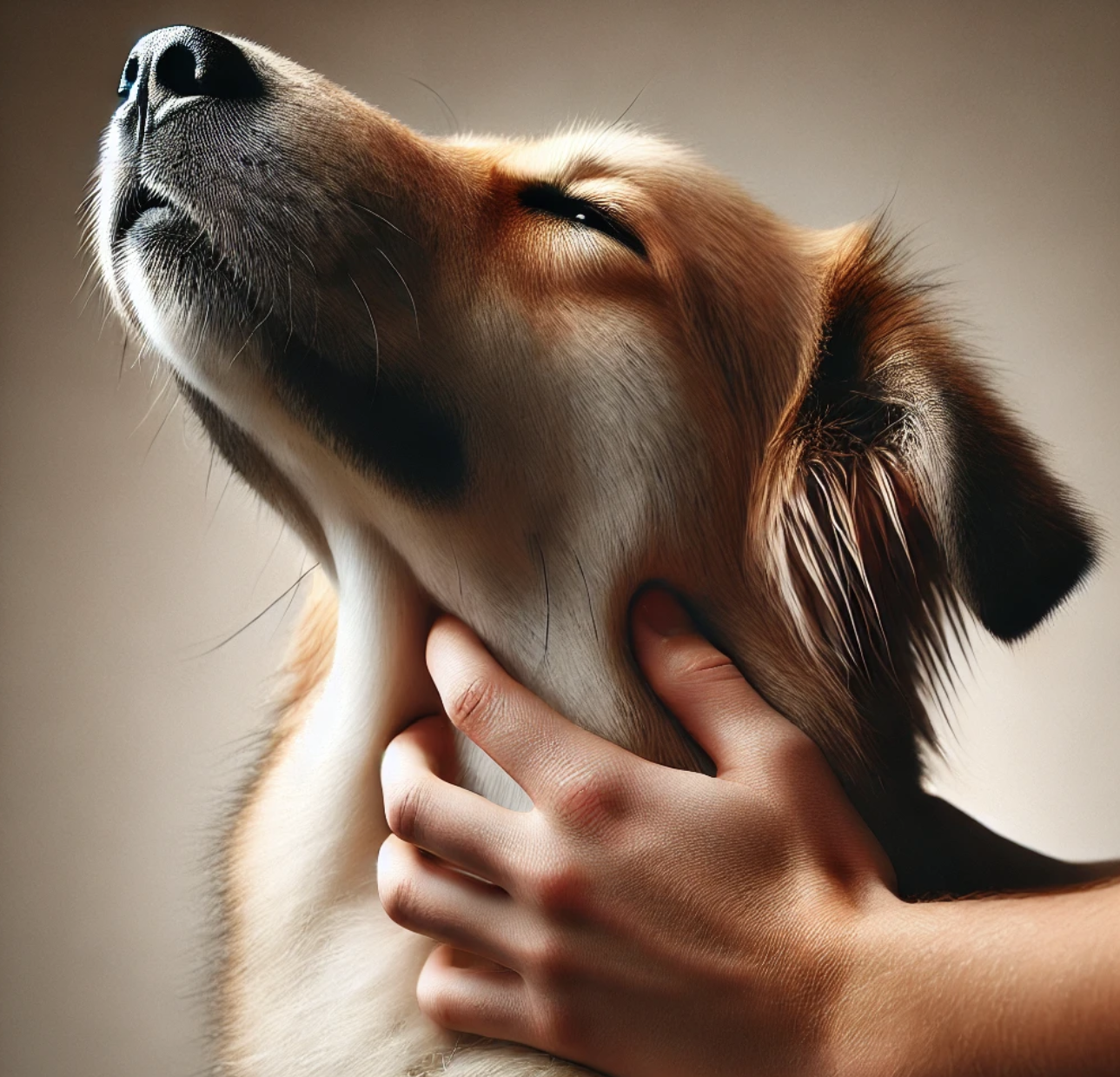
Gentle Touch and Massage
Gentle touch can help some dogs shift into a calmer state.
Focus on areas where many dogs hold tension:
Neck
Jaw
Base of skull
Behind the ears
Chest
Shoulders
Along the spine
Use slow, light pressure.
Watch your dog’s response.
Helpful signs may include:
Soft eyes
Sighing
Leaning in
Slower breathing
Relaxed jaw
Settling or lying down
Stop if your dog moves away, stiffens, turns their head, licks their lips, yawns repeatedly, or seems uncomfortable.
Consent matters. Even with dogs. Especially with dogs.
Acupressure and Bodywork
Acupressure, massage, chiropractic care, cold laser, PEMF, and other bodywork tools may help support nervous system balance, mobility, circulation, and recovery.
For some dogs, neck and jaw tension can be a major piece of the puzzle.
For others, the issue is more emotional, digestive, inflammatory, or pain-related.
This is why I like looking at the whole dog instead of chasing one symptom around the room.
Essential Oils for Nervous System Support
Essential oils can be a beautiful tool for nervous system support when they are used appropriately.
Calming oils may include:
Lavender
Roman chamomile
Frankincense
Copaiba
Cedarwood
Vetiver
These oils may be diffused, used aromatically, or applied properly diluted depending on the dog, the goal, and the situation.
Some techniques also use oils along the spine, neck, or behind the ears to support relaxation and parasympathetic balance.
As always, quality, dilution, method, and the individual dog matter.
More is not better.
Smarter is better.
Cold Therapy
Cold therapy gets tossed around online as a vagus nerve “hack.”
For some dogs, a cool compress near the neck or chest may help calm the nervous system.
For other dogs, it may feel stressful, irritating, or threatening.
That matters.
If you try cold therapy, keep it gentle.
Use a cool compress wrapped in a towel for a short period of time and watch your dog’s response.
Do not force it.
Do not restrain your dog to do it.
Do not use ice directly on the skin.
And please do not turn your already anxious dog into a wellness experiment. They did not sign up for TikTok University.
Sound, Breath, and Co-Regulation
Dogs often respond to the nervous systems around them.
That does not mean you caused your dog’s anxiety.
It does mean your breathing, movement, voice, and energy can either help or add more noise to the room.
Helpful options may include:
Sitting quietly with your dog
Slowing your own breathing
Using a calm voice
Playing calming music
Use Tuning Forks
Humming softly
Creating a predictable relaxation routine
Practicing settle work when your dog is already under threshold
The best time to teach calm is not during the thunderstorm, fireworks, or full-blown meltdown.
That is like trying to teach math during a house fire.
Practice when your dog can still think.
Gut Health Support
Because the vagus nerve connects the gut and brain, gut health belongs in this conversation.
Support may include:
Fresh, species-appropriate food
Moisture in the bowl
Quality protein
Omega-3 support when appropriate
Probiotics
Digestive enzymes
Fermented foods if tolerated
Removing foods that are not working for your dog
Supporting the microbiome after antibiotics
Addressing chronic diarrhea, vomiting, gas, reflux, or food intolerance patterns
If your dog’s gut is a mess, the nervous system may be getting messy signals too.
Clean up the foundation.
PEMF Therapy
PEMF stands for pulsed electromagnetic field therapy.It may help support circulation, recovery, inflammation balance, pain management, and nervous system regulation.
For anxious, tense, aging, painful, or trauma-affected dogs, PEMF may be a useful part of a bigger plan. I have found this technology very effective for myself and many dogs.
What You Can Do Today
Start simple.
You do not need a twenty-step nervous system protocol by Friday.
Try this:
Give your dog more quiet recovery time
Reduce unnecessary exposure to triggers
Add moisture to the bowl
Support digestion and gut health
Use gentle touch if your dog enjoys it
Try calming essential oils appropriately
Practice relaxation when your dog is already calm
Consider PEMF, massage, or bodywork if your dog holds tension or struggles to recover
Pick one or two things.
Do them consistently.
Watch your dog.
Adjust from there.
When This Is Bigger Than Nervous System Support
Some symptoms need veterinary care.
Do not try to handle serious symptoms at home.
Contact your veterinarian promptly if your dog has:
Repeated vomiting
Severe diarrhea
Collapse
Trouble breathing
Seizures
Signs of bloat
Severe pain
Sudden weakness
Abnormal heart rhythm
Pale gums
Blue gums
Severe lethargy
Sudden behavior changes
Loss of appetite that does not improve
Symptoms that are getting worse instead of better
Natural support is not a replacement for appropriate medical care.
It is part of a bigger picture.
Dana’s Notes
The vagus nerve is not just an anxiety topic.
It is a digestion topic.
A stress recovery topic.
A gut-brain topic.
A healing topic.
And for many dogs, it is one of the missing pieces nobody talks about until the dog has already been labeled dramatic, reactive, picky, difficult, sensitive, or “just anxious.”
Your dog’s body is always communicating.
Sometimes behavior is behavior.
Sometimes behavior is pain, gut dysfunction, inflammation, stress overload, poor recovery, or a nervous system that cannot find the off switch.
That is where holistic support can be so helpful.
We are not just asking, “How do I stop this behavior?”
We are asking, “Why is the body stuck here, and how do we help it recover?”
Want more help with anxiety, sound sensitivity, gut health, essential oils, PEMF, and nervous system support?
Join the member forum for deeper conversations, Q&A, and practical support