
Canine Iridology: What Your Dog’s Eyes May Reveal About Whole-Body Health
Most pet parents look into their dog’s eyes and see love, trust, mischief—or the unmistakable belief that dinner should have been served ten minutes ago.
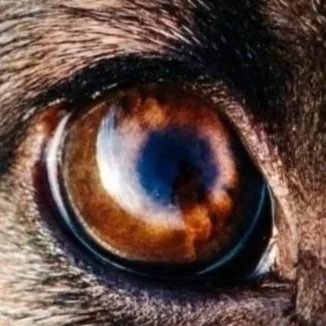
As a Holistic Canine Health Practitioner, I may also look at the color, fibers, markings, rings, and structural patterns within the iris. These observations can add another layer of information to your dog’s overall wellness picture.
Iridology is not used to diagnose disease. It does not replace veterinary examinations, bloodwork, imaging, or other appropriate testing. What it may do is help guide us toward body systems that deserve a closer look, additional questions, or more focused support. When symptoms are vague, testing is inconclusive, or nothing seems to explain why a dog is struggling, iridology may give us a practical starting point by highlighting the body systems and patterns that deserve a closer look.
What Is Canine Iridology?
Iridology is a natural health assessment method based on the idea that the iris—the colored portion of the eye—may reflect constitutional tendencies, inherited strengths and weaknesses, and patterns of stress within the body.
The iris contains visible fibers, pigmentation, rings, openings, lines, and other characteristics. An animal iridologist evaluates these features using an iris chart that divides the eye into regions associated with different areas and systems of the body.
The goal is not to look at one mark and declare that your dog has a disease in a particular organ. That would be an overreach.
Instead, the iris may offer clues that help us decide where to look more closely and which parts of your dog’s health history may be connected.
Iridology Is Not Diagnostic
This distinction is important.
Canine iridology cannot confirm that your dog has:
Liver disease
Kidney disease
Cancer
Parasites
Pancreatitis
Thyroid disease
An infection
An endocrine disorder
A specific toxin stored in a particular organ
Those conditions require veterinary diagnostics.
Iridology may, however, suggest patterns that encourage us to evaluate certain systems more carefully. It may also support observations already showing up through symptoms, diet history, physical changes, laboratory trends, medications, or recurring health problems.
Think of iridology as a way to gather additional clues—not as a crystal ball hiding inside your dog’s eyeball.
What Can Iridology Help Us Explore?
During an iridology assessment, I look at the iris as part of the whole dog. Certain markings or patterns may guide us to ask better questions about several areas of health.
Digestive Function
The area surrounding the pupil is traditionally associated with the stomach and intestinal tract.
Patterns in this region may encourage us to examine:
Chronic loose stool or constipation
Gas, bloating, or reflux
Food sensitivities
Poor nutrient absorption
Repeated antibiotic use
Microbiome imbalance
Appetite changes
Nausea or grass eating
Stool quality and frequency
This does not mean the iris proves that your dog has digestive disease. It may show that digestive history deserves more attention.
Detoxification and Elimination Pathways
The body relies on the liver, kidneys, intestines, skin, lungs, and lymphatic system to process and eliminate metabolic waste and environmental exposures.
Iris patterns may help guide us to consider whether these pathways appear burdened or whether your dog’s ability to eliminate efficiently deserves further evaluation.
That may lead us to review:
Liver enzyme trends
Kidney values
Medication history
Flea, tick, and heartworm preventives
Vaccine history
Household or environmental exposures
Stool frequency
Skin eruptions
Chronic odor
Poor recovery after medications
Hydration and mineral status
This does not automatically mean that your dog needs a detox protocol. Some dogs need nutritional rebuilding, hydration, digestive support, or veterinary stabilization before any type of detoxification strategy should even be considered.
Random detoxing because a supplement ad told you to is not a plan.
Lymphatic Congestion
The lymphatic system helps move cellular waste, support immune function, and maintain healthy fluid balance.
Certain iris patterns may encourage us to consider signs of sluggish lymphatic movement or lymphatic congestion, particularly when the dog also has symptoms such as:
Puffy tissue
Recurrent swelling
Enlarged lymph nodes
Chronic skin problems
Poor circulation
Slow recovery
Sedentary behavior
Recurrent immune challenges
A history of inflammation
Lymphatic support may include movement, hydration, massage, appropriate food choices, bodywork, and other gentle strategies depending on the individual dog.
Parasite Stress
Iridology cannot diagnose worms, protozoa, heartworms, or tick-borne disease.
However, certain iris observations, when combined with symptoms and health history, may lead us to consider whether parasites should be investigated.
That conversation may include:
Stool changes
Mucus or blood in the stool
Poor weight gain
Unexplained weight loss
Scooting
Pot-bellied appearance
Chronic digestive upset
Anemia
Flea exposure
Tick history
Previous parasite infections
Inconsistent or ineffective parasite prevention
Appropriate fecal testing, blood testing, or other veterinary diagnostics may be needed before deciding what support is appropriate.
Inflammation and Immune Stress
Iridology may also help us explore patterns that appear alongside chronic inflammation, allergies, immune dysregulation, or repeated infections.
This may be relevant for dogs with:
Recurrent ear infections
Yeast overgrowth
Itchy skin
Hot spots
Environmental allergies
Food reactions
Autoimmune disease
Chronic inflammatory conditions
Repeated antibiotic or steroid use
The iris does not identify the cause. It may help us see that several seemingly unrelated symptoms could be part of a larger pattern.
Circulation, Nervous System, and Stress Patterns
Some iris features may also encourage us to consider circulation, nervous-system regulation, or chronic stress.
That can be useful when a dog has:
Anxiety
Restlessness
Poor sleep
Trembling
Noise sensitivity
Chronic tension
Reactivity
Slow recovery after stressful events
Circulatory concerns
Temperature sensitivity
Stress is not “just behavior.” It can affect digestion, immunity, inflammation, hormones, sleep, appetite, and recovery.
What I Look for in a Dog’s Iris
An iridology assessment considers several visible characteristics.
Iris Color and Pigmentation
I look at the natural color of the iris, variations in pigmentation, and differences between the left and right eyes.
Pigmentation must be interpreted carefully. Breed, genetics, age, lighting, and normal eye structure can all affect appearance.
Fiber Structure
The iris is made up of visible fibers that may appear tightly arranged, loose, wavy, uneven, opened, or interrupted.
Within iridology, fiber structure is often considered when evaluating constitutional strength and areas that may require greater support.
Rings and Circular Markings
Circular rings, furrows, and bands may be evaluated in relation to stress patterns, nervous-system tension, mineral balance, circulation, or other constitutional tendencies.
One ring does not equal one diagnosis. The pattern must be considered in context.
Darkened Areas and Openings
Dark markings, openings, or changes in density may draw attention to particular regions of the iris chart.
These observations may guide questions about past illness, chronic weakness, elimination, inflammation, or tissue stress. They do not prove that an organ is damaged.
Differences Between the Two Eyes
The left and right iris may show different patterns.
Comparing both eyes can help identify asymmetry and determine whether certain findings are localized, constitutional, or more generalized.
Why the Whole Dog Changes the Interpretation
Two dogs can have a similar iris marking and require completely different next steps.
I also need to consider:
Age
Breed and size
Current symptoms
Duration of symptoms
Frequency and severity of episodes
Diet history
Treats, chews, toppers, oils, scraps, and hidden extras
Current medications
Current supplements
Vaccine and preventive history
Previous antibiotic or steroid use
Stool history
Appetite and nausea patterns
Weight and muscle condition
Hydration
Stress patterns
Lab results and trends
Other diagnoses
Gut, liver, gallbladder, kidney, endocrine, immune, and inflammatory clues
Iridology becomes more useful when it is compared with the rest of your dog’s story.
A mark in an area associated with digestion carries more context when the dog also has chronic loose stool, nausea, food reactions, repeated antibiotic use, and poor muscle condition.
That same mark in a dog with normal digestion, stable weight, good energy, and no concerning symptoms may be interpreted very differently.
Iridology Can Help Us Ask Better Questions
An iridology assessment may help me:
Identify body systems that deserve closer evaluation
Recognize constitutional tendencies
Compare iris patterns with current symptoms
Review past and current laboratory trends more thoughtfully
Decide whether veterinary testing may be appropriate
Look for connections between recurring problems
Evaluate potential detoxification or elimination needs
Consider lymphatic flow and immune burden
Explore whether parasite testing may be warranted
Avoid random supplement guessing
Create a more personalized wellness strategy
Experience helps recognize patterns, ask better questions, and avoid wasting time on a cabinet full of products that do not address what the individual dog actually needs.
Iridology Is Included in Select Wellness Packages
Canine iridology may be included as part of my broader wellness, nutrition, and health-support packages when it is appropriate for the dog.
Within a package, the iris findings can be reviewed alongside:
Your dog’s complete health history
Symptoms and diagnoses
Veterinary records
Laboratory results
Diet and feeding strategy
Medication history
Supplements
Lifestyle
Environmental exposures
Other whole-dog assessment methods
This gives us more context and allows the iridology findings to become one piece of a larger health picture.
Canine Iridology Is Also Available as a Stand-Alone Consultation
You do not need to purchase a full wellness package to have your dog’s irises reviewed.
A stand-alone canine iridology consultation may be appropriate when you:
Want another perspective on recurring health concerns
Are curious about your dog’s constitutional patterns
Already have veterinary testing but feel that pieces are still missing
Want help deciding which systems deserve closer attention
Would like an assessment before choosing a larger package
Want to monitor changes during a wellness or recovery strategy
Have several dogs and want an individual review for each one
The consultation includes an assessment of clear photographs of both eyes, along with relevant health information.
It does not include a diagnosis or an exhaustive treatment protocol. Depending on what is observed, I may suggest veterinary testing, nutritional changes to consider, additional health history to gather, or a more comprehensive consultation.
When an Eye Change Needs a Veterinarian
Iridology is not an eye examination.
Contact your veterinarian promptly if your dog develops:
Sudden cloudiness
Redness
Squinting
Eye pain
Swelling
Discharge
Unequal pupils
Sudden pigment changes
A new visible mass
Vision changes
An eye injury
Eye conditions can become painful and serious quickly. Do not wait for an iridology consultation when your dog is showing signs of an acute eye problem.
Looking Beyond One Symptom or One Diagnosis
Iridology does not give us every answer, and it should never be used to make dramatic claims based on one marking.
Its value is in helping us look more closely.
It may guide us toward digestion, elimination, lymphatic flow, inflammation, immune stress, parasite exposure, mineral balance, circulation, or other systems that deserve further attention.
From there, we compare what we see with the dog standing in front of us.
That is how iridology fits into a thoughtful whole-dog approach—not as a diagnosis, but as another tool that may help us recognize patterns, ask better questions, and choose the next step with more confidence.
About My Training
I am certified as a Clinical Iridologist for Animals through Poppy Phillips.
I use canine iridology as part of my broader work as a Holistic Canine Health Practitioner. It may be included in select wellness packages or scheduled as a stand-alone consultation.
canine iridology | iridology for dogs | dog iris analysis | holistic dog health assessment | dog detox support | lymphatic congestion in dogs | parasite signs in dogs | dog eye photos | animal iridology consultation | what your dog’s eyes reveal

Order this chart on Amazon (affiliate link)
How to Take Clear Eye Photos for Canine Iridology
Clear, well-lit, high-resolution photos are essential for a useful assessment. The goal is to capture the color, fibers, markings, rings, and structure of each iris without glare, shadows, blur, or heavy editing.
Step 1: Prepare Your Dog
Choose a time when your dog is calm and comfortable. After a walk, play session, or meal often works well.
Find a quiet area with minimal distractions.
Have treats nearby to reward cooperation.
Allow your dog a few moments to settle.
Ask someone to help if your dog tends to move their head.
Do not force your dog to hold still if they are becoming stressed. A relaxed dog will usually give you a much clearer photo than a wrestling match involving a phone, a treat, and three increasingly annoyed adults.
Step 2: Choose the Right Lighting
Natural daylight usually produces the clearest and most accurate image.
Use bright, indirect daylight.
Avoid direct sunlight shining into the eye.
Do not use the camera flash.
If indoors, use a bright, indirect light source.
A ring light may work when positioned carefully.
Place the light above and slightly behind the photographer.
Make sure your phone, hand, or your dog’s eyelid is not casting a shadow over the iris.
The iris should be evenly lit without a large white reflection hiding the details.
Step 3: Position Your Dog
Have your dog sit, stand, or lie down comfortably.
Position your dog’s head near your eye level.
Keep the head facing forward for straight-on photos.
Gently steady the head under the chin or along the side of the face.
Do not cover the eye.
Do not pull harshly on the eyelids.
Ask a helper to hold a treat near the camera if needed.
The eye should be naturally open and clearly visible.
Step 4: Set Up Your Camera
A modern smartphone camera is usually sufficient.
Clean the camera lens.
Use the rear-facing camera when possible.
Turn on macro mode if your camera offers it.
Tap directly on the iris to set the focus.
Enable grid lines if they help center the eye.
Use the highest available resolution.
Avoid digital zoom, which can reduce image quality.
Move closer rather than zooming, as long as the camera can still focus.
If the camera keeps focusing on the fur, nose, or eyelashes, tap the iris again before taking the picture.
Step 5: Photograph Each Eye Separately
Take several photos of the left eye and several of the right eye.
For each eye, capture:
A straight-on photo
A close-up showing the entire iris
A slightly angled photo if needed to reduce glare
An image with minimal eyelid or eyelash shadow
Hold the camera steady. Resting your hands on a table, wall, chair, or other stable surface may help.
Take more pictures than you think you need. Dogs can sense the exact millisecond you press the button and will often blink accordingly.
Step 6: Review the Photos
Zoom in and check each photo before ending the session.
Confirm that:
The iris is sharply focused.
The entire iris is visible.
The natural color is clear.
Glare is not covering the eye.
The image is not too dark.
The pupil and iris structures are visible.
The photo is not blurry from movement.
Retake any image that is blurry, dark, heavily shadowed, or dominated by reflections.
Step 7: Save, Label, and Submit the Images
Label the photos clearly:
Left eye
Right eye
Keep the original, unedited files.
You may crop a copy, but do not use:
Filters
Portrait mode
Color correction
Artificial sharpening
Red-eye correction
Heavy brightness adjustments
These tools may change the natural color or alter visible iris details.
Send the clearly labeled photographs to me through the forum along with the requested health information.
Taking Photos During a Cleanse, Detox, or Recovery Strategy
When your dog is going through a nutritional transition, cleanse, detoxification strategy, or recovery plan, it may be helpful to take photographs at consistent intervals:
Before beginning
During the process
After completing the strategy
Try to use the same:
Room
Lighting
Camera
Angle
Distance
Approximate time of day
Consistency makes comparison much more useful.
Changes in the appearance of the iris may sometimes be observed over time. Certain patterns may shift, become less prominent, or become easier to see as other layers change.
This does not mean the iris alone proves that a cleanse is working or that a disease has resolved. Changes should be considered alongside symptoms, stool quality, appetite, energy, behavior, veterinary findings, laboratory results, and the dog’s overall progress.