

Gabapentin for Dogs: Side Effects, Concerns, and Natural Alternatives
Natural Alternatives To Gabapentin
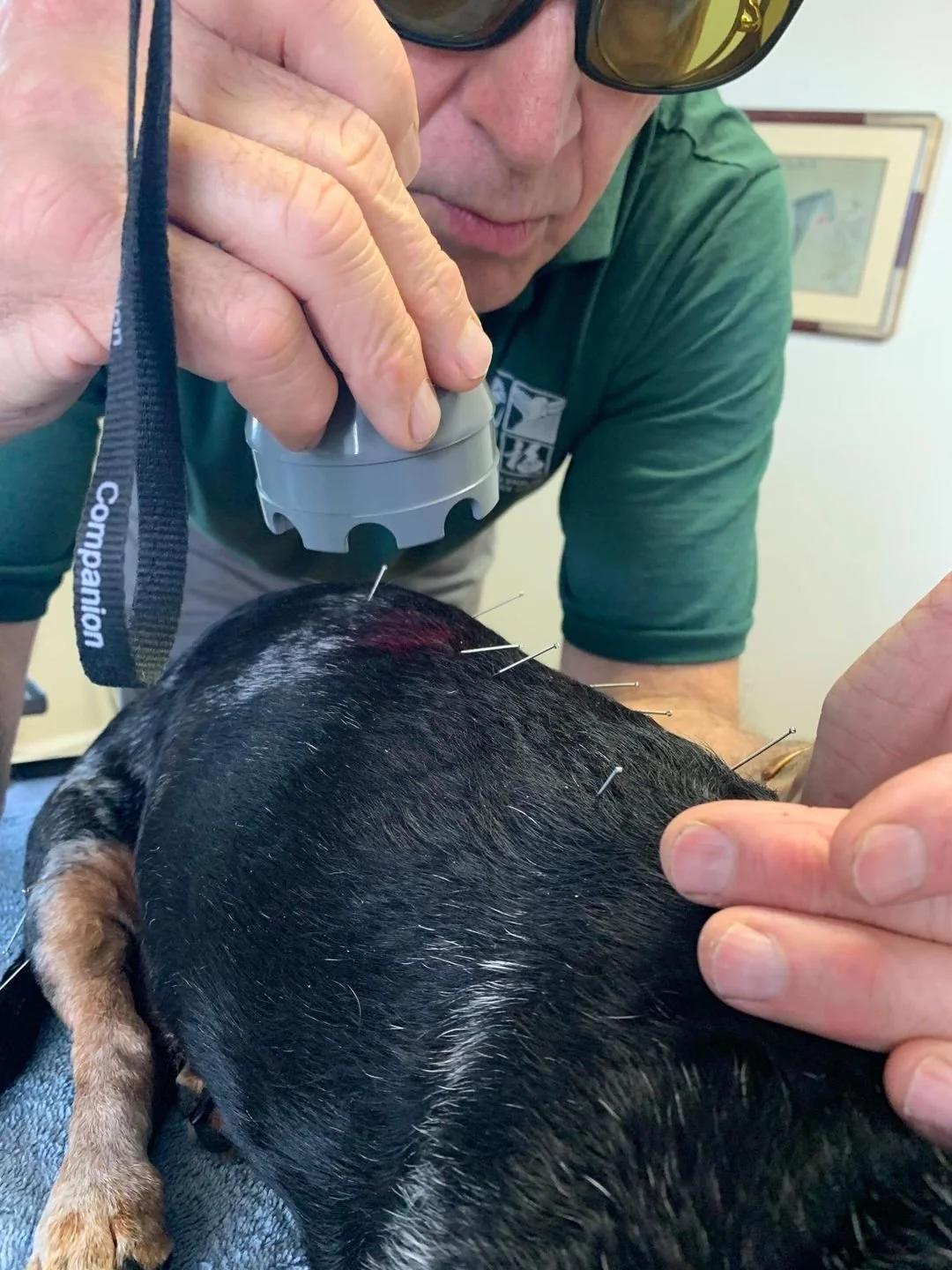
My dog Huey getting Acupuncture and Laser Treatment
When Did Gabapentin Become the Answer for Everything?
Pain? Gabapentin.
Arthritis? Gabapentin.
Pancreatitis discomfort? Gabapentin.
Fireworks? Gabapentin.
Vet visit stress? Gabapentin.
Your dog looked at the wall funny? Okay, I’m exaggerating… but only slightly.
And this is where my brain starts to twitch.
I am not saying there is never a place for gabapentin. There are situations where medication may be needed, especially with serious pain, neurological pain, seizures, post-op recovery, or when a dog is truly suffering and needs immediate support. Veterinary diagnostics, pain control, emergency care, fluids, imaging, labs, and stabilization absolutely have their place.
But “here’s a prescription, good luck, see what happens” is not a recovery plan.
But even then, I’m thinking ahead to see how I can get the dog off that drug and use something natural.
What Is Gabapentin?
Gabapentin was originally developed as an anti-seizure medication in humans. In veterinary medicine, it is commonly used for chronic pain, nerve pain, seizures, anxiety, and sedation.
But let’s be clear: gabapentin use in dogs and cats is considered off-label or extra-label, meaning it has not been reviewed or approved by the FDA specifically for that use in pets. Off-label use is legal and common in veterinary medicine when prescribed by a veterinarian, but pet parents should still understand what is being used and why.
Gabapentin is often talked about like a pain medication. But one veterinary review explains it more accurately as a pain-signal modulator. It may reduce how pain signals are transmitted, but it does not directly address inflammation, tissue damage, instability, poor nutrition, gut dysfunction, or the underlying reason the dog is hurting.
That distinction is huge.
Because if your dog’s pain is coming from inflammation, joint degeneration, injury, pancreatitis, gut distress, stress, poor mobility, or poor recovery capacity, simply quieting pain signals may not be enough.
My Issue With the “Gabapentin for Everything” Approach
What I know is this: many dogs need a better plan than sedation and hope.
Gabapentin may make a dog sleepy. It may make them wobbly. It may make them seem calmer. It may make them move less. But none of that automatically means the dog is truly more comfortable, healing better, or recovering faster.
Sometimes pet parents think, “He seems calmer, so it must be working.”
Maybe.
Or maybe he is sedated, unsteady, disconnected, nauseous, weak, or less interactive.
That is not the same thing as resolving pain, inflammation, anxiety, or recovery barriers.
Possible Side Effects of Gabapentin in Dogs
The most commonly listed side effects in dogs include:
• Sedation or sleepiness
• Incoordination
• Ataxia or stumbling
• Wobbliness
• Weakness
• Digestive upset in some dogs
• More pronounced effects in dogs with liver or kidney concerns
• Potential issues with certain liquid formulations if they contain xylitol, which is toxic to dogs
Veterinary sources also caution against stopping gabapentin abruptly in epileptic pets because withdrawal seizures may occur.
This is why I do not love casual use.
A dog who is already weak in the rear, struggling with mobility, recovering from injury, dealing with pancreatitis, refusing food, or showing signs of cognitive decline may not benefit from a drug that can add sedation, stumbling, appetite changes, or disorientation to the pile.
That is not support. That is stacking problems like a wobbly Jenga tower.
The Cognitive Decline Question
A 2025 human study in Regional Anesthesia & Pain Medicine looked at medical records and found an association between repeated gabapentin prescriptions and increased risk of dementia and mild cognitive impairment in adults with chronic low back pain. This was an observational human study, so it does not prove gabapentin causes cognitive decline, and it was not a dog study.
But do I think it is worth paying attention to?
Yes. Absolutely.
Especially when we are talking about senior dogs who may already be dealing with weakness, confusion, anxiety, vestibular episodes, cognitive changes, organ stress, or multiple medications.
When a dog starts declining after starting a drug, it is too easy to blame age, arthritis, or “just getting old.”
Sometimes that is true.
Sometimes the medication is not helping the situation.
Why I Really Do Not Love Gabapentin for Pancreatitis
Pancreatitis is not a “throw a pill at it and wait” condition.
Pancreatitis involves inflammation of the pancreas, digestive dysfunction, nausea, appetite changes, abdominal pain, dehydration risk, and sometimes serious systemic complications. Conventional pancreatitis care often focuses on supportive care, including pain control, nausea control, fluids, and nutrition strategy.
So yes, pain control may be needed.
But with pancreatitis, we also need to ask:
• Is the dog eating?
• Is nausea controlled?
• Is hydration supported?
• Are electrolytes stable?
• Is the diet appropriate for this dog’s tolerance?
• Are fats, treats, chews, toppers, oils, and hidden extras aggravating the pancreas?
• Is there gallbladder, liver, gut, endocrine, or inflammatory involvement?
• Is this acute, chronic, or acute-on-chronic?
• Has this dog had repeated episodes?
• Are we missing a pattern?
Gabapentin does not answer those questions.
And if it causes sedation, wobbliness, digestive upset, reduced appetite, or “something is off but I can’t put my finger on it,” it can make pancreatitis recovery harder to read.
That is one of my biggest issues. When a pancreatitis dog is recovering, we need clear feedback from the body. Appetite, nausea, stool, energy, posture, pain signs, hydration, and comfort all tell us something.
A sedated dog gives us muddy information.
Gabapentin for Fireworks and Anxiety: Are We Treating Fear or Just Flattening the Dog?
This one really gets me.
Some dogs are terrified of fireworks, storms, vet visits, grooming, travel, or being handled. I get it. Nobody wants to watch their dog panic.
But using gabapentin mainly because it sedates the dog is not the same thing as addressing fear.
Noise fear support should include management, safety, nervous system support, behavior work, counterconditioning, relaxation training, and, when truly needed, appropriate medication. A 2023 review on noise fears in dogs notes that treatment often requires management plus behavioral therapy, and that counterconditioning and relaxation training can improve fear responses. It also recognizes that medication may be needed in some cases to protect welfare during unavoidable noise events.
That makes sense.
But handing out sedation without a broader plan?
No thank you.
If your dog is terrified every July, every thunderstorm, every vet visit, and every grooming appointment, we need to build a plan before the crisis. Not shove the dog into a chemical blanket and call it solved.
Why Side Effects Can Slow Recovery
Recovery is not just the absence of screaming pain.
Recovery requires the body to participate.
Your dog needs to:
• Eat enough appropriate food
• Digest and absorb nutrients
• Stay hydrated
• Move safely
• Sleep well
• Maintain muscle
• Reduce inflammation
• Clear waste through liver, kidneys, lymph, and gut
• Regulate the nervous system
• Show us accurate symptoms so we can adjust the plan
If a medication makes the dog sedated, wobbly, less hungry, weaker, more confused, or harder to assess, that can interfere with the bigger picture.
That does not mean “never use it.”
It means stop pretending side effects are irrelevant just because the dog is quieter.
Quiet is not always comfortable.
Still is not always healed.
Sleepy is not always supported.
Natural Alternatives to Gabapentin for Dogs
This is where I want pet parents to think bigger.
Natural support is not about grabbing one random supplement from a Facebook comment and hoping it works. That is the crunchy version of prescription-and-hope. Same chaos, different bottle.
The better approach is to ask what the dog actually needs.
Nutrition and Fresh Food
Food is foundational during pain, inflammation, anxiety, and recovery.
Fresh, species-appropriate food can provide moisture, amino acids, natural cofactors, minerals, antioxidants, and real nourishment that the body can actually use. This can be especially important for dogs dealing with chronic inflammation, joint issues, pancreatitis recovery, immune stress, gut dysfunction, and senior decline.
For some dogs, that may mean fresh food.
For others, gently cooked.
For pancreatitis dogs, fat tolerance needs to be carefully evaluated.
For kidney, liver, endocrine, or GI dogs, the plan may need deeper customization.
Same diagnosis does not mean same bowl.
Omega-3 Support
Omega-3 fatty acids, especially EPA and DHA, may support a healthier inflammatory response in dogs with joint issues. Veterinary osteoarthritis reviews continue to include nutrition, weight management, and omega-3s as part of a broader mobility plan.
This does not mean dumping fish oil on every dog’s food and hoping for magic.
Quality, dose, tolerance, fat sensitivity, pancreatitis history, stool response, and the rest of the diet all need to be considered.
CBD
CBD may be worth considering for discomfort, inflammation support, nervous system balance, and mobility support in some dogs. Cornell’s veterinary CBD resources note that research is growing, including studies in osteoarthritis, seizures, and itching, but also state that anxiety research in dogs is still limited.
In plain English: CBD may be a useful tool, but it is not fairy dust.
Quality is huge. Product testing is huge. Drug interactions and liver considerations need to be reviewed. And no, I do not love cheap gas-station CBD for your dog. Let’s not.
Herbs and Herbal Formulas
Herbs may be useful for inflammation support, nervous system regulation, digestive support, liver and gallbladder support, circulation, and tissue recovery.
Possible categories may include:
• Boswellia
• Turmeric or curcumin
• Nervine herbs for stress patterns
• Digestive herbs
• Liver and gallbladder support
• Chinese herbal formulas when appropriate
Chinese herbs are not the same as grabbing one herb because someone on Facebook said it helped their Labrador. TCVM looks at patterns such as heat, dampness, stagnation, deficiency, digestive weakness, stress, or inflammation.
That pattern changes the plan.
Homeopathy
Homeopathy may be considered for trauma, bruising, nerve-type discomfort, fear, post-event recovery, and acute stress patterns.
But homeopathy works best when the remedy picture matches the dog.
“Give Arnica for everything” is not a full thought. It may be useful, but we still need to understand what is happening.
Essential Oils
High-quality essential oils may support discomfort, inflammation response, emotional balance, respiratory ease, relaxation, and recovery. I may use them topically, aromatically, or in some cases internally when appropriate oils and proper forms are used.
Possible oils to consider in a personalized plan may include:
• Copaiba
• Frankincense
• Helichrysum
• Lavender
• Marjoram
• Stress-support blends
• Oils used in Raindrop or bodywork sessions
The goal is not to perfume the dog like a walking candle aisle. The goal is targeted support, quality oils, appropriate application, and watching the dog’s response.
Bodywork, Acupuncture, Laser, PEMF, and Rehab
For pain and mobility, I often want more than “take this pill.”
Helpful options may include:
• Veterinary chiropractic care
• Acupuncture
• Cold laser therapy
• Red light therapy
• PEMF technology
• Canine massage
• Rehab vet consultation
• Stretching and strengthening when appropriate
• Weight and muscle condition evaluation
• Home environment changes
Veterinary pain guidelines and integrative pain discussions commonly recognize multimodal pain support, including non-drug options such as acupuncture, physical rehabilitation, myofascial work, therapeutic laser, and other physical modalities.
Pain is rarely one-dimensional. The plan should not be either.
When Medication May Still Be Needed
I am not anti-medication.
I am anti-lazy plan.
There are times when medication is appropriate. Severe pain, surgical recovery, trauma, neurological pain, seizures, severe pancreatitis pain, and dogs in true distress may need veterinary pain control.
A dog should not suffer while everyone debates turmeric.
But medication should be part of a thoughtful plan, not the whole plan.
Ask your vet:
• What type of pain do you think this is?
• Is this inflammatory pain, nerve pain, muscle pain, abdominal pain, or something else?
• What are we monitoring to know it is helping?
• What side effects should I watch for?
• Is this short-term or long-term?
• Does my dog’s kidney or liver function change the risk?
• Should this be combined with other therapies?
• What is the plan if it does not help?
• Do we need to taper instead of stopping suddenly?
Those are fair questions.
The Whole-Dog Questions I Want Answered
Before choosing gabapentin, CBD, herbs, oils, acupuncture, laser, food changes, or anything else, I want to know the dog.
Not just the diagnosis.
I want to know:
• Age
• Breed and size
• Weight and muscle condition
• Duration of symptoms
• Frequency of episodes
• Severity of pain or anxiety
• Diet history — is it anti-inflammatory or is the Rx fighting the diet too.
• Treats, chews, toppers, oils, scraps, and hidden extras
• Current medications and supplements
• Kidney and liver values
• Pancreas, gallbladder, gut, endocrine, and immune clues
• Stool history
• Appetite and nausea patterns
• Stress patterns
• Sleep quality
• Mobility changes
• Previous reactions to medications or supplements
• What has already already been tried — and the results.
Most pet parents answer the question they are asked.
What they often need is someone who asks the questions they did not know to ask.
That is where the plan gets better.
My Take
Gabapentin may have a temporary use. I cannot tell you to not use it. But I can give my opinion on it.
But I do not love gabapentin as the default answer for every painful, anxious, inflamed, post-op, pancreatitis, fireworks, or mystery dog.
And I really do not love it when the dog is not improving quickly.
If your dog has been given gabapentin, trazodone, antibiotics, steroids, anti-nausea meds, pain meds, or any other “let’s try this and see” prescription — and your dog is not clearly getting better — that is your cue to pause and ask better questions.
Because continued use without improvement is not a plan.
It is guessing with a prescription label on it.
Not when the side effects can look like decline.
Not when the medication may muddy the symptom picture.
Not when inflammation, nutrition, mobility, gut health, nervous system stress, and recovery support are being ignored.
Not when the plan is basically “try this and see.”
Your dog deserves more than prescription-and-hope.
If something is not working, stop guessing. Ask what else should be considered. Look for the root issue. Consider natural options that may better support the body. And please — get help before turning your dog into a supplement-and-prescription science experiment.
If your dog is dealing with pain, pancreatitis recovery, arthritis, IVDD, fireworks fear, anxiety, post-op discomfort, or chronic inflammation, this blog is the starting point. The real work is figuring out what your dog’s body is actually asking for to heal. And there are options!
Submit an inquiry and let’s see what I can do to help. No obligation — the inquiry callback is no cost to you.
https://welloiledk9.com/questionnaire
Natural support products and categories:
https://welloiledk9.com/products
Join the community for more education, Q&A, and support:
https://community.welloiledk9.com
FDA Disclaimer
Statements in this blog have not been evaluated by the FDA. Educational content only. Not intended to diagnose, treat, cure, or prevent any disease.
Related Content Keywords
• alternatives to gabapentin for dogs
• gabapentin for dogs side effects
• natural pain relief for dogs
• natural alternatives to gabapentin for dogs
• gabapentin for dogs arthritis
• gabapentin for dogs pancreatitis
• gabapentin for dogs fireworks
• gabapentin for dogs anxiety
• holistic pain support for dogs
• CBD for dog pain
• essential oils for dog discomfort
• PEMF for dogs
• cold laser therapy for dogs
• acupuncture for dog pain
• natural support for dog arthritis
• natural support for pancreatitis in dogs
Consult a holistic veterinarian before making changes to your dog’s prescription medications.
When DIY Isn't Enough Already tried the basics? If this is happening with your dog and you're still stuck, I can help you figure out what deserves attention next.
Request a Discovery Callback →