

Brewer’s Yeast Fight Against Fleas
Why Brewer’s Yeast Comes Up Every Summer
As soon as flea season hits, pet parents start looking for natural ways to reduce flea pressure—without reaching straight for chemicals.
Brewer’s yeast is often one of the first things mentioned.
And while it’s not wrong… it’s often misunderstood.
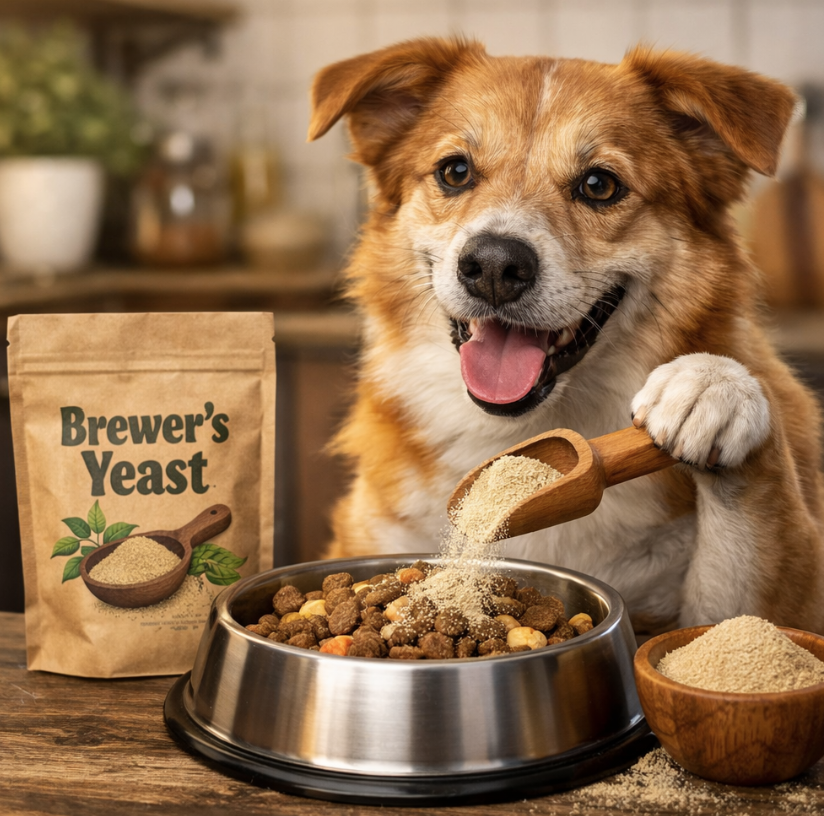
Brewer’s yeast isn’t about killing fleas.
It’s about supporting the dog’s internal terrain.
The Bigger Picture: A Healthy Dog Makes a Poor Flea Host
Natural flea management isn’t about one supplement or one product.
It’s about this principle:
A well-supported body is a terrible host for problems to thrive.
That includes fleas.
Brewer’s yeast fits into this picture by supporting:
Skin and coat health
Nutritional resilience
Immune and stress response
Overall vitality
When the body is supported, fleas may still land—but they’re less likely to thrive, reproduce, or cause severe reactions.
What Brewer’s Yeast Actually Is
It is a yeast (Saccharomyces cerevisiae) that naturally contains B vitamins, along with trace minerals and proteins.
So the benefit isn’t the yeast itself—it’s the nutritional support it provides, particularly B vitamins.
Why Brewer’s Yeast Is Used for Flea Support
The logic behind brewer’s yeast includes:
B vitamins support skin barrier integrity
Small amounts of B vitamins are excreted through the skin
Some dogs become less attractive to fleas over time
Important distinction:
This is supportive, not preventative in the pharmaceutical sense.
Brewer’s yeast does not repel fleas.
It does not kill fleas.
It does not stop infestations.
It simply helps support the dog’s internal resilience during flea season.
Remember how we say “a healthy body makes a terrible host”? That’s the goal here.
Why Results Are Mixed
Some dogs do well with brewer’s yeast.
Others get itchier.
That difference usually comes down to terrain.
Dogs more likely to tolerate brewer’s yeast well:
Dogs without chronic yeast issues
Dogs with balanced digestion
Dogs eating fresh, whole-food-based diets
Dogs without ongoing skin inflammation
Dogs who may struggle with it:
Yeast-prone dogs
Dogs with chronic itching or ear infections
Dogs with gut dysbiosis
Dogs already dealing with inflammation
In those cases, brewer’s yeast can add fuel instead of support.
This Is Why Brewer’s Yeast Should Never Be the Only Strategy
Natural flea management works best when it’s layered.
Brewer’s yeast is best viewed as:
A nutritional support tool
A summer addition, not a year-round crutch
One piece of a broader plan
Effective natural flea strategies also address:
Nutrition and inflammation
Skin health and barrier support
Gut balance
Environmental management
Seasonal exposure patterns
When used this way, brewer’s yeast can make sense for some dogs.
What Brewer’s Yeast Does Not Do
Let’s keep expectations realistic:
It does not replace flea treatments
It does not eliminate flea infestations
It does not protect against flea allergy dermatitis
It does not address environmental flea load
If fleas are already established, relying on brewer’s yeast alone is usually disappointing.
So… Should You Use Brewer’s Yeast in Summer?
Maybe.
But only if it fits your dog.
This is one of those cases where natural doesn’t mean universal.
The better question isn’t:
“Is brewer’s yeast good for fleas?”
It’s:
“Is my dog’s body in a place where this kind of support makes sense?”
What Else Is Brewer’s Yeast Used For in Dogs?
Beyond summer flea conversations, brewer’s yeast has traditionally been used as general nutritional support, especially in dogs eating lower-quality or limited diets.
It’s most often used to support:
Skin and coat health
The naturally occurring B vitamins can support skin barrier function and coat condition when a dog is nutritionally depleted.Energy metabolism
B vitamins play a role in converting food into usable energy, which is why brewer’s yeast has historically been used in active or working dogs.Appetite and palatability
Some dogs find the flavor appealing, making it useful for picky eaters or dogs transitioning diets.General nutritional insurance
It’s sometimes used as a broad, low-cost nutrient add-in when diets lack diversity or whole-food inputs.
Important context:
Brewer’s yeast is supportive, not therapeutic. It doesn’t correct deficiencies caused by gut malabsorption, chronic inflammation, or metabolic dysfunction.
Want Help Building a Smarter Summer Flea Strategy?
If you’re dealing with:
Fleas plus itching
Fleas plus ear issues
Fleas plus gut problems
That’s your sign that the body needs more than a sprinkle solution.
👉 Let’s look at the full picture:
Submit an inquiry (no cost, no obligation):
https://welloiledk9.com/questionnaire
👉 Explore education and guides:
https://welloiledk9.com/library
👉 Join the community discussion:
https://facebook.com/groups/thewellfedk9
FDA Disclaimer:
Statements in this blog have not been evaluated by the FDA. Educational content only. Not intended to diagnose, treat, cure, or prevent any disease.
Community CTA:
Want even more resources, Q&A, and discussions on nutrition?
Join me on Facebook: https://facebook.com/groups/thewellfedk9
When DIY Isn't Enough Already tried the basics? If this is happening with your dog and you're still stuck, I can help you figure out what deserves attention next.
Request a Discovery Callback →