

DIY Flea & Tick Spray for Dogs: Essential Oil Recipe & How to Use It
Want to make your own essential-oil flea and tick spray for your dog?
You do not need every essential oil on this page.
That's actually one reason I give you options.
I want you to understand which oils may fit so you can work with what you already have, adjust for your environment and build a blend around your dog rather than believing there is only one magical flea-and-tick recipe.
Fleas, ticks and mosquitoes are different pests. Your backyard is different from somebody else's hiking trail. And a healthy adult dog is different from a sensitive senior or neurologically complicated dog.
So yes, I have favorite oils.
But I also have a toolbox.
Why take my aromatherapy advice?
I am a Certified Animal Aromatherapist, and essential oils have been part of my own dogs' seasonal flea, tick and mosquito strategy for years.
I do not choose an oil simply because an internet list says bugs hate it. I look at the oil chemistry, the target pest, concentration, application method, skin sensitivity and the individual dog.
That is also why I am giving you several options rather than pretending one five-oil recipe is the only possible answer.
First: What This DIY Flea and Tick Spray Is — and Isn't
This spray is part of a deterrence and prevention strategy.
I use botanical aromatics to make the dog less inviting to fleas, ticks, mosquitoes and other biting pests before and during outdoor exposure.
What it does not do is give you permission to stop checking your dog for ticks.
And if fleas are already jumping around your house, a spray on the dog is not enough to break the flea life cycle.
Read: Natural Flea & Tick Prevention for Dogs — The Complete Strategy
Already Have Fleas? Start With My Active Flea Infestation Guide
My DIY Flea & Tick Spray Recipe for Dogs
What You'll Need
- 8-ounce glass spray bottle
- 4 ounces distilled water
- 4 ounces apple cider vinegar or witch hazel
- 15–20 drops total essential oils selected from the options below
Directions
- Add the apple cider vinegar or witch hazel to the bottle.
- Add your selected essential oils.
- Add the distilled water.
- Close the bottle and shake very well.
- Shake again immediately before and during each application.
Why the shaking?
Essential oils do not truly dissolve into water just because witch hazel or apple cider vinegar is present.
If you are making the simple DIY version without a professional solubilizer, vigorous shaking is an important part of using it.
How I Use It
- Lightly mist the coat before outdoor exposure.
- Focus on legs, chest, belly, shoulders and around the tail area.
- Avoid spraying directly into the face, eyes, nose or genital area.
- Work lightly through the coat with your hands if needed.
- Reassess after swimming, heavy rain or prolonged outdoor exposure.
- Brush and inspect the dog after outdoor time.
Dog Hates Sprays? Make a Flea and Tick Wipe
Some dogs could not care less about a spray bottle.
Others hear psssht from across the room and immediately file a formal complaint.
For those dogs, I like a wipe approach.
Place some of your prepared mixture in a covered glass container with clean, reusable cloths or appropriately sturdy disposable towels.
Use a dampened wipe over areas where pests commonly climb or hide:
- Legs
- Chest
- Armpits
- Belly
- Paws
- Back and sides
- Around — not inside — the ears
The wipe method also gives you more control around a dog who dislikes mist around their head.
You Do Not Need Every Essential Oil on This List
This page is intentionally giving you choices.
Some people already have geranium and lavender. Somebody else has cedarwood and lemongrass. Another dog mom may own half my aromatherapy cabinet.
I want you to understand the different tools rather than believe you need to buy twelve new oils before your dog can go outside.
My Core Flea, Tick and Bug-Deterrent Oils
Geranium
Geranium is one of my favorite oils when ticks are high on the worry list.
Geranium essential oil has been studied for tick repellency, and its chemistry includes constituents that make it particularly interesting in outdoor-deterrent blends.
It also fits nicely when insect exposure and skin support overlap.
Kunzea — The “Tick Bush”
Kunzea deserves far more attention than it usually gets.
Kunzea ambigua is an Australian shrub commonly known as Tick Bush.
Yes — literally Tick Bush.
That common name is documented by the Royal Botanic Gardens, Kew.
Kunzea essential oil has also been studied as a botanical mosquito repellent, which makes it especially interesting to me as part of an outdoor aromatic strategy.
I may use Kunzea when ticks and other biting insects are part of the seasonal picture, and I particularly like having it available as another choice rather than forcing every outdoor blend to look the same.
Lemongrass
Lemongrass is one of my regular seasonal outdoor oils.
Cymbopogon essential oils and their aromatic compounds have demonstrated activity against fleas and other biting insects in research.
I like lemongrass because it gives me a useful broad outdoor aromatic profile and pairs well with several of the other oils on this page.
And if you have followed me for any amount of time, you already know I use lemongrass for much more than bugs.
Cedarwood
Cedarwood is another staple in my outdoor toolbox.
Cedar-derived compounds have shown tick-deterrent activity in research, and cedar-based products are also widely used in environmental pest strategies.
I may use cedarwood in coat blends, bandana approaches and selected yard products.
Lavender
Lavender may not always be the most aggressive pest oil in the bottle, but I still value it.
Lavender essential oil has demonstrated tick repellency in laboratory research.
It also gives me skin and calming considerations, which can make it useful when I am formulating for a sensitive dog instead of designing solely around the insect.
Other Essential Oils You May Already Have
These are not “wrong” simply because they are not my core five.
Some have surprisingly interesting pest research behind them. Others give us useful options when we are building around what you already own.
Spearmint
Spearmint is a legitimate tick-deterrent option.
Field research on treated clothing found significantly fewer ticks with spearmint treatment, and ticks that did attach also dropped off more readily.
That does not automatically tell us how long a particular canine coat spray will last, but it gives me a real reason to keep spearmint in the conversation.
Thyme
Thyme has also performed very well in tick-repellency research.
I consider thyme a stronger aromatic option, which means I am more thoughtful about how much of the total blend it occupies and whether the individual dog's skin is likely to appreciate my enthusiasm.
Citronella
Citronella is widely known for outdoor insect deterrence and can fit very naturally into flea, tick and mosquito blends.
Research on Cymbopogon oils continues to support their potential against fleas and other insects.
Patchouli
Patchouli is another interesting tick option.
In a 2024 study comparing multiple essential oils and naturally derived compounds, patchouli was the natural essential oil that showed significant repellency in the human fingertip portion of the tick testing.
I particularly like it as another choice when someone already owns it and wants a different aromatic profile in an outdoor blend.
Peppermint
Peppermint is another strong aromatic option that has demonstrated some tick repellency in laboratory testing.
I do not automatically put peppermint in every dog's spray.
It is powerful aromatically, so dog sensitivity and the overall blend influence whether it belongs.
Clove
Clove is another oil with impressive pest research behind it.
In recent laboratory tick research, clove ranked among the strongest essential oils tested for contact repellency.
Its eugenol-rich chemistry has also been studied against fleas and ticks.
That does not mean I make clove the bulk of a DIY dog spray.
It means it is a legitimate tool that needs to be treated like the strong oil it is.
Cinnamon
Cinnamon-derived aromatic compounds also have documented flea-repellent and insecticidal activity.
Like clove and thyme, cinnamon is one of the stronger choices in this toolbox.
If I use it, I formulate intentionally rather than assuming “more potent” automatically means “use more.”
Eucalyptus radiata
Eucalyptus radiata is another oil I may consider within an outdoor aromatic blend.
I tend to prefer it when I want a lighter eucalyptus profile and another broad-spectrum aromatic option.
It is not essential to every flea-and-tick recipe.
Myrtle
Myrtle is another oil people sometimes already have in their collection.
It is not one of the first oils I reach for when my only goal is flea and tick deterrence, but it can appear in broader aromatic strategies depending on what else I am trying to support.
I do not believe every oil you own has to be forced into every blend.
How Do I Choose Which Oils to Put in the Spray?
Start with the problem you are actually trying to solve.
| Primary Concern | Oils I Might Consider |
|---|---|
| Ticks | Geranium, cedarwood, Kunzea, spearmint, thyme, patchouli, lavender |
| Fleas | Geranium, lemongrass, citronella, cedarwood, lavender; stronger formulations may incorporate thyme, clove or cinnamon |
| Mosquitoes / biting insects | Lemongrass, citronella, geranium, Kunzea, lavender |
| Sensitive skin | I usually keep the blend simpler and may emphasize lavender, geranium, cedarwood or other gentler choices |
| High tick exposure | I may build a more tick-focused blend and combine it with more frequent tick checks and environmental management |
A Simple Way to Build Your Blend
You do not need a fifteen-oil masterpiece.
For the 15–20 total drops in this 8-ounce recipe, I generally want to choose a few oils that give me complementary purposes rather than dumping in everything I own.
You might think in categories:
- One or two primary pest-deterrent oils
- One supporting outdoor oil
- One skin-friendly or balancing oil if appropriate
For example, someone might build around geranium + cedarwood + lemongrass.
Someone else may already have Kunzea + lavender + citronella.
Another dog in a tick-heavy environment may send me in a different direction.
There is not only one correct blend.
Why I Give You So Many Oil Choices
I don't want you thinking natural flea and tick prevention requires buying my exact collection of oils.
Use what you have intelligently.
Understand what each oil brings to the blend.
Then change the strategy when the dog, target pest or exposure changes.
That is aromatherapy.
Copying a recipe without understanding why anything is in the bottle is just mixing.
Why Apple Cider Vinegar Stays in My Flea and Tick Spray
Yes, I use apple cider vinegar.
I like ACV as part of my overall skin, coat and outdoor-care toolbox and as one possible base for this spray.
I do not expect ACV by itself to provide reliable flea and tick protection.
It is part of the formulation.
It does not have to do all the work.
What About Witch Hazel?
Witch hazel is another base option I may use.
It has an astringent feel, dries relatively quickly and can make a coat spray feel less wet.
One technical correction is important:
Witch hazel is not a true emulsifier for essential oils and water.
Your essential oils can still separate.
That's why a simple homemade spray like this needs to be shaken very well before and during use.
Can I Add Aloe Vera?
Liquid aloe can be a useful addition when I want extra skin-soothing support, particularly in a dog who reacts easily to bug bites or has sensitive skin.
I use a liquid preparation appropriate for the formulation rather than thick aloe gel that clogs a spray bottle and changes the whole texture.
Can I Add Vegetable Glycerin?
A small amount of vegetable glycerin may help the formulation feel more conditioning on the coat and may help aromatic material linger.
Too much makes the dog sticky.
Sticky dachshund was not the goal.
What About Neem Oil?
Neem is not an essential oil, but it is another botanical ingredient I may consider in flea-and-tick strategies.
Neem-derived compounds have a long history in insect-control applications.
The downside?
It has a rather distinctive aroma.
I am being charitable.
It can still be useful when the dog and formulation tolerate it.
Before Outdoor Exposure
Apply your chosen botanical deterrent before the dog enters higher-risk areas.
Pay particular attention to:
- Legs
- Chest
- Belly
- Feet
- Shoulder area
- Tail area
For hikes or tall-grass exposure, I am more deliberate than I may be for ten minutes in a manicured backyard.
After Outdoor Exposure
This part is just as important as the spray.
- Run your hands over the dog.
- Brush the coat.
- Inspect around the ears and face.
- Check armpits and groin.
- Look between the toes.
- Check under collars and harnesses.
- Inspect under long or dense coat.
No essential-oil blend makes me stop checking my dogs.
How Often Should I Apply a Natural Flea and Tick Spray?
Botanical repellents usually require more active management than a pharmaceutical product designed to persist for weeks or months.
How often I reapply depends on:
- Outdoor exposure
- Tick pressure
- Humidity
- Rain
- Swimming
- Coat type
- The specific oils and formulation
Swimming or heavy rain obviously changes what remains on the coat.
During high-risk season, the routine may be part of daily outdoor preparation.
Do Essential Oils Work Better for Fleas, Ticks or Mosquitoes?
This is one of the reasons I do not love the phrase “flea and tick oil.”
Different pests respond differently to different aromatic compounds.
Geranium may get more of my attention when ticks are the concern. Lemongrass and citronella may become more prominent when mosquitoes and broad outdoor insect exposure are high.
An active flea problem sends me into the environment because killing or deterring adult fleas on the dog does not solve the eggs, larvae and pupae in the home.
That ability to adjust the blend is one of the advantages of actually understanding the oils you are using.
Can I Use This on Puppies?
I use much more caution with puppies, very small dogs, pregnant or nursing dogs and medically complicated dogs.
I do not recommend treating a very young puppy as though they are simply a smaller adult dog.
Puppies under about 12 weeks are a group where I generally prefer individualized guidance rather than automatically using an adult recipe.
What About Dogs With Seizures?
Neurologically sensitive dogs deserve more individualized aromatherapy too.
That does not mean I ban essential oils from every seizure dog.
It means I am more thoughtful about the specific oils, concentration, frequency, medications and the dog's history.
This is also one of the reasons some pet parents come to me looking for lower-tox flea and tick strategies in the first place.
Natural Flea and Tick Prevention Is More Than the Spray
I would not put all of your confidence in one bottle.
My complete strategy may include:
- Essential-oil deterrents
- Coat and skin support
- Physical tick checks
- Flea combing
- Yard management
- Cleaning bedding
- Vacuuming during flea problems
- Cedar-based environmental products
- Beneficial nematodes where appropriate
- Other prepared natural products
Read My Complete Natural Flea & Tick Prevention Strategy
What If the DIY Spray Isn't Enough?
Sometimes the problem is the formulation.
Sometimes it is inconsistent use.
Sometimes your dog is walking through an absolute tick convention every afternoon.
And sometimes you are not dealing with prevention anymore — you already have an infestation.
Prepared botanical products may be easier for some families because the formula and dispersal system are already handled for you.
See My Flea & Tick Product Recommendations
Want Help Choosing the Right Oils for Your Dog?
Maybe you already own several oils and have no idea which ones to combine.
Maybe your dog has seizures, sensitive skin or other health issues.
Or maybe you live somewhere with enough ticks that a casual little spritz before going outside is not cutting it.
As a Holistic Canine Health Practitioner and Certified Animal Aromatherapist, I can help you sort through the oils, products, environment and your dog's individual risk and create a strategy that makes more sense.
Submit an inquiry and let's see what I can do to help. No obligation — the inquiry callback is no cost to you.
Request a Discovery Callback Explore Essential Oils for Dogs See Prepared Flea & Tick OptionsFrequently Asked Questions
What essential oils can I use in a flea and tick spray for dogs?
Depending on the dog and target pest, I may consider geranium, Kunzea, lemongrass, cedarwood, lavender, citronella, spearmint, thyme, patchouli, peppermint, clove, cinnamon and other appropriately selected oils. You do not need all of them. I choose a few based on the dog, exposure and what oils are already available.
Why is Kunzea called Tick Bush?
Kunzea ambigua is an Australian plant whose documented common name is “tick bush.” Its essential oil has also been researched for botanical insect-repellent activity, making it a particularly interesting oil in outdoor aromatherapy strategies.
Does geranium essential oil repel ticks?
Geranium essential oil has demonstrated tick-repellent activity in laboratory research. Real-life protection on a dog still depends on the formulation, concentration, application and exposure level, which is why I use it as one layer rather than guaranteed protection.
Does lemongrass repel fleas?
Cymbopogon essential oils, including lemongrass-related species, and compounds such as geraniol have demonstrated flea-repellent and insecticidal activity in laboratory research. I commonly use lemongrass as part of a broader outdoor blend rather than expecting one oil to handle the entire flea life cycle.
Why do you use apple cider vinegar in flea spray?
Apple cider vinegar is one of the bases I use within my overall skin, coat and outdoor-care strategy. I do not rely on ACV by itself as a proven flea or tick preventive; it works as part of the total formulation.
Does witch hazel mix essential oils into water?
Not completely. Witch hazel is not a true emulsifier or solubilizer for essential oils. In a simple DIY water-based spray, the mixture should be shaken very well before and during application so the oils are redistributed.
Can I substitute different essential oils?
Yes. That is one reason I provide multiple options. I want you to build around the oils you have, your target pest and your individual dog rather than assuming there is only one correct blend. Stronger oils such as thyme, cinnamon and clove deserve more careful formulation.
Is a DIY essential-oil spray enough for ticks?
I consider it a deterrent layer. I still perform physical tick checks, especially after tall grass, wooded trails and other high-risk exposure. Dogs in very heavy tick areas may need a broader individualized prevention strategy.
How often should I reapply the spray?
Reapplication depends on the blend, swimming, rain, coat, weather and exposure. Botanical repellents generally require more active management than products designed to persist for weeks. I reassess based on what the dog is actually doing.
Will this get rid of an active flea infestation?
Not by itself. Once fleas are established, the house, bedding and sometimes yard need attention because much of the flea life cycle exists away from the dog. Use my active flea-infestation guide rather than relying only on a coat spray.
Related Content
homemade flea spray | diy flea spray | flea and tick recipe | essential oil recipe for fleas | essential oil recipe for ticks | natural flea and tick spray recipe
A Note About Individual Dogs
This is a general DIY recipe intended as educational guidance for healthy adult dogs.
Puppies, pregnant or nursing dogs, neurologically sensitive dogs, medically complicated dogs and dogs taking multiple medications may need a different formulation or strategy.
Essential-oil concentration, application method and frequency should always fit the dog, the oils selected and the intended goal.
Educational Disclaimer: The information provided by The Well Oiled K9 is for educational and wellness-support purposes only and is not a substitute for veterinary diagnosis, treatment, prescriptions or parasite-disease prevention advice. Fleas and ticks can transmit serious disease. Essential oils and other botanical products should be appropriately formulated and used according to the individual dog.
Research & Botanical References: Royal Botanic Gardens, Kew — Kunzea ambigua / Tick Bush | Geranium Essential Oil & Tick Repellency | Essential Oils & Lone Star Tick Repellency | Essential Oils Against Dermacentor Ticks | Cymbopogon Essential Oils & Fleas
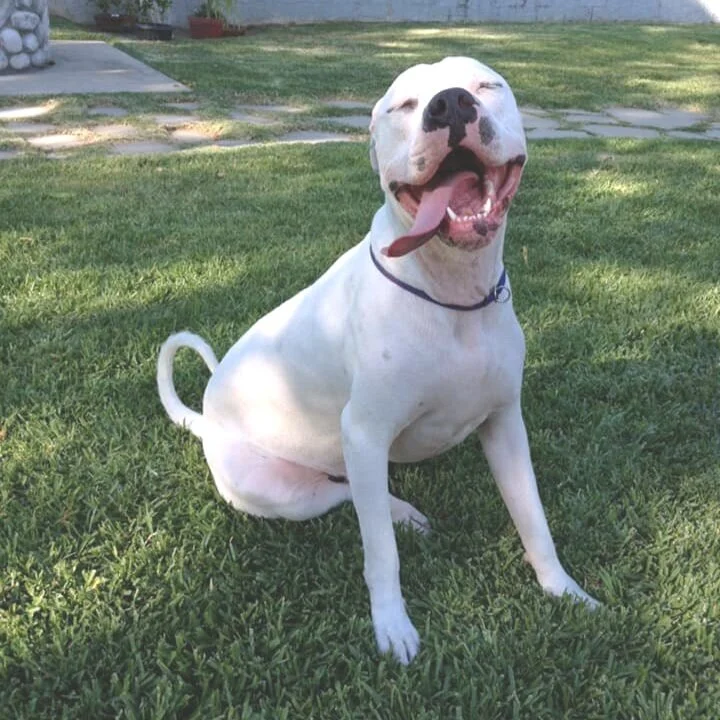
Is your dog happy in the yard with no fleas?
When DIY Isn't Enough Already tried the basics? If this is happening with your dog and you're still stuck, I can help you figure out what deserves attention next.
Request a Discovery Callback →