Local Honey For Seasonal Allergies
Seasonal allergies can make life miserable—for dogs and their families.
Itchy skin, runny eyes, sneezing, paw licking, hot spots... sound familiar?
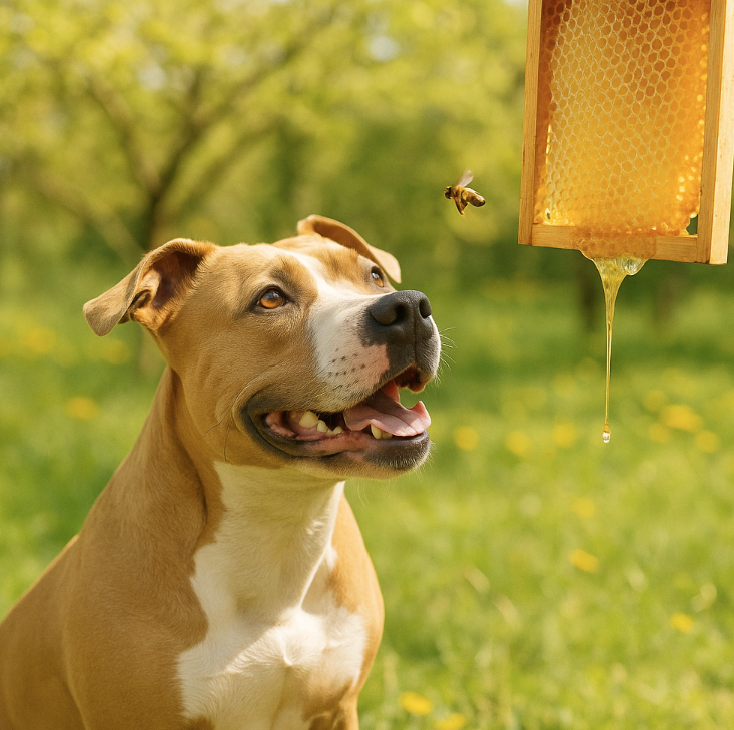
As a holistic pet health coach, I see these cases every single year as allergy season ramps up. And while there’s no single magic solution, I love helping pet parents discover gentle, natural tools that support their dog’s immune system—so their pups can feel more comfortable and thrive.
One of the simplest tools that often gets overlooked? Local, raw honey.
Let’s explore how it works, why it matters, and how you can safely incorporate it into your dog’s allergy support routine.
What Is Local Honey?
Local honey is raw, unfiltered honey harvested from beehives within your own region—usually within 50–100 miles of where you live.
Why does local matter? Because those bees are collecting pollen from the very plants your dog is exposed to—grasses, flowers, trees, weeds—in your specific environment.
And it’s that tiny pollen content that makes local honey such an interesting ally for seasonal allergies.
How Local Honey May Help with Allergies
Seasonal allergies happen when your dog’s immune system overreacts to harmless substances like pollen.
Local honey offers two key benefits:
Low-dose pollen exposure:
Local honey contains trace amounts of pollen. When given regularly in small amounts, this may help your dog’s immune system become more tolerant to those same pollens in the environment—similar to the concept of "allergy desensitization."Anti-inflammatory and antioxidant effects:
Honey is rich in natural antioxidants, enzymes, and polyphenols that may help calm inflammation—which is a huge driver of allergy symptoms.
Less inflammation can mean less itching, less redness, and more comfort.
While we don’t have robust clinical trials in dogs, many pet parents report reduced allergy symptoms when using raw local honey as part of a broader support plan—and human studies suggest similar benefits.
Other Health Benefits of Raw Honey
Honey offers more than just allergy support. Here’s why I often recommend it as part of overall wellness:
Immune modulation: Honey’s antioxidant content helps protect against free radicals and supports balanced immune function.
Digestive support: Raw honey contains natural enzymes and prebiotics that can benefit gut health—an important piece of the allergy puzzle.
Energy boost: The natural sugars in honey offer a quick source of energy—great for active dogs or those recovering from illness.
Topical benefits: While this blog focuses on internal use, raw honey is also valued for its natural antibacterial properties when used topically on wounds (with proper guidance).
How to Choose the Right Honey
Not all honey is created equal!
Here’s what I advise my clients:
Look for raw, unfiltered honey—pasteurization destroys many of the beneficial enzymes and compounds.
Choose local honey if possible (within 50–100 miles). The closer, the better for allergy support.
If local honey isn’t available, opt for raw wildflower honey as a second-best choice.
Avoid honey that says “ultrafiltered,” “blended,” or “US Grade A”—those are often processed and stripped of benefits.
Pro tip: Farmers markets, local apiaries, and small co-op grocery stores are great places to find real local honey.
How Much Honey to Offer
Think of honey as a wellness “boost”—you don’t need large amounts.
I typically suggest the following ranges for clients:
Small dogs: ~¼ teaspoon daily
Medium dogs: ~½ teaspoon daily
Large dogs: ~½–1 teaspoon daily
Consistency matters. I recommend starting a few weeks before allergy season hits and continuing through peak pollen months. Daily use is best.
How to give it:
Stir into food
Offer off a spoon
Drizzle over treats
Start with a small amount and monitor your dog’s response.
When to Be Cautious: Important Considerations
Honey is not safe or appropriate for all dogs. Please be aware of these key risks:
Diabetic dogs: Honey is high in natural sugars and can cause significant blood sugar spikes. I do not recommend giving honey to diabetic dogs unless working closely with your vet.
Overweight dogs: The calories in honey can contribute to weight gain if not managed carefully.
Puppies under 1 year: Rare but possible risk of botulism spores in raw honey. I recommend avoiding honey in puppies under 12 months of age.
Dogs prone to yeast overgrowth: In dogs with active yeast issues (yeasty skin, ears, feet), sugar—including natural sugars—can fuel yeast. Use with caution or avoid entirely if yeast is a current problem.
Dogs with certain immune disorders: Use with caution in dogs who are severely immunocompromised or under active cancer treatment—always consult your holistic or integrative veterinarian first.
Common Conventional Allergy Treatments (And Their Limits)
If your dog has been struggling with seasonal allergies, you may have already been offered:
These can offer symptom relief... but they don’t address the root cause of your dog’s allergies or help the immune system learn better tolerance.
In fact, long-term use of these drugs can suppress immune function, disrupt gut health, and increase risk of other chronic issues.
That’s why I always recommend exploring holistic support options alongside or instead of conventional drugs—depending on the dog’s needs.
Natural Allergy Support Options to Pair with Honey
Honey is just one piece of the puzzle. Here are some of the other tools I often recommend to allergy clients:
Nutrition: A fresh, anti-inflammatory diet with low processed carbohydrate content
Gut health: Probiotics, digestive enzymes, gut-repair nutrients (the gut-immune connection is huge in allergies)
Herbs: Nettles, quercetin, and immune-balancing herbal blends
Functional mushrooms: For immune modulation and gut support
Essential oils: Allergy-supportive diffusions and topicals (always properly diluted—ask me if you need guidance)
Homeopathy: Targeted remedies based on your dog’s specific symptom picture
Detox support: Helping the body clear out inflammatory metabolites and environmental toxins
You can browse some of my favorite trusted options here: Products I Use and Recommend.
Want to take it deeper? My full Allergy Support Guide teaches you how to layer these tools step-by-step for best results.
Final Thoughts
Local honey is not a cure for allergies—but it can be a wonderful immune-balancing tool and part of a bigger wellness plan.
If your dog is prone to seasonal or regional allergies, I encourage you to give it a try—alongside deeper nutrition and gut work. Many of my clients see meaningful improvements with this kind of layered, whole-body approach.
And remember... every dog is unique. What works beautifully for one may need to be adjusted for another. That’s why coaching and individualized support can make such a difference.
Allergies Can Be complex!
👉 Get my full Allergy Guide inside the Library—it’s packed with what’s working right now for allergy dogs.
FDA Disclaimer:
Statements in this blog have not been evaluated by the FDA. Educational content only. Not intended to diagnose, treat, cure, or prevent any disease.
Community CTA:
Want even more resources, Q&A, and discussions on nutrition? Join me on Facebook.
Top 5 Things to Do Today
Source local, raw honey for your region
Introduce it slowly and consistently for your allergy-prone dog
Be cautious in diabetic, overweight, puppy, or yeast-prone dogs
Pair honey with gut support, anti-inflammatory nutrition, and targeted herbs
Consider joining my Library or booking a consult for a personalized allergy plan