

Goldenseal for Dogs: Uses, Benefits & Safety
Goldenseal can be used with dogs — but this is not an herb I toss into the bowl as a daily wellness tonic.
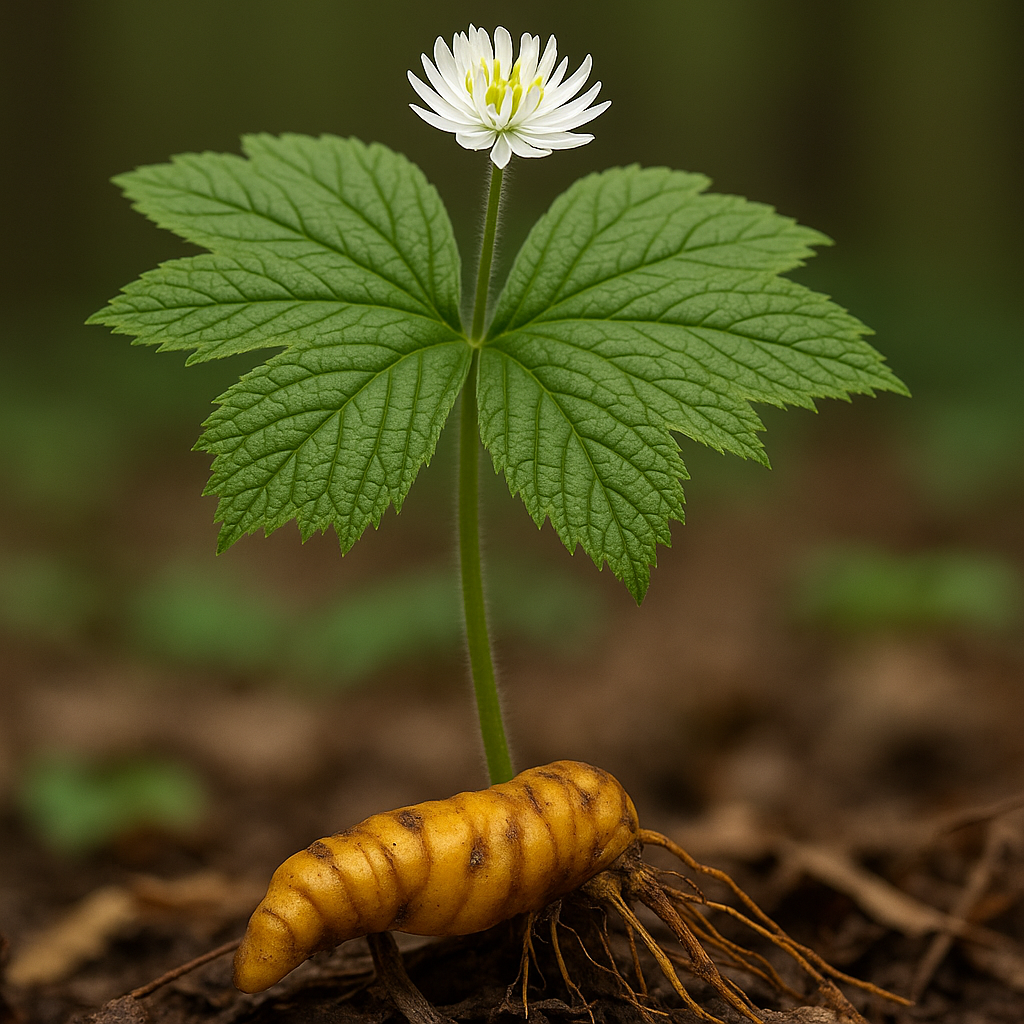
Goldenseal (Hydrastis canadensis) is a potent North American herb best known for its bitter yellow root and alkaloids including berberine and hydrastine.
It has a long herbal history around irritated mucous membranes, digestive disturbances and microbial imbalance. Those same constituents are also why I use goldenseal selectively and usually for a specific short-term reason.
If you're searching for “goldenseal for dogs” because your dog has diarrhea, yeast, an infection, swollen lymph nodes or another chronic problem, don't stop at the herb. We still need to understand why the problem keeps happening.
Is Goldenseal Safe for Dogs?
Goldenseal may be appropriate for some dogs when it is used thoughtfully and for a clear purpose.
I do not consider it an everyday herb, and I am especially careful with dogs taking medications, pregnant or nursing dogs, puppies, dogs with very sensitive digestion and dogs already taking several antimicrobial herbs or supplements.
Goldenseal is one of those herbs where more is definitely not better.
What Is Goldenseal?
Goldenseal is a woodland plant native to eastern North America. The medicinal material most commonly used in herbal preparations is the root and rhizome.
Its bright yellow color comes largely from isoquinoline alkaloids, particularly:
- Berberine
- Hydrastine
- Canadaline
Laboratory research has found antimicrobial activity associated with several of these compounds. But there is an important distinction I want dog parents to understand:
Goldenseal Is Not the Same Thing as Berberine
You'll find a growing amount of research on berberine.
That does not mean every study performed with isolated berberine automatically tells us what whole goldenseal will do.
Goldenseal contains multiple plant compounds, their concentrations vary between products, and absorption of berberine from goldenseal may differ from isolated berberine supplements.
I don't borrow every exciting berberine claim and slap it onto goldenseal.
What Is Goldenseal Used for in Dogs?
There isn't a large body of clinical research testing goldenseal as a treatment for specific diseases in pet dogs.
Its use in veterinary herbal practice comes largely from its traditional herbal actions, constituent research and practitioner experience.
When I consider goldenseal, I'm usually thinking about a specific short-term job rather than general immune support.
Gut + Mucous Membrane Support
Goldenseal has traditionally been used when irritated mucous membranes and digestive imbalance are part of the picture.
I may see it included in short-term herbal strategies around diarrhea, dysbiosis or suspected microbial imbalance — but that does not mean every dog with loose stool needs goldenseal.
Microbial Imbalance
Goldenseal's alkaloids have demonstrated antimicrobial activity in laboratory research.
That makes the herb interesting when bacteria, yeast or protozoal imbalance is suspected, but I usually think about it as part of a broader strategy rather than trying to “kill everything” with one herb.
Oral + Topical Herbal Formulas
Goldenseal has a traditional history in preparations for irritated gums, mucous membranes and minor topical concerns.
Preparation and concentration matter. I don't recommend improvising a strong goldenseal tincture in an eye, ear or open wound.
Short-Term Herbal Combinations
I am more likely to use goldenseal as one part of an intentional herbal combination than as a stand-alone daily supplement.
The other herbs should depend on what we're trying to accomplish — not simply because they came together in somebody's “immune blend.”
Goldenseal for Giardia, Diarrhea or Gut Problems
Because berberine-containing herbs are widely discussed for GI and microbial concerns, dog parents often stumble onto goldenseal while searching for natural support for diarrhea or Giardia.
This is exactly where I don't want us treating a symptom without asking better questions.
Repeated diarrhea can be connected to:
- Parasites
- Diet
- Dysbiosis
- Pancreatic problems
- Inflammation
- Medication effects
- Food intolerance
- Chronic enteropathy
- Stress and nervous-system signaling
Goldenseal may have a role. But “my dog has diarrhea” is not enough information to decide that it is the right herb.
If gut problems keep coming back, start with the bigger picture:
Dog Gut Health & the Microbiome →
What About Goldenseal for Yeast or Skin Problems?
Goldenseal sometimes shows up in natural yeast and skin recommendations because of its antimicrobial constituents.
But chronic yeast is a perfect example of why I don't want the entire strategy to become:
“What can we put on it to kill it?”
Recurring yeast may push me to look much harder at:
- The dog's diet
- Carbohydrate load
- Gut health
- Allergies and food reactions
- Moisture and skin-barrier health
- Immune balance
- Medication history
A potent antimicrobial herb may suppress part of the problem without correcting why the environment keeps allowing the problem to return.
Does Goldenseal Support the Lymphatic System?
You will also see goldenseal used in traditional herbal combinations for lymphatic stagnation, chronic skin problems and situations involving mucous-membrane irritation or microbial burden.
I don't consider goldenseal my primary everyday lymphatic herb.
Depending on the dog and the goal, I am more likely to think about gentler herbs such as:
- Cleavers
- Calendula
- Nettle
- Red clover
Goldenseal may occasionally be one part of a more targeted short-term formula.
For actual lymphatic support, see:
Why I Don't Use Goldenseal Long Term
Goldenseal is strong, bitter and biologically active.
That is exactly why I don't view it as a daily “just in case” supplement.
Long-term indiscriminate antimicrobial support can also work against what we're trying to accomplish in the gut. A healthy microbiome is not supposed to be sterile.
Goldenseal Is Not a Daily Immune Tonic
If you're looking for something to give every day for immune health, goldenseal would not be my first choice.
The better question is what kind of support the dog actually needs:
- Gut repair?
- Better nutrition?
- Medicinal mushrooms?
- Antioxidant support?
- Lymphatic movement?
- A specific short-term antimicrobial strategy?
Those are different jobs.
Goldenseal and Medications: This Matters
This is one of the most important additions to this article.
Goldenseal is not pharmacologically invisible just because it is an herb.
Human clinical research has shown that goldenseal can affect drug-metabolizing pathways including CYP2D6 and CYP3A.
We do not have equivalent clinical interaction studies for every veterinary medication in dogs, so I'm not going to invent a dog-specific interaction chart that doesn't exist.
But the evidence is strong enough that I want to know what medications a dog is taking before casually adding concentrated goldenseal.
That becomes especially important for a dog taking multiple medications or medications where consistent blood levels matter.
Who Should Avoid Goldenseal?
I would use particular caution — or avoid goldenseal entirely — with:
- Pregnant or nursing dogs
- Very young puppies
- Dogs taking multiple prescription medications
- Dogs with significant liver disease unless the full plan has been reviewed
- Dogs with very sensitive or irritated digestion
- Dogs already receiving several strong antimicrobial herbs or supplements
And if your dog has a significant infection, persistent diarrhea, repeated urinary problems, fever, dehydration, blood in the stool or another worsening medical problem, don't let experimenting with an herb delay appropriate diagnostics.
How Much Goldenseal Can I Give My Dog?
I am deliberately not giving you a universal teaspoon-per-pound goldenseal dose.
Goldenseal may be sold as:
- Dried root powder
- Capsules
- Tinctures
- Glycerites
- Extracts with very different concentrations
- Multi-herb formulas
A dose of one preparation cannot simply be copied onto another.
The dog's size, the preparation, the reason for using it, medications and the rest of the herbal formula all matter.
If the product is strong enough to have a therapeutic job, it deserves more thought than “how many drops?”
Choose the Root — and Choose a Good Source
When I use goldenseal, I am looking for a product that clearly identifies Hydrastis canadensis root or rhizome rather than a vague herbal blend.
Sourcing also matters.
Goldenseal has faced substantial pressure from wild harvesting, so I prefer responsibly cultivated material rather than contributing to unnecessary harvesting of wild populations.
And because herbal products can vary considerably in identity and composition, buy from companies that take plant identification and quality seriously.
Dana's Take: Potent Doesn't Mean Better
Goldenseal is one of those herbs people discover and immediately want to use for everything because it contains berberine.
I don't.
I like targeted herbs for targeted jobs.
If a dog needs a short-term antimicrobial or mucous-membrane-focused herb and goldenseal fits the picture, great.
If we're dealing with chronic loose stool, recurring yeast, repeated infections or swollen lymph nodes, I also want to know why we keep ending up back here.
Sometimes that means working on the gut.
Sometimes it means food.
Sometimes it means rebuilding after antibiotics.
Sometimes a gentler herb is the better choice.
The goal isn't to use the strongest herb in the cabinet. The goal is to use the right tool for the dog in front of us.
Gentler Alternatives to Goldenseal
If goldenseal isn't the right fit, that doesn't mean herbs are off the table.
Depending on the goal, I may consider herbs such as:
Calendula
A gentler option I often think about for skin, mucous membranes and lymphatic support.
Marshmallow Root
Very different energetically from goldenseal and useful when soothing irritated GI or urinary tissues is the goal.
Cleavers
One of my preferred herbs when the goal is gentle lymphatic movement rather than a strong antimicrobial effect.
Oregon Grape Root
Another berberine-containing herb that may sometimes be considered depending on the herbal strategy and sourcing.
Frequently Asked Questions About Goldenseal for Dogs
Can dogs take goldenseal?
Goldenseal may be appropriate for some dogs when used selectively and for a specific purpose. I do not consider it a routine daily supplement, and medication use, age, pregnancy status, digestive sensitivity and the reason for using it should all be considered.
Is goldenseal safe for dogs?
Goldenseal is a potent medicinal herb rather than a food herb. Short-term targeted use may be appropriate for some dogs, but canine-specific safety research is limited and the herb has known potential for drug interactions based on human research.
What is goldenseal used for in dogs?
Herbal practitioners may consider goldenseal in short-term strategies involving digestive or mucous-membrane irritation, microbial imbalance and certain oral or topical herbal preparations. It should not be treated as a cure-all or daily immune tonic.
Does goldenseal contain berberine?
Yes. Berberine is one of goldenseal's major alkaloids. Goldenseal also contains other constituents, including hydrastine, so research on isolated berberine should not automatically be assumed to apply identically to whole goldenseal.
Can goldenseal help dogs with diarrhea?
Goldenseal has traditionally been used in herbal strategies for digestive and microbial imbalance, but diarrhea has many possible causes. Repeated or severe diarrhea deserves investigation rather than automatically treating it with an antimicrobial herb.
Can goldenseal help dogs with yeast?
Goldenseal's alkaloids have antimicrobial activity, which is why the herb sometimes appears in yeast-support protocols. Chronic yeast usually requires a broader look at diet, gut health, allergies, skin-barrier health and immune function.
Can I give my dog goldenseal every day?
I generally do not think of goldenseal as a long-term daily herb. I prefer it for a specific short-term purpose and reassess whether it is still needed rather than continuing it indefinitely.
How much goldenseal can I give my dog?
There is no responsible universal dose because powders, tinctures, glycerites and concentrated extracts can have very different strengths. Dose depends on the preparation, the dog's size, the goal of use, health history and other medications or herbs.
Can goldenseal interact with medication?
Yes, interaction potential deserves attention. Human research shows goldenseal can alter drug-metabolizing pathways including CYP2D6 and CYP3A. Dog-specific interaction data are much more limited, so I use additional caution when a dog takes prescription medication.
Keep Reading
Before You Add Another Herb...
If your dog keeps dealing with diarrhea, yeast, infections, skin problems or other recurring symptoms, finding the next antimicrobial herb may not be the piece you're missing.
I can help you look at the food, gut, supplements, medications, history and the rest of the dog — and decide what actually deserves attention.
Request a Discovery Callback → Explore Membership →Research & Safety References
Goldenseal and its active constituents: efficacy and toxicological issues.
A scientific review of goldenseal, its major alkaloids, pharmacological activity, safety concerns and herb-drug interaction potential.
View on PubMed →
Goldenseal and drug metabolism.
Research has identified effects of goldenseal and its constituents on drug-metabolizing enzymes including CYP2D6 and CYP3A.
View on PubMed →
NCCIH Goldenseal Safety Overview.
Includes current information on goldenseal safety, product quality and potential medication interactions.
View NCCIH Goldenseal Information →
When DIY Isn't Enough Already tried the basics? If this is happening with your dog and you're still stuck, I can help you figure out what deserves attention next.
Request a Discovery Callback →