
Heat Stroke In Dogs
When the temperatures rise, so does the risk of heatstroke in dogs—a condition that can escalate from mild overheating to a life-threatening emergency in a matter of minutes. Unlike humans, dogs don’t sweat to regulate body temperature. They rely heavily on panting, and when that’s not enough, their internal temperature can rise dangerously fast.
Heatstroke affects the cardiovascular and nervous systems, placing incredible strain on the heart, brain, and organs. Flat-faced breeds like Bulldogs and Pugs, as well as seniors, overweight dogs, and double-coated breeds are especially vulnerable—but any dog can be at risk during hot weather or intense exercise.
In this blog, we’ll review the most common signs of heatstroke in dogs and what to do if you think your dog is overheating. You’ll also learn why it's critical to avoid ice and cold water, and how natural tools—like peppermint essential oil and cooling towels—can safely support your dog while you seek emergency veterinary care.
If you live in a hot climate or spend time outdoors with your dog, being prepared and educated can truly save lives.
Symptoms and Signs of Heatstroke in Dogs
Excessive Panting: Rapid and heavy panting.
Drooling: Excessive salivation.
Red or Pale Gums: Gums that are bright red or pale.
Increased Heart Rate: Rapid heartbeat.
Weakness or Stumbling: Difficulty standing or walking.
Vomiting or Diarrhea: Often bloody.
Confusion or Dizziness: Disorientation or unresponsiveness.
Collapse: Sudden inability to move or unconsciousness.
What to Avoid (Don’ts)
Avoid Ice or Very Cold Water: Do not use ice or ice-cold water as this can cause blood vessels to constrict, trapping heat inside the body.
Do Not Force Water: Do not force the dog to drink water if it is not willing, as this could lead to aspiration.
Do Not Overcool: Stop the cooling process once the dog’s temperature reaches 103°F to prevent hypothermia.
Avoid Overcrowded or Confined Areas: Do not keep the dog in a confined, hot, or poorly ventilated area.
Immediate Actions (Do’s)
Move to a Cool Area: Take the dog to a shaded or air-conditioned area immediately.
Offer Water: Provide cool (not cold) water to drink, but do not force the dog to drink if it is unwilling or unconscious.
Cool the Dog:
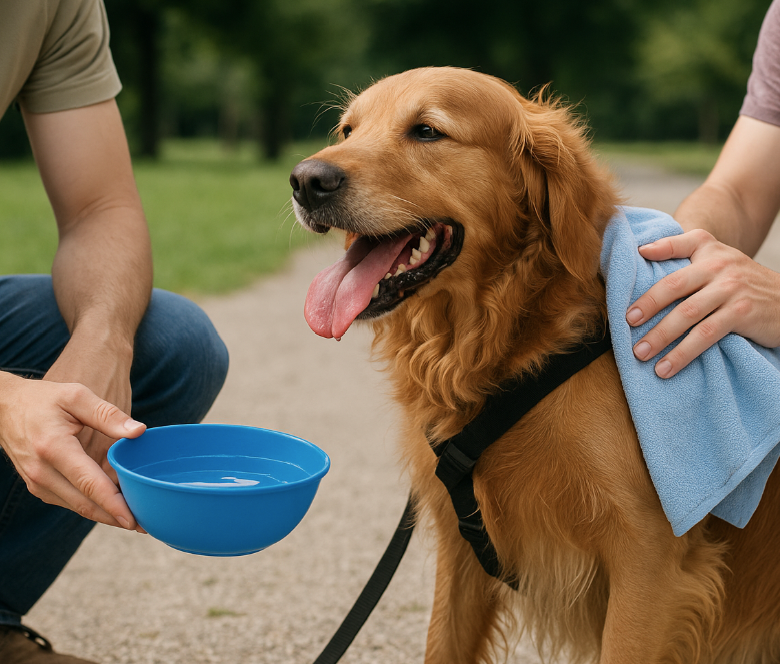
Wet Towels: Apply cool, wet towels or cloths to the dog’s head, neck, armpits, and groin.
Cool Water Bath: If possible, immerse the dog in cool (not cold) water. Alternatively, you can use a hose or shower to pour cool water over the dog.
Fans: Use fans to help with the cooling process.
Monitor Temperature: Use a rectal thermometer to monitor the dog’s temperature. Aim to reduce it to 103°F (39.4°C), then stop cooling to avoid hypothermia.
Seek Veterinary Attention: Contact a veterinarian immediately, even if the dog appears to be recovering.
Heatstroke in dogs is a serious and potentially fatal condition. Recognize the signs early, act quickly by moving the dog to a cool environment, offering water, and cooling the dog with wet towels and fans. Always seek veterinary attention as soon as possible. Avoid using ice or very cold water, forcing water intake, overcooling, and keeping the dog in hot or confined spaces. Prompt and appropriate action can save your dog’s life.
This is a time in which drops of peppermint essential oil on the dog with a cool towel covering can help cool them down. Or add drops of peppermint to their paw pads and ears.
Seek Veterinary Care Immediately.
Heatstroke, Heat Stroke. Overheating
When DIY Isn't Enough Already tried the basics? If this is happening with your dog and you're still stuck, I can help you figure out what deserves attention next.
Request a Discovery Callback →