

Diatomaceous Earth for Dogs
Diatomaceous earth is one of those ingredients that creates a lot of confusion for dog moms. You may see food-grade diatomaceous earth listed in a commercial dog food, hear someone say they add a spoonful to every bowl for worms, and then see another person sprinkling it around the yard for fleas. Same name. Very different reasons for using it.
I do think diatomaceous earth can have a place in a low-tox dog household. What I do not think is that every dog needs DE added to food every day simply because it is natural, contains silica, or appears on an ingredient panel somewhere.
The Quick Answer on Diatomaceous Earth for Dogs
Food-grade DE can be used in animal feed. In the United States, diatomaceous earth is permitted in animal feeds as an inert carrier or anti-caking agent. That helps explain why you may find it in commercial pet foods.
That does not automatically mean your dog needs additional DE added to every meal, nor does its use in feed prove every claim you may hear about parasites, detoxification, minerals, digestion, or long-term supplementation.
And when DE is being considered around dogs, the product type and intended use matter. Food/feed-grade DE is not the same thing as pool or filter-grade DE, and a product labeled as an animal-feed additive is not automatically labeled or tested as an insecticide.
What Is Diatomaceous Earth?
Diatomaceous earth, usually shortened to DE, comes from the fossilized remains of microscopic aquatic organisms called diatoms. Their skeletons are largely made from silica. Once processed, DE becomes the fine, chalky powder most people recognize.
Its physical structure and ability to absorb oils and moisture are what make it useful in everything from animal feed and manufacturing to pest control.
This is also why DE gets talked about as though it has one universal purpose. It doesn't. How it is processed, how the product is labeled, and what you are trying to accomplish all change the conversation.
Why Is Diatomaceous Earth in Some Dog Foods?
This is one of the most important pieces of the conversation because seeing DE on a dog-food ingredient panel can make it look like it was added as a nutritional supplement.
Under U.S. animal-feed regulations, diatomaceous earth may be used as an inert carrier or anti-caking agent in animal feed. In plain English, it can help keep powdered ingredients flowing, reduce clumping, or carry other ingredients through the manufacturing process.
So yes, DE may legitimately be in your dog's food. But its presence does not automatically mean the manufacturer put it there to kill worms, detoxify your dog, improve mineral status, or provide a daily health benefit.
Federal regulations allow DE for its specified feed use at up to 2% of the total ration. That is a manufacturing/feed standard — not a recommendation that you go home and add 2% DE to your dog's dinner.
That distinction gets lost online all the time.
Should I Add Diatomaceous Earth to My Dog's Food Every Day?
I would not make daily DE another automatic item on the dog-food checklist.
If your dog's commercial food already contains it, adding more because “DE is good for dogs” does not necessarily add anything useful. And if you feed a fresh, homemade, raw, or gently cooked diet, I would want a specific reason for adding it rather than making it a permanent bowl topper out of habit.
As a holistic pet health coach and canine nutritionist, I often look at what the dog is already eating before deciding that another powder belongs in the bowl. Your dog's dinner does not need to become a supplement junk drawer.
Before Adding DE Every Day, Ask Why
- Are you using it because you believe your dog has worms?
- Are you trying to prevent parasites?
- Are you adding it for silica or trace minerals?
- Are you hoping it will “detox” something?
- Did someone simply tell you every dog should have it?
- Is DE already present in your dog's commercial food or supplement?
Those are completely different goals, and they should not all lead automatically to the same recommendation.
What About the Minerals in Diatomaceous Earth?
DE is primarily associated with silica, and depending on its source it may contain varying amounts of other naturally occurring minerals.
That sounds appealing, particularly to pet parents trying to improve a homemade diet. But I would not use diatomaceous earth as a substitute for properly balancing your dog's minerals.
If a homemade diet is short on calcium, iodine, zinc, copper, manganese, vitamin D, vitamin E, or another nutrient, I want to know what the actual diet provides and correct that gap intentionally. A scoop of a naturally variable earth product is not how I want to guess at nutritional balance.
Does Diatomaceous Earth Kill Worms in Dogs?
This is probably the most common reason pet parents intentionally add food-grade DE to a dog's meals.
You will find plenty of anecdotal reports claiming that feeding DE helps with roundworms, hookworms, whipworms, and other intestinal parasites. What is much harder to find is strong canine clinical evidence showing that feeding DE reliably clears an established intestinal parasite infection.
We also have to be careful about borrowing the explanation for how DE kills insects in a dry environment and assuming the exact same mechanism occurs inside a wet digestive tract. Those are very different environments.
My approach: If I genuinely suspect intestinal parasites, I want to know what we are dealing with. Fecal testing, symptoms, exposure history, the individual dog, and follow-up testing give us much more useful information than assuming a daily scoop of DE has handled the problem.
DE also should not be treated as an answer for every parasite. Giardia, coccidia, tapeworms, heartworms, and other parasitic problems have different life cycles and different concerns.
Natural parasite support absolutely has a place in my work. But “natural” still needs a strategy.
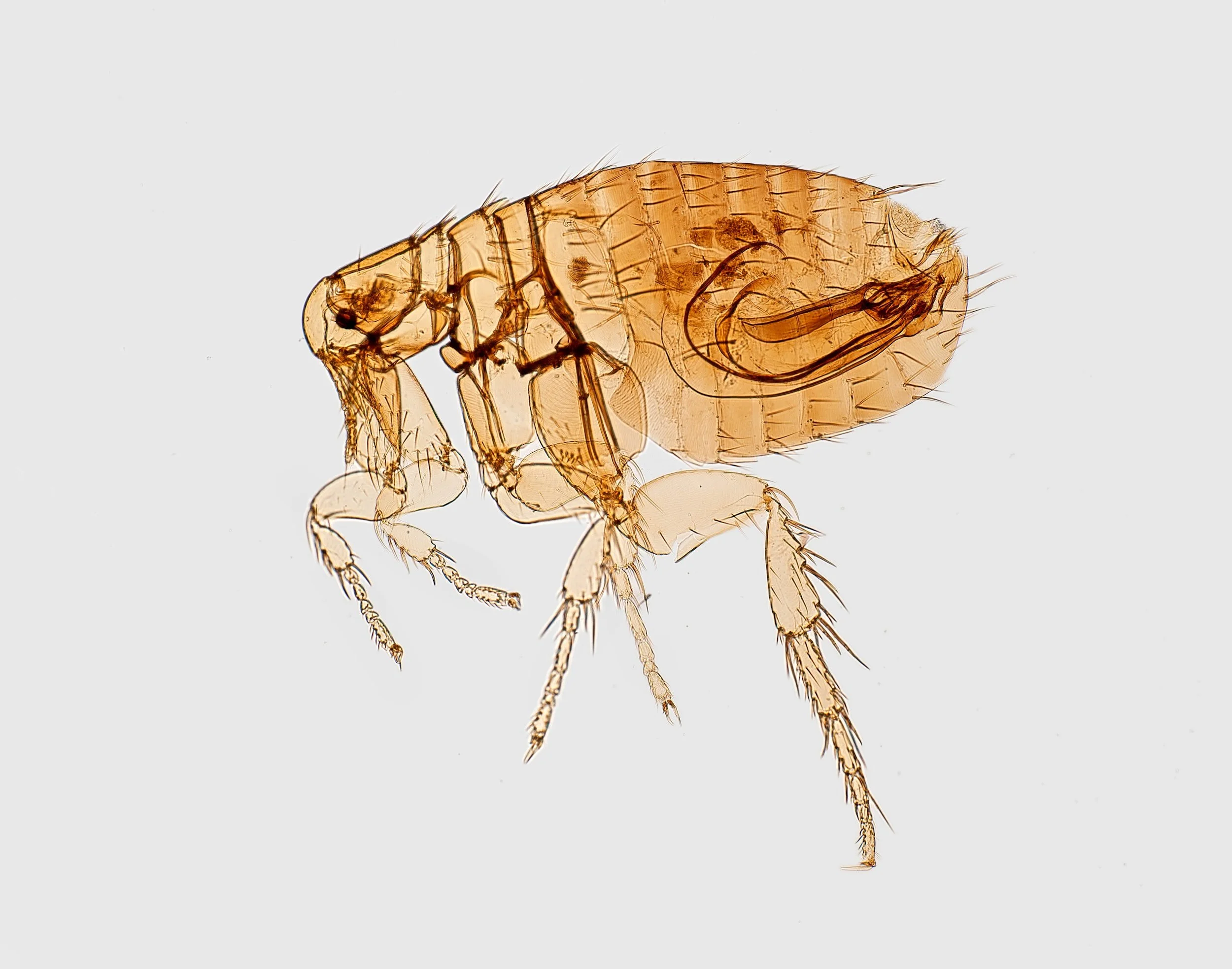
Does Diatomaceous Earth Kill Fleas?
DE has a much clearer physical role when used against certain insects in the environment. It can damage or absorb the protective oily layer of an insect's outer surface, causing dehydration.
But it works best when dry, and flea infestations involve multiple life stages. Treating one part of the environment does not magically interrupt the entire flea life cycle.
If fleas are the reason you are considering DE, read my full guide on how to get rid of fleas on dogs naturally . I look at the dog, the home, and the yard rather than relying on one powder to do all the work.
Should You Put Diatomaceous Earth Directly on a Dog?
This is one place where I am much more cautious.
DE is an extremely fine powder. Dust can irritate the eyes, nasal passages, airways, and skin. Even food-grade DE is still dust. “Food grade” describes an intended food/feed use; it does not mean inhaling clouds of it is a good idea.
This is particularly important with dogs who already have respiratory disease, irritated skin, dry skin, eye problems, or sensitive airways.
Food-Grade DE Is Not the Same as Pool-Grade DE
Food / Feed-Grade DE
This is the category relevant when DE is approved and labeled for use in animal feed. If you are discussing DE in food, this is the type of conversation you should be having.
Pool / Filter-Grade DE
Pool and filtration products are processed for industrial filtration purposes and are not appropriate for feeding to dogs.
There is another wrinkle that is easy to miss: a product sold as a feed additive and a product registered or labeled to control crawling insects may have different intended uses even when both contain diatomaceous earth.
Read the actual label. Do not assume every bag of DE is interchangeable just because the front says “diatomaceous earth.”
Using Diatomaceous Earth Around the Home or Yard
Environmental use is where I think DE can make more practical sense in a low-tox strategy, depending on the product and the problem you are trying to address.
When using a DE product for insects, I want the product to be specifically labeled for that intended use and I follow the label. DE also needs to remain dry to do its job effectively.
I would be thoughtful rather than enthusiastic with application. More powder is not automatically better.
- Avoid creating airborne clouds of dust.
- Keep it away from your dog's eyes and breathing zone.
- Keep dogs away during dusty application.
- Avoid broad application over flowering areas where beneficial insects are active.
- Do not dump it near ponds, drainage areas, or water sources.
- Follow the specific product label rather than a social-media recipe.
If flea and tick prevention is the bigger issue, I also recommend reading Are Flea and Tick Medications Safe for Dogs? Risks & Natural Options .
What About Using DE for “Detox”?
DE gets pulled into detox conversations because it has adsorptive properties and because forms of diatomaceous material are used in filtration and industrial applications.
That does not mean we can jump from “this material can remove something from water in a filtration system” to “therefore feeding it detoxifies my dog.”
Those are not the same thing.
If I am concerned about environmental exposures, heavy metals, pesticides, gut-derived toxins, liver burden, or another detox question, I want to identify what we are actually trying to support and choose the appropriate strategy.
You can read more about reducing everyday exposure in my Low-Tox Lifestyle for Dogs guide.
So Where Does Diatomaceous Earth Fit?
| Why People Use DE | How I Look at It |
|---|---|
| Already in commercial dog food | Often there as a carrier or anti-caking ingredient. Its presence does not mean your dog needs extra DE added at home. |
| Daily food supplement | Not something I automatically recommend for every dog. I want a reason for adding it. |
| Mineral supplement | Not how I would balance missing nutrients in a homemade diet. |
| Intestinal worms | Common traditional/DIY use, but canine evidence is limited. Test when parasites are suspected and verify that the problem has actually cleared. |
| Fleas in the environment | Potentially useful as one environmental tool when using an appropriately labeled product, but not a complete flea strategy. |
| Directly dusting the dog | Not my favorite approach because of drying, eye irritation, and inhalation concerns. |
| Detox | I would choose support based on the actual exposure or problem rather than assuming DE is a universal binder. |
The Whole Dog Still Changes the Answer
If someone asks me, “Should I give my dog diatomaceous earth?” I still don't know enough.
I want to know why you are considering it, what your dog eats, what else is going into the bowl, what medications and supplements are being used, whether there is a confirmed parasite problem, stool history, hydration, GI sensitivity, age, other diagnoses, and what you are actually hoping DE will accomplish.
Experience helps me recognize patterns and ask better questions before we waste money adding one more product because someone on Facebook said every dog needs it.
What I know: DE is a useful material. It is not a nutritional requirement, a proven cure-all, or something every dog needs added to every meal for life.
Frequently Asked Questions About Diatomaceous Earth for Dogs
Can dogs eat food-grade diatomaceous earth?
Food/feed-grade diatomaceous earth is used in animal feed, including as an inert carrier and anti-caking agent. That does not mean every DE product is appropriate for feeding or that every dog benefits from having additional DE added to meals. Check the label and make sure you understand the product's intended use.
Why is diatomaceous earth in my dog's food?
One very ordinary reason is manufacturing. DE is permitted for use in animal feed as an inert carrier or anti-caking agent, helping powders flow and ingredients remain evenly distributed. Its appearance on the ingredient label does not automatically mean it was added as a parasite treatment or nutritional supplement.
Should I give my dog diatomaceous earth every day?
I do not consider DE an automatic daily supplement for every dog. If you are adding it every day, I would first ask what specific job you expect it to do. A confirmed parasite problem, nutritional deficiency, flea infestation, and a desire for general “detox” are different issues and deserve different strategies.
How much diatomaceous earth should I give my dog?
I don't use a blanket dosing chart because it encourages pet parents to add DE without first deciding whether the dog needs it. Amount and duration depend on the product, intended use, diet, dog, and reason for using it. If a commercial product is being used, follow its labeled directions rather than borrowing a dose from a social-media post.
Does diatomaceous earth kill worms in dogs?
DE is widely discussed as a natural deworming option, but there is not strong canine clinical evidence showing that feeding it reliably clears established intestinal worm infections. If you suspect worms, I prefer identifying the parasite and verifying clearance instead of assuming DE did the job.
Does diatomaceous earth kill fleas on dogs?
DE can kill certain insects through physical drying when they contact it in a dry environment, but it does not reliably address the entire flea life cycle. I prefer using it, when appropriate, as one environmental tool rather than dusting a dog's entire body or treating it as complete flea prevention.
Can I put diatomaceous earth directly on my dog?
I generally do not recommend routinely dusting dogs with DE. Fine powder can irritate the skin, eyes, nose, and respiratory tract, and dogs are very good at sticking their noses exactly where we wish they wouldn't. Environmental use with an appropriately labeled product makes more sense to me than creating a cloud of powder around the dog.
Is food-grade diatomaceous earth the same as pool-grade DE?
No. Pool and filter-grade DE is processed for filtration and should not be fed to dogs. If DE is being considered in animal food, the product needs to be appropriate and labeled for food/feed use.
Can diatomaceous earth balance minerals in homemade dog food?
No. DE may naturally contain silica and varying trace minerals, but I would not use it to correct a nutritionally incomplete homemade diet. A balanced recipe should supply known amounts of the nutrients the dog actually needs rather than relying on variable trace minerals from DE.
Not Sure What Actually Belongs in Your Dog's Bowl?
If you have collected DE, probiotics, herbs, oils, powders, toppers, and half the supplement aisle but still aren't sure what your dog actually needs, that is exactly where looking at the whole dog becomes useful.
We can look at the food, symptoms, history, medications, supplements, parasite concerns, and the bigger pattern and decide what deserves to stay — and what can come out of the bowl.
Request a Discovery CallbackSources & References
U.S. animal-feed regulation: 21 CFR § 573.340 — Diatomaceous Earth
Diatomaceous earth exposure and safety information: National Pesticide Information Center — Diatomaceous Earth Fact Sheet
How to Use Diatomaceous Earth
When DIY Isn't Enough Already tried the basics? If this is happening with your dog and you're still stuck, I can help you figure out what deserves attention next.
Request a Discovery Callback →