

The Problem With Suppressing Symptoms in Dogs
When Symptoms Disappear… But the Problem Doesn’t
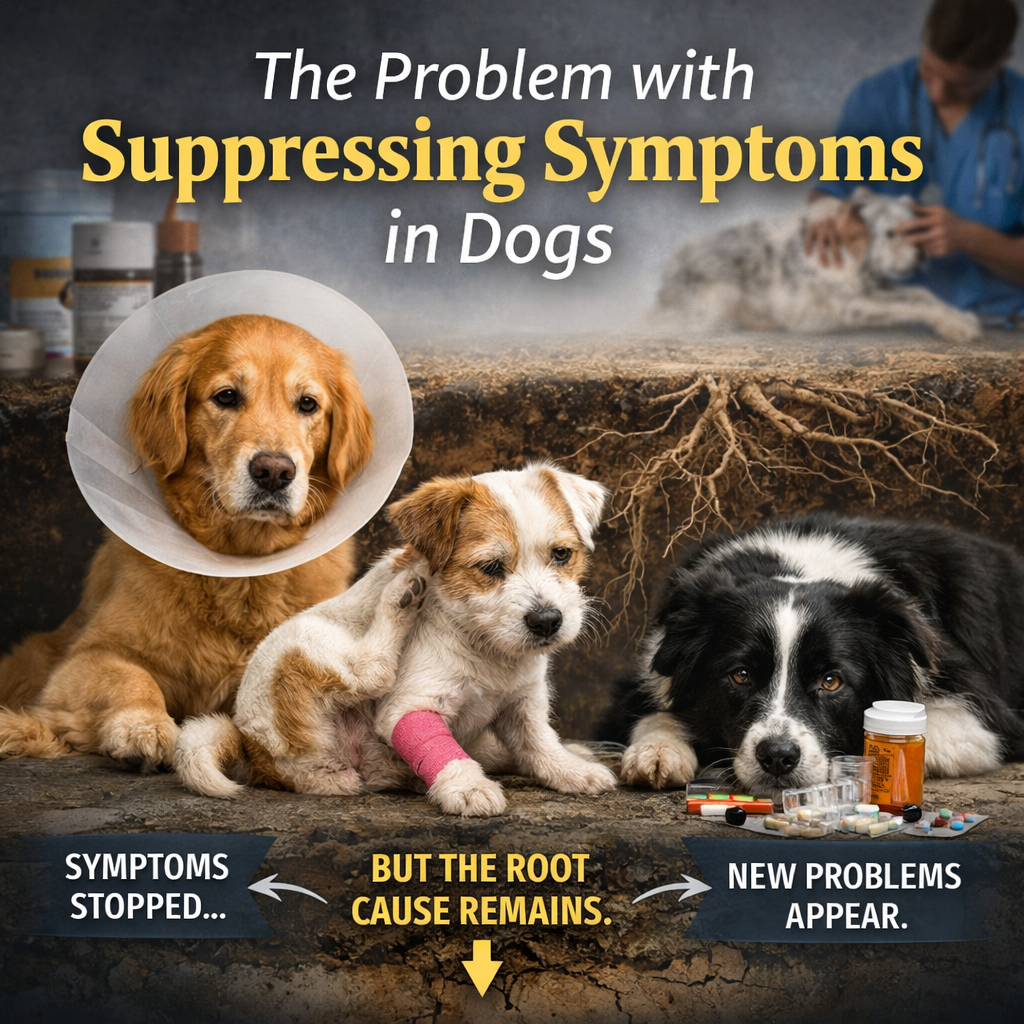
A dog stops itching after medication.
The diarrhea clears up after a prescription.
The vomiting stops with an anti-nausea drug.
On the surface, it looks like the issue was solved.
But many pet parents eventually notice something else…
The symptoms return.
Or a different health issue shows up later.
This is one of the most common patterns I see when working with dogs dealing with chronic health issues.
Symptoms get treated.
The body gets quieted.
But the reason the symptom existed never gets addressed.
Symptoms are not random malfunctions.
They are communication.
What Symptoms Actually Are
A symptom is simply the body signaling that something is out of balance.
Examples include:
Itching or chewing paws
Chronic ear infections
Vomiting
Diarrhea
Excessive thirst
Anxiety or restlessness
Skin eruptions or hot spots
Licking or obsessive behaviors
Digestive upset
Fatigue or withdrawal
Many symptoms are actually protective responses.
For example:
Vomiting and diarrhea can help remove irritants from the digestive system
Inflammation is part of the immune response
Skin eruptions can be a detox pathway
Behavior changes can reflect nervous system stress or discomfort
The body is trying to correct something.
When we silence the signal without understanding it, the underlying imbalance remains.
The Concept of the Body’s Life Force
Holistic practitioners often talk about something called the life force — the body’s innate drive to maintain balance and health.
Veterinarian Michael Dym recently reminded us of an important principle:
When the body is working hard to push toxins or imbalance out, the last thing we want to do is shut that process down unless absolutely necessary.
Symptoms such as:
vomiting
diarrhea
coughing
skin eruptions
discharge
are often what homeopathy and holistic medicine call exteriorization — the body moving waste or imbalance outward.
When the body is doing this work, suppressing the symptom may stop the outward expression, but it does not resolve the underlying problem.
What Suppression Can Look Like
When symptoms are suppressed, everything appears calm on the surface.
The vomiting stops
The diarrhea clears
The rash disappears
But internally, the imbalance that the body was trying to eliminate may still be present.
Over time, that imbalance can be pushed deeper into the body.
Many holistic veterinarians and practitioners observe patterns where repeated suppression is followed later by more complex disease patterns.
These can include things like:
chronic allergies
autoimmune conditions
metabolic disease
inflammatory disorders
tumors or cancers
This does not mean medications always cause disease. That would be an oversimplification.
But the pattern of symptom suppression without addressing root causes is something holistic practitioners see repeatedly.
Dr. Dym has shared cases where dogs experienced severe disease not long after aggressive symptom suppression during detox or flare-up phases. While it is impossible to draw a perfect cause-and-effect line in every situation, the pattern is one many integrative veterinarians pay close attention to.
Medications That Commonly Suppress Symptoms
Modern veterinary medicine offers many drugs that make symptoms disappear quickly.
These medications can be extremely helpful in emergencies or severe situations.
But many of them are symptom managers, not root-cause solutions.
Common examples include:
Apoquel
Often prescribed for itching and allergic skin disease.
It works by blocking immune signals that trigger itch responses.
The itch may stop quickly, but the deeper questions remain:
Why is the immune system reacting this way?
What is triggering inflammation?
What is driving the allergy response?
Cytopoint
An injectable antibody therapy that targets itch pathways.
It neutralizes itch signals in the immune system for several weeks.
Again, itching may improve, but underlying drivers such as diet, microbiome imbalance, or environmental triggers may still be present.
Metronidazole
Often prescribed for diarrhea or inflammatory bowel conditions.
It functions as both an antibiotic and antiprotozoal medication.
While it may reduce symptoms temporarily, it can also alter the gut microbiome and reduce beneficial bacteria.
For dogs already struggling with gut imbalance, repeated use may complicate long-term digestive health.
Cerenia
Commonly prescribed to stop vomiting and nausea.
It works by blocking signals in the brain that trigger vomiting.
While helpful in severe nausea situations, it also stops one of the body’s natural defense mechanisms for removing irritants or toxins.
Steroids (Prednisone, Dexamethasone)
Steroids suppress inflammation and immune activity broadly.
They can be life-saving when inflammation becomes dangerous.
But they also temporarily shut down immune processes that the body may be using to restore balance.
Anti-Anxiety Medications
Drugs used to manage behavioral symptoms can reduce anxiety or agitation.
But many behavior issues are influenced by deeper factors such as:
gut health
chronic inflammation
mineral imbalance
stress physiology
unresolved trauma
When those factors remain unaddressed, the symptoms often return.
Why Conventional Medicine Often Focuses on Suppression
Conventional veterinary medicine is largely symptom-focused.
In a busy clinic or emergency situation, the priority is stopping the immediate problem.
That approach absolutely has value.
But long-term health requires something more than symptom control.
It requires understanding why the body produced the symptom in the first place.
True prevention and resilience come from addressing root causes.
Supporting the Body Instead of Silencing It
A more holistic approach asks a different question.
Not just:
“How do we stop the symptom?”
But instead:
“Why does the body need this symptom right now?”
When we explore that question, we often look at factors such as:
Nutrition
Ultra-processed diets are one of the biggest drivers of inflammation in dogs.
Many dogs improve when transitioned toward fresher, less processed foods.
Gut Health
The gut plays a central role in:
immune regulation
inflammation control
nutrient absorption
neurotransmitter production
Microbiome balance affects nearly every body system.
Environmental Load
Dogs today are exposed to a large number of environmental chemicals including:
lawn chemicals
scented household products
pesticides
processed food additives
Reducing toxic exposure lowers stress on the body’s detox pathways.
Natural Support Options
Many holistic approaches aim to support the body while it restores balance.
These may include:
species-appropriate nutrition
functional mushrooms
herbs for immune and detox support
essential oils for skin and emotional wellness
homeopathic remedies
mineral support
PEMF or red light therapy
nervous system regulation
These tools focus on supporting resilience, not silencing symptoms.
Top 5 Things Pet Parents Can Do Right Now
• Pay attention to recurring symptoms instead of repeatedly suppressing them
• Improve nutrition with fresher, less processed foods
• Support gut health and microbial diversity
• Reduce chemical exposure in your home and yard
• Work with practitioners who evaluate the whole dog
If Your Dog’s Symptoms Keep Returning…
That usually means the body is asking for deeper support.
Many pet parents come to me after trying multiple medications that temporarily quiet symptoms but never fully resolve the issue.
When we step back and look at the full picture — nutrition, gut health, environment, stress, and immune balance — we often begin to see why the body has been struggling.
Let’s get your dog the personalized support they need — submit an inquiry and let's see what I can do to help. No obligations, the inquiry callback is no cost to you.